


In September 2002, Dire Straits leader Mark Knopfler released his third solo album, The Ragpicker's Dream. As the album was released, Knopfler sat down with Classic Rock to discuss his decade of learning, the making of the band's first album, their unlikely breakthrough, and what makes him tick.
"I think I’m finding out more about the kind of records that I want to make,” says Mark Knopfler, his hands carefully negotiating an array of teapots, bottles, cups and saucers on the table in front of us. “The last couple of records would have sounded more like this if I'd known what I was doing a bit more.”
Knopfler and I are sitting in the dining room at an elegant 30s-style gentleman's club on London’s perennially trendy Kings Road, conveniently located just around the corner from his Chelsea house. It seems strange to hear Knopfler questioning his own ability to make a record. After all, he’s been making them for 25 years now and well over 50 million of them have been sold. What more does he need to know? The answer is evidence of what makes Mark Knopfler tick – his need to keep making music without letting anything else get in the way.

The biggest thing that got in the way was the band he formed in the mid-70s for the specific purpose of playing his music: Dire Straits. Not that he had any kind of problem with the band itself. The problem was that the more successful his music became, the more Dire Straits became a juggernaut that obscured Knopfler’s view of his music. As he puts it: “When it got to the point of carrying round our own stage I decided I'd had enough.”
That point came after the 20 million-selling Brothers In Arms album of 1985, with its iconic anthem for the era, the MTV-baiting Money For Nothing that got plugged relentlessly – on MTV, of course. It elevated Dire Straits to stadium rock status. Which was great for the band, but not for Mark Knopfler. It wasn’t just the scale and the alienation from the audience that bothered him: “The distance between you and the little song in your notebook also gets bigger and bigger.”

In September 1988, just three months after headlining Wembley Stadium’s Nelson Mandela 70th Birthday Tribute concert in front of 85,000 fans and a worldwide television audience of countless millions, Knopfler announced that Dire Straits was finished.
He himself, on the other hand, certainly wasn’t. He was playing, co-writing or producing albums with Bob Dylan, Randy Newman, Joan Armatrading and Mink DeVille, touring as a sideman with Eric Clapton, recording a duets album with country picking legend Chet Atkins, and working on soundtracks. In 1990, he formed the low-key Notting Hillbillies, with a bunch of old mates from before Dire Straits and his manager on drums. They released an album, Missing... Presumed Having A Good Time and did a modest UK tour.
That summer, however, Dire Straits were revived for a star-studded charity show at Knebworth along with Pink Floyd, Paul McCartney, Clapton and Genesis. Soon afterwards, Knopfler announced that there would be another Dire Straits album and world tour. And the hype began all over again. The record company announced their intention to sell more copies of the new album, On Every Street, than Brothers In Arms; the band’s manager forecast (correctly, it turned out) that it would sell less than half that. Yet neither he nor the band were complaining.
But this time Knopfler really had had enough of stadium life. After the tour, he knocked Dire Straits on the head again and went back to soundtracks, collaborations with anybody he felt like, and solo albums. The only reason he’d bring back the band now, he says, is for some major charity event. Maybe.
So far that doesn’t seem to be necessary. The week before our chat, Knopfler played three benefit gigs for three different children’s charities’ shows at London’s Shepherd’s Bush Empire, with a band that included guitar buddies such as Brendan Croker, Robbie McIntosh and Bobby Valentino. Dire Straits bassist John Illsley also put in an appearance. They played Dire Straits songs and some choice selections from Knopfler’s solo albums. The critics seemed to want more pizzazz, but everybody else seemed quite happy.
The difference between a Mark Knopfler album and a Dire Straits album can be a fine one, particularly as it’s the same guy writing the songs, but the essential distinction is that one is a band and the other is a singer-songwriter and his band.
Knopfler’s last solo album, Sailing To Philadelphia, did start to blur the edges a little, but there’s no danger of that on his latest, The Ragpicker’s Dream, which has a homespun, almost folksy feel to it. Those trademark guitar licks are still there, but you do have to listen out for them a bit.
“Yes,” he agrees, cautiously. “It's less produced in that sense.”
Was it a conscious decision to take some of the Dire Straits sheen off the songs?
“Maybe,” he replies. “I suppose so,” he adds after a pause. “I suppose so.”
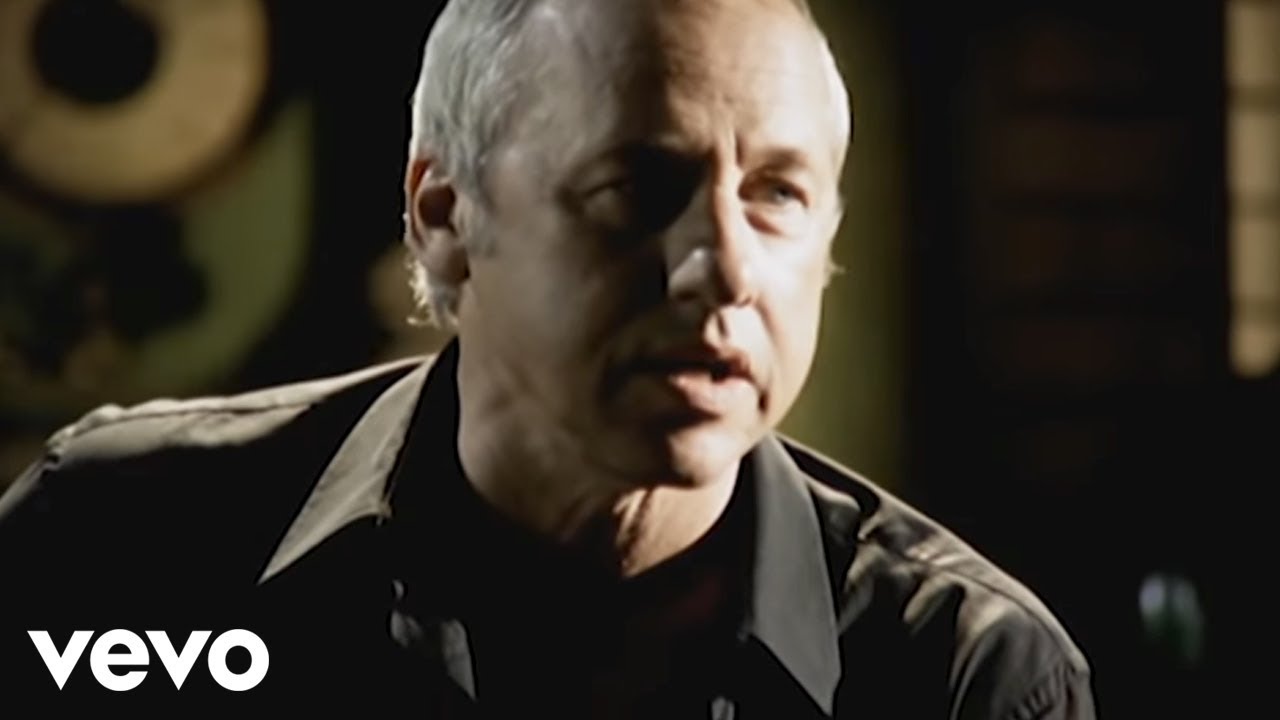
Why Aye Man, the opening track of The Ragpicker’s Dream, will already be familiar to fans of Auf Wiedersehen Pet, as it was used over the end credits of the third series screened earlier this year. Knopfler’s ballad of the Geordie exodus of the Seventies, as working men travelled southwards and to Germany to find jobs, catches the same warm, affectionate style of the series while adding a gritty political underlay that can't resist taking a swipe at Margaret Thatcher, whose harsh economic policies devastated the North East (among other regions). Small wonder that Knopfler, as he makes clear in the song, “ain't gonna work on Maggie's Farm”.
“It's social history,” he says by way of explanation. “And I thought that Auf Wiedersehen Pet documented it pretty well. Certainly the first series did. It was a chemistry thing, the actors just worked so well together. It was a pleasure to put Jimmy [Nail] and Tim [Healy] on backing vocals, just as a nice kind of brush stroke, you know.”
If Auf Wiedersehen Pet has a particular resonance for Knopfler, that’s because he was part of that same migration. He was born in Glasgow but his parents moved to Newcastle when he was a child.
“I was working from around the age of 14 at the weekends,” he recalls. “I started at a market garden and went on to warehouses and then the building site, with a lot of farm work in between. So there was always that, even before I before I went to work as a junior on a newspaper and then managed to be a student for three years. There was always work. I remember when being a professional musician was not an option there was always the farm. So I have sympathy with anyone doing a tough job.
“On the first Dire Straits album there’s a track called Southbound Again which is all about that. What I was trying to do really was make the trip south of the Delta. And that trip down to London the first time is like a transcontinental journey; I just changed the geography a little. But it’s the same thing for me every time I cross the High Level Bridge. There’s something very symbolic about going back over the Tyne.”
Although The Ragpicker’s Dream and Dire Straits’ first album mark the opposite ends of Knopfler’s career, they're linked by the same understated but irresistible force of his music. That music took a while to start flowing, however. Indeed, Knopfler spent nearly a decade gradually getting his act together. The first Bob Dylan album was an early incentive: “My sister bought it home when I was 11, and I just stuck to it like glue. That attachment – there was something completely riveting about that to me.
"Then when I was 15 I heard BB King’s Live At the Regal. And that triangle of the voice, the guitar and the audience made a huge impact on me. All those influences got soaked up in me and stewed around, and when they finally came out again there was something of me in there as well. Tyneside was also a great folk and bluesy area. I saw Chuck Berry when I was 15.”
But, Knopfler admits: “It took me an awful long time to get an amplifier. I used to borrow cheap acoustic guitars from friends. That got me into playing folk joints and stuff. Then a folk singer up in Northumberland taught me how to do the ‘clawhammer’ finger-picking style that I really wanted to learn. Over the years, very, very slowly, I developed a style of playing the guitar, and when I finally got an electric guitar, I transferred that style.”

At the end of the 60s Knopfler moved south, first to Harlow in Essex for a year, where he took a course in journalism, and then up to Leeds, where he got a job as a junior reporter on the Yorkshire Evening Post. Combining business with pleasure, he penned a eulogy to Jimi Hendrix in the summer of 1969 that began: “The guitar is part of him. It can cry aloud with him, expressing his anger and elation, his moments of majestic serenity and his extended torrents of power.” That cool appraisal suggests that Knopfler was developing his own relationship with the guitar while remaining awestruck by Hendrix’s own genius.
It was in Leeds, where he also enrolled at the university to take a degree in English, that Knopfler took the first positive if modest steps towards a musical career. He linked up with a local guitarist called Steve Phillips, who taught him the rudiments of country blues and delta blues. Together they formed a duo called The Duolian String Pickers and played around local clubs and pubs. Knopfler also made his first recording at a home studio in Pudsey with Phillips on the song called Summer's Coming My Way (not the kind of title that would appear on the first Dire Straits album, it must be said).
In 1973, after graduating, Knopfler made the move to London to try to break into the music scene. He answered a classified ad from the delightfully named Brewers Droop, a blues combo whose drummer was Pick Withers. “He was living in a house with the lads from Lindisfarne,” remembers Knopfler, who was impressed. “He’d already done quite a bit of professional music at that point.”
Knopfler’s stint with Brewers Droop lasted only a couple of months, although he did get to record some tracks with them at Dave Edmunds' Rockfield Studio. There was nothing else in the offing, so he grabbed at the chance of a lecturer's job at Loughton College in Essex.
“It was a steadying influence at the time,” he says. “There happened to be guitar classes at college, and there was a guitar teacher there with whom I used to play.” They even formed a rockabilly/R&B band called Café Racers. “It was great. We'd finish work and just throw our amps and instruments in the back of the motor. The group could set up in 20 minutes, and all I had to do was put my amp on a chair.”
The turning point for Knopfler, a couple of years later, was a pilgrimage to America: “I got a Greyhound ticket to get around. I stayed with a couple of friends on the way, and I went to Memphis, Nashville, Atlanta and New Orleans, where I remember staying at the YMCA,” he says, the memory of it still able to light up his face. “A lot of the towns looked the same on the outside. It was only when you get to meet people that you get an in to these places. But it was a very important trip for me, because when I came back the music was really pushing.”
Finally, songs were emerging from the hours of strumming and picking. “I never took an academic approach to composing,” he explains, “it was always just an ear thing: I'd listen to a song and then just figure it out in my mind and play it – not the same song, but one that captured the feeling of the original tune.”
By now his younger brother David, also a guitarist, had moved down to London, working as a social worker and living in a flat in Deptford. “The flats were more of less condemned – although I notice they're still there now – and they wouldn't put respectable families there, so they'd let students and artists have them. I'd bought my dad's old car so I could carry my guitar and amp around, and I'd drive down to Deptford through the Blackwall Tunnel and hang around at the flat, strumming with Dave and looking around for a bass player and drummer who could join us. I was in such a hurry, really.”

Knopfler and his brother’s playing sessions would go on long into the night, and frequently ended with Mark falling asleep while playing his guitar. “It was just the sheer amount of time you'd spend listening and playing, practising chord shapes and scales over and over until you'd fall asleep. Sometimes you'd wake up with something wet and sticky on your trousers, like cold tea or wine,” he chuckles.
That’s how David's flatmate John Illsley first met Mark in 1976 – lying underneath his guitar on the living room floor: “John was playing bass in another band at the time, but he’d join in,” the elder Knopfler recalls. Impressed with Mark’s songs, Illsley joined in more frequently. Mark’s Loughton combo Café Racer was still playing occasionally, and when Illsley filled in on bass one night, the pair clicked.
“That was it. I couldn’t keep working after that. I started putting more and more effort into the music and trying to get the band going. John and I also clicked as far as having the determination to get it moving. If we couldn’t get a gig, we'd try and organise our own, and we'd go and get the amps fixed when necessary. John had a drive that I liked a lot. Bands are a pain in the arse, and you really need willpower to drive them along.”
They needed a drummer, too. Knopfler remembered Pick Withers from Brewers Droop, but Withers was already a professional musician: “We used to lure Pick down to Deptford with a promise of tobacco and fish and chips,” he smiles. I can still remember going down the shop and buying him half an ounce of Golden Virginia. But that’s when I learnt to fit a song to a rhythm section. Because at that time it was pretty rudimentary stuff. Which is part of the charm of it, I suppose.”
The songs that would form the core of the first Dire Straits album were coming together. And they reflected the journey Knopfler had made so far: On The Waterline featured snapshots of life in Newcastle; In The Gallery was about his Leeds pal Steve Phillips’s father, who was a local artist; Wild West End, Lions and Eastbound Train were all drawn from his early days in London.
And then there was a little ditty about a band of ageing jazz musicians still playing for the sheer love of it. Knopfler had originally written the song on his Vintage National steel guitar (that’s the one floating on the cover of Brothers In Arms), but its shape and texture changed when he bought the first of his beloved Fender Stratocasters. “I remember sitting in John’s flat and playing it and playing it and playing it, through John’s little Fender amp. I was just so in love with the sound of it. And that’s what created the music for Sultans Of Swing.
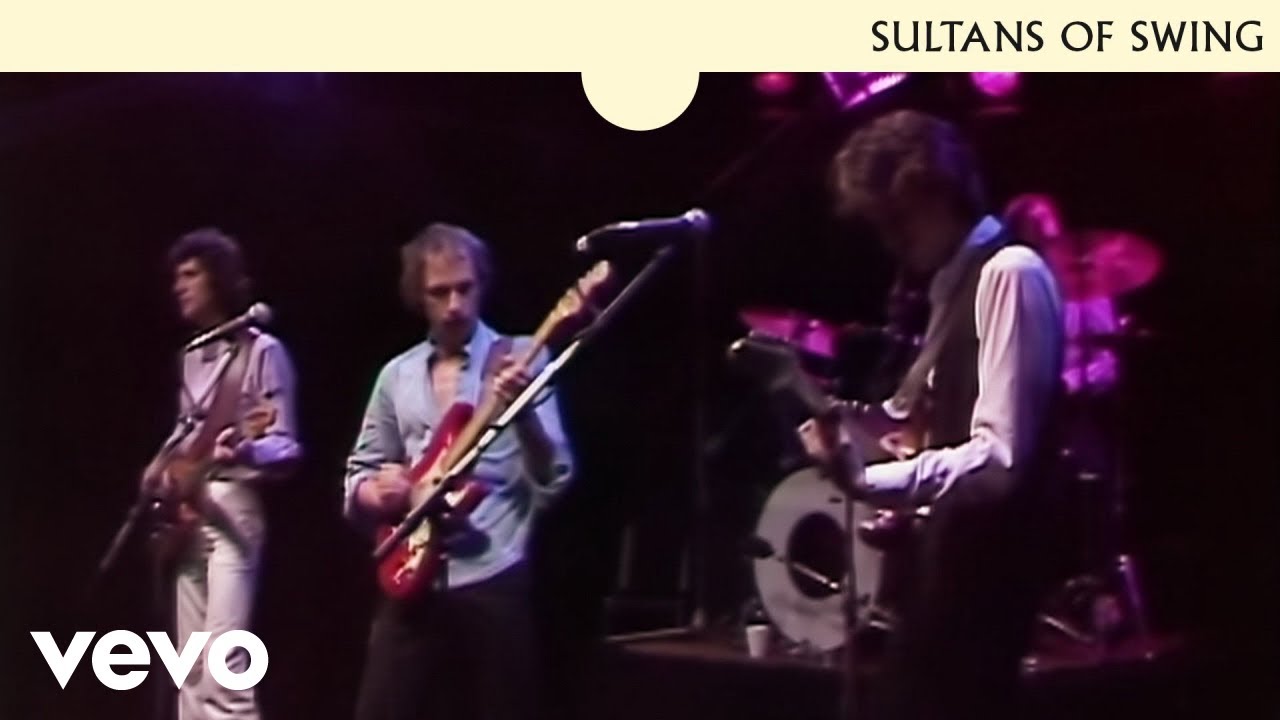
While the band was coming together early in 1977, the London music scene was being rattled by the detonations of punk rock. The Sex Pistols were just starting their record company merry-go-round that would involve three labels in as many months. The Clash and The Jam were each just about to release their first records. And out on the streets the buzz was around the Buzzcocks, The Damned, Generation X, Siouxsie And The Banshees, Subway Sect, Chelsea, the Vibrators, the Boys, the Adverts and Eater.
Even R&B-based bands like The Stranglers, Dr Feelgood and Eddie & The Hot Rods were galvanising their act with shots of sulphate - both musically and literally. But Knopfler was heading remorselessly in the opposite direction – towards a laid-back country blues. Not as laid-back as some of Knopfler’s mentors, like the notoriously reclusive JJ Cale (who once played most of a Hammersmith Odeon show lurking behind his own amplifier), but still somewhat restrained amid the prevailing howl of punk.
Knopfler could understand it, even if he couldn't necessarily identify with it. “There was a lot of stuff to react against. There was a lot of Doobie Brothers and there was a lot of disco dancing; there were bands called Kansas and Boston, and big, heavyweight outfits out there as well. Punk was the reaction against that – a kid could pick up a guitar and blast their way out of it.
“But I wasn’t a kid. I wanted to do something different from Boston and Kansas – obviously; a stripped-down thing, really. Which is where I'd got to from playing duets and stuff. A four-piece is a good way to start. But I was 28 when punk came along. I was too old. I'd got past the first few pages of the Play In A Day book.”
It’s fair to say that throughout 1977, Dire Straits, along with those other great ‘losers’ of the era, The Police, were the most unfashionable groups in town. “Maybe,” Knopfler acknowledges. “But I think you just have to go where your heart takes you and be true to yourself. I never thought about whether Bob Dylan was fashionable or not, I just liked him. Same thing with Dr John. It’s either something you like or you don't. That's how I feel about the whole deal. I mean, I keep hearing about a new blues boom every few years. The fact is you're never going to get away from somebody telling a story with an instrument. That will always go on.”
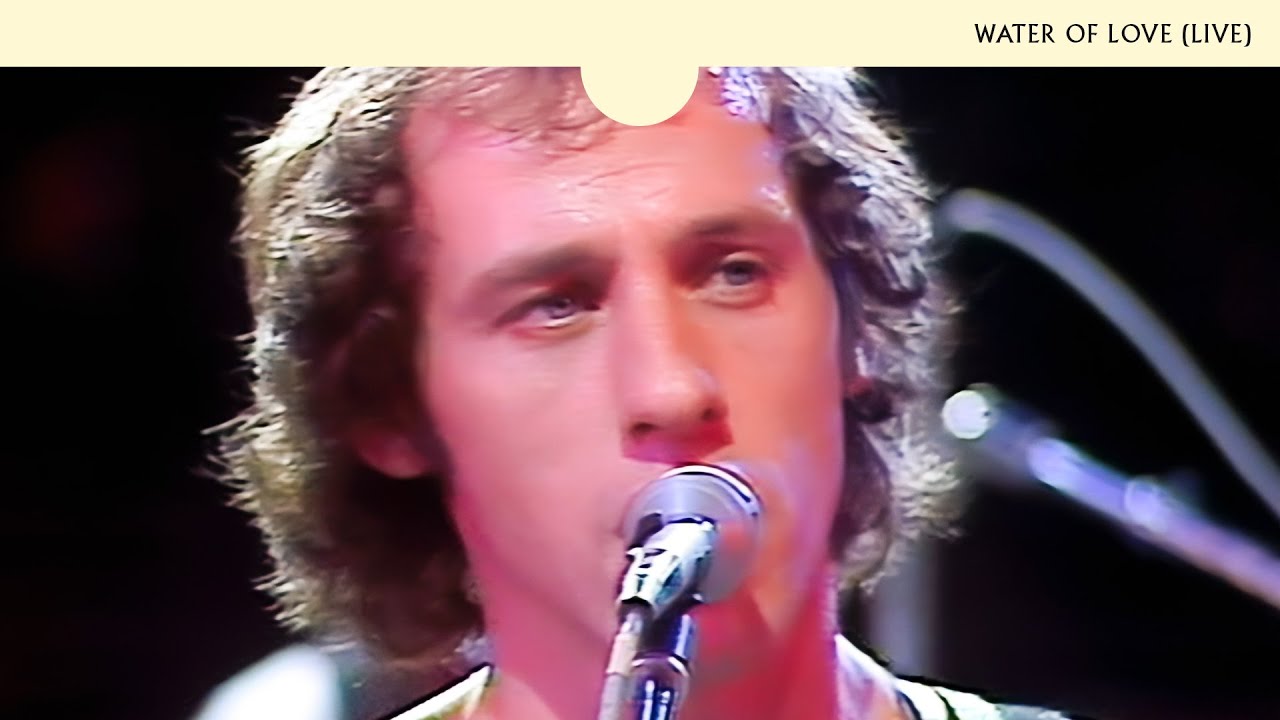
In the summer of 1977, Dire Straits scrambled to get gigs. Their first was literally a stone’s throw from their flat (which was convenient when it came to [ose . supplying the power). They went out as Café Racers. It was a friend of Pick’s who what suggested the name Dire Straits – reflecting the situation they were in.
They blew £120 they didn’t have on making a five-track demo, and then wondered what to do with it. Then Knopfler had an idea: “I used to listen to Charlie Gillett’s Honky Tonk show on Sunday morning on Radio London, and I suggested to John that he might give the tape a listen and give us some advice.”
Gillett listened to the tape. He didn’t give them any advice, but he played it on his show, squeezing Sultans Of Swing in between Bonnie Raitt and Ry Cooder. The band didn’t hear it, but most of London’s A&R community did, to judge from the number of calls Gillett received over the next few days from people wanting to know more about the band. So he played it again the following week.
It was a breakthrough, even if nothing broke immediately. “The record companies were keen early on but fell away one by one. It was touch-and-go at the end.” says Knopfler. The problem was that while experienced A&R men could see where Dire Straits were coming from and where they were heading, their bosses were in the thrall of punk, their vision quite literally impaired by X-Ray Spex.
But Phonogram Records A&R man John Stainze stuck with it through the autumn, and eventually signed Dire Straits to the label on December 9, the same day they played Islington’s Hope & Anchor as part of the Front Row Festival.
The festival, intended to showcase the latest new wave trends in the capital, was recorded for a double album. It’s interesting now to see how Dire Straits were regarded at the time. On the album’s cover they’re bottom of the list, below such fashionable names as The Stranglers and XTC, not to mention the Tyla Gang, 999, the Pleasers and Burlesque.

Through their contacts at Phonogram, they got themselves a manager – Ed Bicknell, who worked at the NEMS booking agency. His first act was to book them as support on Talking Heads’ ’78 British tour. “That was fun,” Knopfler reminisces. “We all travelled round together in a little mini-van.”
But Dire Straits were not yet a well-known name, even within the industry. “I remember we were standing outside the Portobello Hotel, waiting to go on the first date, and the tour manager rolled up in a car and stuck his head out of the window and said: ‘No Dice?’ – which was the name of another little group that was around at the time. And we just shook our heads at him and said: ‘No.”
After the tour, they spent the last half of February recording their first album at Basing Street Studios with producer Muff Winwood, who had the good sense to simply capture what he heard. Indeed, if you listen to the Sultans Of Swing demo that Charlie Gillett played, the version on the first album and a live version from a BBC In Concert later in 1978, there’s remarkably little difference between them.
“I didn’t see any reason to change it particularly,” Knopfler explains. “Sometimes, things that you put in there become part of its architecture. I'm always making an executive decision every time I play it — what to keep and what to improvise. That’s always a fun bit of the whole thing, inventing new licks while you're singing the song and deciding which bits have become so much a part of the song that there’s no way out of it. The twiddly bit at the end of Sultans Of Swing is now so much a part of it, because it leads to the climax, that you can’t not do it.”
The album's understated simplicity turned out to be its greatest strength. At first it’s a bit like being stuck behind a car resolutely sticking to 20mph in a 30mph zone. But once you've resisted the urge to overtake, you can relax and let the musical landscape unfold. The poignant intro to Down To The Waterline, the exquisite guitar tone and superbly controlled solo are the perfect pay-off for all those hours Knopfler spent nodding off over his Stratocaster. Once the album gets under your skin, it’s almost impossible to shift.
Recorded on a total budget of £12,500 (which included the cover), Dire Straits was released in the UK in June 1978, by which time the band had gigged around the country extensively, including a tour with Climax Blues Band, and had even undertaken a short, aborted European tour with Styx – something of a stylish mismatch. “I think it was also something of a culture shock for them, because they'd advertised it as ‘Styx Hit Europe’ – if you can get that – and they abandoned the whole thing after a couple of gigs. I don’t quite know what happened.”

Dire Straits got surprisingly good reviews considering the rock press had pretty much ignored them thus far. Sultans Of Swing was also warmly received, except by radio – astonishing in retrospect. “Radio One wouldn't play it. They thought that Sultans Of Swing had too many words. Which is probably right, actually! When it was a hit in the US, Paul Gambaccini used to play it on his American chart show, and that’s how the radio audience in Britain latched on to it.”
In fact Holland was the first place that first picked up on the Dire Straits album, and sent it to the top of their domestic chart. That success was quickly followed in Belgium and Germany. Foreign-speaking Europeans apparently had less trouble with the number of words in Sultans Of Swing than Radio One did.
But it was America that was pivotal to Dire Straits’ lift-off. It wasn’t just the 10 months the album spent in the chart (peaking at No.2); it was the buzz it created in the business even before its October '78 release there. For the US, the band had signed to Warner Brothers, and had excited legendary soul producer Jerry Wexler so much that he wanted to produce their second album. And when Bob Dylan heard it, he decided he wanted to have Knopfler playing on his next album.
When the British did finally pick up on Dire Straits’ debut album, they did so with a vengeance, keeping it in the chart for two years. By which time the band had already released their third album.
In November '78, near the end of a year that had seen the most extraordinary turnaround for Dire Straits – and just before they headed to Nassau to record their second album – the band played their first headlining tour of Britain, visiting places that had inspired much of the material for the first album.
“When I was at Leeds I used to go and see a band every week,” Knopfler recalls. “And to go back on your first tour and to be standing on stage and seeing all the arms waving up in the balcony where you used to stand was just great. I remember that being one of those complete-the-circle moments. And every time I played the City Hall in Newcastle, where I first saw Chuck Berry, was just a fantastic feeling.”
Sultans Of Swing, the song that started it all off, has completed its own kind of circle too. “You go from learning to play just by yourself, and then you get used to playing with more and more people. But since about 1996 I've gone back to playing Sultans Of Swing as a four-piece. Everybody else goes and has a drink or something.”
This feature originally appeared in Classic Rock 49 (January 2003).

