




Every Pink Floyd album ranked from worst to best
Pink Floyd's journey from underground pioneers to stadium-filling superstars saw them release albums that ranged from woeful to wonderful

There have been four distinct phases in Pink Floyd’s career. The first was the Syd-Barrett-led band, which came together in late 1965 and lasted for just three singles and one album before Barrett fell apart at the end of 1967 and was forced to leave the band. And for some people, Pink Floyd ended at this point.
Then there was the Pink Floyd that picked up the pieces and spent five years groping for a suitable direction, before The Dark Side Of The Moon went supernova and transformed their fortunes and replotted their future. After five hugely successful albums increasingly dominated by Roger Waters, the whole thing disintegrated with sullen rancour at the start of the ’80s.
And then there was what became phase three, after Pink Floyd was retrieved by guitarist David Gilmour (who had replaced Syd Barrett) and restored to their pre-eminent position in the rock hierarchy.
A belated fourth phase came in 2015, 20 years after many had assumed that Gilmour had wound up the band, with the release of The Endless River, a record that the guitarist definitively marked the end of the Pink Floyd journey. At least until the Hey Hey Rise Up single arrived in 2022.
Throughout it all, Pink Floyd have maintained a ‘corporate’ identity while remaining anonymous individually; it’s possible you might not recognise a member of the band on the street – something which has simply added to their enigma.
These are Pink Floyd's best albums. And one should should avoid.

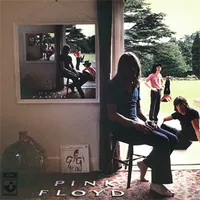
Recorded with David Gilmour firmly embedded in the band, Ummagumma is a live/studio double album that does no favours to their past, present or future.
The live album rakes over the psychedelic ashes, but the trip is audibly over. With the exception of Careful With That Axe Eugene, which creates its own suspense, there’s little spark as the band get the notes right but the spirit wrong.
The studio album gives each member half a side each to do their own thing, and proves conclusively that Pink Floyd is considerably more than the sum of its parts. The chaos might lead you into thinking that they were all on acid. Sadly, they didn’t even have that excuse.
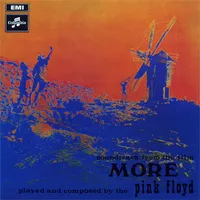
17. Soundtrack from the film More (1969)
It took a while to dawn on Pink Floyd that they were a great soundtrack band for their own increasingly spectacular light show. But their first foray into writing a film soundtrack is the aural equivalent of watching paint dry. It’s a disjointed series of mood pieces that may or may not have matched the scenes on screen.
It’s hard to know because the film, a bunch of nonsense about hippies in Ibiza, has wisely disappeared. If you’re desperate for crumbs then check out The Nile Song, Green Is The Colour and Cymbaline, songs that cropped up in their equally disjoined stage shows at the time.
Another soundtrack to another movie about another bunch of hippies, this time looking for a lost tribe in the remote Andes (which is probably where the film, titled La Vallee, has been buried). But the difference here is that you can see glimpses of how The Dark Side Of The Moon would pan out.
Floyd had already started work on their magnum opus before decamping to the Chateau d’Herouville (shortly to be renamed the Honky Chateau by Elton John) for an intense week of putting music to rushes of the movie.
The results are largely lightweight but Waters brings a more thematic approach to the album and Gilmour gets to hone what would become his trademark soloing style. There are also moments of deja-vu, not least on the title track which was shamelessly ripped off by a Denim aftershave advert in the late 80s.
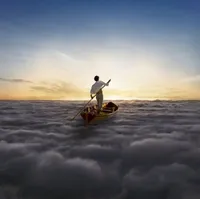
Two decades after The Division Bell album and tour effectively laid Pink Floyd to rest came this unexpected coda. It’s drawn from the jams between Wright, Gilmour and Mason as they geared up for The Division Bell but also serves as a stroll past familiar Pink Floyd musical landmarks.
It’s What We Do could be another part of Shine On You Crazy Diamond, Skins recreates the tumbling rhythms from A Saucerful Of Secrets and there’s even a snippet of Wright at the Royal Albert Hall organ twiddling with his theme to Summer 68 from Atom Heart Mother.
Gilmour has clearly been influenced by his dalliance with The Orb on 2010’s Metallic Sphere. Not that The Endless River is an attempt to woo the ambient crowd; it’s more of a treat for the loyal Pink Floyd fan to bask in the reverie one more time.
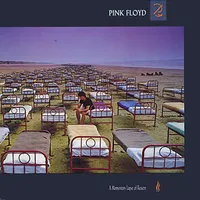
14. A Momentary Lapse Of Reason (EMI, 1987)
A Momentary Lapse Of Reason was cruelly dubbed a “facsimile Floyd” album by the Roger Waters camp, David Gilmour struggled to come up with the first Pink Floyd album without Waters, even with producer Bob Ezrin and various songwriters and lyricists helping out. With Nick Mason and Rick Wright barely participating you could argue that it was a Gilmour solo album except that it certainly didn’t sound like one.
More charitably you can call it Gilmour’s vision of a Pink Floyd album with his voice and guitar providing an instant familiarity. The opening Signs Of Life evokes the same atmosphere as the start of Dark Side Of The Moon, Dogs Of War would fit on the Animals album, One Slip could find a place on The Wall while A New Machine refers back to Welcome To The Machine.
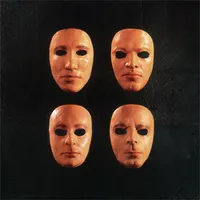
13. Is There Anybody Out There: The Wall Live 1980-81 (2000)
The Wall was performed just 29 times in Los Angles, New York, London and Dortmund. It remains legendary for its extraordinary visual impact and the music had to fit the technical requirements of the show as tightly as any soundtrack the band had worked on. Not surprisingly The Wall Live sticks closely to the original album.
There was, famously, a second “doppelganger” Pink Floyd that, apart from confusing the audience, filled out the sound. And there were a couple of additional numbers: What Shall We Do Now? which helped to clarify the plot a little and the instrumental The Last Few Bricks which gave the roadies more time to finish building the wall. Neither of them add anything to the original.
The only other differences are occasional variations in Waters’ vocal phrasing or Gilmour’s solos and only Floyd fanatics looking for these changes need this album.
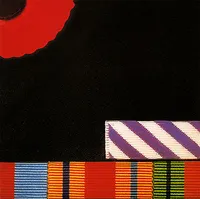
A Roger Waters solo album in all but name, The Final Cut is a disappointing Pink Floyd album but a good start to Waters’ solo career. Wright was no longer in the band while Gilmour and Mason were restricted to doing as they were told. The overall theme – the futility of war – was never going to be a barrel of laughs but without the other members distinctive sense of drama the atmosphere of unremitting gloom becomes overwhelming.
However The Final Cut has a greater sense of clarity than The Wall. It is also more bitter and vicious as the opening Post War Dream shows with its caustic attack on the nature of war. On The Fletcher Memorial Home Waters literally spits out his condemnation of the world’s “incurable tyrants”: Leonid Brezhnev, Ronald Reagan and Margaret Thatcher.
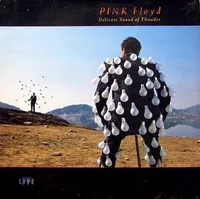
11. Delicate Sound Of Thunder (1988)
In September 1987, Pink Floyd headed out on their first tour in a decade. What was planned as a short series of North American shows expanded into 200 shows around the world spread over three years.
The live album recorded at New York’s Nassau Coliseum, opens with Shine On You Crazy Diamond with the rest of the first disc taken up by tracks from A Momentary Lapse Of Reason that stick pretty close to the originals. The second disc is a greatest hits package, starting with One Of These Days and then focussing on Dark Side Of The Moon and The Wall.
Gilmour seemed happy to give individual band members their own space and while there were complaints about the reggae rhythms on Money, Gilmour’s coruscating solo on Comfortably Numb brought the show to an awesome climax.
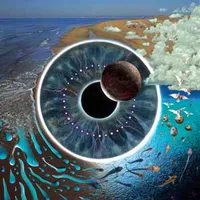
In the wake of The Division Bell Pink Floyd geared up for another, final, world tour but this time they planned ahead, especially when it came to staging and sound. They also took the decision to play Dark Side Of The Moon in its entirety.
Having released a live album from their previous tour they had not intended to record this one but the quality of the show proved irresistible. So another 2-CD package was born, again opening with Shine On You Crazy Diamond followed by tracks from The Division Bell and A Momentary Lapse Of Reason. It’s the second CD that hits the spot with the complete Dark Side Of The Moon and Wish You Were Here featuring the audience on lead vocals.
Some fans complained that the band stuck too closely to the originals. But not hi-fi buffs. If you want the stunning visual effects, get the DVD.
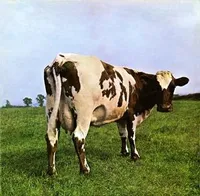
The first serious stirrings of ambition from Pink Floyd since Syd Barrett’s departure, Atom Heart Mother is dominated by the 23-minute title track that features an orchestra and choir. Such classical rock fusions had already been tried by Deep Purple, the Nice and the Moody Blues with varying degrees of success Pink Floyd avoided the potential pitfalls by keeping the arrangements simple. That the piece has not worn well over time is down to technical problems in the studio.
The opening brass bombast gives way to a series of mood changes that includes a celestial choir and, unusually for Pink Floyd, a funky section called Funky Dung. A pity the ending is rather inconclusive. Among the individual songs on the second side, Waters’ If stands out as a contemplative piece on alienation, a topic he would return to more forcefully later.
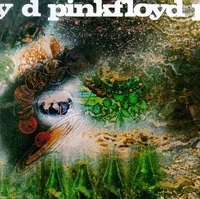
8. A Saucerful Of Secrets (1968)
With Syd Barrett gone, Pink Floyd were now forced to rely on their nascent songwriting. Even Barrett’s final bequest, Jug Band Blues, is dark and damaged compared with his earlier freewheeling gaiety. In their grim determination to continue, Waters’ and Wright’s songs were often weighed down by a plodding dirge-like demeanour while Gilmour was solely focussed on finding his place and sound within the band.
What saves the album is Waters’ brooding Set The Controls For The Heart Of The Sun and the 12-minute group-written title track that begins with some tentative scraping and scratching building up to a rhythmic cacophony that eventually gives way to a sonorous organ theme. It’s a template the band would return to on later albums with increasing finesse.
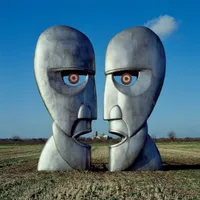
Their sole studio album of the 1990s makes a creditable fist of a Pink Floyd record without Roger Waters.
The David Gilmour-fronted band, not surprisingly, wishes it was back on the Moon, and the album has a studied elegance as the band rekindle the flame. There’s an easy familiarity running through the tracks as Floyd trademarks are deftly reworked with the benefit of better technology.
And after a momentary lapse of lyrics, there are some meaningful words floating around again, notably on What Do You Want From Me, Poles Apart, Wearing The Inside Out, Lost For Words and High Hopes. It would be their last album for 21 years.
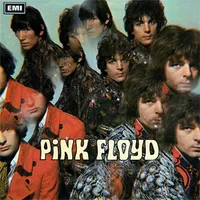
6. The Piper At The Gates Of Dawn (1967)
Pink Floyd’s first album is a sparkling testament to the genius of Syd Barrett, who wrote virtually the whole of this psychedelic masterpiece off the top of his head, so to speak.
With Barrett liberated by LSD, his songs take flight on a magic carpet of cosmic philosophy (Astronomy Domine, Chapter 24), surreal whimsy (Matilda Mother, Flaming) and sublime, nursery-rhyme lyrics (Scarecrow, Bike, The Gnome), bolstered by trippy, technicolour instrumentals (Interstellar Overdrive, Pow R Toc H). The rest of the band are willing and able fellow travellers.
The album remains the musical Mecca for British psychedelia. Sadly for Syd it was a brief flowering followed by a nervous breakdown.

The culmination of Pink Floyd’s endeavours through the 70s, The Wall is a dense, double-album diatribe on isolation, indoctrination, society and the bastards who try to control us.
From the bombastic opening In The Flesh to the surprisingly anti-climactic Outside The Wall, the plot is peppered with metaphors, flashbacks, nightmares and dreams. What saves it is the compelling musical drama that keeps you hanging in there while it all unravels.
Not that there’s an abundance of musical highlights; The Wall engrosses rather than titillates. But when the highlights do show up they’re memorable: Another Brick In The Wall Part 2 condenses Waters’ pessimism into one greatest hit, Hey You is an eloquent plea from the other side of the wall, while Comfortably Numb is awesome in its power and simplicity.

The first Pink Floyd album to reveal their real potential, Meddle took the ideas they had been playing around with for the previous couple of years and gave the band a sense of identity and direction.
That is vividly apparent on the trippy One Of These Days, where Roger Waters' hardcore, echo-drenched bass provides the (almost dancey-trancey) pounding bedrock for some superannuated keyboard and guitar flashbacks, plus an eerie snippet of the Dr Who theme.
It's more leisurely apparent on the epic 23-minute Echoes, which begins with a simple sonar ‘ping’ and builds, via a series of fragmented ideas, to a majestic crescendo before letting you down gently with a cosy glow.
Some of the rest of the album is filler, but you scarcely notice. Meddle is the sound of a band distilling their psychedelic past into a scintillating future.
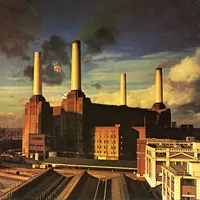
As stripped-back and direct as Pink Floyd ever got, perhaps because the band was now controlled by Waters, with Gilmour as his musical foil.
Animals shunned the widescreen musical soundscapes of their previous two blockbusters, and instead updated George Orwell’s Animal Farm for a bleak, withering observation of humanity.
Waters’ lyrical vitriol drips all over the greedy, conniving Dogs, the autocratic, self-righteous Pigs (Three Different Ones), and the downtrodden but finally rebellious Sheep. Those three epic tracks are book-ended by the disarming two-part acoustic love song Pigs On The Wing.
The prevailing musical atmosphere on Animals is sparse and brooding, with an occasional menacing edge when Gilmour’s guitar chords hack their way through the forbidding undergrowth. It’s not a pretty album, but then, it’s not meant to be.
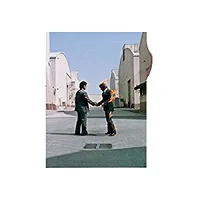
Putting it mildly, following The Dark Side Of The Moon was a daunting prospect. However, with Wish You Were Here, Pink Floyd rose to the challenge. What the album lacks in dynamics it more than makes up for with a controlled tension, which is evident from the taut opening keyboards and guitar that stretches to breaking point before David Gilmour’s four-note arpeggio exquisite release.
Shine On You Crazy Diamond opens and closes the album: a eulogy to the pervading ghost of Syd Barrett, and it's the finest track the band wrote without him. The acerbic Welcome To The Machine and the cynical Have A Cigar rage against the system, while the melancholy of the title track offers a stark contrast. Wish You Were Here may not contain the pizzazz of its illustrious predecessor, but it cuts deeper.
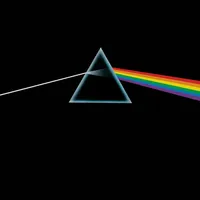
1. The Dark Side Of The Moon (1973)
One of the most consummate rock albums ever recorded, Pink Floyd's The Dark Side Of The Moon was an ambitious, ground-breaking concept that has gone on to become a timeless classic.
Themed around the pressures of modern life and the insanity those can provoke, the record’s dynamic sound reinforces the songs’ contrasting images: from the paranoia of On The Run to the seductive requiem that is The Great Gig In The Sky.
The impact is heightened by linking sound effects, often integrated into the songs – the cacophony of clocks at the beginning of Time; the till-ringing jangle that opens Money.
The Dark Side Of The Moon is a carefully measured album that took a lot of effort to make, but the result possesses a vitality that still has the power to thrill.
Sign up below to get the latest from Classic Rock, plus exclusive special offers, direct to your inbox!

Hugh Fielder has been writing about music for 50 years. Actually 61 if you include the essay he wrote about the Rolling Stones in exchange for taking time off school to see them at the Ipswich Gaumont in 1964. He was news editor of Sounds magazine from 1975 to 1992 and editor of Tower Records Top magazine from 1992 to 2001. Since then he has been freelance. He has interviewed the great, the good and the not so good and written books about some of them. His favourite possession is a piece of columnar basalt he brought back from Iceland.
