


The knock-on effect of ZZ Top’s breakthrough 1973 album, Tres Hombres, was a huge popularity spike. The were no longer just that little ol’ band from Texas. Already invested in a relentless touring cycle, they suddenly found themselves playing to sold-out venues across the States. By September 1974, with the album having gone gold and lead single La Grange a hit, the band were headlining ZZ Top’s First Annual Texas-Size Rompin’ Stompin’ Barndance & Bar B.Q., attracting some 80,000 punters.
The festival was held at the Memorial Stadium at the University of Texas in Austin. Also on the bill were Joe Cocker, Santana and Bad Company, the latter featuring a guest turn from Jimmy Page. ZZ Top eclipsed them all, fetching up in sequined jumpsuits and indulging in pyrotechnics and goofy stage routines. They returned for two encores. The concert brought in the equivalent of $4 million in today’s money.
The preceding tour also directly informed the trio’s next move. At the Warehouse in New Orleans that April, manager Bill Ham arranged for the show to be recorded. The Record Plant Mobile Truck was duly commissioned to capture ZZ Top in all their live vigour. A month later, jamming backstage at a rodeo arena gig in Florence, Alabama, Billy Gibbons hit on a dirty boogie riff that wouldn’t let up. Dusty Hill improvised a vocal over the top. Three minutes later they had a new song, Tush. Gibbons borrowed the title from Tush Hog, a 1966 instrumental by fellow Texans The Roy Head Trio.
Selected live recordings from New Orleans would constitute side one of Fandango!, ZZ Top’s next album. Initially released by Dallas rock’n’rollers The Nightcaps in 1960, Thunderbird is a lively enough opener. And while a souped-up version of Jailhouse Rock feels pretty superfluous, it’s the near-10-minute Backdoor Medley that reconnects the band to their blues roots.
The medley segues between Gibbons/Ham co-write Backdoor Love Affair (from ZZ Top’s First Album) to Willie Dixon’s Mellow Down Easy and John Lee Hooker’s Long Distance Boogie. It’s all “captured as it came down - hot, spontaneous and presented to you honestly, without the assistance of studio gimmicks,” as the sleeve blurb puts it.

Side two, by contrast, is purely new studio recordings. “We had enough live material to make up one side of the disc, so we decided to go with the unusual move of making the album half live, half studio,” Gibbons later reasoned to Music Radar. “It turned out to be a winning combination for us.”
The biggest winner is the aforementioned Tush. Despite its less-than-taxing verses (“I said, Lord, take me downtown / I’m just lookin’ for some tush”) it proved an instant classic, giving ZZ Top their first Top 20 hit in the U.S.
“As for the lyrics, it’s not exactly Bob Dylan,” conceded Gibbons. “[But] Tush felt good from a musician standpoint. You can never tell what’s going to be a hit or not. We were enjoying the recording experience, figuring out how to grab
a moment and making it repeatable.”
Fandango!’s other great moment is the breakneck Heard It On The X. Paying homage to the ‘border blaster’ radio stations of their youth, which pumped out music from the Mexican city of Juárez via stations in El Paso, the song finds both Gibbons and Hill in full voice, testifying to the sheer power of the experience: “Do you remember / Back in 1966? / Country Jesus, hillbilly blues / Where I got my licks / From coast to coast and line to line / In every county there / I’m talkin’ ’bout that outlaw X / He’s cuttin’ through the air.”
Released in April ’75, Fandango! mirrored the success of Tres Hombres by going Top 10 on Billboard. It was also the first ZZ Top album to trouble the UK charts, albeit at a modest No.60. By the end of the year, according to Newsweek, Fandango! was still shifting 50,000 units per week. The magazine also noted that the band had outdrawn Elvis Presley in Nashville and broken Led Zeppelin’s attendance record for New Orleans. Ever the droll commentator, Gibbons accounted for ZZ Top’s appeal as “honest ignorance”.

People tend to go big in Texas. On the back of Fandango!’s success, and no doubt fortified by the Memorial Stadium event, ZZ Top cooked up the Worldwide Texas Tour. Kicking off in May 1976 in North Carolina, the tour lasted more than a year and a half, covering more than 100 shows in five separate bursts.
It wasn’t just the time frame that was ambitious. In an attempt to “bring Texas to the people”, the band appeared on a 35-ton stage that resembled their home state. The backdrop was a giant hand-painted desert panorama with elaborate lighting effects. Amidst a variety of native fauna – cacti, yucca, agave – ZZ Top also shared the space with a bunch of live animals. On any given night you were liable to encounter buzzards, a black buffalo, tarantula spiders, a Texas Longhorn steer and a plexiglass pyramid crawling with diamondback rattlesnakes,.
“They were actually treated better than we were!” Gibbons recalled to NME in 1994. “That tour was handled by a guy who was a specialist in animal handling. It was well done, a lotta fun. In Pittsburgh, the buffalo gets loose and he’s chargin’ around the arena, didn’t know where to go, things like that. But we just kept on playin’.”
Things got off to an ominous start. Opening night at Groves Stadium in Winston-Salem was preceded by hailstorms, tornado scares and a heavy four-day downpour. Plans to visit Europe, Japan and Australia were cancelled due to animal quarantine restrictions. ZZ Top pushed on regardless, building up further dates in arenas and auditoriums across the US, variously supported by Lynyrd Skynyrd, Aerosmith, Ted Nugent, Blue Öyster Cult and REO Speedwagon, to name but a few. By the time they finally signed off in Amarillo on New Year’s Day 1978, ZZ Top had played to more than 1.2 million fans.
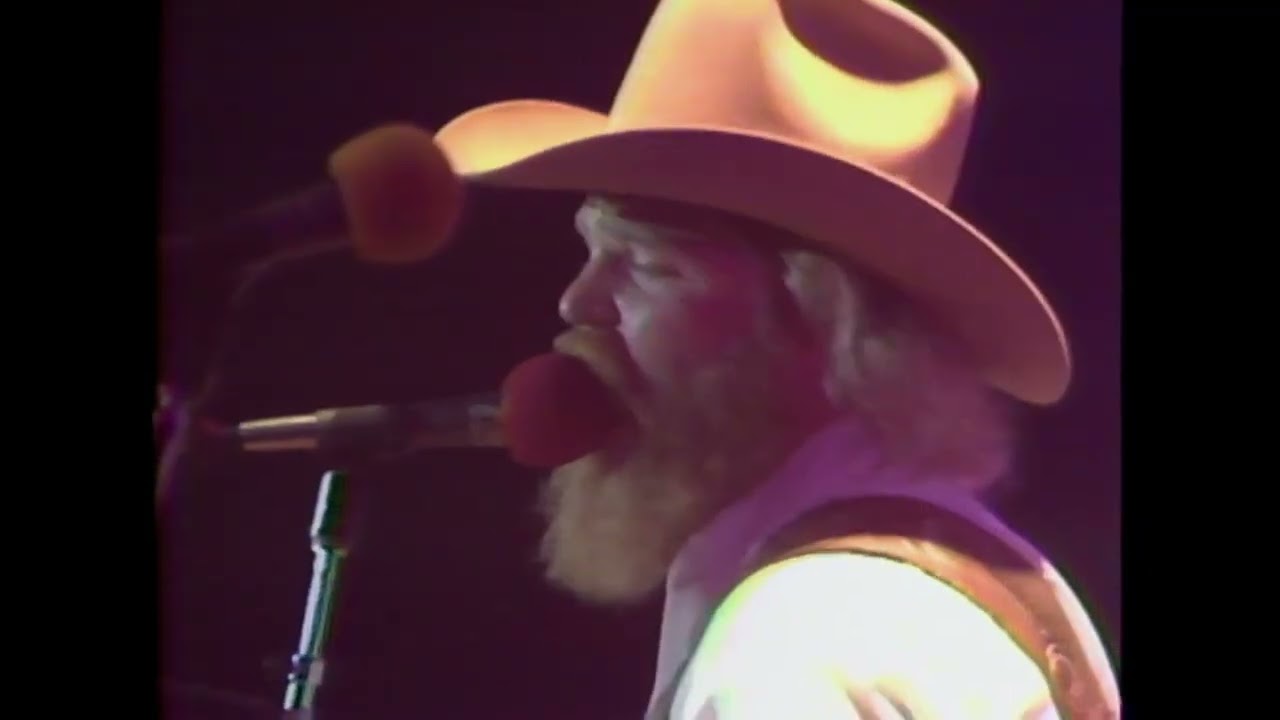
Sometime during the first two legs of the Worldwide Texas Tour, ZZ Top booked themselves into the studio. The resultant Tejas (a Spanish translation of ‘friend’ in the Caddoan language endemic to the Southern states) is a fascinating affair. It’s the sound of a band beginning to toy with formula and expectation, not in any drastic sense, but by gentle degrees. Having alighted on a signature sound with Tres Hombres and Fandango!, it’s as if ZZ Top were a little dissatisfied with who they were.
“It’s fair to say that this is a transitional record, although I’m not really sure what we were transitioning from and what we were becoming,” Gibbons told Music Radar. “It may be representative of how rapidly things were changing in the studio. The equipment was becoming more modernised, and the way that music was being recorded was different – things were moving faster. It was still pre-digital, but there was better gear that was more readily available. We made use of it all.”
El Diablo is a pertinent illustration of ZZ Top’s altered stance. Low-key and delicate, it feels like a requiem of sorts for the titular anti-hero it portrays. “He lived by the luck of the draw,” sings Gibbons, in uncharacteristically tender mode. “Now and then and again / Found him steppin’ outside of the law.” Hunted down like a dog, El Diablo finally bids farewell as he attempts to escape the noose in county jail. It’s the kind of gunfighter ballad that made Marty Robbins’ reputation.

A mild country breeze wafts through Pan Am Highway Blues, one of three tracks that find Gibbons and Hill sharing vocals. Like El Diablo, the subject is loss. Only this time it’s an absent lover, rather than freedom, that’s being lamented: “It’s gettin’ hard to see the white line rollin’ by / I can’t forget her memory deep inside.” The track also affects a vaguely Hawaiian swing at times. Similarly, Asleep In The Desert is an instrumental Tex-Mex border ballad suggestive of Ry Cooder.
That said, the trio are clearly mindful of their fanbase. Arrested For Driving While Blind may not be the best advert for staying sober behind the wheel – “Now just the other night with nothin’ to do / We broke a case of proof 102 / And started itchin’ for that wonderful feel / Of rollin’ in an automobile” – but musically it’s primetime Top, all bluster’n’boogie. Ten Dollar Man rocks even harder, finding a companion in the lean It’s Only Love, in which Gibbons unloads a heroic harmonica solo.
Eclecticism is key throughout Tejas. She’s A Heartbreaker is a feast of twanging country-blues, with a cameo from violinist Lenny Solomon. And while the licks that pepper Avalon Hideway are decidedly funky, the playful Snappy Kakkie (“I say hey, snappy kakkie! / I said what you say! / The water she is nice we can steal away / They’ll never know we’re gone ’til the break o’ day”) carries more than a dash of peppy Memphis soul.
Tejas was released in November ’76, as the second leg of the Worldwide Texas Tour wrapped up. The momentum saw it quickly turn gold. But with hardcore fans perhaps slow to warm to its shifts in temperature, and possibly influenced by a less enthusiastic music press, it peaked at No.17 in the US. Lead single It’s Only Love failed to make the Top 40, albeit marginally. Arrested For Driving While Blind fared much worse. For ZZ Top though, it was a meaningful artistic statement.
“This period was the wrinkle that kind of suggested what was to come,” explained Gibbons, “and change would become a necessary part of the ZZ Top fabric.”
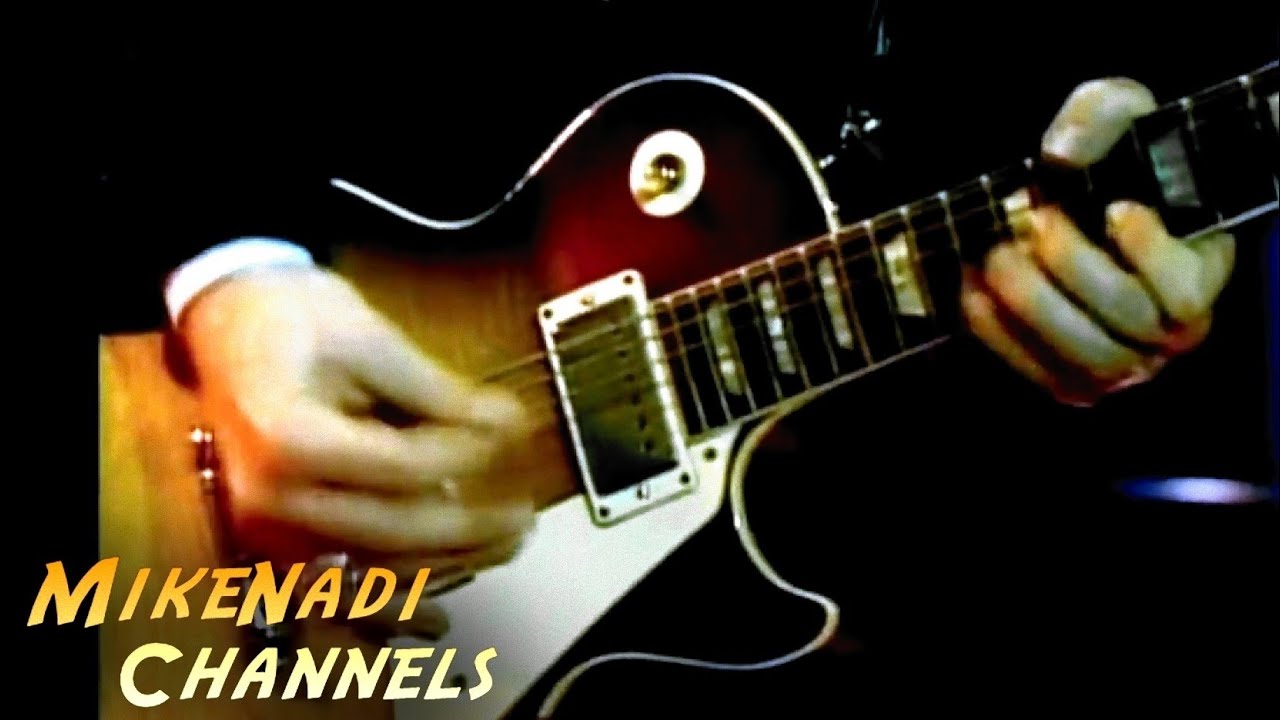
Unsurprisingly, the Worldwide Texas Tour took its toll. The band were clearly exhausted, not just as a direct consequence, but in the cumulative wake of nearly seven years on the road. They decided to take a break. Gibbons spent some time in Europe, Beard went to Jamaica, Hill headed for Mexico.
It all sounded fairly idyllic. But, unbeknownst to fans and press alike, Beard was also undergoing rehab for his drug addiction.
“At the back of my mind I knew that I needed to kick heroin, I needed to stop doing cocaine,” he later explained in the documentary ZZ Top: That Little Ol’ Band From Texas. “I had done it all and I couldn’t go any further… So I went to a 12-step programme; I just wanted to get sober. I wanted to be like people I admired that could sit home and watch TV and go to bed, and that was OK [for them].”
What was supposed to be a short band hiatus instead became much longer. Implausible as it sounds, Hill satisfied his need to “feel normal” by taking a job at Dallas Fort Worth airport.
“We were well-known, but I had a short beard, regular length, and if you take off the hat and shades and wear work clothes and put ‘Joe’ on my work shirt, people are not expecting to see you,” he told Ultimate Classic Rock in 2019. “So it’s not that hard to pass yourself off. A couple of times, a couple of people did ask me and I just lied and said, ‘No! Do you think I’d be sitting here?’”

Gibbons, meanwhile, kicked back in Paris for six months with some avant-garde artists he’d known back home, “going to the hangouts, drinking wine, getting into the esoteric side of things”. He followed this with three months in London.
“The punk scene was taking over, and I hit a couple of famous punk destinations,” he recalled to Classic Rock in 2021. “I had thrown the razors aside, which was certainly not the trend at the time. I was oddball, I was embraced. And I came back home with a full dose of something new.”
When ZZ Top finally reconvened in April 1979, they were ready to embrace a fresh challenge.
“It was just as easy sliding back into it as it was sliding out of it,” Hill told Kerrang!. “We all just found ourselves back at the same time. It was great fun, because we were all excited about things we’d experienced and ready to get back and put some of the ideas to work in the music.”
But it wasn’t quite business as usual. They looked different.
“We just all showed up in Houston,” added Gibbons, “and Dusty and I had grown these beards.”

As Hill and Gibbons were cultivating their impressive face fuzz, manager/producer Bill Ham had been busy negotiating with a new record company. The contract with London Records had run its course and Warner Bros. were eager to step in. Ham agreed to bring along ZZ Top’s back catalogue to sweeten the deal.
It was now almost three years since Tejas. The band settled into the studio and started putting their new ideas into action for what would become Degüello. Hill doubled up on bass and keyboards, while each member also took on sax. Aside from investing things with a little punk physicality, Gibbons, in particular, was interested in adding fresh technology. His latest favourite effect was a pitch shifter.
Another new addition (for ZZ Top) was clavinet. Gibbons had been wowed by Isaac Hayes’ clavinet part on Sam & Dave’s I Thank You and was determined to use it on their own version.
“ZZ Top, in the studio, sometimes became a five and six-piece band, by way of whatever we were adding to the sound,” he recalled to Music Radar. “One of the key pieces here was the use of that clavinet. We put it on I Thank You, Cheap Sunglasses – it started showing up on a lot of tracks. Sometimes change is hard to take for some people, but we knew how far we could push things for our fans.”
Cover songs were a first in the studio too. Aside from I Thank You, the band tackled Robert Johnson’s Dust My Broom. The former is heavily indebted to its 60s Stax source, with the Top leaning into a soulful Memphis chug. Dust My Broom, by contrast, snaps and pops with jolting electricity, dominated by Gibbons’ spidery slide runs. As for original songs, there was a greater balance between tough-edged blues and R&B this time around, and a more concerted effort to work in the themes that would ultimately define their 80s superstar years, namely cars and girls.
She Loves My Automobile is a direct precursor to the turbo-sex fixations of Eliminator: “Well she don’t care if I’m stoned or sloppy drunk / Long as she got the keys and there’s a spare wheel in her trunk.” It’s implied, too, in the bluesy tarmac groove of I’m Bad, I’m Nationwide, while the lovelorn A Fool For Your Stockings feels like a less pop-savvy template for Legs. “I may not want to admit it,” sings Gibbons, part lech, part anguished blues balladeer, “I’m just a fool for your stockings I believe.”
The pitch shifter is put to fullest use on the bizarre Manic Mechanic, its itchy cadence more akin to new wavers Devo than hairy boogie monsters. It isn’t a particularly successful experiment, but it does at least provide evidence of a band prepared to fail in pursuit of something new. And while you could say the same for the texturally light Esther Be The One, Degüello’s clear standout is Cheap Sunglasses.

Lyrically dry and rhythmically spare, the song is quintessential Top. Yet even here there’s a modernist sheen, Gibbons fiddling with various pedal effects and tagging the verses with a ring modulator. “Now go out and get yourself some thick black frames / With the glass so dark they won’t even know your name,” he orders.
The band lived it to the hilt. The inner sleeve of Degüello depicts the threesome in matching white jackets and black berets, sunglasses fixed to their faces. Each of them carries a saxophone across their chest. Labelling themselves ‘The Lone Wolf Horns’, they look like beatniks from a forgotten jazz cellar.
On release in November ’79, the album was their first to go platinum in the States. The diehards had evidently missed ZZ Top. The supporting tour introduced their beardy new look, with Gibbons and Hill showing off chin furniture that fell down over their chests. The band’s defining image was taking shape; so was the music.
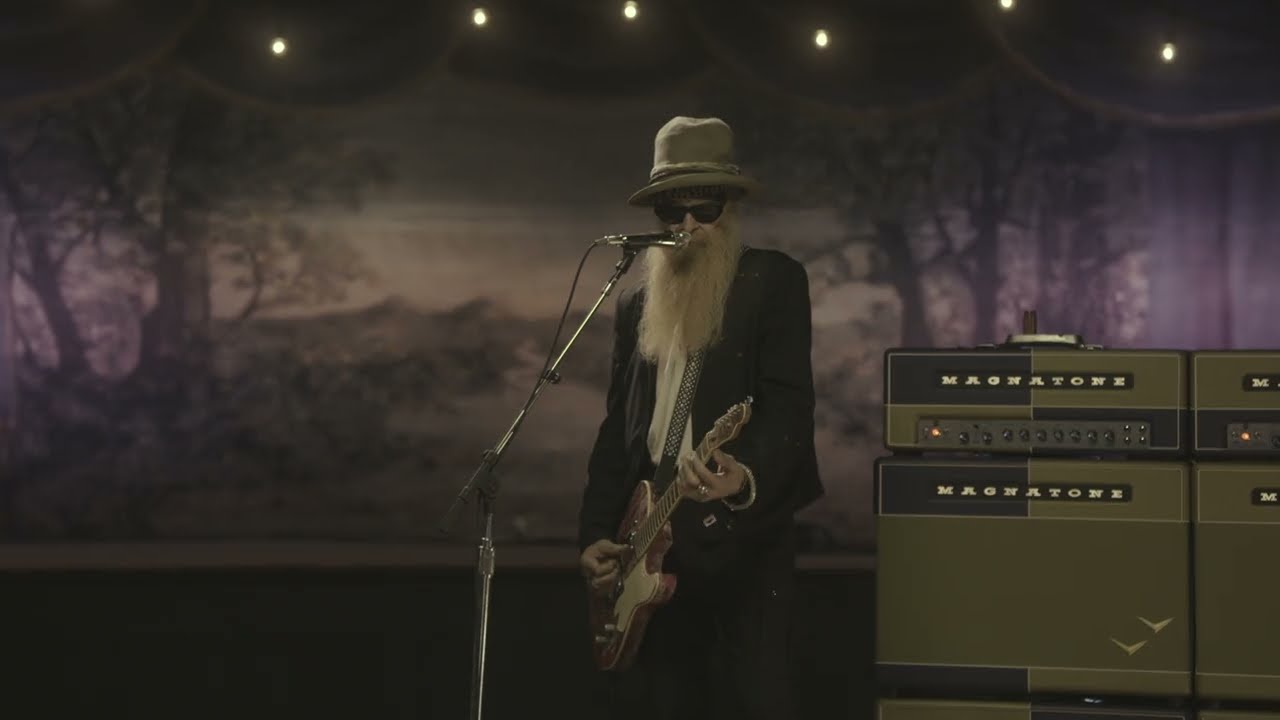
If Degüello was transitional, the same could be said for 1981’s El Loco. Gibbons’ fascination with new technology had drawn him to the synthesiser, the instrument of choice for droves of new wave acts. Already in thrall to the improvised collaborations of Robert Fripp and Brian Eno, a shared bill on BBC TV’s The Old Grey Whistle Test brought him – and the rest of ZZ Top – into contact with Orchestral Manoeuvres In The Dark.
OMD’s wholesale use of synths was an unlikely inspiration. So, too, were the bobbing moves of vocalist/bassist Andy McCluskey, leading Gibbons and Hill to adopt synchronised dancing onstage. With laser beams, pyrotechnics, cheap sunglasses and matching sparkly shirts, ZZ Top were now becoming quite the all-round entertainers.
El Loco’s synths were played by recording engineer Linden Hudson.
“He brought some elements to the forefront that helped reshape what ZZ Top were doing, starting in the studio and eventually to the live stage,” Gibbons explained. “Linden had no fear and was eager to experiment in ways that would frighten most bands. But we followed suit, and the synthesisers started to show up on record.”
While Tube Snake Boogie and Pearl Necklace showed that ZZ Top’s fondness for innuendo remained intact, the likes of Groovy Little Hippie Pad and Leila (a soft-rock ballad that bore little resemblance to anything they’d done before) proved that the trio were only too willing to adapt to the times.
As with its immediate predecessor, El Loco was variable in quality. It sold well enough, but the band’s real acceleration point, with synthesisers to the fore, was just around the next bend.
“The wheels were turning, the scenery was changing, and we were having a field day playing around with these crazy machines that were making wicked sounds,” Gibbons enthused to Music Radar. “For us, there was no turning back.”

