Prog, power-balladry and arena rock: Nine Styx albums you should listen to and one to avoid
Selling 50 million-plus records over more than five decades, Styx are the kings of pomp rock
Select the newsletters you’d like to receive. Then, add your email to sign up.
You are now subscribed
Your newsletter sign-up was successful
Want to add more newsletters?
The roots of Styx lie in early-60s Chicago, where drummer John Panozzo and twin brother Chuck, a guitarist-turned-bassist, hooked up with singer and pianist Dennis DeYoung as The Tradewinds. The band struggled for years before acquiring guitarists James ‘JY’ Young and John Curulewski, signing to RCA subsidiary Wooden Nickel.
Renamed Styx – after the river that divided the Earth from the Underworld in Greek mythology – they played heavy prog on their first four albums, but it was a DeYoung ballad, Lady, that gave them their million-selling breakthrough hit in 1975. Their mastery of the idiom would transform Styx into one of the US’s biggest rock acts.
Signing to A&M for 1975’s Equinox, it was the arrival of pretty-boy Tommy Shaw, replacing Curulewski on guitar, that cemented the definitive Styx line-up. With Shaw and JY delivering the hard rock anthems, and DeYoung – the Barry Manilow of rock – providing the power-balladry and theatrical flourishes, Styx became an arena-rock behemoth. But creative friction between Shaw and DeYoung prompted them to split in 1984.
Since then, the history of Styx has been turbulent. Their first reunion, minus Shaw, produced just one album, and when Shaw did return in 1995, John Panozzo tragically died. Styx hired new drummer Todd Sucherman, but DeYoung left the band in 1999 after being struck down with a rare virus that rendered him extremely sensitive to light. And in 2001, after Canadian singer Lawrence Gowan replaced DeYoung, Chuck Panozzo revealed that he had contracted HIV, which he has continued to battle while serving as a bit-part player in the band.
The Mission (released in 2017) was Styx's first album of original material since 2003's Cyclorama, and while those multi-million sales might be a thing of the past, the album signalled a return to (progressive rock) form, with two subsequent releases (2021's Crash Of The Crown and 2025's Circling From Above) both extremely well received. In 2026, Styx continue to tour, with a lineup that includes Shaw, JY, Sucherman and Gowan, plus multi-instrumentalist Will Evankovich and bass player Terry Gowan, brother of Lawrence.
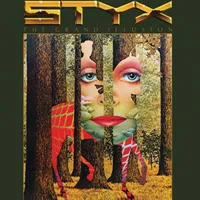
The Grand Illusion (A&M, 1977)
It was with their seventh album (released on 7/7/77, and their first to go platinum in the US) that Styx graduated to the superstar league. DeYoung’s title track is an appropriately pompous prog-rock overture, Shaw’s Fooling Yourself is a Yes-inspired anthem, and James Young’s Miss America a stinging rocker with a pro-feminist agenda.
But most famous of all is Come Sail Away, a fantastical power ballad/prog hybrid that finds spiritual salvation aboard an alien spaceship. Even after South Park’s Cartman murdered the song in the 90s, it remains DeYoung’s masterpiece.
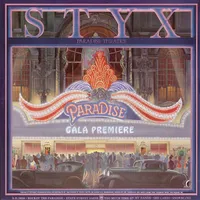
For a band schooled in progressive rock, it was the sweetest of victories: in the era of new wave, this old-fashioned concept album topped the US chart, the only Styx album to do so. According to DeYoung, the album’s tale of a fictional Chicago music hall served as a metaphor for a rapidly changing America.
Filled with great tunes, its biggest hit was another DeYoung ballad, The Best Of Times. Shaw’s futuristic Too Much Time On My Hands also hit the Top 10. And in the stagey Rockin’ The Paradise, DeYoung revealed his love of camp musical theatre.
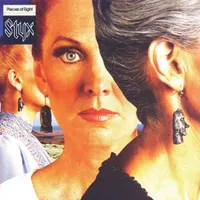
A second consecutive triple-platinum seller, Pieces Of Eight is also the heaviest album that Styx ever made. With enigmatic cover art by Hipgnosis, the album has an existentialist theme, an anti-materialist message powerfully expressed in DeYoung’s title track.
Allied to this lofty art-rock sensibility is a gritty rock edge, evident in JY’s Great White Hope, and two Shaw songs that became top 30 hits: Renegade and Blue Collar Man (Long Nights). Shaw claims that the latter’s staccato riff was inspired by his motorboat’s engine spluttering – as if he’d never heard of Deep Purple!
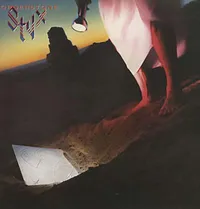
When Tommy Shaw joined the band, Styx raised their game. gaining not only a fine guitar player, but also a third major songwriter. Shaw co-wrote four songs on Crystal Ball, and the title track was his alone, reminiscent of Harvest-era Neil Young before climaxing in classic Styx style with power chords and zesty high vocal harmonies.
But there are great songs throughout, from Put Me On, with its Queen-alike histrionics, to the epic Clair De Lune/Ballerina. Crystal Ball only made No.66 on the Billboard chart, but it set the template for Styx’s future success.
The song that gave Styx their only US No.1 single was Babe, written by Dennis DeYoung for wife Suzanne, which drove sales of Cornerstone to over two million. Adopting a more contemporary mainstream sound, they still rocked out – most notably on Eddie, JY’s warning to Presidential hopeful Ted Kennedy.
There was also a prog influence in Shaw’s Love In The Midnight, and a folk flavour to his brilliant Boat On The River. But DeYoung’s material – Babe, disco crossover Why Me, and gloopy love song First Time – was steering Styx into the middle of the road.
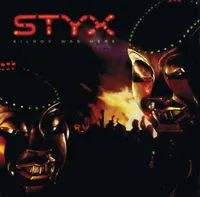
Another concept album, this time a full-blown rock opera. With a plot lifted from the Rush album 2112, Kilroy… is a sci-fi fantasy in which the titular hero battles a fascist regime for the right to rock. In parts, it’s brilliant. Gonzoid top three hit Mr Roboto is a work of genius bordering on insanity, DeYoung hamming it up over a disco-rock beat.
The equally gonzoid Heavy Metal Poisoning is an excellent anti-censorship satire. But half of Kilroy... is weak, plot-driven filler. While the album sold over two million, the stage show proved financially disastrous, and a squabbling Styx imploded.
In late ’74, Styx got lucky. After four underperforming albums, they signed with A&M, while the ballad Lady, originally from 1973’s Styx II, belatedly powered into the Top 10.
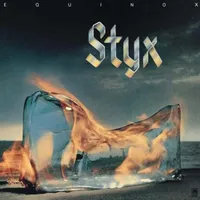
Equinox, didn’t break the Top 40, but it did produce a hit in Lorelei, a joyous pop-rock tune, and was the strongest Styx album to date. Outgoing guitarist John Curulewski co-wrote the rowdy Born For Adventure and the trippy Mother Dear, both themed on hedonism and excess. But the album’s best and most overblown song is Suite Madame Blue, DeYoung’s hymn to America.
Crash Of The Crown (UME, 2021)
The last thing we need is a bunch of successful AOR veterans telling us they’re determined to look on the bright side of life. And yet Styx’s 17th album succeeds admirably in its upbeat message.
Fight Of Our Lives is a gung-ho anthem in which Asia-style vocal harmonies are punctuated by pugnacious riffs and proggy synth flourishes. Reveries is a stirring rocker redolent of ELO, and the title track could be a lost Queen track, Lawrence Gowan sounding like Freddie Mercury arisen from the grave. As positivity goes, then, way more tonic than toxic. (JS)
Circling From Above (UME, 2025)
It’s not a bona fide concept LP à la 2017's The Mission, but Styx’s 18th album Circling From Above continues Styx's recent prog-orientated renaissance, and old-hands JY, Shaw and Panozzo all sound galvanised and vital.
If there’s initially a Supertramp-circa-The Logical Song-vibe to The Things That You Said, it soon opens out into ELO-ish territory. Elsewhere, Blue-Eyed Raven’s Greek folk elements and The Devil Went Down To Georgia-style fiddle – courtesy of guest musician Aubrey Haynie – suggest the band’s touchstone is Boat On The River, from 1979's Cornerstone album. (JM)
...and one to avoid
You can trust Louder
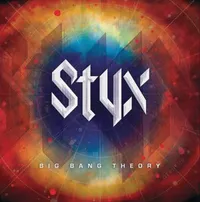
Big Bang Theory (New Door, 2005)
In 1999, Styx returned, with Tommy Shaw back on board. Brave New World was billed as the band’s big comeback, but it was hopeless, featuring Dennis DeYoung’s appallingly titled High Crimes And Misdemeanors (Hip Hop-cracy).
Equally bad was Styx’s album of rock standards, Big Bang Theory, which came out in 2005. It would be their highest-charting album for 14 years, but plodding through The Beatles’ I Am The Walrus, Hendrix’s Manic Depression and other old favourites, Styx simply sound like a bar band, and not a particularly good one.
Sign up below to get the latest from Classic Rock, plus exclusive special offers, direct to your inbox!
Freelance writer for Classic Rock since 2005, Paul Elliott has worked for leading music titles since 1985, including Sounds, Kerrang!, MOJO and Q. He is the author of several books including the first biography of Guns N’ Roses and the autobiography of bodyguard-to-the-stars Danny Francis. He has written liner notes for classic album reissues by artists such as Def Leppard, Thin Lizzy and Kiss, and currently works as content editor for Total Guitar. He lives in Bath - of which David Coverdale recently said: “How very Roman of you!”
- James McNair
- Johnny Sharp
- Fraser LewryOnline Editor, Classic Rock