


Terrace chants, Steve Marriott’s dog and Hendrix’s guitar pedal… the lesser undulations in Pink Floyd’s 1971 textural opus Meddle built a cultural tsunami. In 2011 Prog revisited the unsung masterpiece that changed the band – and its genre – for ever.
Ping. That sound, like a sonar signal.
Ping. Or a radio signal from deep space.
Ping. Or a heart monitor, measuring out a life.
Ping. Incrementally.
The ’ping’ on the opening and close of Echoes was, as we all know, produced by Richard Wright playing a single note on a concert grand piano and feeding the signal through a Leslie rotating speaker. It’s a perfect opening – as iconic in its way as Elvis Presley belting out ‘Well since my baby left me...’ at the start of Heartbreak Hotel, or death knocking at the door at the start of Beethoven’s Fifth.
Echoes is the centrepiece of Meddle, an album now widely regarded as the one where Pink Floyd got everything just right. In Meddle you can almost hear The Dark Side Of The Moon and Wish You Were Here – and even The Wall. You couldn’t necessarily say the same about Atom Heart Mother or Ummagumma. Those albums, brilliant as they are in their way, are still the sound of the Floyd finding their way, trying to escape from the shadow of their brilliant erratic insufferable genius ex-front-man Syd Barrett.
They had come a long way from the hallucinogenic whimsy of Piper At The Gates Of Dawn and its less satisfactory follow-up A Saucerful Of Secrets. The psychedelic chaos was left behind and a new Pink Floyd emerged. They were still adventurous and experimental, but they were also more structured and stable.
By the end of the 60s they had developed into a formidable live touring band. Meddle, an album that revelled in its use of the recording studio, was also the first album to capture some of the potency and excitement of the live experience. After its release nobody called them ’the’ Pink Floyd. The kids who bought it in 1971 didn’t ask, ‘Where’s Syd?’ – they increasingly asked, ‘Who’s Syd?’
It’s now generally agreed that Meddle was the point where Pink Floyd as we know them really began. There’s the fizzing energetic opener One Of These Days which is the blueprint for half of the songs on Dark Side. The soundtrack music they’d recorded was there to serve a function: it was atmospheric. But they weren’t great songs. One Of These Days is Pink Floyd 2.0.
While in their early incarnation they were a pop band as well as a psychedelic free-form freakout band – Arnold Layne and See Emily Play both being hits – the subsequent years saw them completely lose interest in the singles chart. In that way they were going with the flow of their contemporaries, becoming an albums focussed band. But One Of These Days, a great song (despite not having words other than a spoken phrase) proved they were still able to turn out something approachable when they felt like it. It remains one of the best Floyd songs ever recorded. According to David Gilmour in a recent interview, it’s one of the songs where their work was at its most collaborative.
“We’d done the individual solo tracks and decided that we worked better together,” says Nick Mason. “There wasn’t any great plan when we did Meddle other than it would be a group effort. We weren’t under any pressure from EMI to release anything. There was no concept. I don’t think we had anything already written when we went into the studio. After Ummagumma and Atom Heart Mother, we thought, I suppose, that we should maybe make a group album, something that was maybe a reflection of where we were going live.”
“It’s got that sound, hasn’t it?” says Steven Wilson, a long-time champion of Meddle. “That 1971 sound. It’s so warm and organic and so golden; and there’s something about that. Things were just coming out of psychedelic music and the influence was still there, not completely gone.”
It’s an album that they started without any overarching ideas as to what it was going to be. Although Echoes is the centrepiece, there are other songs like One Of These Days and Fearless that are just as important.
We signed a contract that gave us a slightly reduced royalty in return for unlimited studio time. Only The Beatles had a similar deal
Nick Mason
“They were just back from the US,” recalls engineer John Leckie, first recruited as a tape operator but eventually credited as engineer. “I remember Dave Gilmour had just got the same wah-wah peddle that Jimi Hendrix used. The seagull sound you hear on Echoes is that, the Cry Baby. Hendrix died in the middle of recording, which I think affected them a bit.”
They had also worked in Italy on the soundtrack for Michelangelo Antonioni’s counter-culture film Zabriskie Point. The band arrived tired and jet-lagged and were booked in the studio from midnight until six. It was to prove a frustrating experience as the Italian director rejected a lot of the music they’d recorded.
“I don’t think he exactly hated it,” says Nick Mason, “but it’s difficult when someone else has the music in mind for a particular sequence of film. Antonioni wanted total control, and the only way he could have control of the music was to be able to select from lots of different versions.

"Whereas when we’d worked with Barbet Schroeder [director of More and La Vallée, both films with Floyd soundtracks] he would give us the brief, we’d go off and do it; generally he said, ’Yes, fine’ and we moved on. Zabriskie Point was a bloody hard slog.”
Much of Meddle’s success is down to the fact that their label, not really having much of a clue about Pink Floyd other than that they sold lots of records, pretty much left them to their own devices. “We’d just signed a new contract that gave us a slightly reduced royalty in return for unlimited studio time, ” Mason says. “I think only The Beatles had a similar deal at the time.”
Pink Floyd were one of the first bands to be allowed to produce their own albums. Peter Brown – who’d worked with them on Atom Heart Mother – and Leckie recorded and engineered the bulk of the recording work at London’s Abbey Road studio. “They were left alone,” recalls Leckie. “Colin Miles, the only person at EMI who could ’relate,’ used to turn up occasionally with a couple of bottles of wine. Maybe some spliff. They worked hard, though; it wasn’t a party.”
Echoes, for me, is the quintessential, ultimate epic … It just has a perfect shape
Steven Wilson
Floyd weren’t at the stage where they could afford a garage full of sports cars, but they were making a fairly good living from touring and recording. They were starting to experience success in the US and had just returned from there when they started work on Meddle. Leckie remembers the atmosphere in the studio was good: “They weren’t really different to any other band. It was quite energetic; everyone had a say. Nick came up with a lot of the crazier ideas. It’s his voice through a ring modulator that you hear on One Of These Days saying ’One of these days I’m going to cut you into little pieces.’ Rick contributed a lot. Roger and Dave were running the show but everybody was contributing..
As the band recorded at Abbey Road, sometimes bringing in ideas they’d worked on at home, they continued to gig, setting up the gear in the studio then going off at night to play headline shows at colleges and polytechnics. “We were trying out a lot of stuff live at that time,” says Mason. Echoes, at that time a series of unconnected parts labelled Nothing (there was Nothing Part One through to Part 36) eventually took shape when they debuted it at a gig in Norwich in April, listed under its working title Return of the Son Of Nothing.
The band were now pushing the possibilities of the studio. Mason remembers: “Abbey Road had just invested in an eight-track, but were ready to go 16-track. So we went to Air studios, which was great. A very different atmosphere – EMI was very established, had the big canteen... there was already a lot of change, though. The Beatles did that a few years before. But Air was state of the art.”
It was the possibilities offered by 16 tracks that changed everything. “Yes, by definition, though unfortunately it made the process of recording slower,” says Mason. “There were almost too many options. Mixing took a hell of a lot longer.”
They also recorded at a third studio, Morgan in Willesden. “Morgan was one of the first British studios to go 24-track, though not at that time,” says Leckie. “What’s interesting is that years later I recorded some of the first Stone Roses tracks there, when it was called Battery.”
Although they had worked on longform pieces before, Echoes was a bit of a departure. Songs like Interstellar Overdrive and A Saucerful Of Secrets came from the Syd era when the band were more improvisational. These were essentially extended jams. Atom Heart Mother was conceived as a sort of quasi-classical piece.
Roy Harper could do a song differently every time. He’d record with a band but the acoustic version would be just as good. And he never used them
Nick Mason
Echoes incorporated several ideas, different passages and moods, but it was a structured and planned song. Its creation involved trial and error. A lot was thrown out. But it was a song with a final, almost definitive form. The version you hear in the film Live At Pompeii or the BBC sessions isn’t markedly different to the version on Meddle. Interstellar Overdrive, particularly in the Syd era, was never the same twice.
“Echoes, for me, is the quintessential, ultimate epic,” says Wilson. ”It just has a perfect shape. They hadn’t tried to cram too many ideas into it, so it still has a lot of room for building up and breaking down and improvisation, and it has that lovely song sequence that bookends the piece.”
“I’m sure one of the reasons they did Echoes was Roy Harper,” says Leckie. “They shared management with Roy and he was a big mate of the band. He was always around and he was working on Stormcock. I’d worked with Roy; I think played a big part in my being hired for Meddle.”

Stormcock, a groundbreaking 1971 album, includes four epic acoustic songs, all between seven and 13 minutes long. “I don’t think it was any kind of one-upmanship with Roy,” says Mason. “He was extraordinary. I loved the fact that he could do a song differently every time. He’d record with a band but the acoustic version would be just as good. And he never used them. God knows where those recordings are.” Harper, of course, would later join the band on Wish You Were Here to sing Have A Cigar.
Mason reflects: “We quickly worked out that doing a song like Echoes was comparatively easy because of the repetition. Listening to it now, it sounds a bit overlong – it could be chopped, which would make a better piece.” Ah, and maybe Leonardo Da Vinci thought in later life that the Mona Lisa would have been improved by wiping the smile off of her face.
The album also includes three absolutely perfect short songs: One Of These Days, Pillow Of Winds and Fearless. Fearless includes the Kop Choir singing You’ll Never Walk Alone. Naturally John Peel flogged it to death on the radio. “Fearless is still the one that everyone in Liverpool plays,” says Leckie. “Not just for the football chant, but those churning acoustic guitars. That’s the one The La’s and all those bands tell you is the classic Pink Floyd track.”
Steve Marriott would always be around the studio. They noticed that his dog would start barking in tune with the music
John Leckie
Waters (a lifelong Arsenal supporter) played the acoustic parts using an open tuning, which gives the song its ringing quality. It’s a sound that does indeed surface in the work of bands like Echo & The Bunnymen and The Teardrop Explodes. It’s been covered by a wide range of artists, from ex-Marillion frontman Fish to The Black Crowes by way of Midwestern indie ’slowcore’ band Low.
A Pillow Of Winds – inspired, according to Nick, by the game of mahjong that he, Gilmour and their respective partners used to play while on holiday together – is a fairly straight love song. It’s one of the pastoral pieces they’d toyed with before in songs like Julia Dream and Grantchester Meadows. “There’s a couple of songs at the end of side one that maybe you could say are filler,” Wilson allows, ”but certainly One Of These Days, A Pillow Of Winds and Fearless are as good as anything they recorded. I think Fearless does always get overshadowed because of the pieces they played a lot live.”
San Tropez was not composed collaboratively; it was written by Waters and was brought to the studio in a completed form. The notorious Seamus – a great sense of humour test – was named after ex-Small Faces then-Humble Pie frontman Steve Marriott’s dog. “Steve would always be around the studio,” says Leckie. “They noticed that it would start barking in tune with the music.”

The dog that appears in the film version in Live At Pompeii is in fact another one, a female Russian Wolfhound named Nobs. Owned by Madonna Bouglione, daughter of circus director Joseph Bouglione, the pet took a bit more coaxing for her performance than Seamus did.
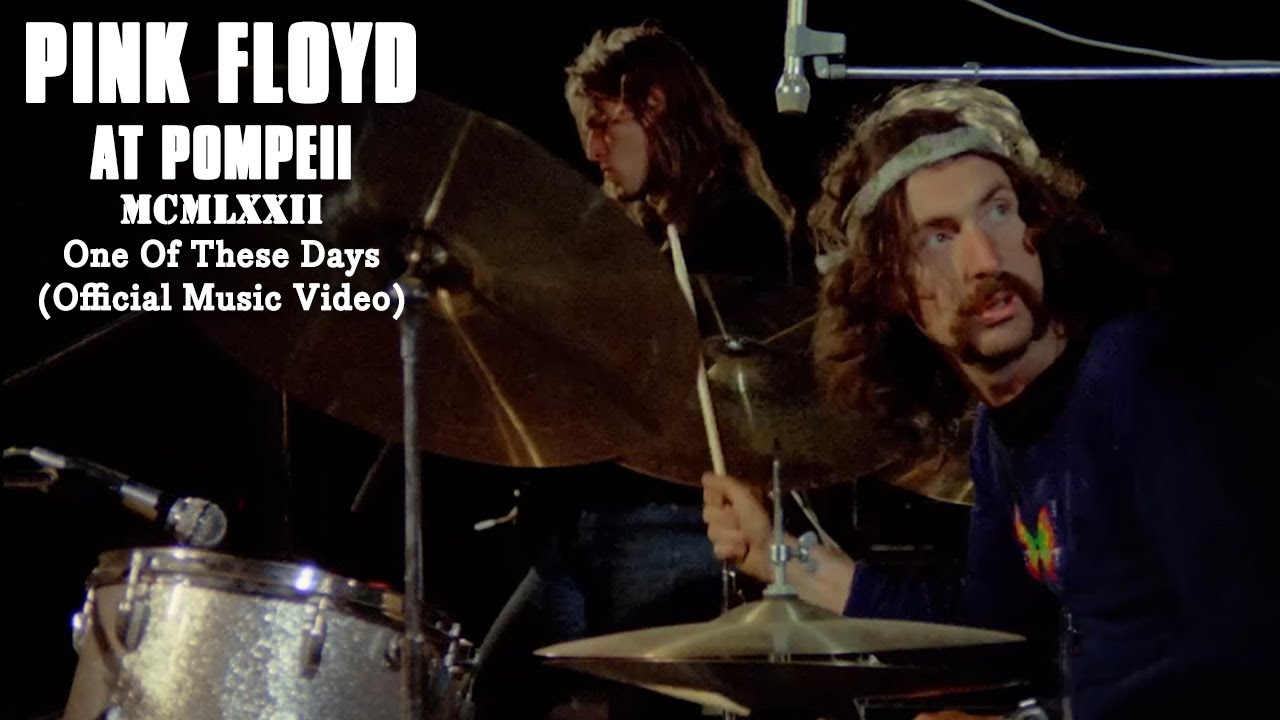
Live At Pompeii, a good snapshot of where the band were in 1971, was one of the first films of this kind. It prefigures the rock video by filming a performance in an exotic location without an audience. “Steve O’Rourke [Floyd’s then manager] said, ‘This French-based documentary maker wants to do a film,‘” Mason recalls. “The deal we did turned out to be very hard work and we never saw any money from it for a long time. On the other hand it turned out to be a very useful, and I think a very good, film.
“Pompeii was a controlled environment as there was no audience, so we could cut, stop and reshoot. But the open air and the dust and everything else made it feel like a real live show. There was a bit of grit to it.” Although some reels were lost: “It was Dave and Roger from One Of These Days, which is why it’s mostly me,” the drummer says.
You feel that Floyd were still were playing live, experimenting… by Dark Side Of The Moon that had gone
Steven Wilson
Meddle was released in October 1971 in the US and November in the UK. It was packaged in a sleeve that Hipgnosis partner Storm Thorgerson revealed was his least favourite Floyd sleeve: “I think Meddle is a much better album than its cover,” he said. It was supposed to have been a close-up picture of a baboon’s bum. The band told him they wanted something to do with water, maybe an ear underwater. It certainly matched the mood of the album in a way that somehow you don’t feel that an ape’s anus would have done.
Regardless of its packaging, it reached No.3 on the UK album charts – Atom Heart Mother had been No.1 – while it bombed in the US. “If in doubt, blame the label,” says Mason. “We felt at the time that Capitol [Floyd’s North American label] was really an old fashioned company; it was the label of Frank Sinatra and Dean Martin and the executives were all old. I don’t think they really approved of us. They didn’t understand it. Consequently, they never worked the records.
“EMI, on the other hand, saw the potential particularly from European sales. And they decided to make it a hit. That’s the thing – the success of Dark Side Of The Moon had nothing to do with the loveable moptops who made it. It was all the record company.” The band lost patience with Capitol in the US and secretly signed with Clive Davies to Colombia.

Obscured By Clouds, the soundtrack to La Vallée, was recorded in a matter of weeks later that year. Then they started work on Dark Side. They had an appetite for work – yet they would never record at this pace again. “No, because we got spoiled,” says Mason. “After Dark Side we were a number-one band. And also, the pressure was on. You couldn’t just go in and knock another album off. You had to think about it; not repeat yourself.”
Wilson notes: “You feel that Floyd were still a band that were playing live, going out there and experimenting, and I think by Dark Side that had gone. They’d become great sonic architects – but a lot of the danger and a lot of the hangover from that period of experimentation had been gradually refined out of their sound.”
It’s a sobering lesson to read the contemporary reviews of an album now considered an undisputed classic. Some writers seemed to miss the point: one compared Meddle unfavourably with More and Ummagumma. Arguments as to whether it belonged in the same file as Fragile, Tarkus or Nursery Cryme now seem fatuous. Floyd, like Yes, ELP and Genesis, were just slightly ahead of the technology that was available – 24-track bands in an eight-track era.
After Meddle and Dark Side, something was lost; the ambition became to create and sometimes meticulously over-egg the pudding in the studio. It culminated with The Wall and was probably what ultimately tore the band apart.

Working on Meddle gave Mason the confidence to start producing himself. Later that year he worked on The Asmoto Running Band, the second album by whimsy-prog oddballs Principal Edwards Magic Theatre. He later produced Robert Wyatt’s classic Rock Bottom and The Damned’s second album Music For Pleasure (though apparently he got the gig because they couldn’t get Barrett).
After the one-off solo album Nick Mason’s Fictitious Sports in 1981, he worked with Rick Fenn and then jazzer Mike Mantler. But being rich as Croesus, he’s under no pressure to get in the van and go gigging. “I’ve been thinking about doing something for a while,” he muses. He won’t be pushed on details.
And what about another Pink Floyd reunion? Mason only recently appeared on stage with Waters and Gilmour, performing Outside The Wall at one of Waters’ massive O2 shows. He says touring or playing with one of the pair is a possibility. "I’d love to do something like Live8 again,” he says. Then he adds, perhaps enigmatically: “If it was to be arranged."
Was that a hint? Or was it what we want to hear – that the journey that really got underway 40 on Meddle hasn’t quite come to its end?

