


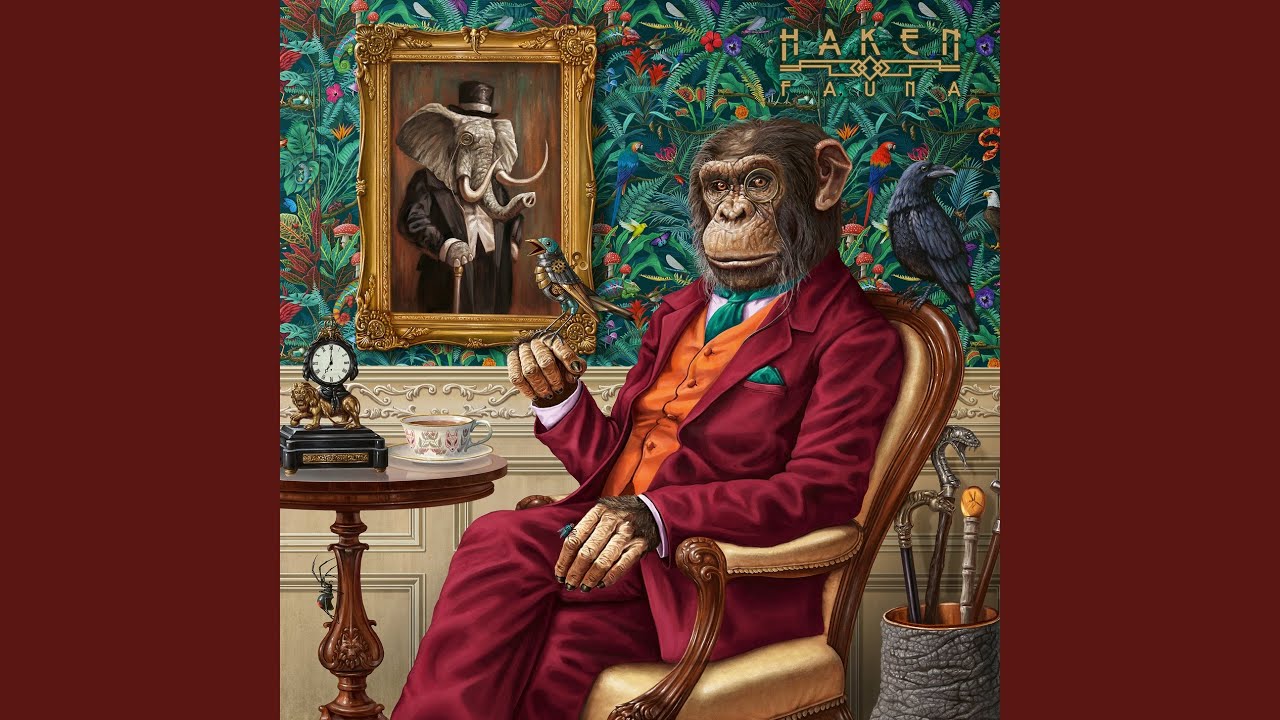
Haken's 2023 album Fauna was inspired by the natural world, and found the progressive metal six-piece entering new musical territory. That year, multi-instrumentalist Richard Henshall and returning keyboard player Pete Jones told Prog the story of their seventh studio record – which turned out to be the last with guitarist Charlie Griffiths and bassist Conner Green.
Richard Henshall’s been in his home studio, trying to get his impressive hands around the guitar parts for Messiah Complex so it’s gig-ready. The 17-minute suite from Haken’s presciently titled 2020 release Virus was the brainchild of drummer Ray Hearne. “It’s easily our hardest song to play,” Henshall says. “Each of us has probably spent about a year trying to get it up to scratch. When Ray wrote it he just programmed the riffs on a keyboard, and it’s almost impossible to actually play. But we’ll try it!”
The London prog metal sextet are preparing for their longest continuous run of shows, the 37-date Island In Limbo tour of Europe with Between The Buried And Me. While the tour serves in part as a soft relaunch for Virus – which never got its proper shake because of, well, the virus of 2020 – it also marks the start of a year-long push for their seventh album.
What a many-headed beast Fauna is: colossal, detailed and dizzyingly diverse. Just contrast the epic first single, Nightingale, and the current heavy-hooky one, Lovebite, the latter with lyrics inspired by the mating ritual of the black widow spider. There’s a lot to unpack here.
They’ll take the record to North America for month, then they’ll be at Midsummer Prog in the Netherlands. Next there’s their high-bill slot at Manchester’s Radar Festival, which will be a 10th anniversary set for The Mountain. And more shows are in the works.
“It’s gonna be the busiest year in our career, and I’m very excited,” Henshall says. ”We’ve been at home for the last two and a half years, practically stuck in the house, changing nappies and watching Netflix. So it’s gonna be a real contrast to be back on the road.”
His partner had their second child over lockdown, during which time singer Ross Jennings also became a father of two. “Leaving your family behind is 100 per cent the trickiest part of being a musician,” Henshall says. “It’s amazing to go out and meet the fans and play the music you’ve written – but the flipside is that you’re away from your family. I’m going to miss both of my children’s birthdays; I feel really bad about that.”
Jennings’ first taste of touring as a dad came last May, when Haken joined prog metal titans Symphony X in the US. As well as being the first time they’d played since the lockdowns, the shows also marked the return of an old friend into Haken’s ranks. Pete Jones was the band’s first keyboard player. He joined in 2007 and played at their first gig. He’s heard on their early demos, including their 2008 calling card, Enter The 5th Dimension.
Jones has been playing piano since the age of six, and gravitated towards jazz and prog in his early teens. He was 15 when he replied to Haken’s ‘keyboardist wanted’ ad on a Dream Theater-related web forum. It’s actually through Jones that drummer Hearne joined – the pair have been best friends since primary school. “I met Ray when we were four,” Jones says. “We were always doing music together. As kids we got into power metal – Angra, Stratovarius – then death metal, and when we were about 12 I discovered Dream Theater through my brother, and showed them to Ray.”
Jones left the band after a year to pursue his studies in theoretical physics to PhD level. These days he’s high up in the field of data science. Mexican keyboardist Diego Tejeida replaced him, but Jones remained within Haken’s inner orbit. During his studies he joined Henshall and BTBAM bassist Dan Briggs in prog/fusion trio Nova Collective, playing on their 2017 one-off LP, The Further Side. He began his own, rather excellent solo project, Nested Shapes, making “glitchy, ambient electronic stuff,” and contributed drum programming to Haken for Virus and previous album Vector. By November 2021, when Tejeida departed the band citing “different musical visions,” Jones was firmly back in the fold.
“I couldn’t ask for better luck or timing,” he says. “I always knew what was happening in the Haken world – I knew they were likely to separate with Diego quite ahead of time. Ray spoke to me informally about joining at first, and it became a formal thing late in 2021. But the band were a bit stagnant, as many were during lockdown, and I hoped things would start happening at some point.”
In May 2022 he found himself doing his comeback Haken show. In the Caribbean. On the Cruise To The Edge tour. They did two sets – one comprising covers (Yes, Gentle Giant, Queen et al) and the other using material from their own catalogue.
“I’d never played a professional gig really, ever!” Jones says. “To suddenly be playing prog classics aboard a cruise ship surrounded by some real prog legends was just surreal. Then we got back to land and toured with Symphony X, which was my first tour, and it went really well. There was great energy in the band. We were having fun and making the most of it.”
“It’s been so much fun having Pete back on board,” says Henshall. “He’s injected so much energy and new life into the whole process.”
By the time of the Cruise and Symphony X shows Fauna was already cooking, with Jones pitching in whole-heartedly. That February the band – Henshall, Jones, Hearne, Jennings, guitarist Charlie Griffiths and bassist Conner Green – had rented a house near Brighton, and lived together for a week. They turned the living area into a makeshift studio and thrashed out the details for Fauna. They’d imagined some band bonding: watching movies, yomps across the South Downs. Instead they worked 15-hour days.
That week was important, because Haken write in an unusual way now. For 2010 debut Aquarius and the next few records, Henshall penned the lion’s share with his colleagues fleshing the tunes out in the rehearsal room. Around the time of 2016’s Affinity, the whole group began to pitch in. Members would team up in different combinations, then bring those songs to the table for the others to add their own parts.
It’s this method that’s perhaps responsible for Fauna’s broad palette. One of the early tunes was Nightingale, with lyrics from Jennings and Griffiths. It draws on Hans Christian Andersen’s tale of an emperor who tires of his pet nightingale and gets a mechanical replacement. When he falls ill the real bird returns, and its song helps bring him back to health. The music was written by Jones and Hearne; the song opens with Jones’ mellifluous, complex, Radioheady electric piano part, then the band swept it firmly into their own terrain.
Our music is pretty intense… if you bombard the listener with too much of the same mood, they’ll turn it off and not come back
Richard Henshall
“Pete’s got these very strong jazz influences,” says Henshall. “He came in with this cool jazz progression, and the song stemmed from there. We took it and made it Haken – we made it dense, heavy and dark, and added polyrhythms to it. That was almost his introduction to the fans – ‘This is Pete, our ‘new’ keyboard player. What do you think?’
“That was almost a year before the album came out, a lot of fans assumed it was the start of the process and we’d have an album out three months later, but there was a big gap until the next release.”
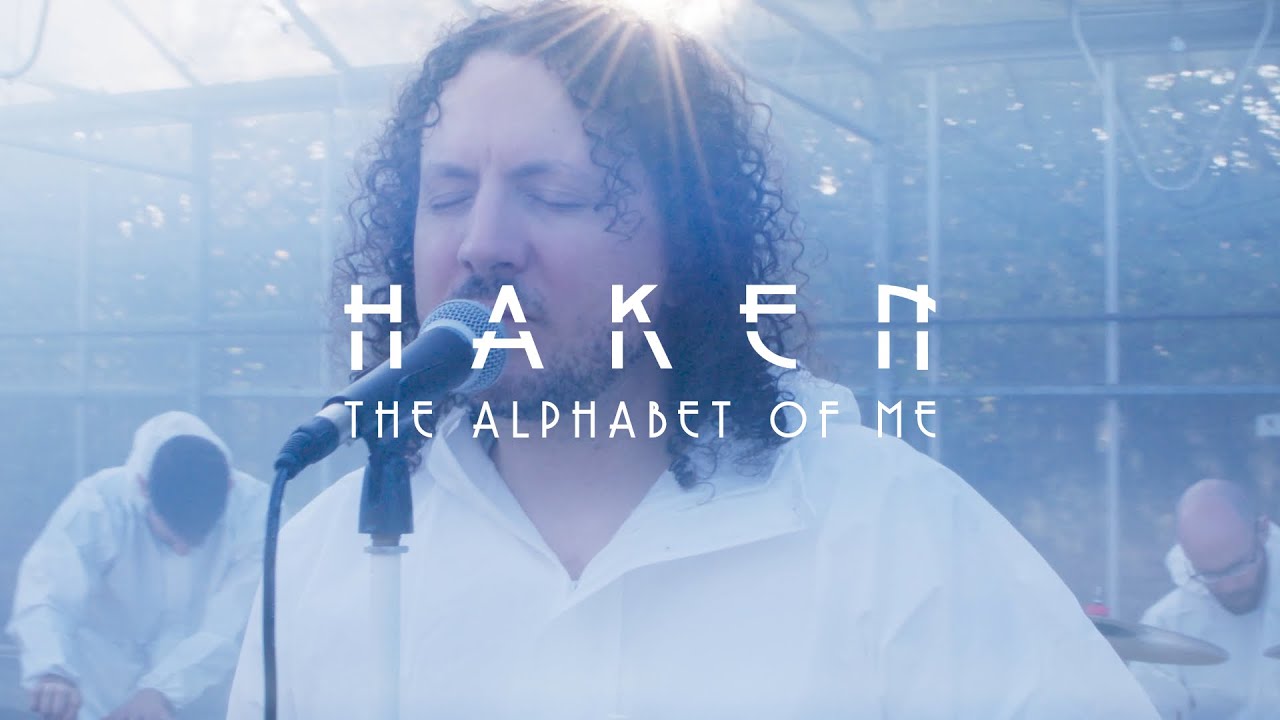
The next was The Alphabet Of Me, emerging nearly eight months later. With an 80s Yes chorus, syncopated beat and synthy, poppy moments, the song draws on Henshall’s affection for eclectic UK indie/electro rap-rockers Everything Everything. Jennings’ abstract lyrics channelled Philip K Dick’s Do Androids Dream Of Electric Sheep?, and its classic film adaptation Blade Runner (‘There’s a tear in the rain, momentary pain’). Vocally, Jennings’ flow is soulful, on the cusp of R&B.
“We all love pop, jazz, electronic, metal,” says Henshall, “and that song really embodies the spirit of the album. There’s a lot going on: the Sting/Police ‘whoas’ at the end, the trumpet solo. A lot of music just washes over you and you forget it after you’ve heard it, but we want our stuff to be memorable and catchy – we want people to sing along. We spend a lot of time getting that hook in the chorus. Our music is pretty intense at times, and you need to have that kind of balance – if you bombard the listener with too much of the same mood or colour, they’ll turn it off and not come back.”
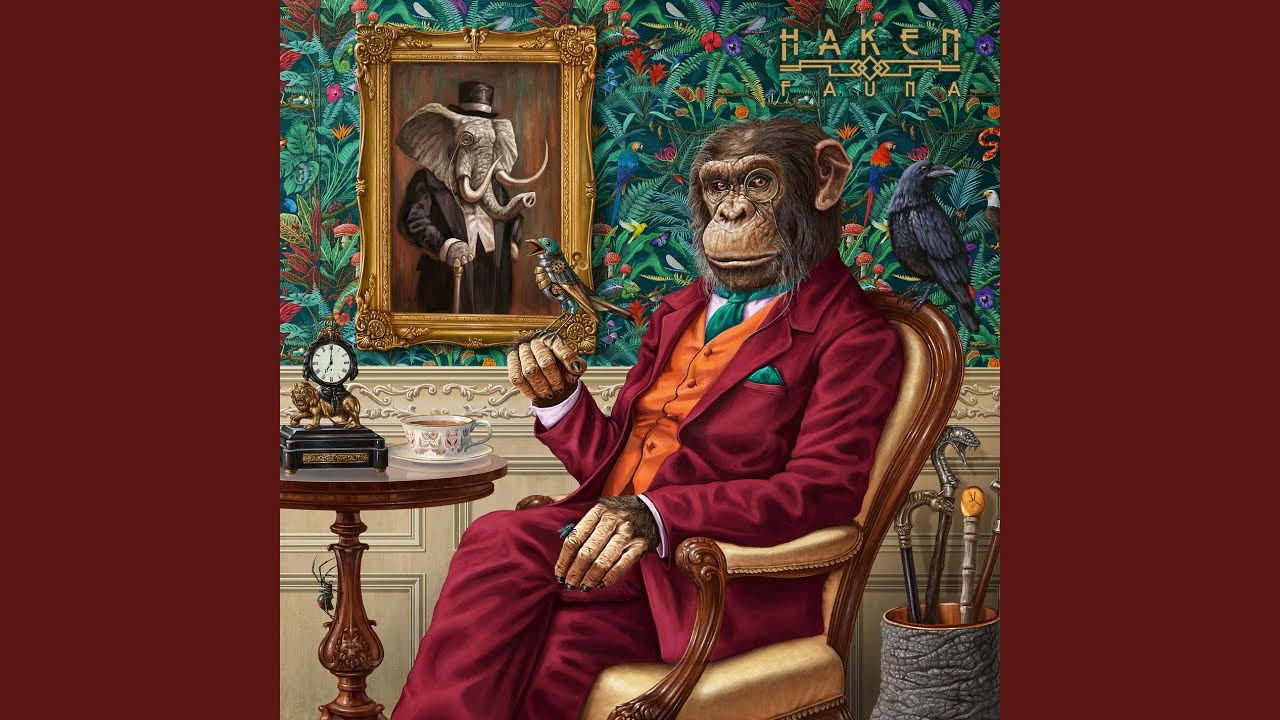
Fauna bristles with such hooks from the clanging harmonics, dizzying grooves and soaring chorus of opener Taurus. There are so many riffs and details in Griffiths’ relentless, Gentle Giant-y magnum opus, Elephants Never Forget, it’s hard to pinpoint the central motif – in a good way. With its sub-bass and fast-tremoloing guitar textures evoking Tool and Porcupine Tree, Island In The Clouds also features an extraordinary one-take instrumental from Henshall, retained from his original demo.
Finding my dad was horrific. But if I’m honest, writing the lyrics was therapeutic
Richard Henshall
Jones’ low, jazzy piano cascades on the cinematic Beneath The White Rainbow hint at the influence of another band favourite, Armenian jazz piano virtuoso Tigran Hamasyan. Jennings channels Mike Patton’s Mr Bungle in his entertainingly manic vocal excesses mid-song – apparently when he first did them, at the Brighton house, it put his bandmates on the floor with hysterics.
By turns soulful and metallic, that black widow tune Lovebite has some beautiful melodies delivering brutal lines: ‘We consummate, decapitate, I will leave your rotting corpse here to decompose.’ Henshall loves that juxtaposition: “The whole idea was basing the lyrics on a Cannibal Corpse/Corpsegrinder approach, but mixed with this very happy music. It’s almost like Toto meets Devin Townsend – it has that Toto-like syncopation, then that Devin heaviness in the chorus. That’s what we were going for!”
Hearne’s dry, jazzy drums introduce Sempiternal Beings with its plaintive 7/8 verse giving way to a head-nodding chorus (in 15/16) and a raw, emotive guitar solo from Griffiths that really suits the song; Henshall reckons he was channelling Pain Of Salvation here. All this and striking lyrics too. The animal in question here is Turritopsis dohrnii, or the immortal jellyfish – ‘Medusa, a haunting allure/Elusive ectoplasmic residue/Spineless stinger servant healer’. Jennings’ words and sounds work so well for his voice as an instrument, while delivering on the lyrical concept that weaves the record together.
The album’s animal theme stemmed from lyrics Henshall wrote for what became the record’s moving closer. Eyes Of Ebony is ostensibly about the fate of the endangered white rhinoceros, but it’s actually about the guitarist’s father.
A big influence on his son, Peter Henshall was a serious prog fan. He loved Yes, King Crimson and Pink Floyd. Richard recalls the wall above the stairs being dominated by a poster of Floyd’s striking artwork for The Division Bell. As he developed into a musician and Haken began to play shows, his dad was there. “He wouldn’t even tell me he was coming sometimes. We’d seen him in the queue – he’d never want to be on the guest list; always wanted to buy a ticket. He was all about supporting the band.”
Father and son went together to see David Gilmour, the Australian Pink Floyd, Zappa Plays Zappa, and heavier stuff too – Meshuggah, Periphery, Leprous. But during lockdown Peter was diagnosed with an auto-immune disease. It wasn’t immediately life-threatening, but with his system compromised he shielded himself in the flat where he lived alone. Even when normality returned to the world, the illness meant his life would be very different. There’s a striking line in the song: ‘Freed from limbo you were fighting for your life/In the heat of the flames of dying embers, burnt to ash.’
“My dad was in this limbo period,” Henshall says. “The disease didn’t cripple him, but he couldn’t leave the house because he was suddenly vulnerable. I could sense in him that he felt, ‘I won’t be able to go to gigs after the pandemic – I’m just kind of waiting now, waiting for the end.’”
In March 2021, Henshall and his brother became extremely concerned when their dad didn’t answer his phone. They found him in his flat, where he’d suffered a fatal heart attack aged 75. “There’s a reference to the moment of finding my dad,” Henshall says, “which was horrific. But if I’m honest, writing the lyrics was therapeutic – it was a good way for me to get it out there. I don’t know how I’ll feel if we play it live, but it’ll definitely be a special song for me.”
Eyes Of Ebony alludes to the person who ‘sang his last lullaby at the great gig in the sky’ and ‘gave me the power to believe as we climbed to the mountaintop.’ As with the rest of the album it was a joint effort. Jones added some sound design touches. He’s into “binaural processing,” which he describes as “the sounds that pop out at you from strange bits of the stereo field, rather than just being in front of you.” He’s also done a remix of the song, and this Nested Shapes-style reimagining is earmarked as a bonus track for the Japanese edition of Fauna.
There’s this raw feeling of experimentation – the restraints are off… It’s a similar mindset to 2007
Pete Jones
Jones and Diego Tejeida are sophisticated yet disparate soundsmiths. “Diego writes parts differently to me,” Jones says. “On the last run we did some pretty keyboard-heavy things like 1985 and Nil By Mouth – there’s a lot to learn, and lots of sounds to program. But on this album, my role is less about what I’m playing and more about what the band is sounding like; how can I enhance that ambience, that feeling? More often it’s a production or sound design thing rather than a line I could write out on a stave. Haken’s music is a very rich tapestry – it can bear these more glitchy things. There’s no synth leads on the album at all.”
Having been involved at both ends of the band’s career, Jones is in a unique position to comment on how things have changed: “It’s actually come full circle. When I joined, Rich was the predominant writer; he was prolific and fast, and had six years on me and Ray – but we were writing together in a jam room as a group. After I left, on those first few albums, Rich would write everything and the band would help build the arrangements. But right now feels like those early days. There’s this raw feeling of experimentation – the restraints are off, let’s just see what we can create. It’s a similar mindset to 2007, and I know Ray, Ross and Rich have felt that too.”
“We had a ‘no filter’ rule on this album: make it as crazy as you want,” Henshall says. “A reggae riff, a bassoon solo – anything goes! Everyone brought in their own influences and it’s resulted in our most exhilarating album, and definitely our most diverse. We’ve fully realised that spirit of collaboration. We’re starting a new chapter with Pete, with Covid behind us. We can move upwards again.”

