


Sunday, August 24, 1975. The final night of the Reading Festival weekend. Cold, dark, wet, horrible. Typical British festival weather. We don’t care. We’re used to it. We’re long-haired, flared-jeaned, denim-faded 70s rock fans and we’ve come prepared: white cider, black hash, pasty yellow sulphate and – for the hard-core – cowshit-encrusted magic mushrooms.
The rain can piss down all it likes – we’re already strafing the heavens. Why? The Ash, man! Here them roll like thunder through the stately overture to Phoenix, then careen off into the unknown with a new, as-yet unreleased epic that we learn later is called Rest In Peace. Behold as they cast the largest Reading festival crowd for five years under their spell, entwined guitars planet-hopping through the night; tripping on godhead through The King Will Come… Warrior… Persephone… Time Was… Blowin’ Free… all the way back to the bosom of Phoenix. Coming full circle. The journey over where it began. Like life itself, man. Strange, isn’t it? Weird. Far fucking out.
Right, Andy?
“Well,” says Wishbone Ash guitarist Andy Powell now, “I can’t honestly say I recall that show as one of our absolute best, but yes, we did see our music as taking a journey, if you like. It was the era we came from. A sort of golden age where a whole new generation of musicians were seriously starting to explore music, as opposed to trying to come up with three-minute hit singles. We wanted to progress from that. All the bands making albums did back then.”

So too their fast-evolving audiences. Which is why we all loved those bands so much and why we could never quite outgrow them, even as the years zipped by and rock’s snot-nosed children laughed at what they saw as the effete pomposity of it all. It’s why for so many of us, the words ‘Dear Fluff’ still bring back memories of a time when real music warriors were all blowin’ free on joint-rolling titans like the Ash, the Heep, Hawkwind and others of their ilk – somewhat below the interstellar success of Zeppelin, Yes and the Floyd, but still way above the ken of simple pop oafs who wouldn’t know a chillum from a Hobbit.
“We were very young, of course, when the band first became successful,” says Powell, on the phone from an airport somewhere in Germany where he’s still on tour with Ash, still combing the musical cosmos for signs of other-world life. “And I think we sort of expected it to last for ever.”
And yet, for Wishbone Ash, that triumphant Reading Festival headline appearance was, in retrospect, the beginning of the end. It was the last time, certainly, that they would still be considered champions of real-deal British rock.
“I don’t want to say the rot had set in,” says Powell, “but, well, you know…”

A dope smoke-filled basement in St John’s Wood: posh London, 1969. For Martin Turner, a 23-year-old bassist and singer from Torquay, fate has finally come a-calling.
We auditioned every guitar player that was available in London and we weren’t happy with anyone. Some of them were overqualified, shall we say.
Martin Turner
“We were very into what we used to call ‘positive thinking’,” he says now. “It’s a bit like instructing your subconscious to provide what you’re after, whether it’s a song or whether it’s to travel the world. The idea is, if you do it right, it will manifest. There was a strong element of that, like a magical process that did come about. We kind of created our own reality.”
Turner certainly seems to have created his – not least when he recalls the genesis of the twin-guitar sound that would become Wishbone Ash’s signature.
“I came up with the idea of two guitars – harmony guitars, lead guitars together. Not an entirely original concept. But I’d invited Ted Turner and Andy Powell to come back for a second audition together, and it was just absolutely obvious that it was gonna work.”
Hit pause here while we consider the rather different recollections of the other three founding members of the band. First off, drummer Steve Upton, who back then had journeyed up to London from the Devonshire wilds with Martin and his younger guitar-playing brother, Glenn, just weeks before.
At 24, Upton was already a muso veteran; at 18 he’d done a three-month tour of England and West Germany, including a stint in Hamburg playing five sets a night, six nights a week. “It was grim,” he recalls. “Shooters going off in the street, musicians lying on dirty mattresses with the clap.”
Back in Blighty in 1964, he joined a group called The Devarks, playing blues and covers. This was when the Turner brothers, Martin and Glenn, first saw Steve play. Months later, a chance meeting in a late-night café called Dirty Dot’s led to talk of forming a group. A week later they were doing gigs, under the name the Empty Vessels, getting £2 a gig.
Steve got Martin a driving job in a pick-up truck. Then Martin fell asleep early one morning, and smashed into a car with a woman and a baby on board.

“Thankfully no one was hurt,” says Martin. “But it was one of those moments of clarity where you say: ‘I can’t do this driving job and be a jobbing musician.’ I said: ‘I’m not doing this any more. We’ve got to be professional musicians.’”
My early nickname in the band was Snap, because I was always making these snap judgements, which I knew were right.
Andy Powell
And so the three Empty Vessels took off for London, up the A303, using money Upton had secretly squirrelled away from their gigs – almost £100, which was a nice pot in those days.
They found digs in Gloucester Avenue, near Primrose Hill. “A room with a loo down the corridor, basically.” Knowing no one, doing nothing, “it was really tough at first”, Martin says now. “It was really tough at first and that’s when Glenn left.”
Martin was distraught. “My brother was asthmatic from day one, and I had been trained by my mother to look out for him. I spent every day of my life with him, and for him to leave the band and for me to think in terms of being in a band without him was tough.”
So tough that Martin was considering throwing in the towel too and following Glenn home. “I remember walking with Martin up to Primrose Hill, looking out across London,” says Upton. “He’s saying: ‘I don’t know if I want to continue.’ I just put my arm round him and said: ‘Listen, Mart, if Glenn had said he didn’t want to come, or he wasn’t going to come, or he was gonna be a flake, we’d never have come. He’s got us here. That’s what that was all about, whether he’s with us now or not. We’re here and we’ll carry on.’ He said: ‘I’ll think about it.’ I thought: ‘Jesus Christ!’ Cos I wanted to go forward with this. So it was difficult.

Fortunately, the last gig they had played with Glenn – then going under the name Tanglewood, at the Country Club in Haverstock Hill – had resulted in a meeting with a very odd-looking American chap, with blond-white Andy Warhol hair and horn-rimmed glasses, who was about to change their lives
His name was Miles Copeland. A decade later, Miles would help take his drummer brother Stewart’s band The Police to vast global success. In 1969, however, he had just graduated in economics from the American University in Beirut, and had returned to London, where he’d been born in 1944, on the lookout for ways to get into the crazy world of rock’n’roll.
Copeland was exceptional in other ways too, Turner remembers. “Miles was a super-straight guy. He didn’t do drugs. He didn’t even drink alcohol. Ask him what he wanted to drink and he’d say a glass of milk.” Or as Upton puts it, “From the blazer and the horn-rimmed glasses to the haircut, we thought: ‘Who is this?’”

They would soon find out. Miles gave them his card. The next day, Glenn took off for home. The day after that they rang Miles. He invited them over to his house, one of those three-storey villas in Marlboro Place, St John’s Wood.
We were very into what we used to call ‘positive thinking’,” he says now. “It’s a bit like instructing your subconscious to provide what you’re after.
Martin Turner
After they’d spilled their tale of woe, Miles simply told them to go down into the basement and start playing, while he placed an ad in the back pages of Melody Maker for a new guitarist.
“We auditioned every guitar player that was available in London,” Turner recalls, “and we weren’t happy with anyone. Some of them were overqualified, shall we say. We wanted guys the same as us that didn’t have history, that were starting out from scratch.”
Enter 19-year-old Andrew ‘Andy’ Powell. Born in edgy East London, brought up in homey Hemel Hempstead, Powell had been in soul bands, covers bands, all kinds of different pub pleasers. As he says now: “It was a real apprenticeship I went through, so I was very pragmatic.”
Pragmatic, talented, capable, Powell seemed the perfect choice. Even though Turner and Upton had already auditioned another very obviously talented player named Ted Turner (no relation).
“We’d seen Ted and he was good,” says Upton. “We seriously thought about offering him the gig, but he was very young and we weren’t sure. Then Andy came in and was obviously a good player and seemed very amenable to the whole thing. He went home and we said: ‘Well, that’s it, we’ve got the guy.’”
Ted Turner was 19, lived at home in Birmingham with his mum and dad, and had only been playing guitar for two years. His only previous group experience was in local act the King Biscuit Blues Band; he “probably played about twenty gigs with them. Lots of giggles and youthful passion.”
He didn’t like school, so left early. Did a variety of bum jobs. Didn’t like them either. Hated Birmingham. “I just wanted to leave everything behind.”
His only hope: the guitar, which he was “totally consumed by”. The first band he ever saw live was Cream. “That was kind of mind-blowing.” A week later, at a tiny club under a viaduct, he saw Peter Green (who had replaced Eric Clapton) playing with John Mayall’s Bluesbreakers. “That had a really profound impact on me.”
Steve Upton recalls how when Martin rang Ted to let him know they had chosen someone else for the gig, he got Ted’s mum on the phone instead. And she wasn’t happy. “She gave Martin a right earful. She said Ted was devoted to music. He did nothing other than carry his guitar with him everywhere. He played it constantly. ‘You’ve got to give him a chance. You won’t regret it.’

“Okay, so he came down again. We put Andy and Ted together, and it seemed to work. Martin coaxed things out of them, because he was very much the musical director. He would orchestrate the things. And it all just came together. It immediately felt very, very right to us. So we thought, all right, this is it. We’ll do it this way.”
Ted was a purist. He likens joining Wishbone Ash as “like Dorothy in the Wizard Of Oz”. Learning to play alongside Andy came as a revelation.
“For me it was challenging, which I loved. It did work quickly for us, though. It was like a natural fit. It was like yin and yang. It was a really good combination of different styles. I was far more economical, melodic, soulful, Andy was more energetic, playing a lot more notes. But we met in the middle.”
So, not quite as Martin remembers it then?
Powell chuckles. “The important thing is we had chemistry,” he says. “Ted was this beautiful-looking lad who had still been living at home. Martin always saw himself as a rock star and as an artiste. My role was really to facilitate that. But the triumvirate of Martin, Steve and Miles really was a partnership. So we had this perfect combination.”

The band had found their name from writing down words, then pulling them into a hat. Of the first two that Martin took out, the first piece of paper had the word ‘Wishbone’ on it. The second had ‘Ash’.
There was this mystery to it all. We were very much aware that we were a closed society. We were dipping into a mysterious world.
Andy Powell
They had found their fame almost as easily. Miles fast-talked booking agency NEMS into scoring the Wishbone Ash a string of gigs opening for Slade, T.Rex, Taste, Caravan, Mott The Hoople… He then paid for them to go into Advision studios London to make an album-length demo. Between recording dates, they played in Paris for a week. Then in May 1970, Wishbone Ash played the gig that would help secure them their record deal, opening for Deep Purple at Dunstable Civic Hall.
Purple guitarist Ritchie Blackmore was so impressed by them that he told Derek Lawrence to check out the band. Lawrence was an old-school producer who had worked with everyone from Joe Meek to The Pretty Things, Jethro Tull – and Deep Purple. He knew the stone-faced Blackmore didn’t make recommendations lightly, so he got in touch with the band, via Copeland, and went down to see them rehearse in the St John’s Wood basement.
“Derek came down and immediately got what we were about,” says Martin. “He said he had this friend that had just been made head of A&R at MCA/Decca in Los Angeles. Derek said: ‘If you buy me a ticket to fly out there, I’ll take your demo with me and I guarantee that I will bring you back a decent record deal.’ Which he did. Then he was written in to produce the first three albums.”

In fact, the deal the band signed when they flew out to LA in August 1970 was more than “decent”, with an advance of a whopping 250,000 dollars – around 1.5 million dollars in today’s money – an enormous sum at the time for a completely unknown band. With that kind of outlay, though, came a demand for total commitment, on both sides of the pond.
“We had an American manager,” Martin Turner says. “We were signed to an American label. And from day one we were dashing backwards and forwards across the Atlantic, touring and building things up. A lot of people in America thought we were an American band in the early days.”
Listening back now to their self-titled debut album, released in December 1970, it’s easy to see where that confusion came from: it was those spiralling twin lead guitars. Nothing like the chug (Keith Richards) and whirl (Mick Taylor) of the Stones, and far more off-the-leash than Jimmy Page and Jeff Beck ever achieved in their time in harness in The Yardbirds, the sound of Andy Powell and Ted Turner weaving their sonic tapestries in 1970 was closer to that of the Allman Brothers Band or the then just-released Derek And The Dominos album Layla & Other Assorted Love Songs, neither of which anyone in Wishbone Ash had even heard back then.
As the popular Radio 1 DJ and taste maker John Peel remarked to his listeners at the time: “I heard Wishbone Ash for the first time and haven’t been so impressed with a relatively new band for a long time. Their music is original, exciting and beautifully played.”
I loved the music and the peace that you experience in church, but I thought the whole concept pf religion was bullshit.
Martin Turner
Indeed the sheer exuberance of tracks like Blind Eye and Lady Whiskey was dazzling. Funky in a purely far-out way, heavy in a wonderfully don’t-mess sense, heart-swaying in a leg-kicking, watch-me-go kind of devil dance, it’s difficult to believe even now that this is the work of newbies and ne’er-do-wells.
Then you came to side two. Comprising two monumental tracks in the 11-minute-plus Handy and the 10-minute-plus Phoenix, this was album-oriented rock at its apotheosis: making full use of the cultural zeitgeist, of space and time and mind-travel, to produce music for a new decade, going from the black-and-white TV of the rule-bending 60s to the blurred-around-the-edges colour TV of the give-a-shit 70s.
As Andy Powell says now: “There was this mystery to it all. We were very much aware that we were a closed society, along with other bands. We were dipping into a mysterious world. Once we dabbled in these worlds, taking references from literature, the Bible, we didn’t necessarily know why we were doing it. We just decided to throw it all in the pot.
“Our very first logo that appeared in Melody Maker was a couple of witches throwing stuff into a giant cauldron. It was mystical and hobbits and the Bible and the Koran, and it was drugs and it was… yeah, we didn’t really know what we were doing. We knew it was mystical and that it was impacting people in that way. And if we didn’t know exactly, we knew the audiences would be equally as fuzzy and make of it what they will. That was part of the amazing thing about it – the coming of age we felt both our audience and us was going through. It was a powerful thing.”

For Martin Turner, there was also the sense of purpose, of destiny.
“For a mere bass player, I was very pushy. If I’d written something, I didn’t want anyone messing with it. Andy would say: ‘Why don’t we change this?’ And we’d end up with the same song but with the chords in a different order. I’m like: ‘No! That’s not what I had in mind. If you want to use the song, use it as it was written, or not at all.’”
We would get back to the hotel after the gig and I’d be ready to go clubbing. But nobody else did. It was me on my own.
Martin Turner
The band contained four strong personalities, but it was Martin who saw himself as the whip cracker. The musical director. The leader.
“I would say to them sometimes: ‘Just shut up and do what I’m telling you to do and then we can all get home for dinner.’ That wasn’t always the formula, but someone had to point the way. We didn’t always do it that way, though. A lot of the early stuff were extended sessions where it would have been a jam that we recorded on a tape recorder and there would be one little section that we really liked, and we would then build on that.”
He cites Phoenix – the epic number that would become for Wishbone Ash what Stairway To Heaven would become for Led Zeppelin, or Shine On You Crazy Diamond for Pink Floyd – as the prime example.
“That was a series of those pieces that had occurred on various improvised jam sessions, which we all learned to play in one continuous stream.”
And which they would take several steps further when they played it live on stage. “A tune that was originally eight minutes could end up being ten or twelve, sometimes longer. It depended.”
Depended on what?
“On everything…”

A second Wishbone Ash album, Pilgrimage, again produced by Derek Lawrence, was released in September 1971. And though it lacked the ground-breaking grandeur of their debut, it went straight into the UK Top 20. The band were touring in America that winter as the opening act for The Who when they got the news that two music magazines back home in England – Sounds and Melody Maker – had named them Best New Band. Life was good.
“We were all young men,” says Martin. “A couple of us had girlfriends. But we hadn’t reached that point yet where you’re bogged down with properties and family and children. We were all free to go wherever and do whatever we wanted, which we did.”
Party time? Yes and no. Martin was the rock star of the band. All the pretty girls loved Martin.
“I was kind of braver, I think, than the other guys,” he says. “They were a little bit more conservative than me. I would get up to all sorts. Every bloody town we went to, we would get back to the hotel after the gig and I’d be ready to go clubbing. There’s always a bar in every town rocking until two in the morning. But nobody else did. It was me on my own.”

Andy Powell, again, remembers things a little differently.
“I never really thought of the band as a drug band. But when I think back now and talk to some promoters, they tell me: ‘We knew we had to have everything on hand for when you came in.’ The first time we went to America, the limo driver offered us a cigarette box full of joints. In those days that was normal. At the same time, you’d actually have a couple of cops on Harley-Davidsons as outriders.
From day one we were dashing backwards and forwards across the Atlantic. A lot of people in America thought we were an American band.
Martin Turner
“There was a lot of that stuff around. There were a lot of ‘old ladies’ [professional groupies, à la Elton’s Tiny Dancer]. You were just full of euphoria at being this impervious little entity. I actually had to reconstruct about ten years in my thirties, because I just… I knew where LA was and I knew where New York was but the rest of it was just a blur.
“There would be this routine on those tours where we would just party all night. Then maybe a couple of hours’ rest and then getting to an airport – always running for planes, hungover. Then the first thing they would do on the plane was offer you a drink. ‘Thanks, I’ll have a Bloody Mary!’ That’s how you’d start your day. Then you’d get to the gig and off you go.
“Of course, there would be a lot of ladies around, a lot of wives and girlfriends on the road too. There were always a lot of people around and it was a nice feeling, a community that was our little society that would travel around together.”
Wishbone Ash were also immensely cool suddenly. When John Lennon was looking for an additional guitar player while he was recording Imagine, he asked for Ted Turner. It was during the recording of Pilgrimage at Apple Studios. Ash were just finishing up for the day, past 11 at night, when Ted got a phone call.
“It was a call telling me I was wanted for some session. I said: ‘Yeah, great,’ thinking it was for some time in the future. So I said: ‘When?’ And they said: ‘Right now!’ I’m like: ‘I’ve been working all day, I’m too tired for this…’ They said: ‘It’s for John Lennon.’ I said: ‘Oh, right.’
“I got picked up in a big white Rolls-Royce, [keyboard player] Nicky Hopkins is sitting in the back seat, and we’re whisked off to the white mansion house – the one you see in the Imagine video.

“We get there, and I go into this big room with a long table in it full of food. There’s some hashish there. Then I got led into the studio room. As I walk in, George Harrison is working on his guitar licks, very small, crouched over his guitar in the corner of the room.
“Then John walks in. [Liverpudlian accent] ‘Everybody ready, like?’ Then one-two-three-four and off you go. It was amazing. Here I am in a small room, playing with my heroes, two of The Beatles. The song was Crippled Inside. Sort of surreal, really.”
Ted also played on How Do You Sleep that night, “but the guitars weren’t used on it. Not the parts that I played.”
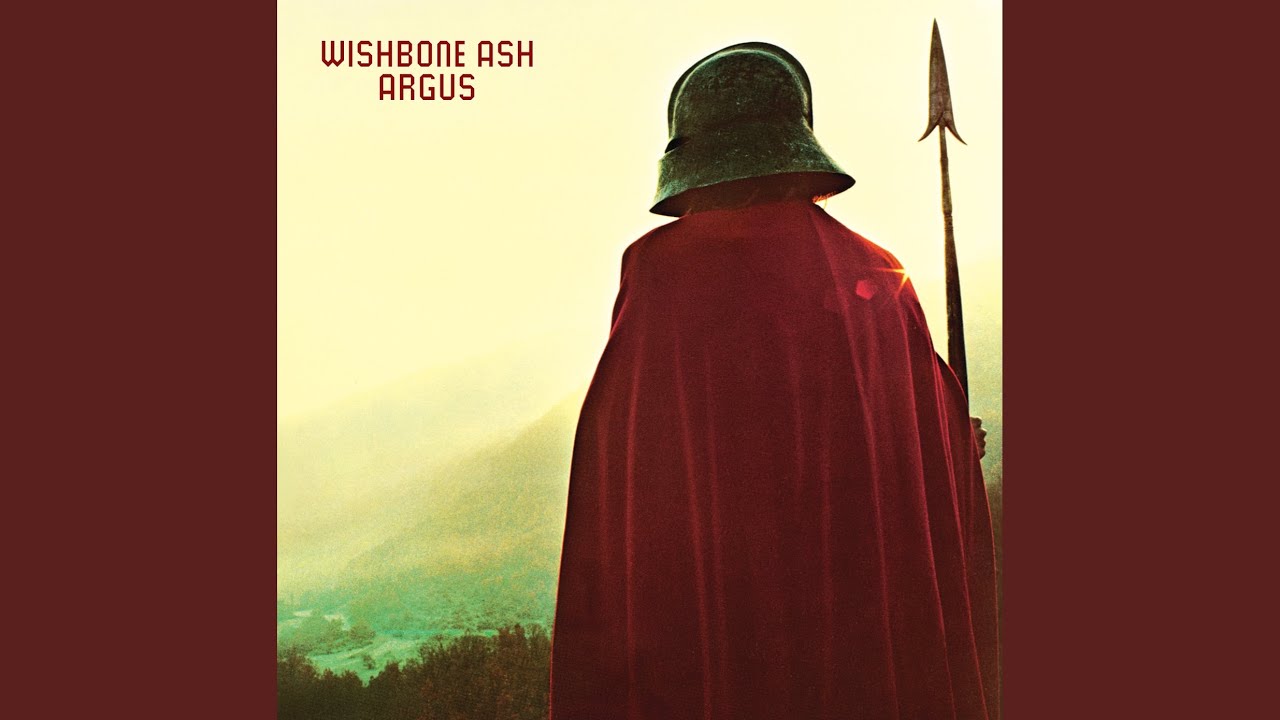
It was the third Wishbone Ash album, though, that brought the band to their own perfect high. Released in April 1972, Argus was not only the most commercially successful album of their career – reaching No.3 in the UK – it was also, as the men who made it still agree, their finest. Although they don’t all necessarily agree on how the album came about. Take for example the best-known track from Argus, the brilliantly hooky Blowin’ Free – aka the hit single that should have been but never was, mainly because it was never released as a single. Shame.

Ted Turner recalls coming up with the memorable opening lick one day while “sitting in my tiny room at the flat in Chalk Farm. I took it to the band, they said: ‘That’s good,’ and we just attached a twelve-bar boogie blues on to that.”
I go in and George Harrison is working on his guitar licks. Then John Lennon walks in: ‘Everybody ready?’ Here I am, playing with two of The Beatles.
Ted Turner
Martin, meanwhile, has this to say about it: “I had the idea for that tune way back. Somewhere around sixty-eight, I think.” He says it was inspired by a Steve Miller song, the title track of his 1968 debut album Children Of The Future. Listening to it now, you can absolutely hear the ‘overlap’.
Martin continues: “That song, I was describing it to Andy and Ted and explaining how [Miller] was using this hammer-on technique with the guitar strings. They had never heard it, but we concocted from that the beginning of Blowin’ Free, which I had the lyrical idea for from way back in the sixties. It took us a long time before we were able to get a decent recording of that.”
Whoever came up with it, no one seems able to explain why it never became the giant hit it probably should have. “The decision about whether a track should be a single or not, that was really record company stuff,” Ted says simply. “It was a very separate thing.”

It didn’t matter. Not when Argus had so many other cornerstone moments.
“Argus had a lot of big, ambitious themes, lyrically, that I’d been thinking about for many, many years,” says Martin. “The phenomenon of war, and how since the beginning of time dictators, despots, powermongers had harnessed the energy of young men to make war. And that’s what gave rise to writing the song Warrior.
“Now, being a Libran, as I am, balancing the scales, I thought when I wrote it that people might think I was advocating war. So I thought, okay, I’ll write another tune to balance it out, which will be a peace song. That was Throw Down The Sword, which was really not far off being a hymn like I used to sing in the church when I was a head choirboy about ten years before.

“Then there was The King Will Come, which is the idea of orthodox Christian religion where the end of the world is nigh and the Lord, the king, will come back and save us all. I’d been pondering that for a long time. Being a young lad in the church, I had a very conflicted view. I loved the music and the peace that you experience in church, but I thought it was full of contradictions and the whole concept was bullshit, really.”
When Sounds voted Argus Album Of The Year in its annual critics’ poll, it seemed like Wishbone Ash had it made. Sell-out tours of Britain and America followed. Cash flowed their way.
“When we were touring America we were getting really great fees,” recalls Andy. “We were getting between fifteen and twenty thousand pounds a night.”
In today’s money, that would be worth around £150,000 a night. What could possibly go wrong?
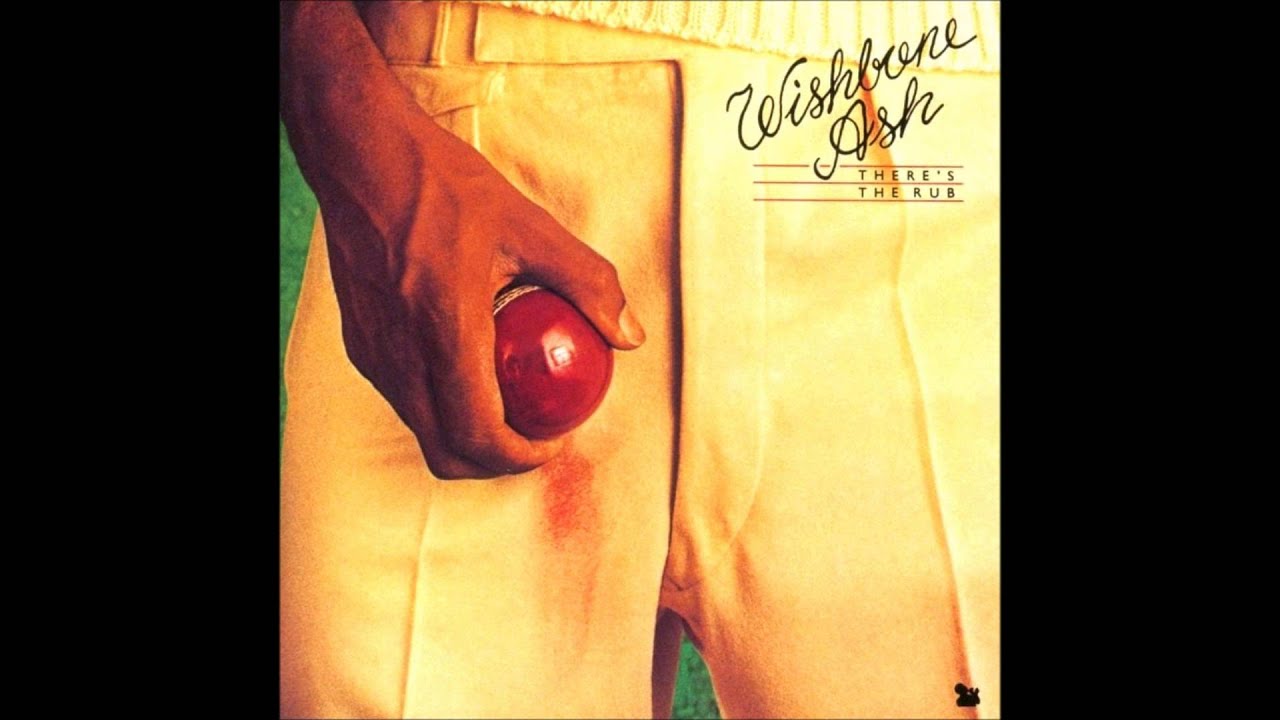
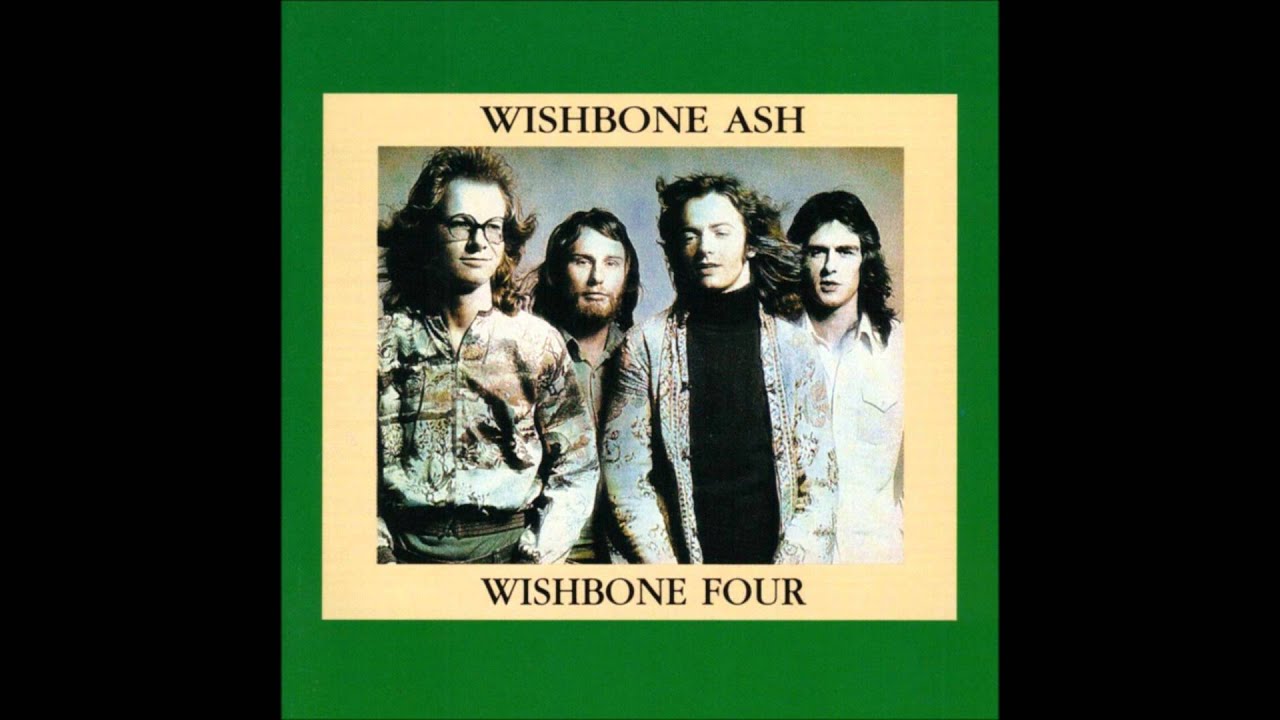
The answer was two things. The first was the disappointing follow-up album, simply titled Wishbone Four, released in 1973. Having decided it would be a mistake to try to make, as Powell puts it, “a son of Argus”, they then made the fatal error of making an album that so deflated the expectations of an audience hoping for exactly that, that they would spend the rest of the decade trying to figure out where they went wrong. They made albums that either tried to emulate the old magic (the good-not-great There’s The Rub in ’74), or went off-message completely (their Tom Dowd-produced ‘American’ album, Locked In, in ’76).
What really derailed Ash, though, was the sudden and unexpected departure of Ted Turner in the summer of 1973.
“I was a very quiet, introverted person,” Ted says now, doing his best to explain his decision. “I was the emotional one. The dominant personalities, the egos in the band, were Martin and Andy. It got to the point where it started to feel like competitiveness had come into the band. The best of music for me is always collaboration – you listen to what everyone has to say and you go with the best ideas.

“But now people had started to go their own way. We’d all got girlfriends now. People are getting married, living in different places. We’re now starting to listen to different music, having different influences. I was listening to Weather Report and Billy Cobham. It wasn’t just about the blues any more. Then I’d go back and start playing Wishbone music and it wasn’t doing it for me. It was different.
I would say to them sometimes: ‘Just shut up and do what I’m telling you to do and then we can all get home for dinner.’
Martin Turner
“Also, I felt that my voice wasn’t being heard within the band. I’m the kind of guy where I can’t fake it. I couldn’t compromise. I could never compromise with music – it’s sacred.
“I thought: ‘Well, there’s got to be more to life than this.’ It was a time of self-expansion. Like: ‘Who am I?’ I’m a young man exploring his spirituality and asking: ‘What is this all about? Am I playing music for my ego?’
“I wanted to do something completely different from being a rock’n’roll guitarist in a rock’n’roll band. So I went to Peru. The remote regions of Peru – the Andes, up in the mountains, with the indigenous tribes there. I ended up buying a couple of burros and just started walking. It was amazing to be taken back to something so basic and simple. It just nourished my soul.”
According to Martin, there was another reason Ted left. “We were working so intently, and because Ted was the youngest he kind of broke first, if you like.”
Ted leaving “was a blow,” he says, “but I think he had also been influenced in that department by a lady we had met in New Orleans. She walked into the dressing room – a beautiful girl – walked up to me and said: ‘Hi Martin. My name is Anastasia. I write poetry, and when I saw the flying saucer on the back of your Argus album, I just knew we were on the same wavelength.’ I took one look at her and said: ‘Yeah. Okay, darling. I just got to go for a sprinkle. I’ll see you in a minute.’ Like, get me out of here quick!
“I have a wee, and when I come back in I see her chatting to Ted, and he’s just got that look in his eyes of: ‘I’m just a little boy lost and I just need a mummy to take care of me.’ Women would just love him. I’m thinking: ‘Oh God, be careful what you’re getting into there.’

“She hooked up with Ted and they became quite an item. And she had quite an influence over him at that point. Next thing, they decided they wanted to go off to South America, to some temple of divine light, some stuff like that.”
Ted’s replacement, Laurie Wisefield, most recently of another Copeland-managed British band, Home, could not have been more different.
“We all seemed to get on pretty well,” Wisefield says now. “Martin was probably the most difficult, but he always was,” he laughs. “We got on fine. I think he was just always like that. Still is to some degree.”
In fact, Martin had wanted to try out Mick Ralphs, who had just left Mott The Hoople. It was Andy who invited Laurie to the basement in St John’s Wood.
“Martin was a little bit worried possibly about my proficiency, in a way. Not that I wasn’t good enough, more that I was too good. I think he wanted more of a kind of simple player. More of a blues-based player. I was trying to get away from that at the time. I think Andy was too.
The egos in the band were Martin and Andy. It got to the point where it started to feel like competitiveness had come into the band.
Ted Turner
Or at least Andy was at first.
“I was flashy on guitar at that age,” Laurie remembers. “I was trying to be the fastest, the flashiest.”
It was a shape-throwing attitude that actually dovetailed far more neatly with the rock-star persona of Martin Turner than it did with the increasingly spotlight-shy Andy Powell.
“It’s true,” says Powell. “I switched off when Laurie came along. I ceased to have the same role with Martin. Maybe because I was difficult – my early nickname in the band was Snap, because I was always making these snap judgements, which I knew were right. But I think the moment Martin got the opportunity, like, ‘Fuck, there’s another guitar player here I can work with,’ I think that was the nature of the dynamic that perhaps people don’t see.”
Subsequent Wishbone Ash albums relied far more heavily on the joint input of Martin and Laurie than they did on Andy. None, though, were any more successful, or able to prevent the band’s reputation from slipping into ignominy as the era of punk dawned.
“I mean, yeah, I had my nose sort of put out of place, so I just turned my attention to other things,” says Powell. “I think Laurie was kind of oblivious to that, to be honest, because he hadn’t gone through the first four albums and all of that strife and tribulation. He was just doing whatever he could to push the gig forward.
“Don’t forget, he was also a guy like Martin – they liked to mine that rock-star thing. I knew I could turn that stuff on, on stage behind a guitar, but it didn’t really interest me that much. I was more interested in… going back to the whole thing. I think we created something that was artistic with Argus. We threw that card away a bit when we became distracted.

The last few years of the 1970s found Wishbone Ash living semi-communally in Connecticut, where they became tax exiles. “We were getting big record advances by then,” says Andy, “so we could afford to rent houses. Then we had one main band house, which was this fabulous place on about 14 acres with a swimming pool. It was very whimsical. When it came time to write an album, we’d all just hang out, get the acoustic guitars out. There was a lot of smoking going on.”
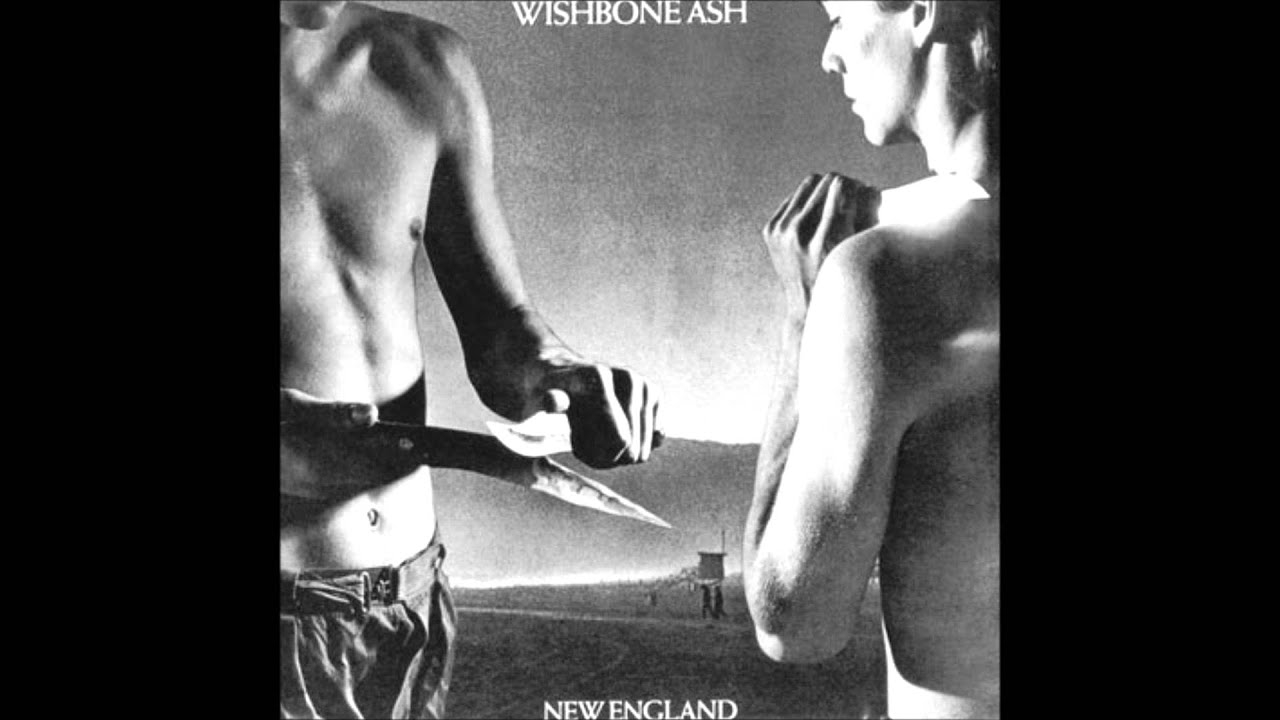
Still able to earn big money touring those parts of the world that hadn’t gone all Johnny Rotten, they did well, but the fun was no longer fun any more. Martin developed a cocaine habit, which he kicked only after a brush with hepatitis, “which I only just avoided”. But none of their final three albums recorded in the 70s – New England, a partial return to form buried in the undignified critical rush to embrace punk; Front Page News, an ill-judged move into ‘soft rock’, breezy just as punk was blowing a gale; and the boringly titled and, frankly, boring Just Testing.
After that, the band informed Martin Turner that they intended to bring in a new frontman, a bizarre idea that Turner rightly bridled at and left the band over. But by then it was a far too familiar tale of egos popping, middle age encroaching, money problems mounting and the sudden, desperate urge to do anything to keep the show on the road – even if it included spoiling it for everyone involved.
No matter that by 1980 a new British band named Iron Maiden were recording their debut album – produced, not coincidentally, by former Wishbone engineer Martin Birch – so obviously influenced by those original twin guitars and machine-gun rhythms. Or that Thin Lizzy had proved you didn’t need to soil your pants doing country-tinged adult-oriented whatnots in order to survive.
The phoenix, it seemed, had finally crashed to earth.
All these years and lots of shenanigans (many of them legal, but that’s another story) later, however, the influence of Wishbone Ash lives on, in the shape of the current incarnation with Powell, and Turner’s version, now billed as ‘Martin Turner Ex-Wishbone Ash’. Mainly, though, in the form of the recently released box set, where Ash’s precious catalogue is now gathered in not so quiet splendour.
Originally published in Classic Rock issue 249 (May 2018)

