


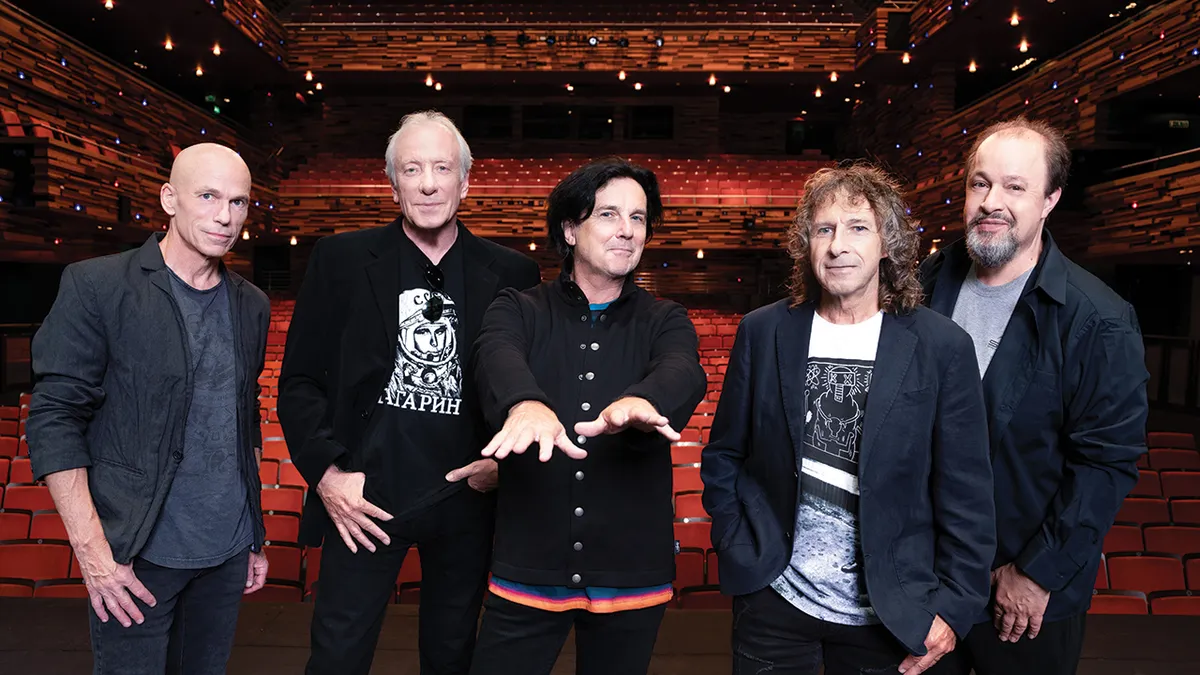
In 2022 Marillion released An Hour Before It’s Dark, their most recent album to date. They’d attempted to avoid referencing the Covid pandemic, but failed. Nevertheless, as they told Prog, they managed to deliver one of their brightest and most optimistic-sounding records.
December 16, 2019. Marillion are playing the last concert of their With Friends From The Orchestra tour at The Colosseum Theater in Essen, Germany. Befitting the show’s grand conceit, the set leans towards the more epic end of their catalogue: Gaza, Estonia, plus the four-song The New Kings Suite, from 2016’s acclaimed FEAR album.
After the final chords of closing song This Strange Engine drift away, the band take their bows. It’s a triumphant end to one of the most successful periods of their career – in which FEAR gave them their first UK Top 5 album since 1987’s Clutching At Straws. But the members’ minds are on the impending Christmas break and the prospect of reconvening in the new year to begin work on their next studio album.
On the same day as the Essen show, in the Chinese city of Wuhan, a patient is admitted to hospital with severe acute respiratory symptoms. It’s the first documented case of a virus soon to be named Covid-19. What happens next seems simultaneously surreal and all too real: the rising tide of uncertainty and fear, the escalating death toll, the closing of borders and government-mandated lockdowns, the disruption and despair, the chaos and grief. By the middle of 2020, every person on the planet has been touched by the pandemic in some way.
For Marillion, as with so many musicians, the last two years have been the strangest of times. Bubbled up in their Racket Club studio/HQ, they tried to block events outside the window from bleeding into the songs they were writing. As singer Steve Hogarth puts it: “I was determined not to reference the pandemic ’cos I thought every writer under the sun was going to do it. But everything I was trying to write, it kept worming its way into the words.”
The resulting work, An Hour Before It’s Dark, is undeniably a lockdown album, albeit one that has been informed by events rather than confronting them. Like FEAR, it’s coloured by everything going on around it – but where that album was a dark, sometimes despairing examination of Britain and ‘Britishness’ in the run-up to the Brexit vote, the new record finds compassion and hope amid the chaos and confusion of the pandemic era. If FEAR was a state of the nation address, An Hour Before It’s Dark is a state of humanity address.
“You can make two kinds of record in a pandemic,” says guitarist Steve Rothery. “It can be doom and gloom, and the world’s about to end; or it can be a celebration that we’re still alive and we’re still going and hopefully there’s still light at the end of the tunnel. I like to think that’s the one we’ve made.”
Over the last two years, The Racket Club became a kind of physical bubble for Marillion. “It was slightly weird being in there while all this stuff was going on outside,” says keyboard player Mark Kelly. “Obviously we were watching the news, but we were in the middle of doing our own thing too.”
He says the pandemic has been an unexpectedly productive time for him. As well as working on An Hour, he moved house, released his debut solo album, Mark Kelly’s Marathon and wrote his autobiography, the entertaining Marillion, Misadventures And Marathons: The Life And Times Of Mad Jack. The only blip came at the end of 2021, when he tested positive for Covid. The symptoms weren’t bad, but the timing was lousy. It was a week before the band were due to kick off their delayed UK tour.
In a repeat of the crowdfunding model they pioneered in the late 90s, fans had clubbed together to provide a kind of DIY insurance, meaning Marillion wouldn’t end up out of pocket should the tour be cancelled due to Covid. But Kelly’s positive test could have torpedoed everything before it began.
“I was doing lateral flow tests every day and keeping the rest of the band updated,” he says. “It completely scuppered rehearsals. Luckily, I tested negative a couple of days before we were supposed to start.”
Even then, it took a few dates for his bandmates to let him travel with them. “I’m like, ‘Come on guys, it’s been three gigs – you’ve got to let me on the bus now!’” Yet even when he was allowed aboard, it was a strange tour. In order to minimise the risk of infection, the musicians travelled and ate separately from the crew, a one-way system was put in place at every show, and even band manager Lucy Jordache (drummer Ian Mosley’s wife) couldn’t join them backstage.
I’m just saying, ‘Go out and make things better. Paint a picture, give a fiver to the local Big Issue seller. Do something positive for the world
Steve Hogarth
“It was the weirdest tour we’ve ever done,” says bassist Pete Trewavas. “We hadn’t played in almost two years, then there was all this anxiety about whether anyone would come down with anything. But gradually we started burning off that anxiety, and by the final shows there was a sense of relief and celebration.”
Hogarth talks about “an extraordinary vibration” among the crowds. “Everybody had waited so long, and they wondered if it was going to happen – if rock’n’roll was going to carry on happening, even. There was the same backs-to-the-wall spirit that we had on the Seasons End tour. We were out there against the odds, and that always makes something feel a bit more precious.”
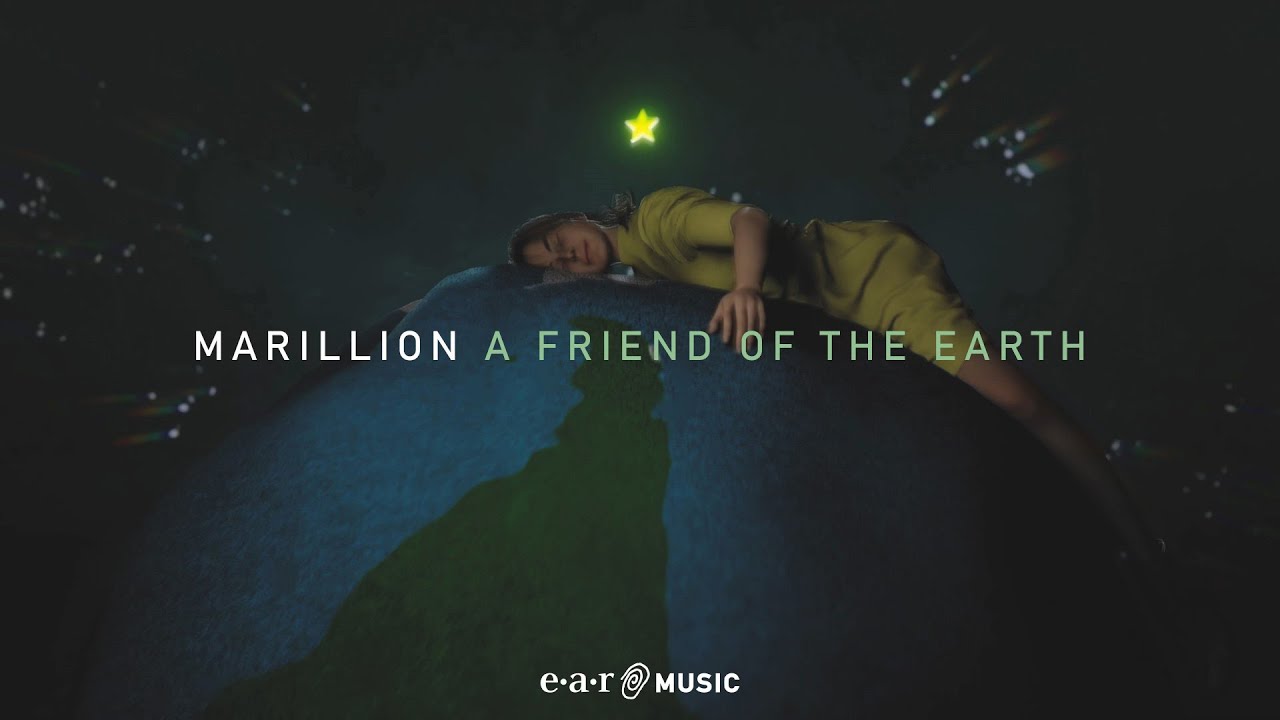
The tour was significant in another respect. It featured the live première of Be Hard On Yourself, the first single from An Hour Before It’s Dark. A dramatic exploration of humanity’s “pursuit of luxury” and its destructive impact on the world, the three-part song begins with Hogarth dreamily envisioning a ‘big ball of rocks and water[…] blue and green and made of magic,’ before plunging in the emotional knife: ‘Why would you kill it?’

“It’s a song about the environment, and how we’re going to have to change how we live if we’re not going to kill ourselves,” says Hogarth. “How less is going to have to be more.”
The power of the song comes not from anger or sadness, but from its urgency. After nine and a half minutes of shifting dynamics and escalating drama, it ends with Hogarth offering a quiet call-to-action that also gives the album its title. ‘Paint a picture, sing a song, plant some flowers in the park… Get out and make it better, you’ve got an hour before it’s dark.’
That line became the album title by someone else’s design. The singer sent a list of phrases and lyrics to art director Simon Ward. “Simon pulled it out – ‘An Hour Before It’s Dark’ would be a really good title,” says Hogarth. “Then Mike Hunter, our producer, jumped on it and said, ‘I think that’s it.’ It does encompass a lot of what’s in there.”
I was saying from the beginning, ‘We need something with a bit more pace.’ Uptempo for Marillion is 90 beats per minute. But we need something with energy
Mark Kelly
When he wrote the line, Hogarth originally saw “your mum saying to you as a kid, ‘You’ve got an hour, I want you back in before dark.’ It was meant in quite a whimsical way.” But the phrase contains a multitude of meanings beyond childhood nostalgia. It could be viewed as an exhortation to do something before our own personal clock runs down. It could be taken as an apocalyptic warning that humanity’s time is running out in the face of impending climate catastrophe or, God forbid, a lethal virus. Or it could refer the final minutes before death – a subject tangentially addressed on the album’s magnificent closing track, Care.
“I’m just saying to people, ‘Go out and make things better,’” says Hogarth. “Paint a picture, give a fiver to the local Big Issue seller. Just do something useful instead of sitting watching the box. Do something positive for the world.”
Like most of his bandmates, Hogarth had a relatively trouble-free couple of years. He dodged the virus; though the first lockdown did get off to a painful start when he was bitten while putting up a set of lights outside. “I felt like I’d been Tasered. ‘What the fuck is that?’” he recalls.
It turns out the culprit was a false widow spider – a less lethal relative of the black widow. “People had lost limbs with these things,” he says. He didn’t lose any limbs, though he did lose a tooth after opening a packet of cheese with his mouth. “It broke clean off at the gum,” he says. “I got a big gap in my front teeth that I couldn’t fix and a left hand that looked like Mickey Mouse!”
Swollen extremities and missing teeth aside, a tangible sense of positivity underpins much of An Hour Before It’s Dark. In contrast to its predecessor’s occasionally claustrophobic approach, it’s more open and upbeat, lyrically and musically – ironic given the backdrop against which it was created.
“I was saying from the beginning, ‘We need something with a bit more pace to it; we need some guitar-based stuff,’” says Kelly. “We don’t really do ‘uptempo’ – uptempo for Marillion is 90 beats per minute. But something with energy.”
We all sit in opposite corners and work on headphones anyway. We just carried on jamming and faffing about like we always do
Steve Hogarth
Fortuitously, the band had earmarked 2020 to make a new album. “If we’d planned a year of touring, it would have hit us really hard,” says Trewavas. Still, planning an album and actually making an album are two very different things, even without a global pandemic looming.
Marillion long ago abandoned the idea of simply sitting down and writing songs. “We’ve done that in the past,” says Trewavas, “and it usually ends up being rubbish!” Instead they spend hours jamming in their studio, amassing hundreds of pieces of music. “From the day we start jamming, Mike Hunter is running a multitrack recorder,” says Kelly. “We must have nearly 2,000 ideas of various lengths, from 30 seconds to 10 minutes.”
That was the easy bit. The harder bit was filleting those ideas down into ones that were actually usable. Hunter – who more than one member of the band agrees is crucial to Marillion’s latter-day success – suggested they each draw up a list of what they liked next best. “And of course none of us agreed on any of it,” says Trewavas. “Not one idea was liked by us all. So then it’s, ‘Well, which idea do four of us like, which ideas do three of us like…’”

This process seems less like making an album and more like a series of high-level United Nations negotiations to determine the disputed border of a mid-sized country. And that’s before they get stuck into the arduous job of finding a way to fit all the pieces of music together. “It sounds insane,” Trewavas agrees. “But weirdly it works for us.”
There were additional complications this time too. The pandemic meant the band had to Covid-proof their studio, installing acrylic barriers and hand sanitiser stations. “We all sit in opposite corners and work on headphones anyway,” says Hogarth. “So that didn’t make any difference. We just carried on jamming and faffing about like we always do.”
More serious was Rothery’s absence from the early sessions. As a diabetic, and carrying more weight than he’d like, the guitarist had more cause to be concerned about the virus than his bandmates. Deeming himself at high risk, he effectively put himself into lockdown in early 2020, before the rest of the country. “I was stuck at home for a few weeks while the band were working together on the album,” he says. “That was a strange feeling. But it gave me the opportunity to try and be healthier. And it wasn’t like they wrote the album without me.”
None of us know how much time we’ve got left. The band were playing this really cool, dark groove, and these words about my friend just seemed to hang in it
Steve Hogarth
When the band did reconvene with their guitarist in the summer of 2020, any hopes of the virus having run its course had faded. The band watched infection numbers rise, and with them the death toll. The situation would ultimately feed into the lyrics of Murder Machines, the album’s shortest and punchiest track. ‘I put my arms around him, and I killed him with love,’ sings Hogarth, against a pulsing, guitar-heavy backdrop.
“It’s a fearful song,” he says. “The machines are the virus, and the fear is the physical contact – that by hugging somebody you might be giving them the thing that kills them. And it’s about the isolation that so many people had to endure because of the consequences of that. A great many people lost their parents without being able to be in the same room.”
Coincidentally, our interviews take place in the week that British Prime Minister Boris Johnson is accused of breaching social distancing guidelines set out by his own government by attending a party held at Downing Street in May 2020, while the first UK lockdown was at its most restrictive. The mere mention of Johnson’s name prompts the same reaction from both Kelly and Hogarth.
“I can’t understand how we’ve ended up with such a fucking charlatan as our Prime Minister,” says the keyboard player. “The guy’s a clown.”
Hogarth is marginally less blunt. “Boris makes me angry before he opens his mouth,” he says. “In fairness, it’s easy to point the finger: ‘You fucked all this up, you should have done this or that.’ But at the beginning of it all, nobody had got it figured out. Nobody even knew how it was transmitted – did it live on the kitchen counter? What did piss me off was the feeling of Tories being Tories – they’ll never pass up a business opportunity to make a few million quid for themselves and whoever they sat next to at Eton. The cronyism pissed me off, and continues to piss me off.”
Not all of An Hour Before It’s Dark references the events of the last two years. The Crow And The Nightingale is Hogarth’s “we are not worthy” tribute to Leonard Cohen, while the undulating 11-minute Sierra Leone is the vivid tale of poverty-stricken man who finds a diamond buried in a rubbish dump in the titular West African country, only to refuse to sell it. “It’s about dignity and respect,” says Hogarth. Yet even here, images of ‘sleeping in the white sand of Sierra Leone’ evoke a sense of freedom that has been all too scarce over the last two years.
But it’s the closing track that stands as the album’s musical and emotional heart. Care isn’t just the best piece on the album, it’s one of the greatest songs Marillion have written in their 40-plus-year career – a shifting, soaring journey that begins on the edge of darkness and ends, 15-minutes later, as a hymn to compassion and hope.
The people who wore themselves out, the people who killed themselves to help us… If they don’t deserve a song, who does?
Steve Hogarth
Two key real-life events inspired it. The atmospheric opening section paints a vivid, first-person image of a hospital patient being fed ‘maintenance drugs to keep me alive.’ It’s based on a friend of Hogarth’s, who was diagnosed with a series of tumours down his spine, and sent selfies while he underwent gruelling chemotherapy treatment.
“I was there with him, and we became much closer friends because of it,” says the singer. “But it just made me think that none of us know how much time we’ve got left, from the moment we’re born. The band were playing this really cool, dark groove, and these words about my friend just seemed to hang in it.”
The song’s central sections pulls the camera back, offering a contemplation of mortality and loss. “A final declaration of love, the kind of declaration you might make at the end, when you’re facing death,” as Hogarth puts it. “You go to the people who have loved you; you see it for what it is and you maybe want to thank them.”
However, the final section, titled Angels On Earth, is the real emotional kicker. Hogarth had seen a news story about a mural in Manchester painted by artist Paul Barber, based on a photo taken by nurse Johannah Churchill. It showed one of her colleagues, Melanie Senior, dressed in sea-blue hospital scrubs and gazing sidelong at the camera over the top of a regulation-issue face mask, her hair pulled loosely back, the visible part of her face etched with a range of emotions: fear, uncertainty, anger and exhaustion.
For Hogarth, the photo summed up both the desperation of the times and the humanity it brought to the fore. As he sings, ‘The angels in this world are not in the walls of churches… the heroes of this world are not in the hall of fame’, two years’ worth of emotion comes rushing out in one exultant torrent.
“They’re people who were working while we were sleeping during that crisis,” he says. “The people who wore themselves out. The people who killed themselves to help us – those people who died as a consequence of the viral load that they picked up trying to save people. If they don’t deserve a song, who does?”
I’ve got a suggestion for how to make another album much quicker. But it’ll be a different sort of album if it does happen
Mark Kelly
The result is magnificent and moving, and not just to listen to. Hogarth admits he “was crying singing it,” and his bandmates were similarly moved. “It brings a tear to my eye sometimes when I listen to it,” Rothery says.
And Hogarth’s friend in Mexico, the one who went through his own medical struggle? He beat the tumours. The singer sent him the finished version of Care. “He was knocked out by it, completely knocked out. He thinks it’s amazing.” He adds with a laugh, “So that’s a relief!”
Care encapsulates not only An Hour Before It’s Dark’s greatness, but also its humanity and its optimism. These are dark times, and the album doesn’t shy away from the fact. Still, the singer wonders if the subjects he’s singing about will still resonate when the album comes out. “They were most definitely of a time,” he says of the themes he explores, “and the longer we leave it on a shelf, the less fresh it becomes.”

He’s worrying unduly – though the passage of time is hard to ignore with Marillion. Six years separate An Hour Before It’s Dark and FEAR, but the gaps between albums were getting longer even before the pandemic. It’s something the band are acutely aware of.
“It does get harder,” says Kelly. “With FEAR, we thought, ‘What are we going to do after that?’ And the only thing we could do before we even considered making another album was leave it alone for a few years. The idea of going straight back in the studio right away and starting on that long road… H would just refuse. He’d have to come up with another album’s worth of lyrics.”
Except that Marillion theoretically have at least part of another album already in the bag. Depending who you speak to, it’s “three or four” songs (Hogarth), “four or five” (Kelly) or “half an album’s worth” (Rothery).

“They’re different sorts of songs,” says Kelly. “They’re simpler, more straightforward, not your 10- or 15-minute epics. We really liked them a lot, but we just felt that they didn’t go with this album.”
Typically, no one can agree when the tracks might see the light of day. Kelly, for one, wants to release a new record sooner rather than later. He’s thinking about ways of bypassing the usual agonies. “I’ve got a suggestion for how to make another album much quicker. I need to email the rest of them. But it’ll be a different sort of album if it does happen.”
Few bands this far into their careers make albums as vital as An Hour Before It’s Dark. “If we stopped tomorrow, we’d certainly be ending on a high note,” says Kelly. “But I don’t think we’re winding down. Years ago, when things were a bit tough, I had a bit of a midlife crisis, thinking maybe I should get a proper job. I wasn’t that bothered about touring so much, and I told myself I wouldn’t miss it. Now I’m like, ‘I want to keep going.’” He pauses for a second. “Although I don’t think we should carry on until it sounds shit!”

