


For a band known primarily as creators of high concepts, soundscapes and atmospherics, Pink Floyd have also made some strikingly heavy rock music. In 2022 Prog published our list of the most notable.
Interstellar Overdrive (1967)
One of two long-from pieces from the band’s debut album The Piper at the Gates of Dawn – the other being Astronomy Domine – it’s said to have originated when then-band leader Syd Barrett heard manager Peter Jenner trying to hum the tune of a song whose name he couldn’t remember (it may have been Love’s version of My Little Red Book). It’s been described variously as one of “the very first psychedelic instrumental improvisations by a rock band” and “an abstract piece.”
When the band move from the Frank Zappa/AMM inspired free-form section back to the main pounding riff, the effect is quite startling. Not bad for a song Roger Waters once said reminded him of the theme to TV’s Steptoe & Son.
The Nile Song (1969)
From the soundtrack to Barbet Schroeder’s psychedelic drug-fest More, the first full-length Floyd album with no involvement from Barrett. Written by Waters and sung by David Gilmour, The Nile Song is almost a proto-version of Not Now John, which features later in this list. It was released as single in France, Japan and New Zealand, and was covered by Floyd fans Voivod on their 1993 album The Outer Limits.
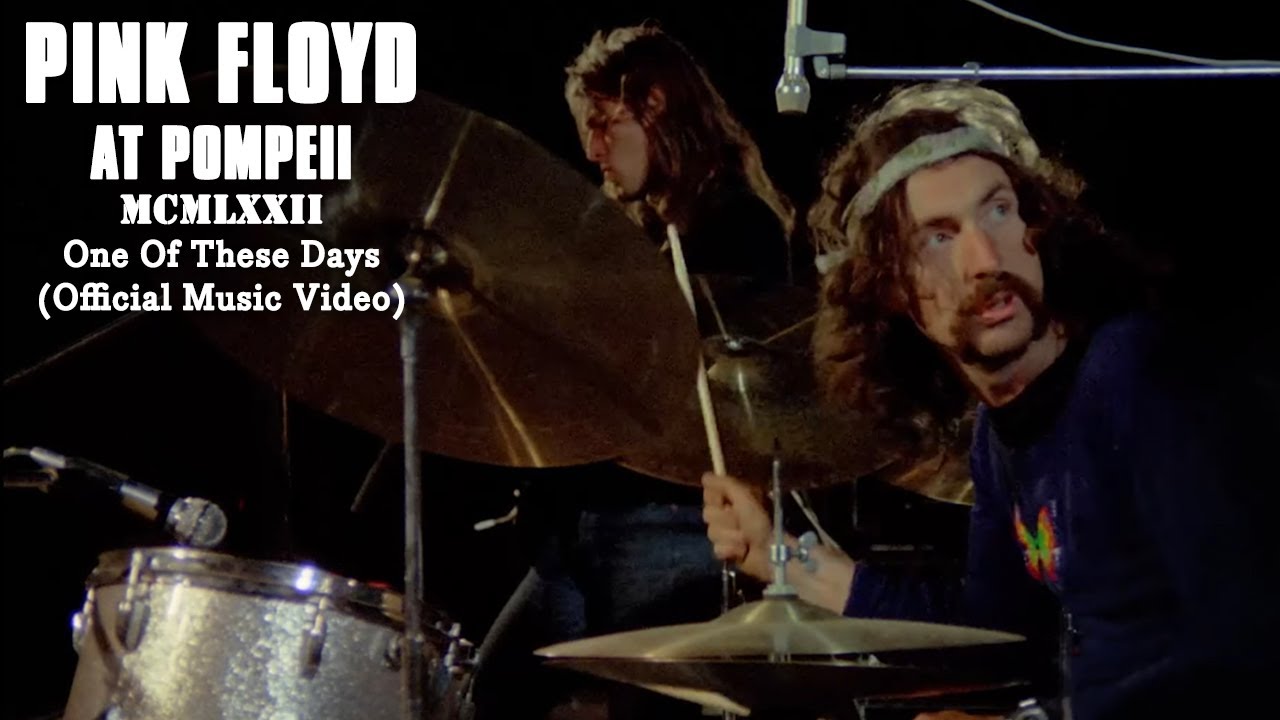
One Of These Days (1971)
The opening track from 1971 album Meddle, which saw them beginning to move away from the space rock of their earlier albums, working in a more defined manner and beginning to veer towards conceptuality.
For many, the side-long Echoes is what makes Meddle such an important album in the Floyd canon. But this bass-heavy instrumental opener is worthy of attention, with Nick Mason’s heavily effected ‘One of these days I’m going to cut you into little pieces’ spoken interlude the only vocal. When they performed it live in the 80s, the legendary Floyd pig, Algie, would be flown menacingly over the audience.
The Gold, It's In The... (1972)
The band returned to work with Iranian film director Schroeder on his bizarre voyage of self-discovery La Vallee, set in the jungles of Papua New Guinea, naming their soundtrack Obscured By Clouds.
One of their very few songs that doesn’t feature any keyboards, this tune ranks alongside The Nile Song and Not Now John as Floyd at their most metallic. Capturing the essence of the free-spirited 70s, this was also the B-side of the single from the album, Free Four, another up-tempo rocker.
Sheep (1977)
If Animals – Waters’ treatise on society in a manner akin to George Orwell’s Animal Farm – was heavy going, then the 10 minutes of Sheep was the heaviest song on the album, building to a caustic Gilmour guitar attack, with Waters equally venomous in his lyrical delivery.
It’s often described by Gilmour as the band’s “punk album” – and as “a slog” by the late Rick Wright, whose relationship with self-appointed band leader Roger Waters was deteriorating. Waters would instigate Wright’s sacking during the making of follow-up The Wall).
![Pink Floyd - Sheep [2018 Remix] - YouTube](https://img.youtube.com/vi/R6losoE1s4c/maxresdefault.jpg)
In The Flesh (1979)
The opening track from the epic double concept album The Wall is named after Floyd’s 1977 Animals tour during which Waters legendarily spat at a member of the audience – inspiring his alienated rock star concept. It’s certainly an explosive start to the album, all crashing keyboard power chords and blazing guitars.
The riff was taken from what would become Waters’ solo album The Pros And Cons Of HitchHiking, which he’d written concurrently with The Wall. When performed live, backing musicians made to look like Floyd performed as the “surrogate band” mentioned in the lyrics.
The Thin Ice (1979)
The second track from The Wall is almost a segue of the opener, telling the story of the central character, Pink, as he grows up – opening with the closing crying child from In The Flesh. All runs relatively smoothly, lyrically and musically, until Waters takes over from Gilmour on vocals, warning of “the thin ice of modern life…”, and soon all hell breaks loose with a huge heavy rolling riff reminiscent of the previous track.
Young Lust (1979)
A rather simple blues-based hard rock song from The Wall, it tells the tale of casual sex on the road. The phone conversation at the end was inspired by a real-life event when Waters called home from tour in 1975, and a man answered – revealing his then wife’s indiscretion. Co-producer James Guthrie staged a real telephone call to a friend in Los Angeles so he could record the reaction of the operator, who remained unaware she was being recorded.
Not Now John (1983)
A storming hard rocker from 1983’s The Final Cut, Waters’ anti-war concept album which some suggest was more a solo album than a Floyd one. Not Now John features Gilmour’s only vocal on the record, along with some of the most incendiary guitar playing he ever recorded – possibly reflecting the terse nature of the studio sessions.
Released as a single, it had the main refrain of “Fuck all that…” replaced with “Stuff all that…” as the lyrics railed against corporate greed and corruption.
Sorrow (1987)
The closing track from 1987’s A Momentary Lapse Of Reason, the band’s first release since the acrimonious split with Waters and the court case that followed. It’s pretty much a Gilmour tour de force, written and largely recorded over the space of a weekend aboard his houseboat Astoria.
He’s often admitted lyrics are not his strong point. Sorrow, inspired by Steinbeck’s novel The Grapes Of Wrath, began as a poem to which he set music; normally he works the other way round. In the live arena it serves as the perfect vehicle for his stunning guitar playing.

