


Best known as the voice behind Vienna and his subsequent successful solo career, Ultravox frontman Midge Ure has developed a varied CV. He’s currently touring his new solo double album, which includes a full side of instrumentals. Prog takes a deep-dive into his life to uncover the influences behind A Man Of Two Worlds and his prog connections.
When do you remember first being moved by music?
The first thing I remember hearing on the radio was a guitar instrumental – Santo & Johnny playing Sleepwalk [1959]. The haunting sound of this lap steel guitar was just so exciting.
Then when I started playing, I went through that phase of listening to the Yardbirds, Bluesbreakers and the rest – the guitar heroes – and you learned by copying them. Even to this day, my basic guitar skills are based around that kind of blues scale.
All those things stick. You fall in love with the Small Faces, then your mate’s got a King Crimson album. So you fall in love with The Crimson King. And all those little elements stick to you.
So you did have your prog moments! Did you ever see Crimson live?
Yes, but to be honest, I don’t remember too much about it!
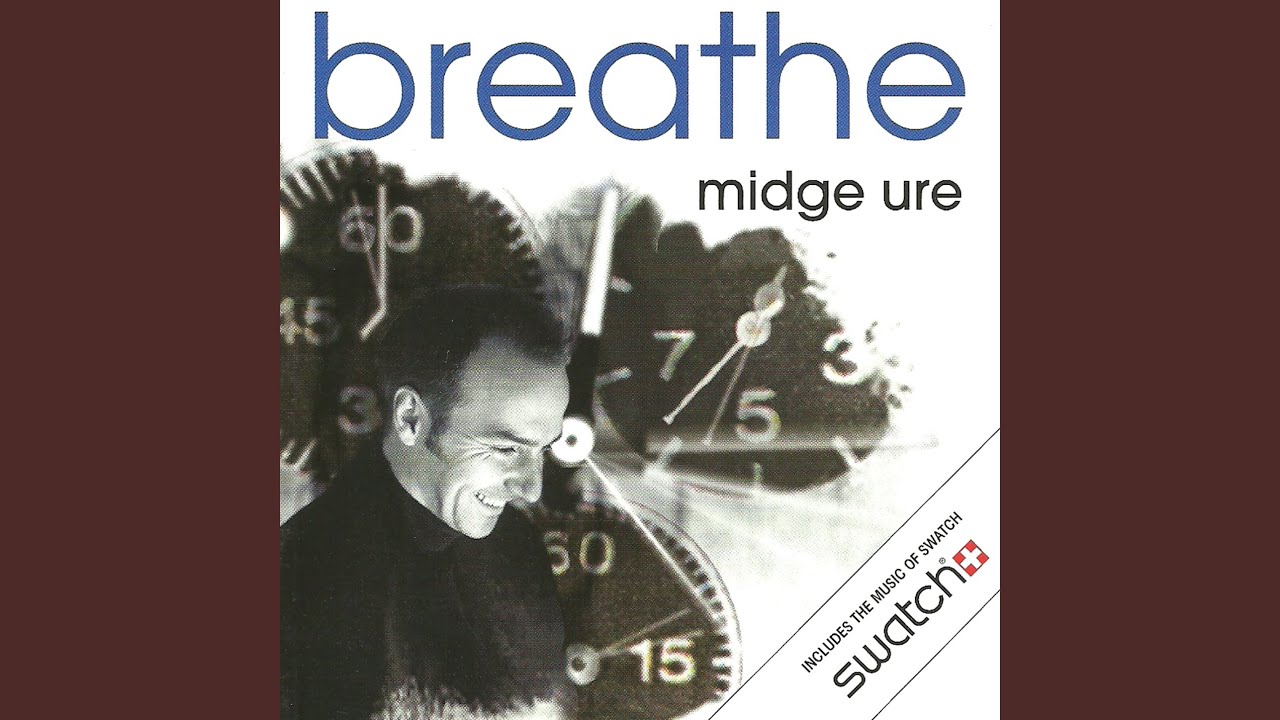
You ended up working with Robert Fripp later, though, when he played on your 1996 album Breathe.
I was in Los Angeles making that album and I saw Robert was recording there. I thought his Frippertronics thing was fantastic – but I wasn’t going to try and emulate it, because it’s a very specific thing that he does. But if I could get him to do it on my record…
So I asked if he would play on Guns And Arrows and he said, “Well, I’ve got 40 Japanese students with me.” I was working in a tiny little studio. But opposite us was Dave Stewart from the Eurythmics, who had a big studio in his house, so we booked that. Robert turned up with all this equipment and 40 Japanese guitar students, and he kind of educated them as he was playing.
He said, “This is Midge, and this is in D-minor, so what I’m going to do is this…” and he started doing drones and all these Frippertronics things. It was just incredible; they all had their hands and faces pressed up against the window watching Robert, and I was just as fascinated as them.
Were you interested in music technology back in your early days?
I was fascinated, but I didn’t have much access to it. I remember seeing someone on [BBC tech show] Tomorrow’s World with a guitar that made the sound of a keyboard. It was way beyond anything I could imagine. They also had a keyboard that made the sound of an orchestra, or, you know, whatever.
Didn’t Yes also play an incidental role in you gaining the courage to be a singer?
Yeah – I was in my teens, and I still had a fairly high, boyish voice. My older brother pointed out: “That Jon Anderson, he’s done all right, and he’s got a really high voice!” So that gave me a bit more confidence.
Synth was as punk as picking up a guitar – ‘I can do this! I don’t have to be Rick Wakeman’
Another prog connection: you covered Jethro Tull’s Living In The Past on your debut solo album in 1985. Were you a fan in your youth?
I was a fan of that song, certainly. I remember when I was 16, riding my motorcycle up to technical college, hearing that song and it stuck with me. Later on, I went to see Tull [in November 1974] at the Apollo in Glasgow. As an aspiring guitar player, watching the band perform, you were blown away by the musicianship. And you couldn’t take your eyes off Ian, this crazy guy swinging his flute around.
On your new album there’s a really ambient feel to many of the instrumental tracks. That seems to hark back to your early interest in Krautrock and Berlin-era Bowie.
Yeah, that’s definitely in there. I remember back in the Slik days, I was in London listening to John Peel, and they played some tracks from Low. It just completely blew my head off. I’d never heard anything like that – the production, that bizarre, detuned snare with a big ambient sound. It was a revelation.

And of course, Music For Films – all that stuff going on before it was cool to make instrumental music. And they were doing it on tape with very limited equipment. Rusty [Egan, Visage and Rich Kids bandmate] used to say, “I can’t stand it – sounds like somebody’s banging bones together!” But it always captivated me, as did modern classical stuff like the Penguin Cafe Orchestra.
Was there a DIY element to playing electronic music in the 1970s?
When I joined The Rich Kids, Rusty was putting a little club together [which would become New Romantic HQ The Blitz], and he’d find these tracks coming out of Europe, which we never heard on the radio – we were so UK- and America-centric. You’d hear these Kraftwerk things, or [Belgian synthpoppers] Telex, or these guys who were using electronics. That’s what drove me, in 1978, to go out and buy a synthesiser.
I’d put Japan and Ultravox in the same category. They didn’t just do standard three-minute singles – they explored
Although I didn’t know how to play it, it was as punk as picking up a guitar and learning three chords had been two years before – “I can do this! I don’t have to be Rick Wakeman. And there’s this box that makes infinite noises you can’t even begin to imagine.!” And they were just becoming affordable.
Yet at the same time, you were playing stadiums with Thin Lizzy.
Yeah; within 24 hours of Philip asking me [to step in when Gary Moore left in the middle of a 1978 US tour], I was in New Orleans, learning all these harmony guitar parts. My heart was with Ultravox – I’d already joined the band – and I was also finishing production of the first Visage album. So it was like a busman’s holiday to me, opening for Journey in front of 30,000 people. Because I knew I wasn’t staying with them.
When you joined Ultravox, did it feel like you’d found your home?
We had no money, no management, and the band had been dropped by the record label. But the moment we plugged in and played, it was the most magnificent thing I’d ever heard. It was unbelievably powerful, this combination of the synth, bass and drums. And, you know, it was heavy – Ultravox was a rock band. It was incredibly powerful onstage. So that was my band; I’d found my little Midge space, after kissing a few frogs!
Among your fans was a young Steven Wilson, who, many years later, remixed four Ultravox albums from your era.
I’ve never met Steven. We keep saying we’re going to try and hook up. But he seems to be the man of the moment: he’s touring his own stuff, he’s still doing Porcupine Tree – how does he find the time? It seems he can just throw digitised multitracks into his computer and remix things incredibly well. He’s doing Atmos mixes too, which is a different animal again.
It’s not so much of a surprise that he’s a fan, because of course he works with Richard Barbieri, and I would put Japan and Ultravox in the same kind of category, because they didn’t just do standard three-minute singles – they explored, and they stuck their neck in the noose a lot of the time. I suppose back in the 80s you could call that electronic prog.
They use the term ‘genius’ but it barely covers what Kate Bush does. I was just unfortunate that I wasn’t there to see her doing it
In America, weirdly, they used to compare Ultravox to The Moody Blues. To me it’s so far removed, but I guess they heard similarities because it had Mellotron-like string effects.
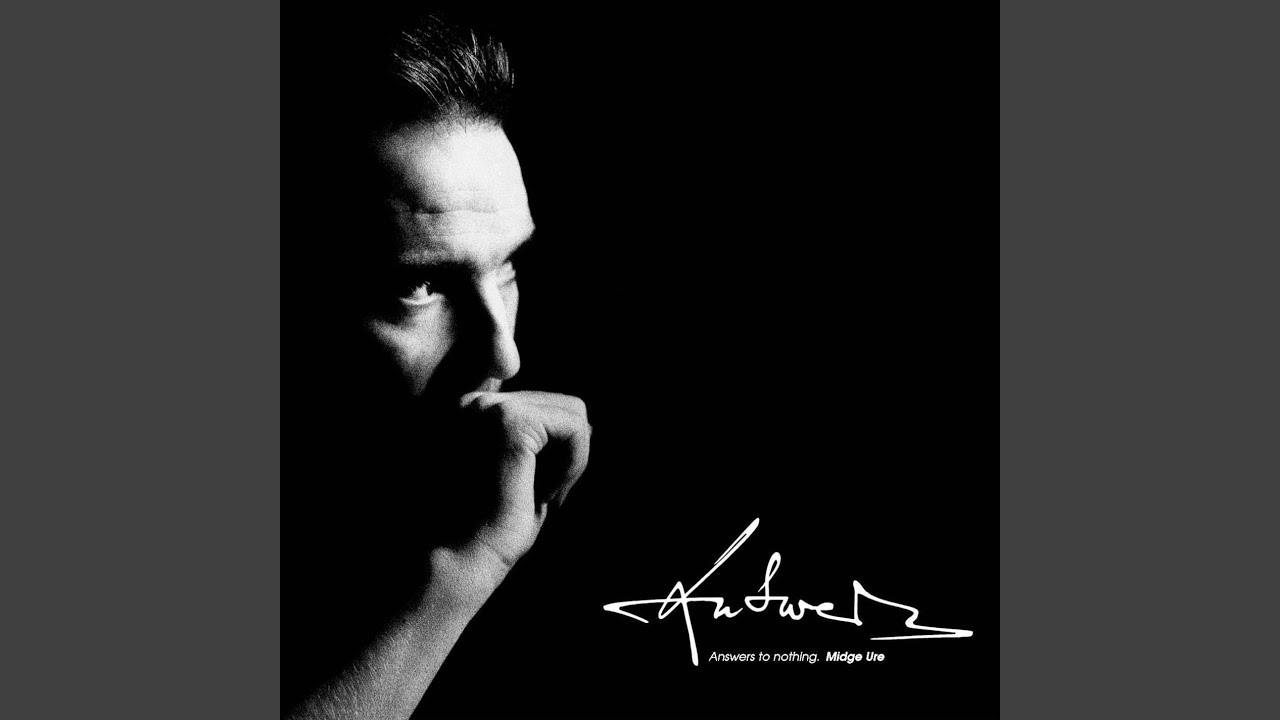
Another prog-adjacent person you’ve worked with is Kate Bush, who duetted with you on Sister And Brother ftom 1988’s Answers To Nothing.
At a Prince’s Trust do we got chatting and she asked me what I was up to. I said, “I’m recording – and by the way, I’ve got a duet I’d love you to do.” She said, “Well, I’m right in the middle of my own album right now, but send me over the multitracks, and if I get a chance I’ll sing it.”
Then she called up a few days later and asked me to come over to hear what she’d done. And, of course, she had Kate Bushed it! She’d done this Kate choir at the end of it, all this multitrack stuff. She’d obviously spent a lot of time. I was completely agog – they use the term ‘genius’ but it barely covers what she does. I was just unfortunate that I wasn’t there to see her in action, doing it.
Your CV doesn’t have many gaps, but have you ever been offered soundtrack work?
I always thought Ultravox could have done soundtrack stuff, had we been able to agree on things. You know, the way Tangerine Dream moved into that area. But it never really happened. The only things we’d be offered were these bizarre, ooh-missus-where’s-my-trousers sex romps – so wrong for us, so we didn’t do it!
But when you write instrumental music, in a way you’re writing a soundtrack for a movie that doesn’t exist yet. It’ll exist in people’s heads, and everyone’s heads will have a different movie. That’s why, with no lyrics, the music has to stand up on its own two feet.
Ure’s doulbe album,A Man Of Two Worlds is out now.

