


Nine years before Richard Barbieri became part of Porcupine Tree, he’d joined Japan alongside David Sylvian, Mick Karn and Steve Jansen. He tells Prog his reason for being in a band was very different from that of his colleagues – and explains how he developed his unique approach to making music.
What was the spur to form Japan?
For David, Mick and Steve it was escapism, looking for a way out, as well as being creative. They hated living in Catford and didn’t have the best relationships with their parents.
It wasn’t quite the same for me – I was fairly happy. I worked in a bank for a year and a half and was then brought into the band. Between them they’d sorted who was playing what instrument.
I couldn’t play anything, wasn’t trained and couldn’t read music, but I was interested in taking part. I started on keyboards and I’d get thrown out – then brought back in. I just couldn’t play in a conventional way.
Did you get any keyboard inspiration from prog?
Both Keith Emerson and Rick Wakeman put me off because their music sounded like these scales that went by so quickly. They were astounding and dynamic, and I could never do that.
I was more drawn to Tony Banks and Rick Wright. They were melodic and atmospheric. I liked Gentle Giant as well, though – that was probably as far as I went in terms of technicality.
With Roxy Music, Brian Eno showed me how you could use electronics and sound within the context of a pop song. It’s always been the case for me that if you slow things down, what you’re doing becomes more interesting. You can let things evolve and you can do more with the sound.
And then having a synthesiser changed everything?
It did. I’d saved up for a Micromoog. I started to find my own voice when playing it – I was coming up with interesting things that impressed the other guys. It took a while, but it worked towards me having my own position within the group and feeling confident.

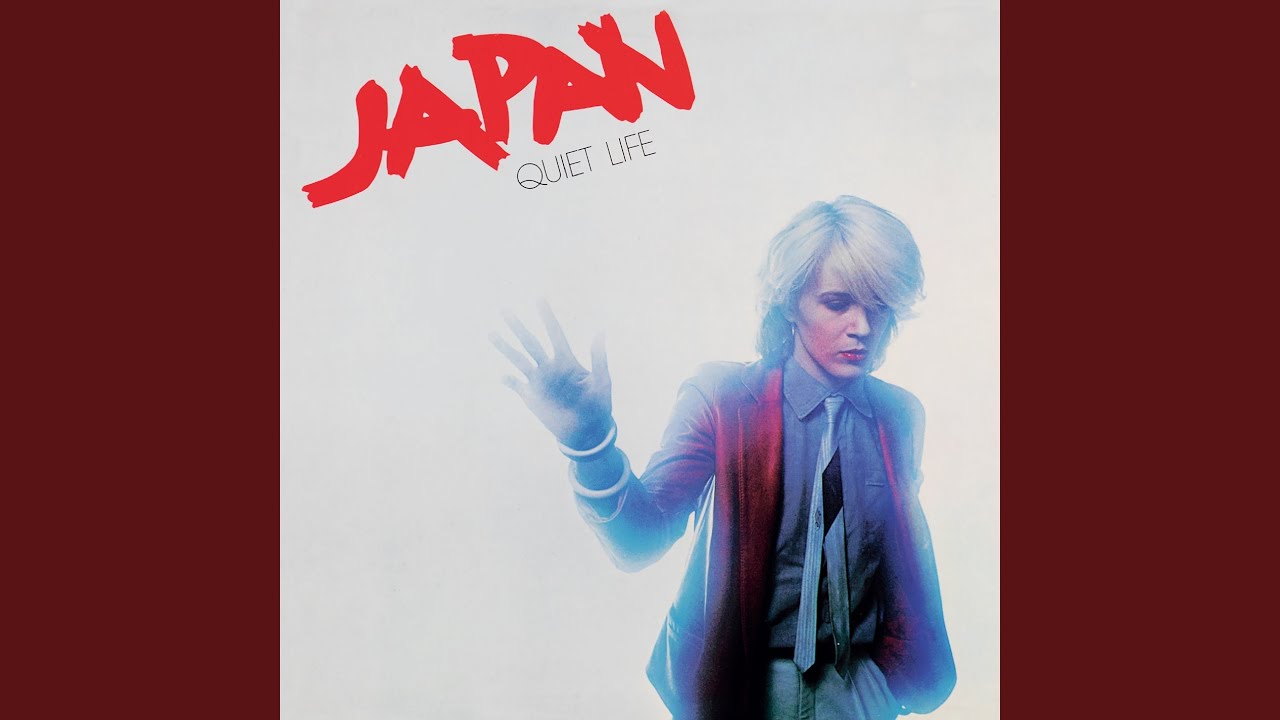
Once I was playing synthesisers. and allowed to take my time overdubbing in the studio, the music started to become more based around what I was doing. The third album, Quiet Life [1979], was a huge jump for us – a more sophisticated sound palette. With that album I could just go in and layer things, and that was like a luxury.
Japan looked so striking, quite pretty and pouty, with backcombed hair and makeup. How did your parents feel about that?
They were very good; very patient. I think occasionally they used to say to the neighbour, “Well, you know, he’s in the entertainment industry.”
Did you have to tone things down visually for visits to your local football club, Millwall?
I’ve gone to Millwall with blue hair – that was quite a brave thing to do. I also used to play tennis with coloured hair, but I’d lay off the lipstick and rouge. Our early look actually helped us get our deal with Hansa Records.
We auditioned as part of a competition and they chose us because David was wearing a woman’s fingerless glove, three-quarters long up the arm, and black mesh. That swung it!
You had some weird support slots at the beginning, didn’t you?
We toured the UK with Blue Öyster Cult [in 1978]. They were considered a bit naff by the music press then – rock dinosaurs. We got booed by the crowd every night, but we got some good press.
We also supported The Damned, and Jim Capaldi’s band, which was half of Traffic with Stevie Winwood in the line-up, and Osibisa. We didn’t really fit with anyone until new romantic came along.

