


Klaus Meine and Rudolf Schenker exude more pep than might reasonably be expected of two 77-year-olds. When Classic Rock talks to them they’re still buzzing from their band’s 60th-anniversary homecoming show in Hannover, Germany, and their general vibe chimes with the spirit of the title track of Scorpions' 2022 album Rock Believer.
As men still smitten and sustained by the genre after which this magazine is titled, Scorpions are big on the restorative power of riffage, and big on turning the spotlight on their fans. When vocalist Meine sings ‘I’m a rock believer, just like you’, it rings true.
As Scorpions’ lyricist (aided by their then drummer Herman Rarebell from 1977-96), Meine has better English than Schenker. However, Schenker’s enthusiasm for the band he founded always translates.
“Sixty years on the road and still happy to be a rocker!” the guitarist says, beaming, chatting via Zoom. “Only us and the Stones can say that.”
Shades on, cheekbones still prominent, Schenker is backstage prior to Scorpions’ headline show at the Marés Vivas festival in Portugal this summer. Forever upbeat, he seems like the possible model for Viv ‘Have a good time – all the time’ Savage of Spinal Tap.
“Hannover was amazing, fans coming from Mexico, from Australia,” he enthuses. “Normally I do a runner after the show, but I stayed up until two a.m. that night. I was shaking hands with our old manager Doc McGee and many other friends. Unbelievable!”
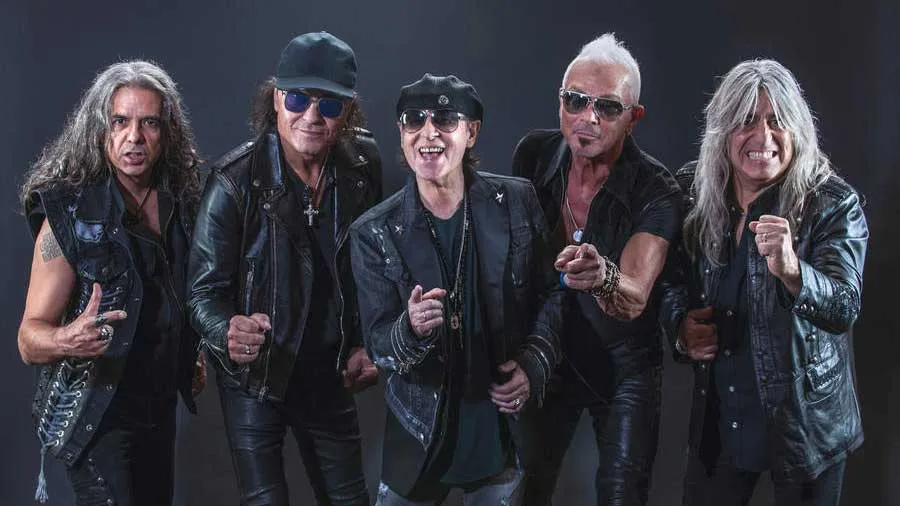
Meine, chatting from his home in Hannover two weeks later – prior to flying to Las Vegas for the band’s five-night stand at Planet Hollywood – is a warm, relaxed presence, wearing his trademark black beret. He too, speaks fondly of Scorpions’ homecoming show with old pals Judas Priest and Alice Cooper.
“The vibe was incredible,” he enthuses. “It felt like a statement about our roots. You know: ‘Thank you! This is where we come from.’ It sold out really quickly and the promoters asked for a second show, but we wanted it to be special, a one-off.”
With hindsight, only the July 4 timing of the Hannover show (released this week as Coming Home Live) came to seem unfortunate. Scheduled prior to Ozzy choosing that day for his final stand at Villa Park, it precluded Scorpions’ involvement – and that of Judas Priest – in that similarly momentous event.
“Not joining Ozzy was a shame, especially later when we heard the very sad news that he had died,” says Meine. “But it was great to give something back to our home city,” he adds, alluding to Hannover airport being renamed Hub Of The Scorpions in honour of the band, and to the Scorpions-themed exhibition, named Rockstage, that has been a permanent fixture in the airport’s Terminal B since March.
“So many lovely things have happened this year, but we were a little worried people would get sick of us when they touched down in the ‘Hub Of The Scorpions’,” Meine says, laughing. “Maybe it’s too much.”

In these times of rapprochement à la Oasis’s Gallagher brothers or The Black Crowes’ Robinson brothers, some Scorpions fans had wondered if their 60th-anniversary celebrations might also see longestranged siblings Rudolf and Michael Schenker on stage together again in Hannover. But it was not to be. Does Meine – the onlooker in between, who played with Michael in covers band Copernicus before they both joined Rudolf in Scorpions in 1969 – sometimes despair?
“Well, it’s a family affair and it’s their business,” he says. “I think Rudolf was pretty much up for Michael joining us, actually, but the whole guest issue was very complicated by Ozzy’s farewell show and other people’s touring commitments. There is part of me that wishes whatever [bad blood] is between us all could be washed away and we could hang with Michael like we did in the old days. He’s still a wonderful guitar player, truly amazing.”
“I love Michael, but he’s too different,” Rudolf says, frankly. “He’s a solo artist, and he has a hard time being part of a band. But like everyone who has played with the Scorpions, he will be thanked on the sleeve of Coming Home Live.”

Rudolf reveals that there was also talk of Uli Jon Roth – who replaced 16-year-old Michael Schenker in Scorpions after the band’s 1971 debut album Lonesome Crow and was with them for their next four albums – reuniting with the band in Hannover.
“But the record company wanted a live album, we were also filming the show, and Uli wanted his own amplifier, all his own gear on stage,” Schenker kind of explains. “We said: ‘Sorry, Uli, we can’t have people getting bored watching roadies.’ I think it was good we concentrated on ourselves. That way we made no mistakes.”
Along with the Coming Home Live album and new compilation At First Sting (more of which later), Scorpions’ 60th-anniversary celebrations also herald yet another major event. Wind Of Change, the long-overdue biopic of the band (directed by Alex Ranarivelo and produced by Ali Ashfar), was made largely at Warner Bros Studios in Leavesden, Hertfordshire, with additional filming in Liverpool. As we speak, it’s undergoing post-production tweaks in Los Angeles.
In Leavesden, sets recreating post-WW2 Germany were built to portray the world into which Scorpions emerged in 1965, seeking change, acceptance from US and UK rock fans, and ultimately fame. All three would come their way eventually.
“Yes, I think it was in 1970 that I said that Scorpions would become one of the top rock bands in the world,” says Schenker. “People thought I was mad.”

“It was quite a dream for some young boys from Hannover,” says Meine. “It was not easy in the beginning to write English lyrics, but that was the only way to find our way into the international rock community. In the early days we experienced some racism, and the UK press were always talking about ‘blitzkriegs’ or calling us ‘the worst German import since the V2 bomb’. But then the concerts got so good that people either forgot where we were from or didn’t think it mattered.”
All of this plays out in the film Wind Of Change, in which producer Ali Ashfar’s involvement is deeply personal. Ashfar has said that Scorpions’ message of love, peace and rock’n’roll was “an immense comfort” to him growing up as an Iranian immigrant to the US, and that the band’s music “changed my life, if not saved it”. He too was an outsider smitten with hard rock.
“We’ve met with Ali many times, and we feel he’s the right guy,” says Meine. “Of course, you look at other successful biopics, like Bohemian Rhapsody [Queen] and Rocket Man [Elton John], and wonder if you should join the competition, but with Ali it’s a matter of trust.”
In the film, German-born Alexander Dreymon plays Rudolf Schenker, and his countryman Ludwig Trepte plays Meine. Did the Scorpions pair offer the actors any tips in terms of how they should be portrayed?
“Yes, of course,” says Schenker. “Alexander came to Hannover and we chatted for five hours. I told him he should read my [German-language only] book Rock Your Life, which gives advice about meditation and enjoying yourself.”
“With Ludwig,” says Meine, “I gave him a tip about the [specific] way I move the mic when I offer it to the audience to sing. We’ve mostly stayed out of it, though. Obviously, we know the script already.”
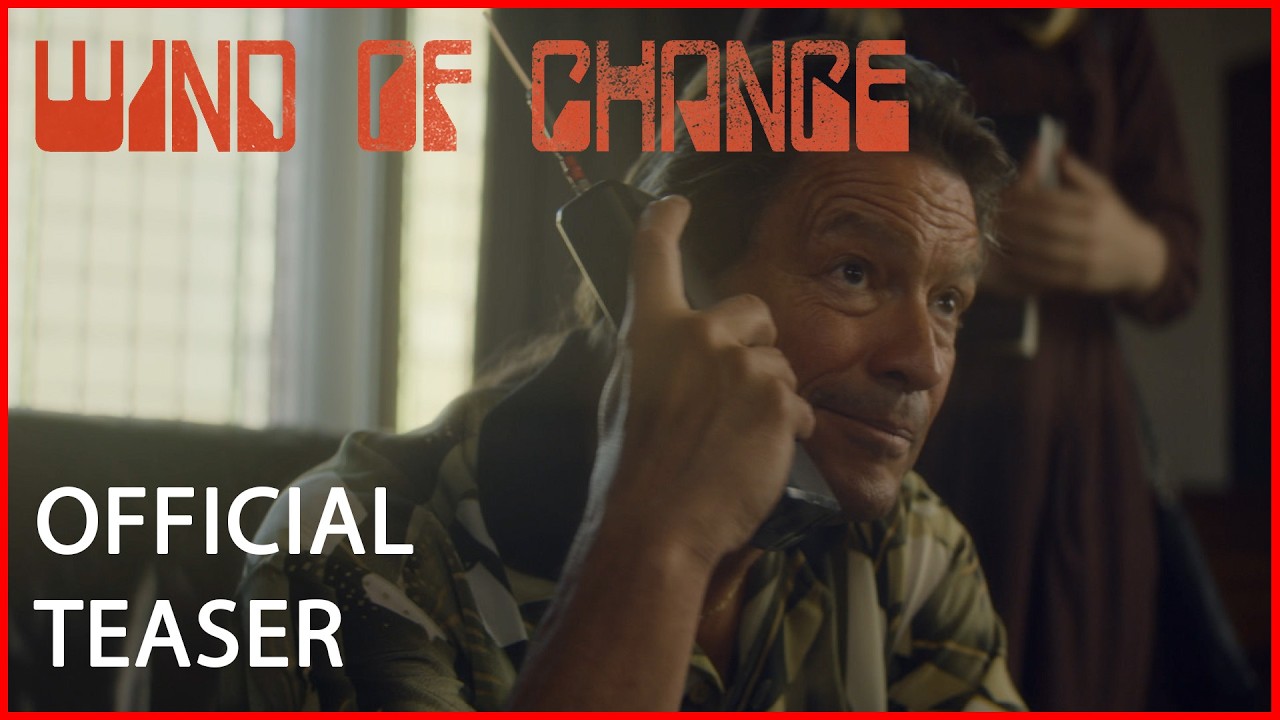
In a teaser for Wind Of Change, Trepte/Meine remarks pointedly: “We are not like our fathers. We are the new generation of Germans.” Playing Schenker, Dreymon quips that Scorpions are “like The Beatles but more dangerous”.
The film also explores Scorpions’ late-80s role as a genuinely transformative force in the Cold War era and beyond.
“Lots of music movies only focus on the sex, drugs and rock’n’roll,” notes Meine, “but this one has another side too. It would be crazy to try and look at sixty years of the Scorpions’ career, so it follows us from the early days up until this very special moment in time.”
Ah, yes. 1989. By that point Scorpions were already a decade with their current other guitarist Matthias Jabs. Beating 140 other auditionees, Jabs had replaced Uli Jon Roth as second lead guitarist in time to play on Scorpions’ 1979 classic Lovedrive album, and now the band were knee deep in the glasnost era.
Together with other western rock acts including Mötley Crüe and Ozzy Osbourne, they played alongside Russian bands including Gorky Park at Central Lenin Stadium that August in an event billed as the Moscow Music Peace Festival.
Promoting empathy between the Western and Eastern blocs, it was broadcast live to 59 nations, and later inspired Meine’s whistling-led power ballad Wind Of Change. The song quickly became synonymous with the fall of the Berlin Wall that same year, and would go on to sell more than 14 million copies, making it the biggest-selling single by a German artist. In 2025 it’s difficult to imagine any single making such a resonant, politically charged splash.
“Obviously the world has changed since then, and I’ve had to change the lyrics over the years,” says Meine. “The terrible war in Ukraine is just one of the reasons I don’t feel as hopeful as I did when I had the idea for the song. But when I was sitting in the Gorky Park Center looking at the Moskva River, glasnost [then-Soviet Union president Mikhail Gorbachev’s late-80s policy of transparency and open discussions in the Soviet government] seemed very real.”

Rudolf Schenker always wanted to play anywhere and everywhere. His kid brother Michael began playing guitar professionally straight from school. But for Rudolf, the contrast between his mundane day job as an electrician and the heady thrill of driving to Marseille and back for one gig brought a missionary zeal.
“Of course, I became a rock believer,” he says, smiling. “We used to make our own leather trousers. Then I realised that you could be a quite big krautrock band like Amon Düül, or you could sing in English, play abroad and get really big. Once you are successful somewhere, the record company makes your record available there. That was the trick.”
It was in 1982, Schenker recalls, when the North American leg of the band’s Blackout tour took in such prestigious venues as Madison Square Garden, and their single No One Like You set US rock radio on fire, that he first suggested Russian dates to his bandmates. “I was like: ‘There’s nothing there. No record company. Let’s go and show them that the new generation from Germany are bringing love, peace and rock’n’roll.’”
Later, when Schenker chatted with Eastern European concert promoter Laszlow Hegedus at the 1984 Monsters Of Rock Festival, Hegedus told Scorpions of “a new guy” named Mikhail Gorbachev.

“Laszlow said: ‘I have good connections there, I’ll take care of it,’” Schenker remembers. “And he did. We played five shows in Moscow and five shows in Leningrad, and became good friends with our Russian support band Gorky Park. On the first night, they turned up and said: ‘Our manager has let us down. We’re sorry, we have no amplifiers.’ We said: ‘Look – lots of amplifiers. Pick whatever you want.’ We learned to make a bad situation into a good one.”
Klaus Meine’s memories of the Blackout era are less happy. Despite that being arguably one of the band’s best and most successful albums, the period was probably the nadir of his whole Scorpions career. It was the band’s long-term, all-important producer Dieter Dierks who first noticed Meine’s voice was ailing badly as they began sessions for the album. It turned out that Meine needed nodes on his vocal cords removed using laser surgery.
“I remember my doctor saying: ‘Klaus, your vocal cords are like a salami – you’re losing a slice every other year,” the singer says today. “Sometimes I wish I was the bass player! By this point, singing involves a lot of preparation for me, a lot of warming up in advance. Live, it can be really frightening. The songs are not going to work if you can’t sing them.”

Today, while many of their peers rest on their laurels, Scorpions are still forging ahead, broaching new milestones. As the opening track of 2022’s Rock Believer says: ‘There’s gotta be more gas in the tank.’ Their new two-disc compilation From The First Sting includes a previously unreleased version of Still Loving You, recorded live on French TV show Taratata with violinist Vanessa Mae in 1996.
“But what I remember most about that show is the host telling Alanis Morissette that the Scorpions created a baby boom in France in 1985,” Schenker says, laughing.
New Scorpions music is also percolating.
“When you’re a creative person, you can’t switch that off, says Meine. “I gave Rudolf a couple of new lyrics not so long ago, but he hasn’t come back to me with anything yet. But Rudolf and me still have an intact friendship after all these years and he’s still the one driving us forward, though maybe not so much as in the past. Now he often says: ‘If it’s good for you and Matthias, I’ll follow you there.’”
“These days my challenge to my bandmates is to have fun as long as you can,” Schenker says. “But it’s difficult. Ageing doesn’t stop because you’re a rocker. Touring is getting harder and harder. Klaus had operations on his knee, on his backbone, and when I’m home my kids want me to play soccer. But you can’t take too long a break, because your body and fingers have to be in training. I did some stupid things in the old days, but now I make my yoga and meditation. The body can be very strong when you give him a chance to recover.”

Does Schenker feel Scorpions’ achievements have been fully recognised in Germany?
“Of course,” he says. “We have our own airport, our own postage stamp! But I was never really interested in becoming famous too quickly, anyway, because then you lose the plot. I remember saying to Klaus: ‘Be happy that we can live in peace here in Hannover without people knocking on the door asking for autographs.’”
With 60 years and a great many successes to look back on, various golden memories crop up as Classic Rock’s chat with Meine and Schenker winds down. Meine recalls a nervous wait for a one-on-one with one of his heroes, Paul McCartney (“It was backstage after a show of his in Hannover. Every time the door opened, my heart fluttered”), while Schenker speaks fondly of Journey guitarist Neil Schon turning up unannounced at a Scorpions US show after hearing Lovedrive’s magnificent opening track Loving You Sunday Morning on his car radio.
“It’s been an incredible journey, and I think we’re enjoying ourselves more than ever,” Schenker concludes. “But we won’t go on forever, and the biggest challenge will be to stop at the right moment. When will that be? When the music starts to sound terrible!”
From The First Sting: The Best Of 60 Years is available now via BMG. Coming Home Live is released this week via Spinefarm.

