


In 2019 Prog spoke to Japan drummer Steve Jansen about the band’s life and times, and discovered it had all been more fun than their image appeared to suggest.
Like any kid growing at the height of glam rock, when 14-year-old Stephen Batt formed a band with elder brother David and schoolmates Richard Barbieri and Andonis Michaelides, they knew they needed cool names. Barbieri could just about cut it as a rock’n’roll surname, but not Batt – so their singer became David Sylvian, bassist Michaelides became Mick Karn, and young drummer Stephen became Steve Jansen.
“I was going through a big New York Dolls phase,” he explains, “so I went to the phone directory, looked under Johansen and ended up with Jansen.”
The band named themselves Japan, having “no idea what it meant other than a place far away.” Initially heavily influenced by avant-glam such as Roxy Music and the more artful side of American punk, they made slow but determined progress in the London punk scene, for which they felt little affinity.
Noted pop schemer and future Wham! manager Simon Napier-Bell helped secure a deal with German disco label Hansa-Ariola, and with guitarist Rob Dean beefing up their sound, two albums of feisty art school glam punk were released – and largely ignored.
Success in – naturally – Japan gave the band a lifeline, though, and the group’s growing fascination with Far Eastern culture and sounds was enhanced by the influence and friendship of Japanese techno pioneers Yellow Magic Orchestra.
By 1979’s Quiet Life, Dean’s slashing guitar pivot was increasingly offset by the prominence of Barbieri’s inventive synth, Karn’s curiously elasticated fretless bass and cool sax, Sylvian’s charismatic post-Ferry croon and Jansen’s increasingly intricate percussion. By the release of their final album, 1981’s Tin Drum, they were sounding pretty much unlike anyone in western music before or since, carving out a progressive art pop niche with beguiling singularity.
With Sylvian and Karn at creative and personal loggerheads, the band split at the end of 1982. Since then, Jansen has continued to work intermittently with brother David, with Karn until his passing in 2011, and with Barbieri on a number of projects including early incarnations of No-Man. They also briefly reformed Japan under the name Rain Tree Crow in 1989.
When did you first seriously get into music?
When I was around 11 or 12 I got a guitar, but I’m left-handed, so I found the books hard to follow and I took up the drums. I’d always liked what Mickey Finn did with the congas and stuff on Marc Bolan’s records, and drums seemed a more exciting addition to making music than another guitar or a keyboard. Me and David progressed to making our own little songs, recording ourselves on really primitive cassette decks with a microphone.
You formed Japan while still at school in Catford. How did unconventional haircuts and make-up go down there?
That came later – you’d be lucky to get away with hair over the collar! The school, Catford Brownhill Boys, drafted in some ex-military guys to keep teenage boys in check. They stood at the top of the staircase to look at the back of your head. If your hair was touching your collar, there would be a tap on the shoulder and you’d be sent to the barbers!
By the later years you could grow your hair and make the decision to enrage your parents further by dyeing it. Then came make-up – it was a way of standing up to society. Things in suburban London were so mundane and rigid and conformed, and if you stood out, you either got anger from parents or the skinheads – but we were determined not to conform, and have fun doing it.
The band formed in 1974. Were you ever a prog fan?
Not primarily – Richard was more that way inclined, because he was listening to things like Yes, Genesis and ELP. Those bands were in the mix but I was more interested in offshoots like Brand X when Phil Collins first started doing something a bit different – that stuff was really interesting. My tastes varied from modern jazz to pop, and yeah, a bit of prog in there.
By the time you were gigging in earnest, punk was kicking off. Were you a fan?
No, I thought it was pretty vacuous. I don’t like aggression. We did support The Damned once, and it was one of the worst environments, because of people spitting and being really crude. Someone upset Mick so he pushed a monitor on top of them, and we needed a police escort to get out of there. I just didn’t like the whole vibe. Just a noise, as Alan Partridge would say.
And yet you were big fans of pre-punk American guitar music, which is evident on your early records.
Yeah, among other stuff, which is where the juxtaposition happened. Obviously we were influenced by the Dolls and we were really into stuff like Patti Smith, Television, Lou Reed and Iggy Pop. We had that energy on our early albums, but also, listening to Stanley Clarke and Percy Jones, we had a bit of funk element. And because we were self-taught and absorbed all sorts, some very odd stuff came out.
Rhodesia on the second album is a reggae tune while Love Is Infectious is more jerky and post-punk. Were you still trying to work out your best style?
Definitely. We used to cover reggae things like I Shot The Sheriff, Stevie Wonder songs – a real mix. Then you have Wish You Were Black, which is edging on a bit of jazz. It’s part of the initiation.
Clearly someone saw something in you – you got management from Simon Napier-Bell, then a record deal.
I don’t want to libel myself, so I’ll say Simon could bullshit. He takes advantage of people and situations to make money – primarily for himself.
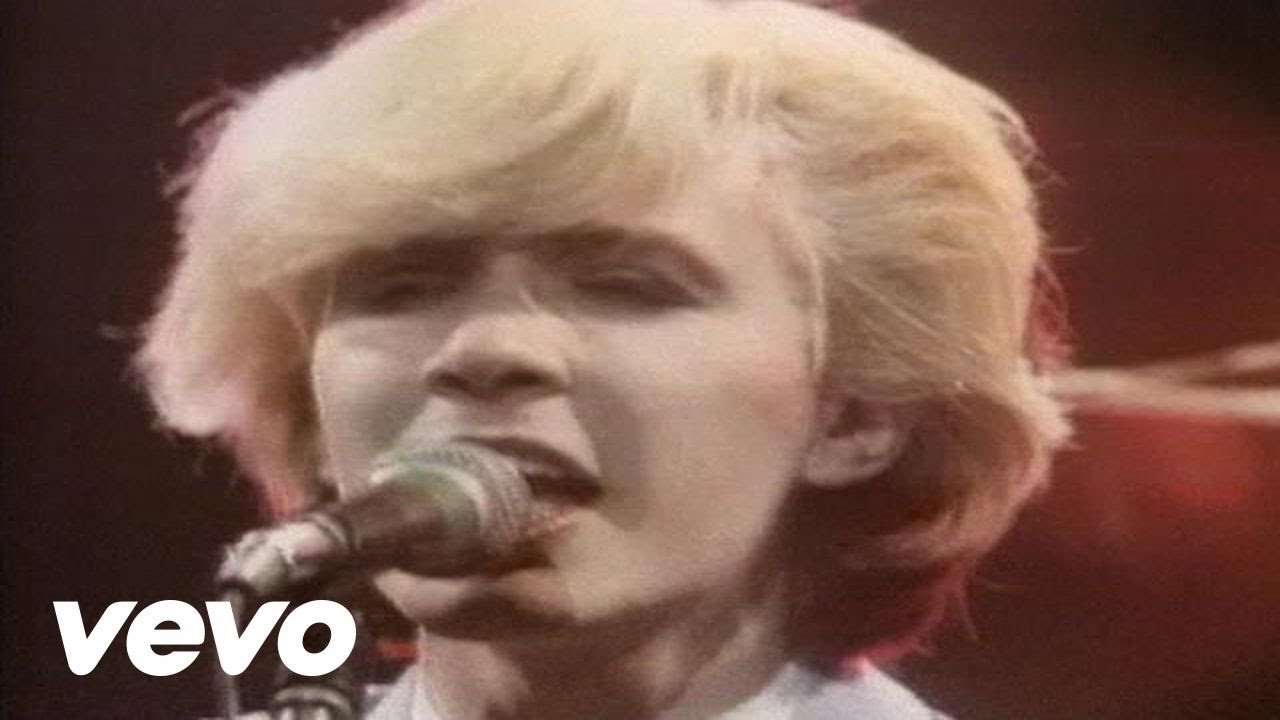
It was a German label, Hansa [a disco-oriented imprint best known for Boney M], and they had no real knowledge of how to market us. So Simon went the hardcore route of appealing to the worst taste you could imagine and just getting attention. We were too young to think, ‘Is this the right thing or the wrong thing?’ We were just trying to leave it to him. But we felt it turned the press against us; we spent the years that followed trying to turn around the damage he’d done.
You did your own version of The Beatles’ Hamburg apprenticeship, didn’t you?
Yeah, just before we signed with Hansa we were offered a residency in Germany. The accommodation was on the 14th floor of a high-rise – one room, six of us in bunk beds. We had to sleep with the light on or the cockroaches would come in. That was probably the lowest point, before we got in the recording studio and realised it’s not all just about performing.
You managed to survive for the next couple of years due to success in Japan. How did that affect you?
My perception is that if you call yourself the name of a country, people will be pissed off with you – I mean, if a band came over here calling themselves England we probably wouldn’t react very well! But the image suited the music, and they loved the made-up kids and the glam rock; it was really big over there so it was a combination that worked. We didn’t anticipate it at all, despite the name. But it served us well in the first couple of years when we had no success anywhere else.
Musically, it wasn’t until we’d made a few trips and absorbed more of the music that we started to listen differently. We didn’t reflect that in the music we made until Tin Drum, where there was more of an oriental influence – and even then that was more Chinese.
How did your friendship with Yellow Magic Orchestra affect your music?
It was probably the first or second time we went there. [YMO keyboardist] Ryuichi Sakamoto interviewed us for a magazine. I was a big fan of Akiko Yano and Sakamoto was married to her. And I’ve remained good friends with [drummer and frontman] Yukihiro Takahashi. So different connections emerged around 1979, 1980.

We were both into bands like Kraftwerk. We heard them blend that electronic refinery with more modern equipment and slightly Asian melodies, and those combinations were immediately attractive. The similarities probably also stem from using some of the same synthesisers, plus the programming style would have sounded similar to what Ryuichi was doing.
By that time you were already making Quiet Life, your third album, a real step forward, with some of those exotic sounds also creeping in.
We were halfway through the second album when we realised that, rather than just record the music you play in the studio, you can start developing it and see how different it can sound. By the time we made Quiet Life we had the budget to work more original components in there.
Yet there was a perception problem in the UK, wasn’t there? Around that time your management tried to make marketing hay from your Far East success — David Sylvian was repeatedly said to have been labelled “the most beautiful man in the world” by the Japanese.
That was our PR agent, who would spin any little morsel of publicity to get newspapers buzzing, with Simon giving it the OK. There would be these lame polls in Japanese pop magazines where people vote for “Mr Valentine” or something, and whoever was selling records at the time would be top in each category. No one asked, “Where is this poll? What magazine?” Things like that stopped us getting taken seriously for a long time.
Then you found yourselves co-opted into the New Romantic scene by some observers – did you feel any affinity with that movement?
No, because it was a fashion thing, not a music association. What does ‘New Romantic’ mean musically? Nothing. You’ve just got to look this way and dance this way. But it worked for us in some ways, because people who liked Duran Duran were coming to see us live. Yet we did Top Of The Pops doing songs like Ghosts and Cantonese Boy and they don’t sound like those other bands at all. It was like, ‘It’s all very well wearing the clothes – but what does it mean?”
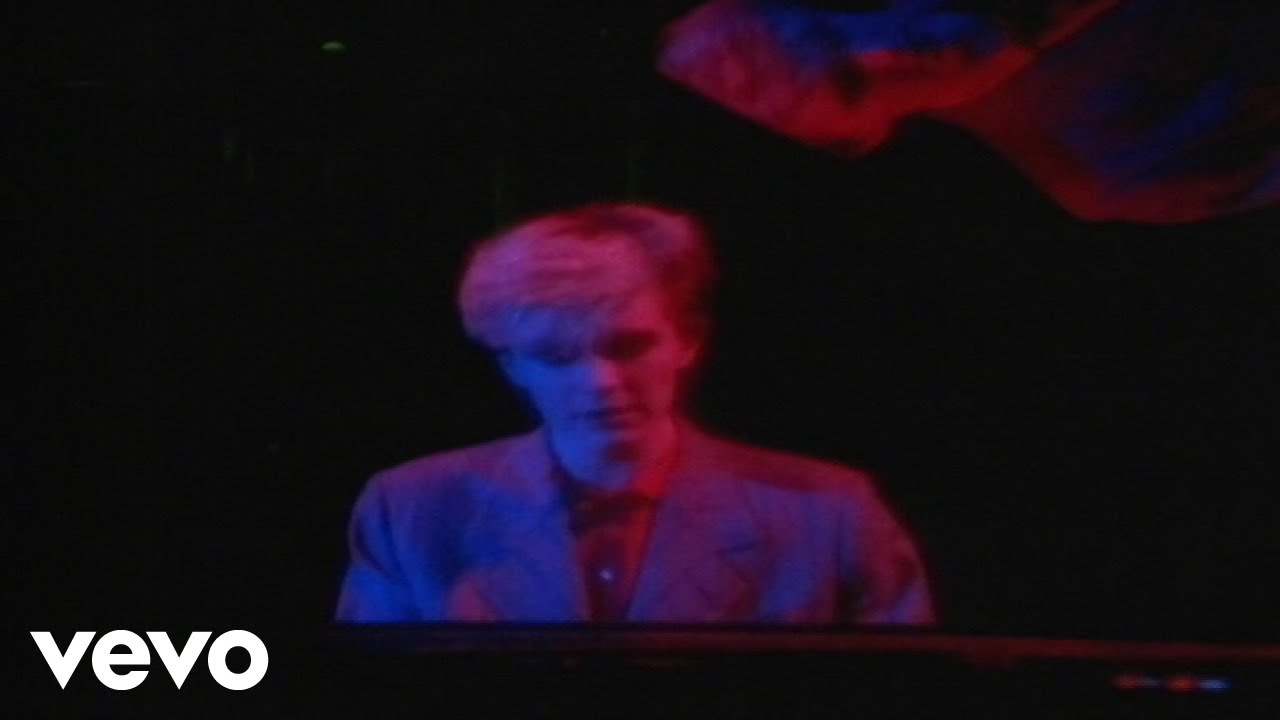
Listening to your drumming and percussion develop over Japan’s albums, it becomes more intricate.
I thought you were going to say “adept”! Yeah, well, a band’s only as good as the drummer; and as I improved I was able to explore ideas more. It was great working with Mick, who wanted to push the boundaries of the relationship between bass and drums.
It was an odd one because Mick would be determined not to play a bass player’s role. He was more of a frustrated lead guitarist with a lot of melody, and not so much holding down a rhythm. It wasn’t always as simple as us driving the song; it was kind of like a jigsaw puzzle combining the band’s parts together.
Tin Drum is probably the most obvious example of that – if it’s not the bass or drums there’ll be a keyboard part that will hold it together. There’s always a shifting of elements that will hold the structure together in what is otherwise a bland song. You don’t often hear Japan songs covered, because the songs themselves, generally, are all about the structure and style; they’re more than the sum of their parts in a way.
You all lived together in the same flat in London, didn’t you?
Not quite! We all lived in the same square in Kensington. I lived with Richard, and David and Mick lived just adjacent. All in each other’s pockets for a few years until the early 80s.
There’s was a real sense of a “gang band” who seem pretty inseparable. And then within a year or two you’d split. Was that down to David wanting more creative control?
It was more to do with relationships.
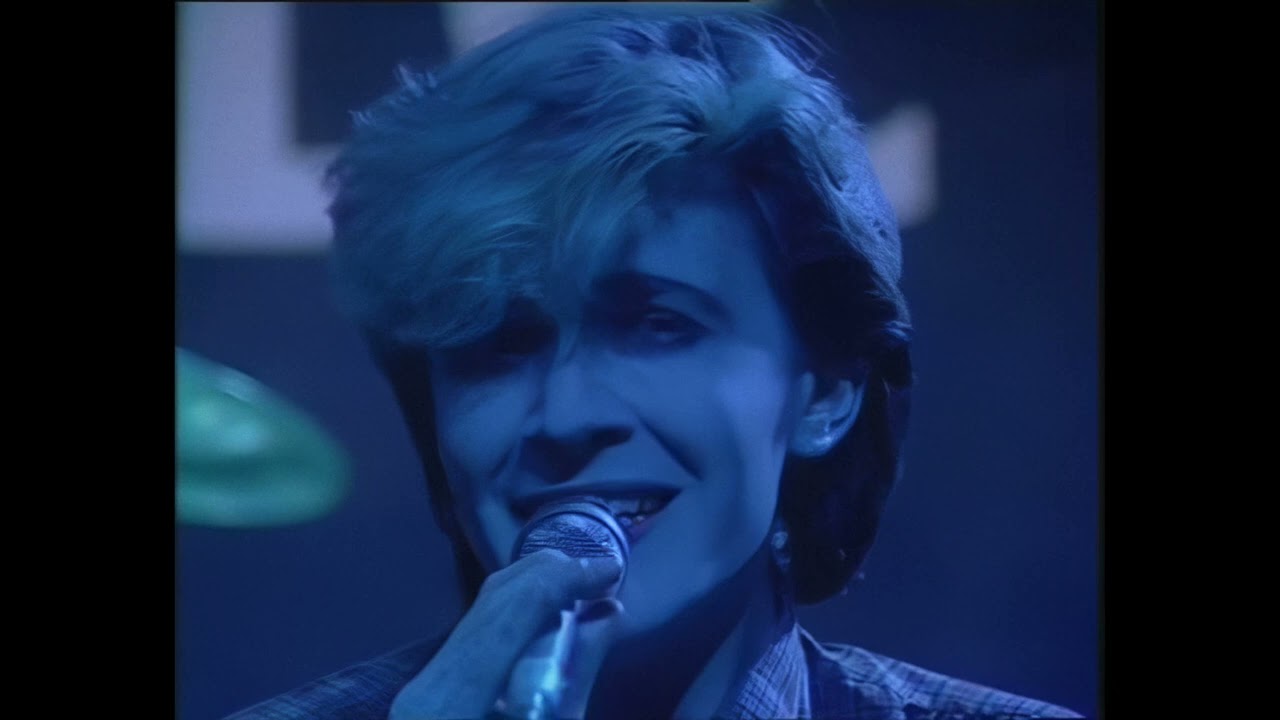
Mick’s girlfriend left him for David.
Well, that was almost a side issue. It was more to do with David and Mick and their egos being at each other’s throats. It was just silly to watch. They both had their reasons for wanting to do what they wanted to do. And sometimes when there’s a standoff they’d end up going, “We’re not going to work together.”
In the years that followed, though, you made music with all of them. And then you reformed as Rain Tree Crow in 1989.
It started out pretty idyllic, and musically we touched on a couple of good things there. If I had to pick a body of work that says the most about us as people, it’s probably that album, because we’d matured and were able to make statements musically without it being a little bit immature – without it being, “Look what I can do!”
Yet that lasted only one album.
That was about our lack of ability to truly collaborate. As the recording went on there was more friction in that department, and it became a battle about, “How do we finish this?” because there was no money left. So it went sour at that point, and it became about control and finances.
Then you worked with Richard as The Dolphin Brothers then also with Mick as JBK. Both were pretty different styles to Japan...
The Dolphin Brothers was a compromise. The first album we’d done together was an ambient album, very minimal, and we thought, “Yeah, great, but we also want to make a living.” So it was more songwriter material, quite punchy. I had worked with Yukihiro Takahashi so that rubbed off on me. It was an exploration for us and a learning curve. JBK was more of a musicians’ band – the plan was just to make music and integrate songs into that.
In the early 1990s you and Richard worked with Steven Wilson and Tim Bowness in No-Man. How did that come about?
We’d just finished the Rain Tree Crow thing and we were kind of in limbo. Then this opportunity came up to work with Tim; we heard the songs, they were good and we thought we’d do something. But we didn’t realise quite how much at the beginning of a long career he and Steven were. It was an interesting project anyway.
Then we hired Steven as part of the JBK band, and the connection grew between Richard and Steve – which of course resulted in them forming a group together.
In 2007, you made your debut solo album, Slope. Why the wait?
It came about after I started working together with David again in the early 2000s, on our project Nine Horses. I started writing stuff more, some of which became Nine Horses material, and then when David was setting up his own label [Samadhi Sound], it was natural to carry on with what I was doing and put it out on his label. It did take a while, but I’ve been distracted; and since then I’ve been catching up!
Much of your solo material has been pretty ambient in feel. Were you always into that kind of stuff?
Yeah – I was a Roxy fan, so when Eno did it I was listening, then through him I got into Harold Budd and Roedelius. All that stuff seemed to be happening around then, which was inspiring. Even when you listen to side two of Bowie’s Low, parts of it are very ambient.
That approach seemed in line with composing as a musician rather than songwriter, and that’s something I’ve always liked to do because I’m not a singer and it’s kind of fun working without boundaries. It’s kind of in line with prog really, because that is about musically indulging an idea without worrying about the structures and conforming to musical conventions.
Was Japan more fun than your public image perhaps suggests?
Oh God, it was great fun! There was no point in any of it if it was too serious. Of course we took what we did seriously, but we’d take the piss out of each other viciously – we were quite cruel to entertain each other.
You just don’t sit around with your head in your hands when you’re young. We were doing exactly what we wanted to be doing, and gradually getting more and more popularity doing it. Not many bands can say that.

