


After Emerson, Lake & Palmer split in 1979 – not to reconvene for another 11 years – a series of other musical projects appeared featuring two of the three members. Prog explored those groups in 2010, including a mid-80s alternative ELP, featuring esteemed rock drummer Cozy Powell in place of Carl Palmer.
There’s an obvious reason why there was constant tension between Keith Emerson, Greg Lake and Carl Palmer. All three were personalities and leaders in their own right. None of them could act as a conduit or sounding board for the others. There were no sidemen. Without a low-key member, there’s an imbalance – and ELP were definitely never balanced.
Still, there was an underlying, albeit grudging respect between them. Evidence lies in the myriad of subsequent projects which involved two of the three. Every possible permutation has occurred.
In 1985, it was Emerson and Lake’s turn to regroup. When Palmer declined to join a full-blown reunion, preferring to stay with Asia, there was an attempt to secure Bill Bruford. But he was committed to King Crimson and his own Earthworks, so the pair turned to Cozy Powell.
“Cozy was a very old friend of mine,” said Emerson. “He called up and said, ‘If you need a drummer, I’d love to do it.’ So he came down to my studio and we started working on this album. And then we realised, ‘Oh my goodness, we have the same initials – it’s ELP again!’”
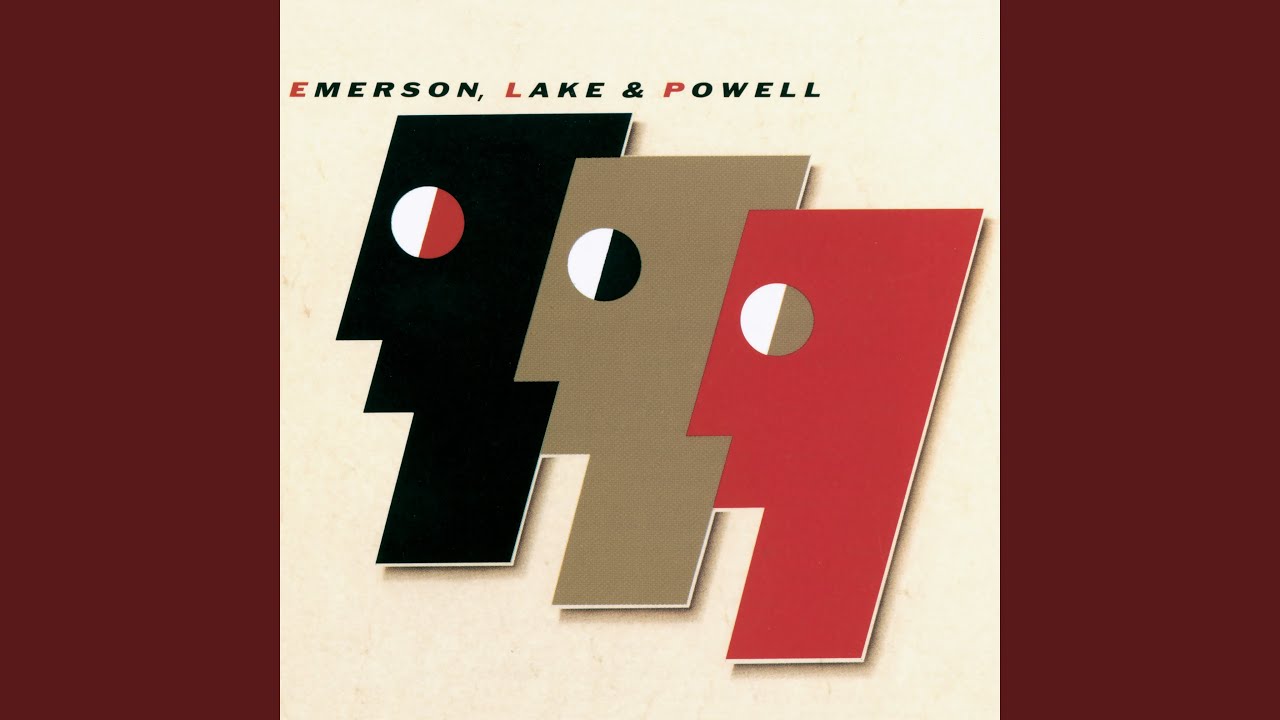
The trio’s subsequent self-titled album, released in 1986, was actually quite a success, generating the hit single Touch & Go as well as featuring a cover of 60s hit The Loco-Motion and the classical piece Mars, The Bringer Of War.
The balance within the band worked well. Unlike Palmer, Powell could act as a sounding board. He was prepared to underplay his role to bring out the best in the others.
“I’d worked with Ritchie Blackmore, David Coverdale and Michael Schenker,” Powell said, “so I was used to dealing with those sort of people. After them, Keith and Greg were almost a dream.”
Reviewing its 2024 reissue in an extended format, Prog described the album as “a much better testimony to ELP’s legacy than the original incarnation’s risible swan song, Love Beach.”
We added: “Especially good is the opener The Score and the strident The Miracle, while the handful of extras here – loopy instrumental The Loco-Motion and jazzy Vacant Possession, which clearly should have made the original album – are the work of a band finding their feet and having fun doing it.”
The disc featuring previously-bootlegged rehearsal tapes contains joyous versions of Tarkus, Pictures At An Exhibition and Pirates; while the live third disc, we said, “rubs salt in the wound, bringing as it does the nagging realisation that the trio managed only one North American tour.”
Sadly there was no second ELPowell album – but that was down to finances rather than any inherent problems between the members. “By the time it came to making a second album, there wasn’t any money left,” Emerson explained.
“Greg said, ‘Well, if PolyGram isn’t interested in putting any more money up, I’m not interested.’ And, of course, Cozy was being offered jobs; he got fed up with the indecisions and said, ‘I’m leaving!’”
Surprisingly, Palmer was delighted to see Emerson, Lake & Powell working, because it gave him the chance to get Emerson, Lake & Palmer’s back catalogue re-activated; by then he’d almost taken over protecting the trio’s heritage.
“If they hadn’t gone out with Cozy Powell, I couldn’t have gotten the record company to spend the money on the catalogue,” the drummer said. “I’d already made 16 albums which Cozy was promoting for me and the band. It was a much better thing for them go out with him than to not go out at all.”

