




Adored and detested in equal measures, Cardiacs defied classification; and their expansive line-up included musicians who continue to play leading roles in modern progressive music. Tim Smith’s brother Jim, William D Drake, Kavus Torabi and others look back – and provide an update on their long-awaited final studio album, LSD.
A packed Hammersmith Odeon, December 13, 1984. Awaiting their heroes, Marillion fans are growing increasingly impatient with support act Cardiacs, a bunch of outliers led by the charismatic Tim Smith. Wearing terrible makeup and customised bandsmen uniforms, neither they nor their deliriously unclassifiable music is going down well with the Marillion hardcore, who’ve begun to hurl insults and objects.
Cardiacs are used to hostility, having been on the road with the neo-prog giants since early November; but tonight is particularly vicious. Fish, appalled at what he’s seeing, feels compelled to intervene. He marches onto the stage to reprimand his own followers: “If you don’t like it, fuck off to the bar and let them get on with their set!”
“The people at the front really hated it; they were shouting over us,” recalls Cardiacs’ then-keyboardist William D Drake. “But we were revelling in it. At one point, someone spat at Sarah Smith, our saxophone player, so Tim kicked this guy in the mouth, absolutely perfectly in time to the music.
“Marillion’s management ended up cancelling the last few gigs – but afterwards we got lots of letters from people who were really into us, who’d discovered us on that tour. Fish was a big fan. He used to come and see us at the Marquee.”
Such a polarised reaction wasn’t uncommon for Cardiacs. Their music tended to inspire either fervent devotion or intense loathing. Nothing was off limits. Weird and experimental one moment, brash and excitable the next, with a fondness for leaping time signatures, they alchemised prog, punk, pop and psychedelia into a spectacular sound.
“When Cardiacs came along, I realised that’s what I’d been looking for,” says Kavus Torabi, a disciple long before he joined as guitarist in 2003. “Seeing them live was kind of a scorched-earth thing. After that there was just no going back to normal rock’n’roll.”
He wasn’t alone in his sentiments. In 1993, drummer Bob Leith joined up, reuniting with guitarist Jon Poole, his former ally in prog-pop band Ad Nauseam. Both were already committed followers. “When I saw them for the first time it was like, ‘Fucking hell – that’s my new favourite band!’” Leith remembers. “Before they’d even played a note, they had this presence. Jon and I hardly missed a gig for the next two or three years. We were obsessed.”
Cardiacs issued five studio albums under Smith’s leadership – which might seem like a relatively meagre return over 30 years. But factor in numerous EPs, singles and rarities compilations, plus offshoots like The Sea Nymphs, Spratleys Japs and Panixphere – and it constitutes a sizeable body of work. Despite brushing the UK Singles Chart with 1988’s magnificent Is This The Life, Cardiacs never rose above cult status. Yet they’ve been cited as influential by Blur, Radiohead, Mike Patton, Steven Wilson, Opeth and Andy Partridge.
It’s tempting to imagine the band’s surreal pageant of melody and dissonance was born in a vacuum. But every band have their roots in something or other. In Smith’s case, prog ran deep: Henry Cow, Egg and early Genesis were among his key inspirations. “Tim introduced me to Gentle Giant, Gryphon and Gong’s Angel’s Egg and Flying Teapot,” recalls schoolfriend Mark Cawthra, who joined the band – then called Cardiac Arrest – as drummer in 1979.

“PFM as well. And King Crimson’s Starless And Bible Black. When you listen to Cardiacs, it sounds crazy that he’d never heard Zappa at that stage. The first album I took round was We’re Only In It For The Money, then Apostrophe. He was hooked after that. He loved Zappa.”
Devo, The Residents and XTC also fed into Cardiac Arrest, formed in Kingston upon Thames in 1977. The initial line-up featured singer Michael Pugh, drummer Peter Tagg, Smith, and his older brother, Jim, on bass. According to their happily unreliable folklore, Tim only formed the band to exact revenge on Jim for all the unkind things he’s done to him as a child. The idea was to play unpalatable, unpopular music and therefore humiliate his older sibling.
Workmates were excited that I had a record out… They bought it, then no one ever spoke about it again
Peter Tagg
“It was a brotherly relationship – let’s put it that way,” laughs Jim, who would find himself subject to low-level bullying onstage. “Back then, Cardiacs was more of a hobby and a laugh. But it gradually became something else quite organically. Tim exerted his writing prowess on everything.”
They were still billed as Cardiac Arrest for 1979’s debut single, A Bus For A Bus On The Bus, its title a riff on the Mothers’ A Pound For A Brown On The Bus. “I worked at Norwich Union at the time and lots of workmates were excited that I had a record out,” Tagg recalls. “Quite a few of them bought the single, then no one ever really spoke about it again! I guess they didn’t like it, but we were just doing what we wanted to do. It was never about trying to fit into anything.”
As Smith’s songwriting evolved, so too did his arrangements. Sarah Cutts joined Cardiacs in the second half of 1980, elevating the sound to another level. “She was a big catalyst,” believes Cawthra. “We didn’t have any polyphonic keyboard at all until she arrived and stumped up the money for a string machine.”
![Cardiacs - The Everso Closely Guarded Line (Music Video) [HQ] - YouTube](https://img.youtube.com/vi/Cm2khPgLN58/maxresdefault.jpg)
Tim and Sarah were married in 1983. By then, he’d found other musicians who could translate his more ambitious pieces, including percussionist Tim Quy and William D Drake. “Tim and I just really clicked,” says Drake. “The first song I brought in, The Whole World Window, is probably the beginning of prog Cardiacs. We co-wrote The Everso Closely Guarded Line and that’s a big, immense sort of thing, a bit like Gentle Giant.”
As Cawthra puts it: “Once Bill turned up with his Wakeman arsenal, they were off.”
Released in 1988, A Little Man And A House And The Whole World Window was Cardiacs’ first studio album proper. It was a record with a purposeful directive, teeming with inventive tempos, melodies and lyrical motifs – part absurdist theatre, part sensory deluge.
The girl who first introduced me to Cardiacs described Tim as ‘the Beethoven of Kingston
William D Drake
“Tim knew how to manipulate sounds to do things that really made you want to listen to music,” says Drake. “He was such a brilliant arranger. It never feels like there’s too much sound going on; it’s very spatial. I think he just had an amazing clarity of vision. The girl who first introduced me to Cardiacs described him as ‘the Beethoven of Kingston.’”
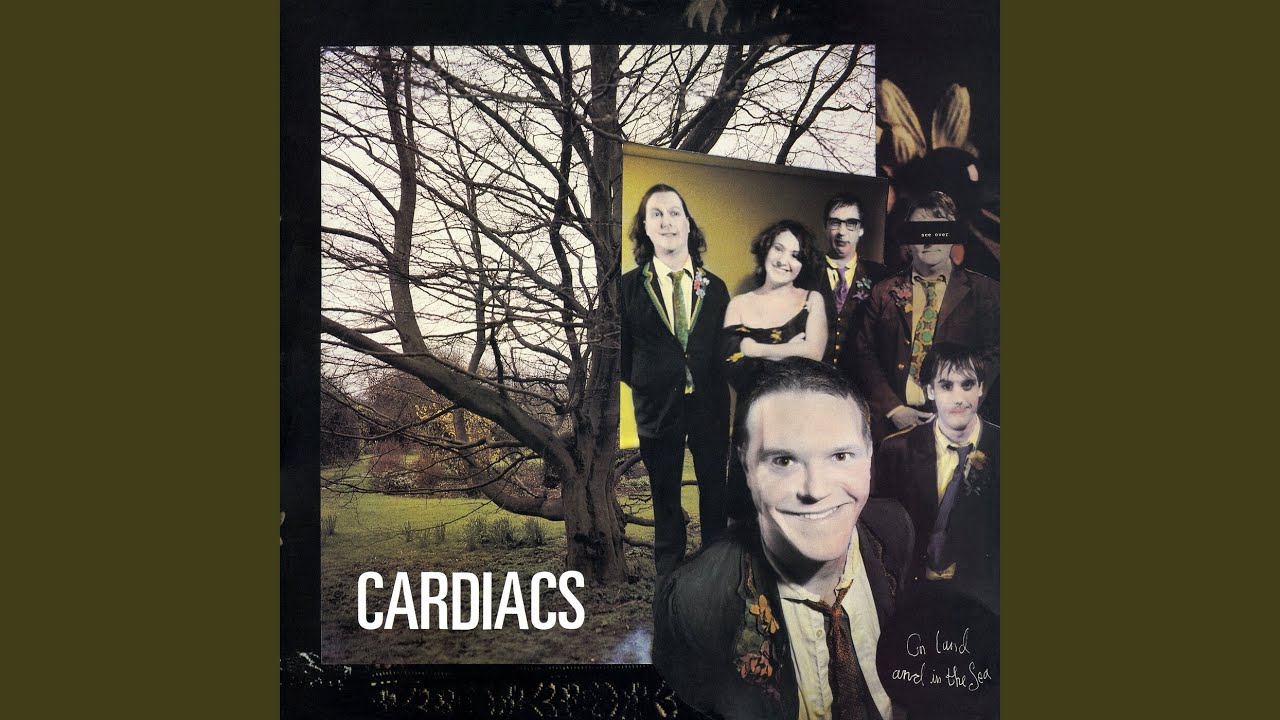
Psychedelic single Is This The Life picked up airplay on Radio 1. although its chart journey stalled at No.80. Another minor classic album followed with On Land And In The Sea, featuring free-spirited treasures such as The Duck And Roger The Horse and the epic The Everso Closely Guarded Line. But aside from the band’s fiercely loyal fanbase and a handful of music press supporters, no one seemed to be listening.
Cardiacs slimmed down from a sextet to a four-piece during the 90s. It proved a temperamental decade. There were three more albums (including 1996’s irrepressible Sing To God), a headline spot over Radiohead at the Astoria and a luckless deal with Rough Trade – then on the brink of closure – that left the band in dire financial straits.
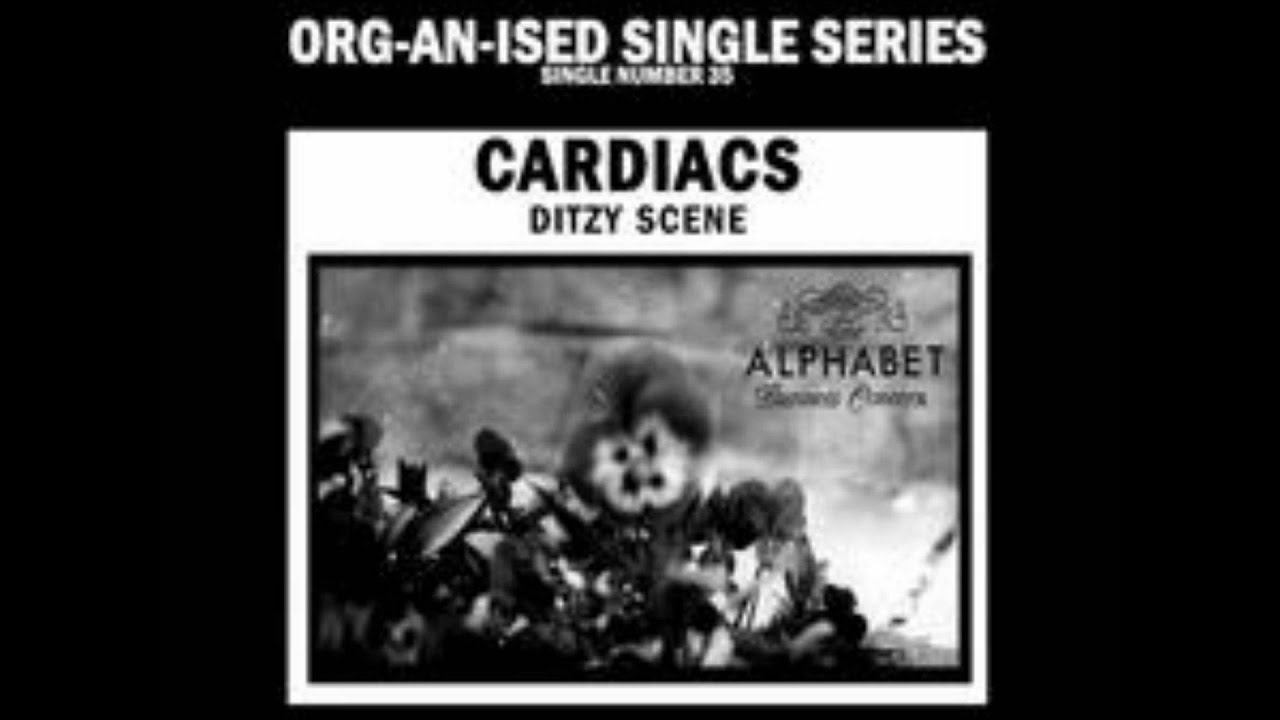
They pressed on, through good times and lean, re-emerging in late 2007 with a fabulous single, Ditzy Scene. Co-written by Smith and Kavus Torabi, its release augured well for a proposed double album, LSD. Then tragedy struck. In June 2008, Tim Smith suffered a heart attack that led to a stroke and, eventually, a rare muscle condition called dystonia. He was left semi-paralysed and unable to speak. Understandably, Cardiacs went on indefinite hiatus.
A crowdfunding campaign, various gigs and the two-part tribute album Leader Of The Starry Skies all raised money to help with Smith’s care. The outpouring of love was huge; but his recovery never happened. Smith died in July 2020, aged 59.
Doing it again has just been fantastic. And it’s still really, really fun
Bob Leith
The journey from Cardiac Arrest to Ditzy Scene is celebrated in A Big Book And A Band And The Whole World Window. Published by Melodic Virtue, the coffee table-sized tome includes rare and unseen photos, artwork and ephemera, alongside contributions by fans, contemporaries and past and present bandmembers. It’s what Tim would probably approve of: an alternative history of Cardiacs.
But the story doesn’t quite finish there. In May 2024, Tim Smith’s Spratleys, featuring Cardiacs personnel “past, present and future” played a tribute show at London’s Garage. A couple more dates were added, followed by four nationwide gigs in October. Audiences were in raptures.
“I never even considered playing while Tim was ill,” explains Jim Smith. “Once he’d popped off to paradise, Bic [Christian Hayes] and Jo [Spratley] came up with the idea of doing it. I thought, ‘Yeah, the time’s good. Let’s give it a go.’”
“The first time we got back together in a room, it was like, ‘God, can we still do this?’” says Leith. “But within the first run-through of The Duck And Roger The Horse, it was pretty obvious that we all still had that thing, despite our advancing years. Doing it again has just been fantastic. And it’s still really, really fun.”
“My band supported them in Manchester and they were extraordinarily good,” marvels Drake. “It was so beautifully played, with Jim and Bob as the rhythm section and Jon Poole on guitar. Obviously there was the sadness of Tim not being there, but his spirit was loud and clear, and the music was so playful and vibrant and fantastic, because all the people who loved him were playing it.”
I hate it when people say ex-Cardiacs. I think, ‘God, I put my blood and bones into that!’ We’re all still Cardiacs, definitely
William D Drake
Not only that, but LSD – begun in 2005 and revisited since Tim’s death – will finally see light of day this year. “It’s great – it’ll knock your socks off,” says Jim. “Some of it is old archive stuff, when Tim had done some roughs in his studio. All the time he was ill, I think he had it in his head that he was going to finish it when he got home. Unfortunately, he never made it; so I guess we owed it to him, really. It’s been a labour of love.”
There is, too, a legacy to consider. Talk to any bandmember, past or present, and they generally agree that once a Cardiac, always a Cardiac. It’s a unique club. “I hate it when people say ex-Cardiacs,” Drake reports. “I think, ‘God, I put my blood and bones into that!’ We’re all still Cardiacs, definitely. And I’m so proud of it.”
For his part, Jim Smith doesn’t measure the band’s influence in terms of recordings. It goes deeper than that. “I think it’s more of a philosophy than anything,” he says. “If you want to do it, do it. You don’t need people to help you – you can do it yourself, even if it takes 50 years. Believe in something enough and it will happen.”

