


There's surveillance camera trained on the alleyway behind Opra Music, the Los Angeles studio , owned by Travis Barker, where Blink-182 are tracking their new album. For the most part, the footage it captures is mundane and unremarkable. But not always. On occasion gritty vignettes will play out on the flat screen monitor in studio A: images of drug busts, fistfights, junkies shooting heroin, couples fucking on the backseats of cars. Bearing little relation to the slick narratives manufactured in its celluloid dream factories, this is real life in Hollywood - raw, unscripted and unpredictable, with no guarantee of a happy ending.
Had they chosen to, Blink-182 could have had a neat, pat Hollywood ending to their career. Were Tom DeLonge, Mark Hoppus and Travis Barker to have commissioned their own fly-on-the-wall 'rockumentary' about Blink's recent history, a canny director might have considered the evening of August 29, 2010 a perfect point at which to wrap the project.
When DeLonge walked off the stage at Reading festival that night he was, by his own admission, an emotional mess - elated, humbled, proud, astonished. Five years previously he'd walked out on the band he'd started with Mark Hoppus in high school: now Blink-182 had just played the biggest headline show of their career to an estimated 100,000 people. Five years ago he'd turned his back on his best friends in the world, now there were hugs and tears and broad smiles as the trio celebrated a genuinely remarkable, wholly triumphant comeback. For once in his life, the band's garrulous guitarist was literally speechless.
Fade to black, roll end credits.
There wouldn't have been a dry eye in the house.
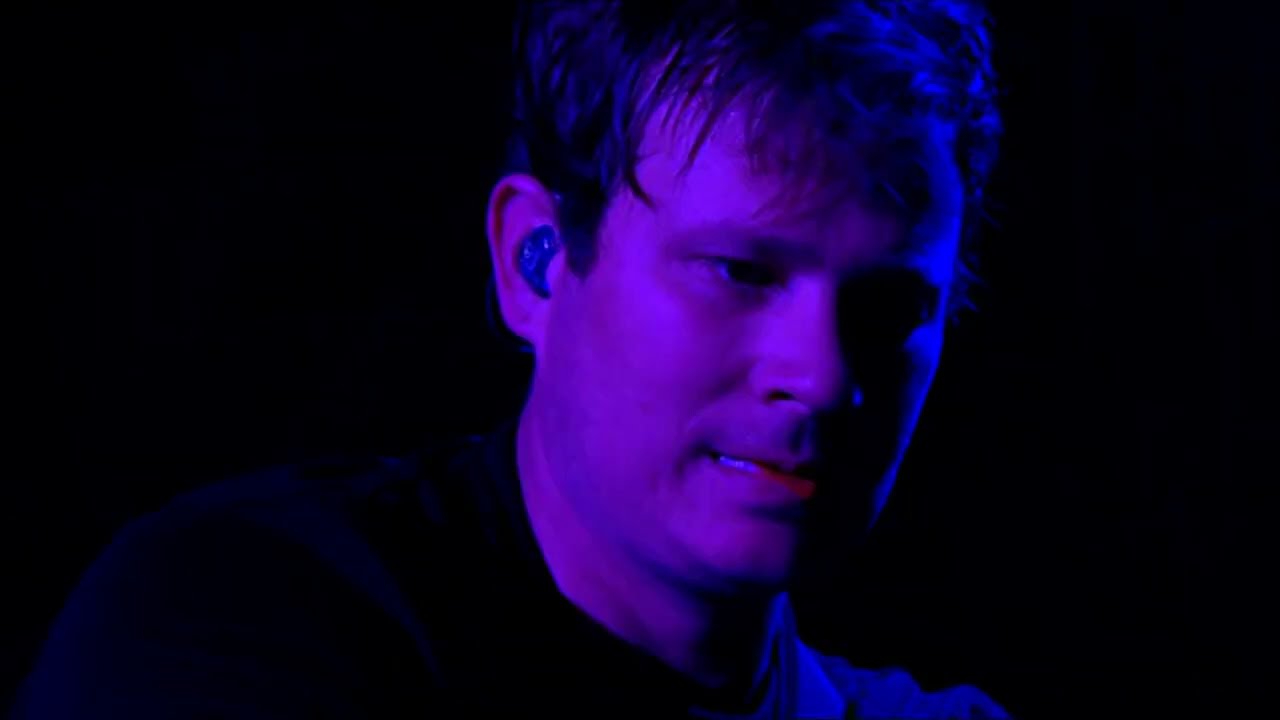
But the Blink-182 story didn't end there.
Instead, in September 2010, a new chapter began for the San Diego band, as the trio began work in earnest on their sixth studio album, Neighborhoods.
In some respects, in taking this step, the trio are on a hiding to nothing: though happy to trouser huge fees for live performances, few of the iconic rock bands who've reformed in recent years have committed to recording new material, wary of sullying their legacy. The ever-confident DeLonge has no such fears for Blink-182.
"We're not just recording songs here," he insists. "We're trying to make a masterpiece."
Unfortunately, we're not in a position today to pass judgement on how the band's long-awaited follow-up to their 2003 self-titled album is shaping up, as none of the 12 songs they've earmarked for inclusion on the new record, scheduled for a September release, have yet been completed. But upon stepping into Opra Music we're greeted by a wall of noise that bodes well for the success of the sessions, the sound of Tom DeLonge and Mark Hoppus laughing uproariously as they pose for photos with LA photographer Lisa Johnson.
"Stop with the dick grabbing!" Hoppus chides at one point.
"I didn't grab it," De Longe protests indignantly, in his familiar nasal whine. "I just scratched the top of it..."
Watching on, Travis Barker is a little more subdued than his bandmates. But the smile that flickers across his face as he watches his friends trade gleefully juvenile banter tells its own story. In fact the drummer's new-found appreciation of every new day is tangible, given that in 2008, he was left with severe burns on over 70 per cent of his body after surviving a horrific private plane crash which claimed the lives of four of the six people on board.
"Tom and Mark came to my house a couple of weeks after I got out of the hospital from the plane crash," he says quietly, "and immediately it was dick jokes again. It was just on like a lightbulb. Those jokes have never sounded funnier."

The drummer bought this studio, off Laurel Canyon Drive, five years ago: with Travis' kids' toys and crayons scattered around the reception area it has a relaxed, homely vibe, though admittedly most homes don't contain a print of Elvis Presley cradling a toy M-16 assault rifle. There's a stack of DVDs - The Sopranos, Nip/Tuck, Hostel and Nursery Rhymes & Bedtime Songs among them - by a huge widescreen TV, there are Famous Stars and Straps prints on the walls, and drum kits everywhere: eight of them fully set up, others stacked neatly from floor to ceiling.
The band members are interviewed separately today. Mark and Tom offer firm handshakes before they sit down to speak, Travis opts for a bump of fists. Each in turn sets a bottle of mineral water on the glass coffee table in front of them as they plonk down upon the grey sofa in the studio's reception room, though these will remain unopened while they speak. When they do so, the three musicians will use words such as "progressive", "modern", "fast" and "dynamic" to describe the album they're making.
"If I was a Blink fan and I could have looked into the future and fast-forwarded myself into 2010 to hear what this band was working on, I would be stoked," says Barker.
The one word that crops up most frequently in the trio's conversation today is "respect".
"We've all learned to be more respectful of one another," says Hoppus at one point, when discussing how Blink-182 circa 2011 differ from the band who went on 'indefinite hiatus' in 2005. "We respect each other now and that's the most important thing," says Tom at another juncture.
Ironically, when they first got back to making music together in October 2008, their friendship restored in the wake of the horrific plane crash which almost claimed Barker's life, their conscious efforts to show respect for one another almost crippled their comeback before it had begun.
"Everything was so fresh and so new, it was like we were all gathered around this precious flame that we were all trying to protect," recalls Mark. "We were so respectful of one another that we were all walking on eggshells, and it was all too nice. But fortunately we all realised that we really needed to be a proper band before we started recording. Now I feel like we're comfortable enough in our friendship again to not only be able to support each other, but also to be able to say, 'Hey, that idea is cool, but what about we did it this way?' and not feel like anyone was going to have their feelings crushed. It was important for us to turn that corner."
The recording of the sixth Blink-182 album is progressing in a rather unorthodox fashion. There is no producer overseeing the session - the band's long-time collaborator Jerry Finn passed away in August 2008 - instead each band member has his own dedicated sound engineer. They are using not one, but two studios simultaneously, bouncing tracks between here and Tom DeLonge's studio in San Diego. And most unusually, the three musicians are rarely in the same room together: they'll get together once a week at most to bounce around ideas then retreat to work on their parts individually.
There are obvious logistical reasons for this: all three men have families, and a raft of other commitments beyond this band. Mark Hoppus has to be in New York every week to film his TV show, A Different Spin with Mark Hoppus, which airs on US cable channel Fuse. DeLonge is gearing up for the release of his other band Angel And Airwaves' ambitious Love movie/album package, and in-demand drummer Barker is presently working upon two other albums - his debut solo album Give The Drummer Some, and a new Transplants album - in addition to contributing to his rapper friend Young Jeezy's forthcoming album: the drummer is currently working 20 hour days, and frankly, he looks frazzled.
All this extra-curricular activity might lead a cynical observer to question just how much unity there is in the re-united Blink-182. But when this question is voiced, Tom DeLonge looks genuinely horrified, and not a little sick.
"Please don't read that in this process," he splutters, eyes widening. "You can't read something like that into this, you just can't. When a band gets together in one room and jams there's definitely an electricity that happens that's different and special - and we need to do a bit more of that to be honest - but it's hard with our schedules. Recording a record involves a lot of tedious work, and the tools are different now. It has absolutely nothing to do with a lack of unity, it's just a more efficient way of working."
"The really great work happens when we're in the same room shooting ideas around," admits Hoppus, "but this process is great because it gives everyone the chance to explore ideas on their own without having the other two guys sitting around twiddling their thumbs. Before I'd have an idea for a song and I'd play it on acoustic guitar to Tom over the phone and then we'd lock ourselves in a room and write it, but now we can send files to the other studio and work individually.
"When we were kids playing in Tom's garage that's not how we ever envisaged a band working, but it works for us. It's taken so much stress out of the process. We're fortunate to have this luxury."
If you're in a rock band normally you're a fucked up individual who came from a weird space, a weird family, or a weird childhood
Tom DeLonge
There will be no songs explicitly referencing Blink-182's break-up or reunion on the band's new record. Mark Hoppus has written lyrics dealing with breakdowns in communication and trust, and tackled themes of isolation and confusion, but he swears these are not specific to anything his band has gone through. DeLonge too has shied away from raking over Blink's history: "If you're inspired to pick up a guitar and write a song about a very specific emotion that's one thing," he states, "but it's another to try to force shit."
Speaking to the pair today, there's no sense that past events are an elephant in the room, but understandably both men are keen to move forward. When asked to reflect upon the hurt and loss he felt in the years he was separated from his best friend, DeLonge speaks slowly and chooses his words with surgical precision, as if weighing up the impact of each syllable.
"Bands are really weird animals," he says haltingly. "If you're in a real rock band normally you're a fucked up individual who came from a weird space, a weird family, or a weird childhood and you need to go be an individual and vent something. And then you get a group of those fucked-up dudes together and you're all friends and it's a family, a tribe. Then you grow up and become an adult, with all the same issues, but you have this little empire, this precious creation and it demands investment and care and it's your life.
"So when that falls apart.... well, when bands break up it's not the same thing as walking out of your fast food job. And now that we're back together, we know the value of this. Now there's no ego, no pride, nothing getting in the way."
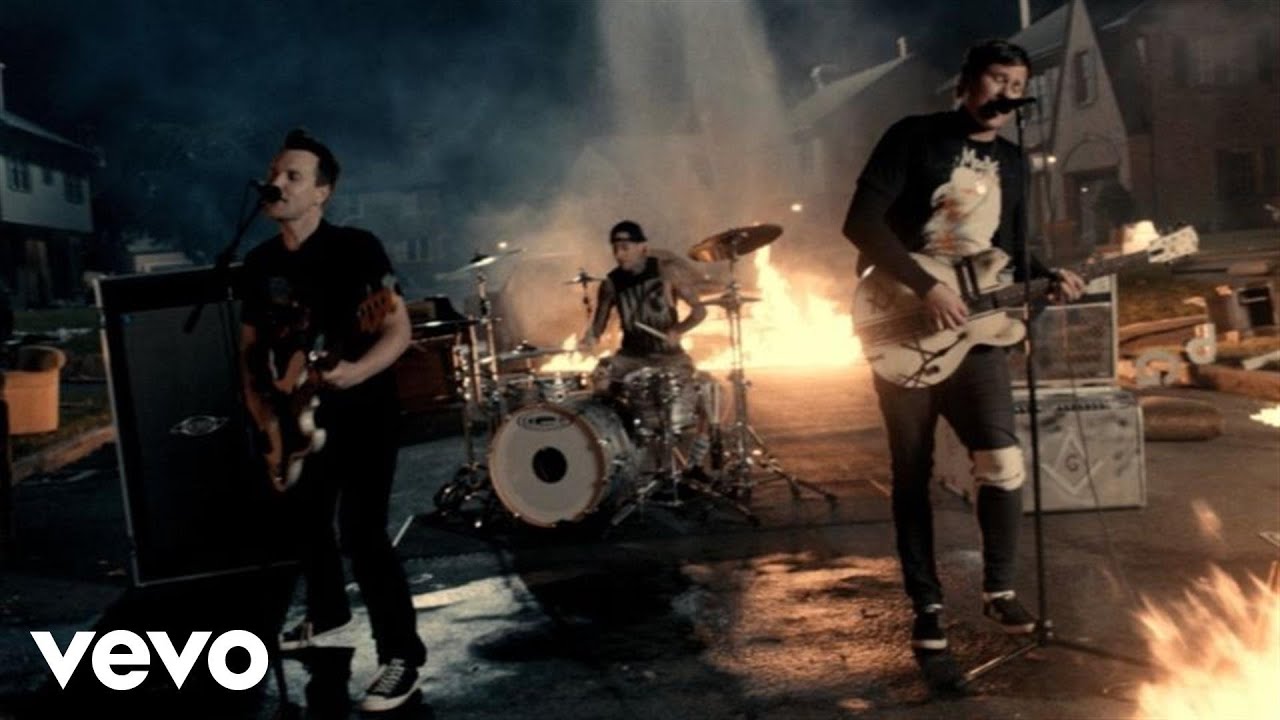
The most striking thing you notice in Blink-182's company now is just how precious this band is to them. Once upon a time, when they were dizzied and disorientated by success and fame, perhaps believing the hype and bullshit more than they'd ever admit, this might not have been the case.
Back in the summer of 2002, as Blink were co-headlining the Pop Disaster tour in US arenas with Green Day, I interviewed Tom and Travis about their side-band Box Car Racer, and questioned why they needed another avenue for their creativity, why they couldn't just bring the influences inherent in their new band's debut album - Fugazi, Refused, Quicksand - into Blink-182. Their answers then were a little too smug, a little too self-satisfied: Blink fans might not be able to process this more experimental, hard-edged sound, they ventured, the Blink formula was working, why fuck with a good thing? At source, it was an answer that exhibited a fundamental disrespect for Blink's fanbase. But those days are gone. A much nicer, more humble and appreciative band to be around now, they insist there are no limitations, no restrictions and, crucially, no attempts at second-guessing with Blink album number six.
"We have to be able to think that Blink-182 can do everything," Mark insists, "we can't pigeonhole ourselves. The new album has a wider scope than anything Blink-182 has ever done: it expounds on what we did on the last record but also goes back to the earlier records and connects with those ideas as well. It's our most complete recording yet."
After my accident our lives were put into perspective. All the stress and arguments and whatever we'd fought about seemed so trivial
Travis Barker
"Everyone in the band wants to make a very modern record," Tom adds. "We all grew up on punk rock obviously, but Travis lives in the hip-hop/drum 'n' bass/electronic world, and Mark lives in an indie rock world - he's always telling about incredible, obscure artists that I've never heard of - and I live in the classic stadium rock world and I'm always referencing big bands of the '70s and '80s, that are tried and true, so when you mix that all together it's really unique. We're the only band that's doing shit that sounds like this. When you take the best of everything that we do and put it together under the Blink name, it's like anything is possible."
"And you know what?" Mark asks. "Driving home from a day at the studio where a song has progressed from being an idea in one of our heads to being an actual song you can listen to is still one of the best moments in life. It's every bit as exciting now as when we wrote our first songs together. It's the absolute best feeling. It's unbeatable."
The clock is ticking, and the trio have places to go, people to see. DeLonge has to get back to San Diego. Barker has to pull another all-nighter in studio B, as his deadline to deliver Give The Drummer Some looms ever closer. And Hoppus has engineer Chris Holmes tapping his fingers on the mixing desk in studio A, anxious to get back to work. As it was Travis Barker who brought these three musicians back together as a unit, it seems only fitting to allow him the last word.
"After my accident our lives were put into perspective," he says quietly. "All the stress and arguments and whatever we'd fought about seemed so trivial, so lame, so completely unimportant. The most important thing was getting our friendship back on track. And now that we've done that, I think kids are going to hear the band they love sounding better than ever."
A version of this feature first appeared in Kerrang! magazine in 2011.

