


Blondie’s 1976 debut album was the one that made them a music press cause celebre, and the following year’s Plastic Letters was the one containing the hits that would make them UK stars. But it was Parallel Lines, released in 1978, that transformed Blondie from Stateside-act-popular-abroad to biggest band on the planet, as ubiquitous as Abba, the Bee Gees and Chic.
Hard to believe that, three years before, they were the runts of the CBGB litter, considered by sceptics as a joke with their ironic take on Brit Invasion energy and 60s girl group smarts. Now here they were with a pop masterpiece worthy of inclusion in the late-70s New York pantheon, alongside Marquee Moon, Horses, Blank Generation and Fear Of Music.
Parallel Lines didn’t just turn the critical tide towards them. It was a commercial blockbuster, a virtual Greatest Hits, with no fewer than six tracks issued in various territories as singles, paving the way for Thriller’s similar feat. The best-selling album in Britain in 1979, you could seemingly hear it everywhere you went that year; whether it was student halls, fashionable stores or suburban homes, it was there, vying for turntable space with Off The Wall, Armed Forces, Voulez Vous and Saturday Night Fever. Overall, it has sold 20 million copies worldwide.

There’s no denying the impression made by Debbie Harry. Here was
a new female pop paradigm: the arty beauty, the mannered mannequin, the bored bombshell. Despite her pre-history as a member of folk rockers The Wind In The Willows, Harry was no Joni; nor did her tough-gal persona make her just another Janis, a credible Joan Jett or a pretty Patti. She was more far-reaching than that.
She wasn’t the only sexily subversive woman to have emerged out of punk, but she multiplied and magnified her peers’ achievements. She took the thrust and parry of Siouxsie, Poly and Ari and gave them some Hollywood gloss and Warholian glamour. She blazed a trail for provocative, empowering female performers, but had an icy insouciance that many of the people that followed her don’t.
She was in a sense the first meta-pop star, the sum of all her pop art references, but this was no postmodern in-joke. Parallel Lines made her briefly the most famous woman on earth, the missing link between Marilyn and Madonna, only more multidimensional than either. In the 70s there was Bowie, there was Rotten, and there was Harry. Blondie’s then-manager was encouraging her to leave the band and go solo, yet without them Harry may have drifted, or seen her droll New York art-trash persona downplayed; she would have certainly lacked ballast.

Parallel Lines succeeded because it got everything right: great attitude, singing, playing, songs, production, even a great sleeve, one of the few to genuinely merit the term “iconic”, featuring Harry in white dress scowling enigmatically beside her besuited, goofily smiling bandmates, displaying that new wave penchant for standing stock-still in a line (see also Talking Heads’ More Songs About Buildings And Food). Remove any one of those elements and it may not have worked.
It could have gone either way. This was, after all, Blondie’s third album, notoriously a difficult time for bands. Notwithstanding its two UK hits, Plastic Letters hadn’t made Blondie a worldwide force. The feeling at their record company, Chrysalis, was that this was the moment to capitalise on any cult or local acclaim and catapult them to the next level. As label co-founder Terry Ellis declared: “I want to make them into a worldwide, multiplatinum success.”

The man entrusted with effecting this transition in their fortunes was Mike Chapman, the Australian producer who, with partner Nicky Chinn, created all those early-70s UK hits for The Sweet, Suzi Quatro and Mud. The feeling at Chrysalis was that, as good as Richard Gottehrer, producer of the first two Blondie albums, was, Chapman could coax out of them the pop classic of which he knew they were capable, even if the band themselves weren’t yet aware of their own potential. “I raised the bar,” said the glam rock producer, “to a point they didn’t even know existed.”
It wouldn’t be easy. There were numerous personal problems and internecine tensions with which to contend. Each member in their own way felt under siege. Manager Peter Leeds and Chris Stein clashed: Stein loathed the Leeds-sanctioned cover shoot for Parallel Lines and thought it reduced him, the effective leader of the group, to a smiling droog. None of them, Harry excepted, felt in control of their image, the presentation and packaging, with her forever at the forefront. Eventually, they managed to wrest control and oust Leeds.
Added to these extracurricular troubles were other issues. They were, according to Chapman, “musically all over the place”. Clem Burke, he decided, was a talented drummer but “totally out of control”. There were other casualties of Chapman’s ball-busting regime. He and new bassist Nigel Harrison – a Brit boy drafted in after the departure of original player Gary Valentine – “got off on the wrong foot” and the producer “rode him so hard he threatened to take me apart piece by piece if I didn’t back off”.

Guitarist Frank Infante was Chapman’s biggest challenge. Although he was, in Chapman’s eyes, “the perfect guitar player for the band”, he felt surplus to requirements next to Stein and wondered what his role was (eventually, he receded from view). Jimmy Destri – who Chapman called “Mr Popstar” – wasn’t exactly the producer’s biggest fan, either, while Chapman considered the songs Destri had contributed to the band thus
far to have been worthwhile but not invaluable.
Somehow, however, for all their “fragile and delicate personalities”, despite each member of Blondie coming with a “truckload of complications”, and notwithstanding the daily ego clashes, the producer claims he managed to turn “chaos into order”, that he took what was essentially a SoHo boho arthouse couple – Harry and Stein – and musicians of mixed abilities, and turned them into the nonpareil pop
hit machine of the age.

“My first intention was to clean the bloody band up,” he said. This time, there would be better, tighter musicianship, less of the comic-book trash-art sensibility of yore, and more mainstream, polished pop. “Rehearsals were hard,” he wrote in the sleeve notes to the 2001 reissue of Parallel Lines. “The group didn’t know what hit them. Everything had to be as good as it could possibly be.” Or, as Chris Stein put it: “He whipped us into shape. It was like body-building.”
The band spent two months painstakingly assembling tracks from the ground up at the Record Plant in New York during June and July 1978. The difference was evident as soon as they began working on a track called Heart Of Glass. It was originally titled Once I Had Love and had been lying around since Stein and Harry wrote it around 1974-5, when it was otherwise known as The Disco Song and had been “produced”, albeit hesitantly and left in unfinished form, by Alan Betrock, doyen of Bowery scuzz rock.
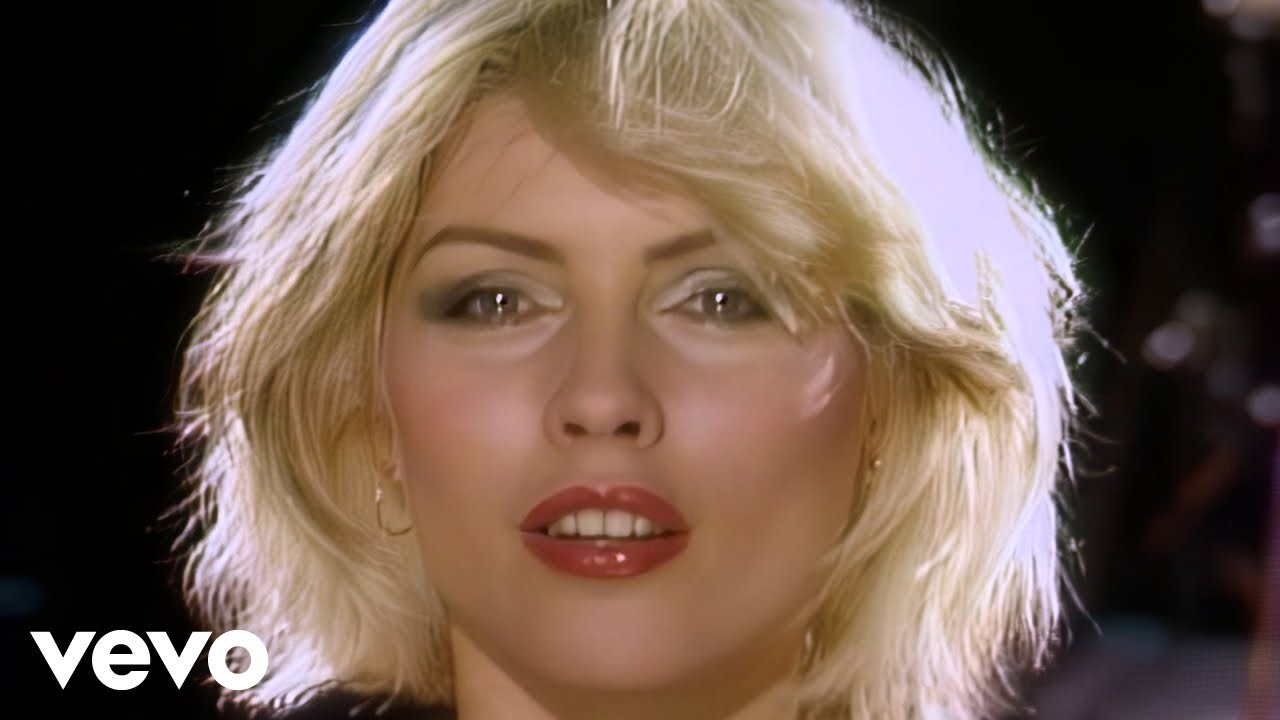
Now, via an arduous process of multi-tracking and the layering of fabulously fatigued high-register sighs over some lower-octave moans, the correct effect was achieved for Harry’s voice. Getting the drums right was fraught – a day each was spent on the kick drums, the snares, the hi-hats, and so on. And making sure the synthesized, keyboard-triggered bassline pulsed synchronously with the original bass guitar was no picnic. Chapman may have been a hard taskmaster, but the results proved that collections of seemingly effortless pop don’t come without a lot of studio graft and grind.
It’s a given now, and all bands pay lip service to this, but nearly every track on Parallel Lines could have been released as a single. Album opener Hanging On The Telephone, written by Jack Lee of little-known power pop trio The Nerves, was the second track to be lifted for single release in the UK, where it reached number 5 in November 1978. Weighing in at just 2 minutes 22 seconds, every bar and every word counted, from the titular phone buzzing at the start to the lyric (‘I’m in the phone booth it’s the one across the hall/If you don’t answer I’ll just ring it off the wall’) that contained just the right amount of venom to give Blondie a punky edge, even as the music had the melodic hooks to qualify it as bubblegum.

One Way Or Another was a single in the US but it’s a measure of the album’s quality that it felt like a UK single, too. Co-written by Harrison and Harry, it was also street-tough and snarling, only in a seen-it-all way, superior to the milieu that spawned the band. Harry bared her teeth, which were diamond-white and neat. ‘I will drive past your house and if the lights are all down I’ll see who’s around,’ she warned, a reminder that new wave was a boon time, lyrically, for lovers’ retribution as much as it was for societal unrest. That it later became a byword for louche bitchiness was confirmed when it was used on the soundtrack to Mean Girls in 2004.
Picture This, although never released in the States, was the lead single in Britain. Harry’s promise – ‘I will give you my finest hour/The one I spent watching you shower’ – seemed more seditious than a room-full of riot grrrls while the 12-second guitar solo was a model of pop concision. But Parallel Lines was nothing if not a diverse delight, and on track four, Stein’s Fade Away And Radiate, Blondie showed their experimental European roots, nodding to Roxy Music, anticipating the synthpop age of Ultravox et al. With its talk of ‘Blue blue neon glow’ and Robert Fripp’s guitar textures bolstering the dubby electronics and reggae coda, it suggested what might have occurred had The Shangri-Las met Lee Perry and Eno in Berlin.

‘My dream is on the screen,’ cooed Harry, reading our minds, while ‘Dusty frames that still arrive/Die in 1955’ conjured images of The Last Picture Show if directed by David Cronenberg. The penultimate track on side one was Pretty Baby, a Harry-Stein throwback to the first two albums of girl group pop. Blondie took 60s romantic tropes and subverted them, but as with 10cc before them, the songs functioned as straight pop as well as they did genre satires. The side closed with I Know But I Don’t Know, a Frank Infante showcase with shades of Iggy Pop’s I’m Bored from the following year.
Side two was no let-down. 11:59 was a juddering Destri number that could have been the seventh single. Will Anything Happen was another burst of Jack Lee power pop-punk, sung with plaintive grit by Harry. Hardly frontloading the hits, the back end of Parallel Lines featured Sunday Girl and Heart Of Glass. Astonishingly, the former was never a US single release, but it reached No.1 in the UK where the lyric, ‘I know a girl from a lonely street/Cold as ice cream but still as sweet’, perfectly captured Debbie Harry’s appeal.

But Heart Of Glass was the track that unleashed Blondiemania with its combination of machine rhythms and real drums, Mudd Club mayhem
and Studio 54 sonics. The first white disco single (give or take Bowie’s Young Americans and Roxy’s Love Is The Drug), it did as much to mechanise – and revolutionise – pop as I Feel Love and Trans Europe Express. As Parallel Lines eased through the cover of Buddy Holly hit I’m Gonna Love You Too and kiss-off of Just Go Away, a glorious 12-track run was confirmed. An album in a million. Now all they needed to do was make another one of those.
Originally published in Classic Rock presents Blondie (June 2011)

