


From the Starman to Ziggy Stardust to the Thin White Duke, David Bowie’s ever-changing persona saw him moving from folk to glam, pop to industrial, Krautrock to art rock with consummate skill and style. As the world mourned the passing of a true music icon in 2016, we asked: how prog was he?
On Friday, January 8, 2016, Prog’s editor commissioned an article about David Bowie and the progressive quality in his work, running all the way up to Blackstar, his latest album, released that same day – his 69th birthday. By Monday, January 11, the news had spread that it was, in fact, the last-ever album of his lifetime. And so this article became a conflation: part exploration of the prog-ness of his work, part requiem; a tribute to a truly progressive rocker, artist and man.
It would be hard to argue for his musical virtuosity and super-proficiency on any of the instruments he played, but if you’re talking dazzling sleight of mind when it came to realising radical and exciting ideas, and a willingness to create shock-art for the masses, there was no one more brilliant.
Bowie was the quintessence of prog: flamboyantly experimental, always pushing the boundaries, charting new territory and refusing to accept standard practice. He was to the 70s what The Beatles had been to the 60s – the avatar of ch-ch-ch-ch-change, albeit for more paranoid, confused, darker times.
If you regard prog as a series of codified rules, you might hesitate before allowing Bowie through its hallowed portals. But if you see the term in its most fluid sense – and Bowie was nothing if not fluid, a shape-shifting creature prone to transition just when you’d got used to his newest guise – you won’t flinch at his accession to the pantheon.
He certainly mixed in prog circles. Brian Eno was his partner in crime for arguably his most celebrated phase, being his foil at Hansa by the Berlin Wall, offering oblique strategies as to where Bowie should go next.
Rick Wakeman provided the keyboard flourishes for Space Oddity and Life On Mars?; and he was famously invited to be a member of The Spiders From Mars on exactly the same day that he got the nod to join Yes. “It was like being asked to sign for Chelsea or for Manchester City,” he once said. And although he eventually plumped for Jon Anderson’s team, it wasn’t an easy decision.
Robert Fripp was part of the illustrious squad Bowie took to Berlin, playing “hairy guitar” (Fripp’s phrase) on two key “Heroes” numbers: Beauty And The Beast and the immortal title track. Three years later, the Crimson King was back on Planet Bowie, supplying the harsh mechanical textures for Scary Monsters (And Super Creeps).
You might argue that a willingness to adapt and experiment are hallmarks of the genre – in which case, again, Bowie was supremely prog. There had already been several shifts and transformations before he even arrived in the spotlight. He was a blues rocker with the Manish Boys, a mod with the Buzz and a folkie with Feathers.
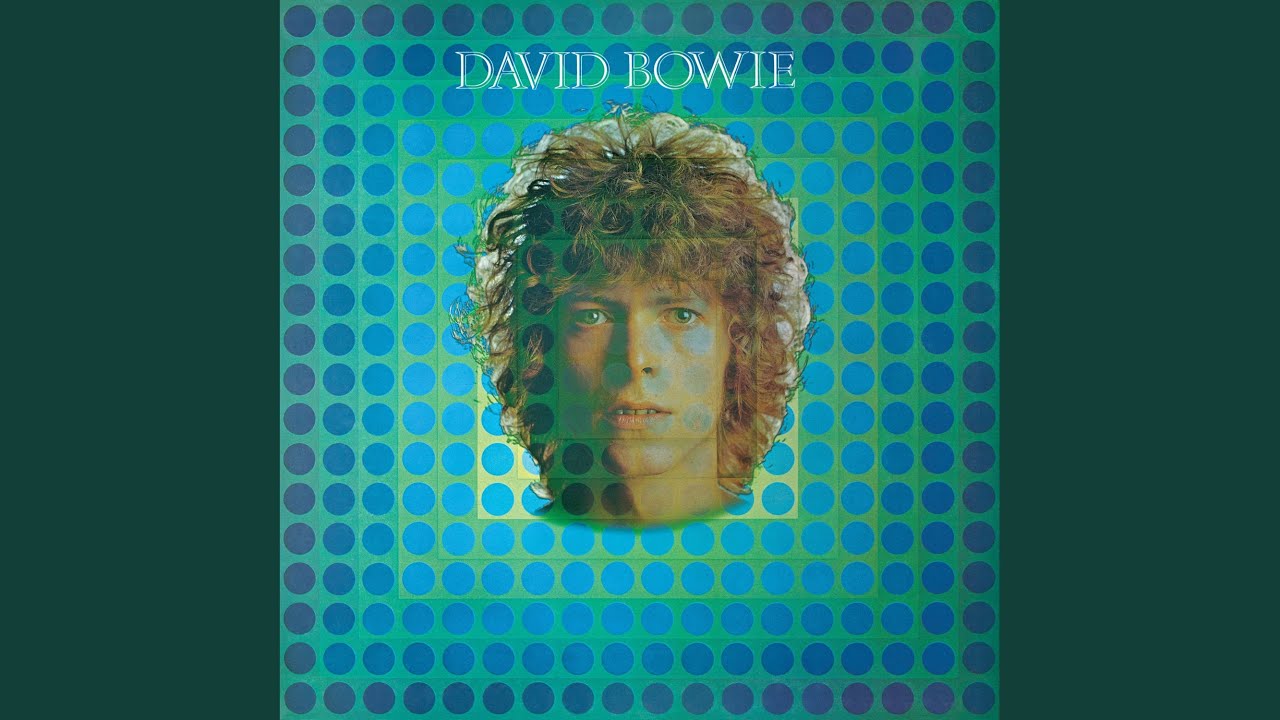
His self-titled 1967 debut album was a curious mix of the theatrical and whimsical, music hall and psychedelia. Although it’s often dismissed as the work of a callow folkie, the also-eponymous 1969 follow-up (issued as Man Of Words/Man Of Music in the US and reissued in 1972 as Space Oddity) featured several songs – notably the seven-minute Memory Of A Free Festival and nine-minute Cygnet Committee – which extended instrumental workouts and sheer heaviness, and had a lot in common with the burgeoning underground/ progressive scene.
The track Space Oddity itself has been compared, tonally and texturally, to King Crimson’s Epitaph. Its use of mellotron was none more prog, as was its space/sci-fi imagery and sense of yearning for a faraway place.
Bowie shared a fascination for the cosmic and futuristic with his prog peers, and a need, expressed by his lyrics and far-out sleeve art, to flee the banal and create a new reality. Just as The Moody Blues went In Search Of The Lost Chord and Hawkwind journeyed In Search Of Space, Bowie used Major Tom as the protagonist in his own moonage daydream.
Hunky Dory enjoyed as much turntable space in student unions that year as Fragile, Tarkus, Nursery Cryme and Aqualung.
The feelings expressed across Bowie’s music, lyrics and artwork is similar to that captured in the sounds and visuals of Yes, ELP et al. The individual ideas may have differed, from Ziggy Stardust’s leper messiah persona to the sci-fi armadillo tank of Tarkus and the giant hogweeds of Genesis’ Nursery Cryme. But the desire to use rock’n’roll as a portal to strange new worlds was largely the same.
Notwithstanding the often-overlooked treasures to be found on its two predecessors, The Man Who Sold The World (1970) is widely regarded as the real start of the Bowie story. It’s certainly an early warning shot across the bow of anyone intent on putting him in a neat box. It could be filed under progressive rock – although it could just as easily be categorised as blues rock, hard rock, folk rock, art rock, psych, even nascent heavy metal and an early sign of glam.

But prog fans as much as anyone will thrill to the two-part, eight-minute album opener The Width Of A Circle, its lyrics less fantastical than sinister, with satanic and sexual overtones.
Hunky Dory (1971), with its concise, adroitly conceived three- and four-minute paeans to Bob Dylan and Andy Warhol, Kooks and Queen Bitches, may not have been prog on paper; but it would have enjoyed as much turntable space in student unions that year as Fragile, Tarkus, Nursery Cryme and Aqualung.
Bowie and Ronson blow notions of rock masculinity out of the water on Top Of The Pops – at teatime, no less
It was co-produced by Ken Scott, sometime engineer for The Beatles, Pink Floyd, Procol Harum and Mahavishnu Orchestra. Despite its kaleidoscopic catchiness and exquisite accessibility, there was a gloominess to Bowie’s idiosyncratic vision (‘A million dead-end streets’) on Hunky Dory as he unveiled his mission statement (‘Turn and face the strange’) and announced his imminent takeover (‘Look out, you rock’n’rollers’).
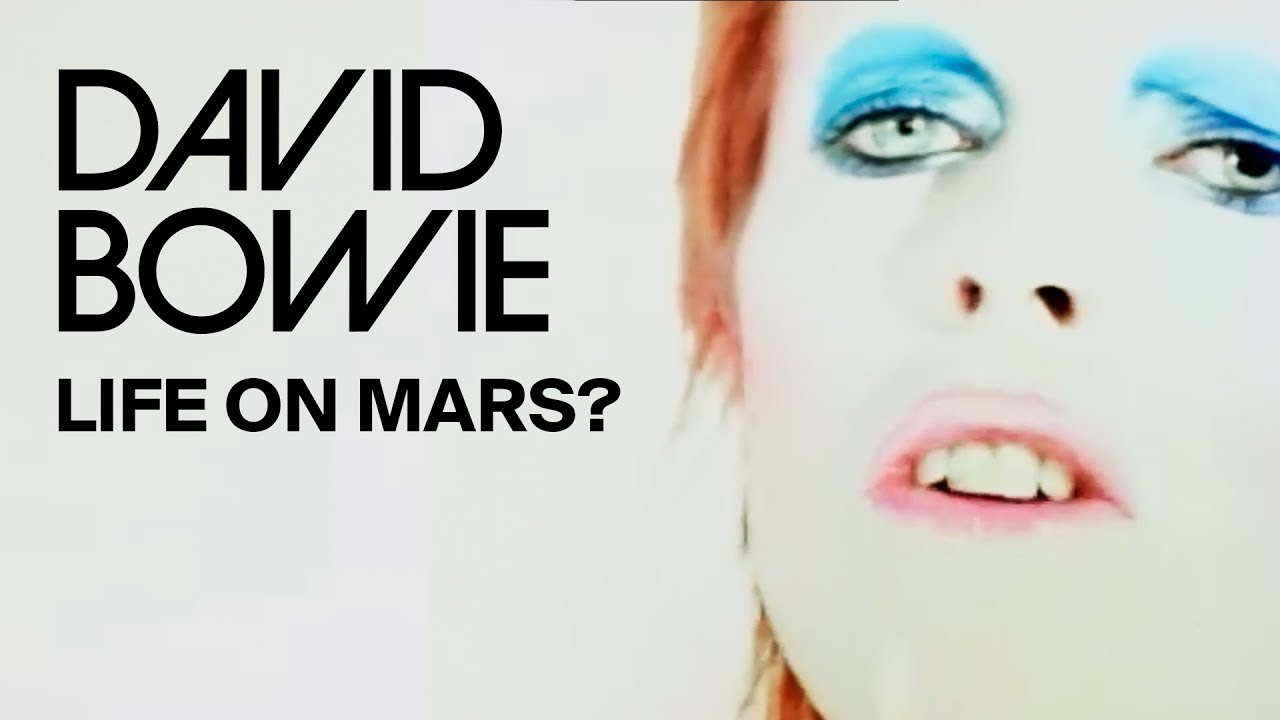
Then Life On Mars? was a baroque masterpiece in miniature and testament to Bowie’s genius knack for bringing esoterica into the mainstream. The series of unsettling images may have seemed unpalatable, but the context – Wakeman’s piano, Mick Ronson’s ravishing string arrangement – was so appealing that before long, kids in playgrounds across Britain were singing about ‘The mice in their million hordes/From Ibiza to the Norfolk Broads’ and rhyming ‘America’s tortured brow’ with ‘Mickey Mouse has grown up a cow.’
![David Bowie - Starman (Live on Top Of The Pops) [Official Video] [HD] - YouTube](https://img.youtube.com/vi/oOKWF3IHu0I/maxresdefault.jpg)
Close To The Edge, Foxtrot and Thick As A Brick weren’t the only thematically unified albums with a coherent vision from 1972. There was also Bowie’s modest little collection, The Rise And Fall Of Ziggy Stardust And The Spiders From Mars, on which his audacious tendencies – musical, lyrical, sexual – achieved full flight.
His mythic extraterrestrial aura combined with a descent into a narcotic underworld would have felled a weaker character
If you really want a measure of Yes’ The Solid Time Of Change, then watch Bowie and Ronson blow accepted notions of rock masculinity clean out of the water onTop Of The Pops, where they unleash Starman on an unsuspecting populace – at teatime, no less.
Ziggy Stardust functioned as escapist fantasy and grim parable about the realities of fame, and made the orange-haired bisexual alien a household name, even though – or rather, because – we didn’t know where Bowie ended and Ziggy began.
Aladdin Sane (1973) further fractured the fault line between fiction and reality, being the first album Bowie made as a bona fide star. The title track alone, with Mike Garson’s freaky avant-garde piano heightening the sense of disturbance, managed to balance reflections on insanity with intimations of the apocalypse.
Bowie was the harbinger of doom in the guise of a human-canine. Diamond Dogs (1974) was another outlandish concept that sustained the mood of imminent cataclysm, with the epic song suite comprising Future Legend, Diamond Dogs, Sweet Thing, Candidate, Sweet Thing (Reprise) and Rebel Rebel on side one entirely palatable to prog heads. Comparisons have been drawn between that nightmarish album, based on George Orwell’s Nineteen Eighty-Four and Rush’s equally dystopian 2112.
The track 1984 on Diamond Dogs was an orchestral funk number that pointed towards Bowie’s next move – the “plastic soul” of Young Americans (1975). By this point, the alien androgyne’s experimentation included a foray into cinema with The Man Who Fell To Earth, forever capturing his mythic extraterrestrial aura, combined with a descent into a narcotic underworld that would have felled a weaker character. There was a concomitant obsession with witchcraft and black magic, while he became mired in a sort of living hell in LA.
He wanted to do it his way and the best way. His death was no different from his life – a work of art
Tony Visconti
Being Bowie, he naturally made his adventurism work to his advantage, and by Station To Station (1976) he was reborn as The Thin White Duke, with one eye on the Philly soul past and another on the electronic dance future, with some Teutonic present-tension from the German music (aka Krautrock) he’d been listening to.
With the help of Eno, Fripp and producer Tony Visconti, he then made a groundbreaking move to Berlin, accompanied by a shift in attitude and aesthetic value. Low and “Heroes” (both 1977) were the results – albums of modern pop on one side and starkly beautiful instrumentals on the other. It may have been the height of punk, but Bowie was every bit as relevant as Johnny Rotten and his cohorts. Or as the famous advert of the time had it: “There’s old wave, there’s new wave, and there’s David Bowie.” The 80s started here.
![David Bowie - Lazarus (Official Video) [HD] - YouTube](https://img.youtube.com/vi/y-JqH1M4Ya8/maxresdefault.jpg)
Arguments rage as to which album was Bowie’s last great addition to his peerless canon. Some say it was Lodger (1979), others suggest Scary Monsters (1980), while many cite Let’s Dance (1983) – his commercial high- water mark, the one that turned him into a global superstar – as the one.
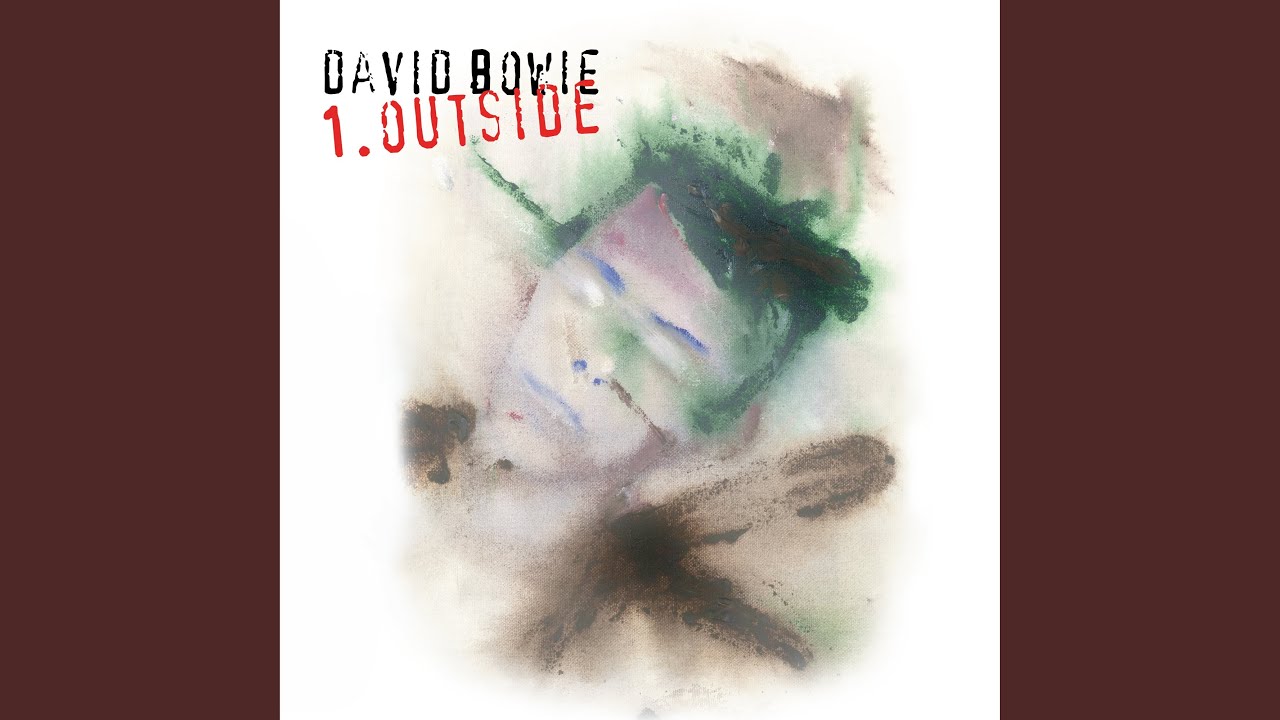
Outside, the 1995 release that saw him collaborate once more with Eno, is now regarded as a late example of his unstinting progressive tendencies. And then, of course, there are The Next Day (2013) and Blackstar, the latter released two days before his death, featuring so many poignant portents of his demise (‘Look up here, I’m in Heaven’). It was the final act of subversive strategy from a man who’d seemingly plotted his every artistic move for five decades.
“He always did what he wanted to do,” declared Visconti, producer of Blackstar, on the day Bowie died. “And he wanted to do it his way and he wanted to do it the best way. His death was no different from his life – a work of art.”
Total commitment to artistry, to provocation and to change, in life as well as death: how prog is that?

