


Decades of pushing the boundaries of what the pedal steel can do made Cochise co-founder BJ Cole one of the world’s most creative and in-demand session players. In 2014 he told Prog about the artists who inspired him and the people he’d most enjoyed working with.
BJ Cole has been the most sought-after pedal steel guitarist in the UK since the 1970s. He’s played in every conceivable musical genre, from pop to prog and ambient to free improvisation, including sessions with David Gilmour, Mike Oldfield, Kevin Ayers, Björk, Scott Walker, REM and The Orb. He was in the UK post-psychedelic country band Cochise from 1970 to 1972 and he’s made a number of solo albums.
Cole delights in taking the pedal steel way beyond the repertoire of country and Hawaiian music, with which it’s most readily associated. “If people have an assumption about the instrument, I want to blow it,” he says. “I want them to hear the instrument in a pure way and to hear what it is in a pedal steel that excites me.”
What initially drew you to the pedal steel?
I played guitar for two or three years, inspired by Hank Marvin. Then I heard Santo & Johnny, who had an instrumental hit in 1959 called Sleepwalk. And when I heard it around 1962 I thought, ‘That’s where Hank got it from!’
![B.J. Cole - The Regal Progression [UK] Avantgarde Prog (1972) - YouTube](https://img.youtube.com/vi/cIv-avSjB9k/maxresdefault.jpg)
It’s played on a lap steel and it’s got a lyrical quality that he’d copped for his instrumentals. I thought, ‘I’m going to go learn this thing.’ I see pedal steel as being an improvement on electric guitar!
Like many groups of the early 70s, Cochise were difficult to categorise; they weren’t really prog but fitted into that milieu.
Only the first Cochise album is country rock. The stuff that works is more heavy rock. Mick Grabham was in love with country guitar but didn’t really know how to write country songs. He went on to Procol Harum and Rick Wills went to Foreigner. It was only Willie Wilson, who worked with Quiver, who was soft rock.
But nobody really thought in terms of genres, and it was a badge of pride then that it didn’t fit. We did loads of gigs with Hawkwind as we were both on United Artists.
Your debut solo album, 1973’s The Hovering Dog (later reissued as The New Hovering Dog), is imbued with the ‘anything’s possible’ feel of the early 70s.
I was deeply into poetry and mysticism, which led to me building up a lot of material that wouldn’t work with Cochise. I had a slightly cavalier attitude – ‘How do we mess with people’s minds and expectations?’
You get these lovely baroque pieces, which I’m really happy with, followed by a country number by John Hartford, who’d written Gentle On My Mind, done in a completely off-the-wall way, followed by a steel guitar piece with percussion, and a piece of deep electronica.
Everyone said it was ‘eclectic’ – but that can be dismissive if it doesn’t work. Rhythmically, Captain Beefheart was in there and I was influenced by Love – Forever Changes is my favourite album of the 60s.
I went to David Gimour’s house and we did loads of playing together… I’ve got a whole bunch of stuff that we did together
Then session work largely took over. Any regrets about that?
If there’s anything that makes me regret not pursuing more of an artistic career, it’s looking at Brian Eno. Not that I would compare myself with him; but when I look at The Hovering Dog, it’s not a million miles away from his early stuff. And in the 80s he made all those fantastic ambient albums, which inspired my solo effort Transparent Music in 1989.
It must have been good to record and play with Icebreaker on their version of Eno’s Apollo.
I’d heard that record pretty much after it came out and the inclusion of Daniel Lanois’ pedal steel made it more resonant for me. They gave me a chart with his part written out – you put chords underneath and a top line and leave it to the player, largely. It’s a very touching and meaningful thing to be asked to do.
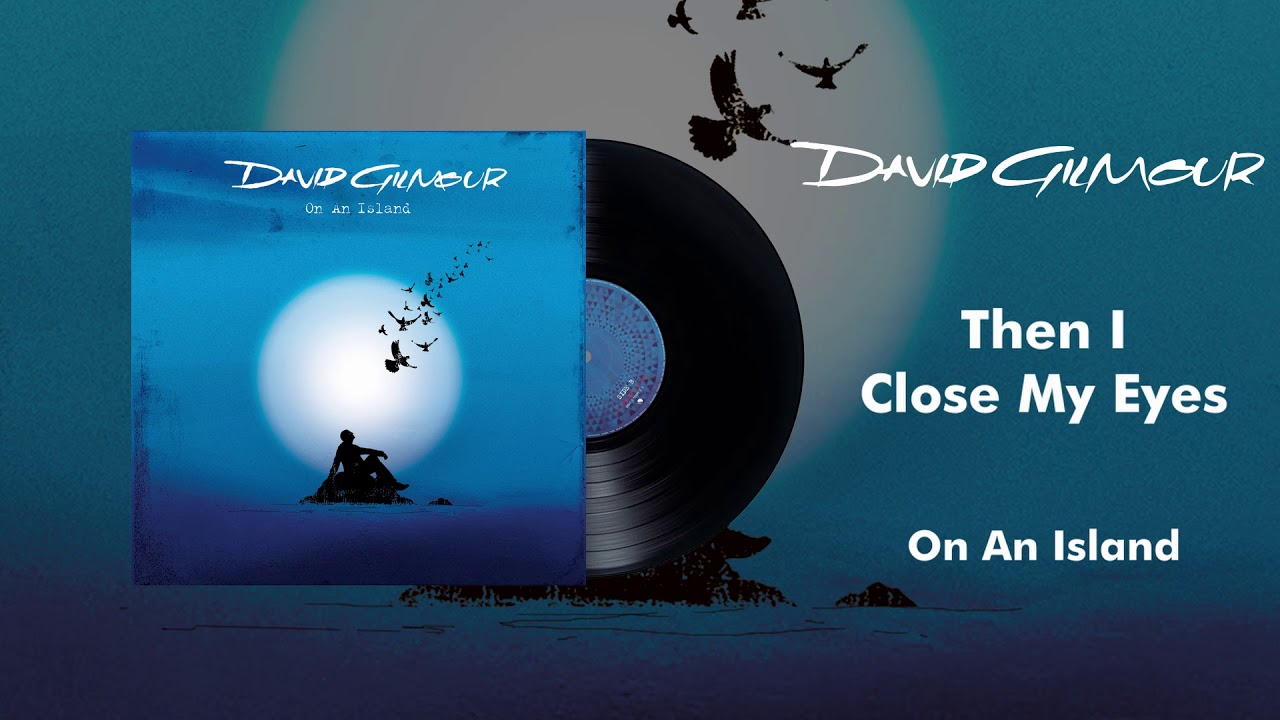
What about your playing on David Gilmour’s On An Island?
That wasn’t really a session. I went down to his house and we did loads of playing together. It was years before the album even came out. He asked me to play at Rick Wright’s funeral service. I’d known him since the early 70s, with Willie Wilson and Rick Wills. I’ve got a whole bunch of stuff that we did together.
And into electronica with The Orb?
Alex Paterson pretty much asked me to supply him with licks, which he could take away and make into a track. I really enjoyed working with them – they made it into something quite over the top.
The track was Montagne d’Or on Orbus Terrarum. It was also a great experience to work with [techno/drum and bass experimenter] Luke Vibert. He’s one of the greatest musicians I’ve ever worked with. That record we made, Stop The Panic, I’m totally happy with – he made me play out of my skin.
Are there any sessions that particularly stick in the mind?
Harold Budd’s album By The Dawn’s Early Light. They flew me to New Orleans and put me in Daniel Lanois’ studio. We were there for a week working with Harold and Bill Nelson, and a harp player and a viola player. Harold was fantastic to work with; magical.
Working with Scott Walker was always a joy. He’s the man with the voice that inspired everybody else. “Can you play Hawaiian – but not like Hawaiian the cliché?” was about the best instruction I remember from him.
Musically you occupy a unique position.
Pedal steel is an instrument that only has a narrow band of musical styles in which it’s acceptable – once you’re beyond that, you’re in experimental land. So I’ve been very lucky in making a living out of being an experimental musician. I’ve managed to get away with it!

