




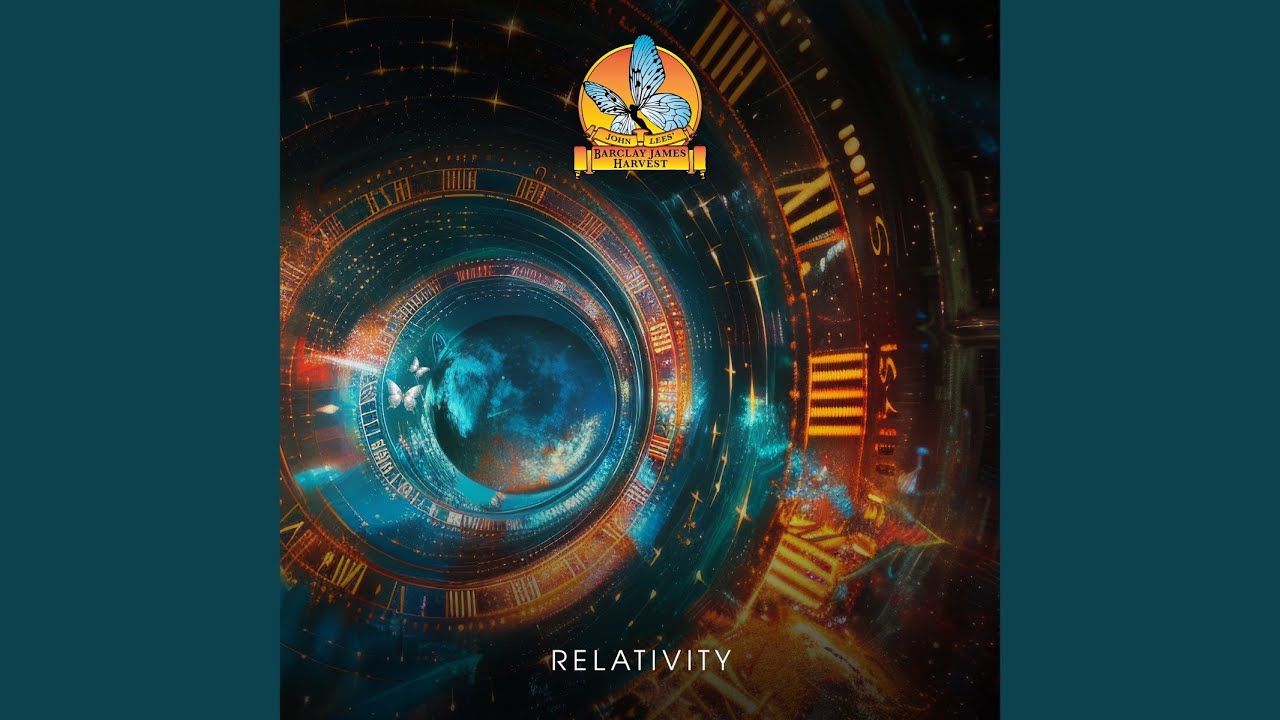
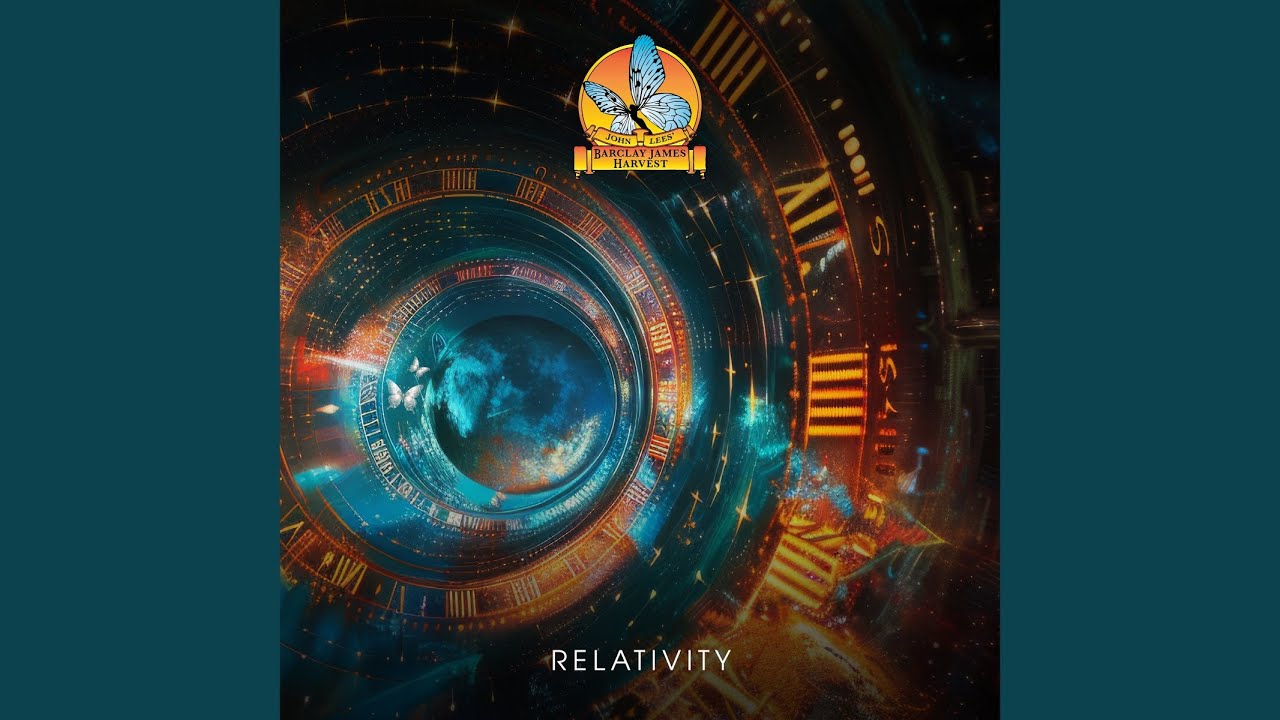
Barclay James Harvest co-founding singer and guitarist John Lees has been leading his iteration of the prog overlords since the band split into two in 1998. After launching Relativity, his first album in 12 years, Lees reflects on his legacy, why he’s cautious of playing live, and the possibility of a reunion with Les Holroyd.
“I’ve got no expectations,” says John Lees of Relativity, the first album by his incarnation of Barclay James Harvest since 2013. “It’s just nice to look back now and think, ‘Wow, we’ve created this!’”
He’s talking about the eight-year, pandemic-disrupted process of making the third album as John Lees’ Barclay James Harvest, but he could just as well be referring to the illustrious body of work he played a part in making since the Oldham-formed symphonic prog pioneers made their recording debut back in 1970.
“The fact I’m still involved in making this music at 78 seems amazing to me,” he continues. “In my 20s, if you’d told me I’d still be doing this, there’s no way I’d have believed you.”
With help from longtime JLBJH bandmates Craig Fletcher (bass, vocals), Kevin Whitehead (drums) and Jez Smith (keyboards), he’s made a record that seems to lean into those kind of reflections on the passage of time, as well as other subjects related to our place in the grand scheme of things.
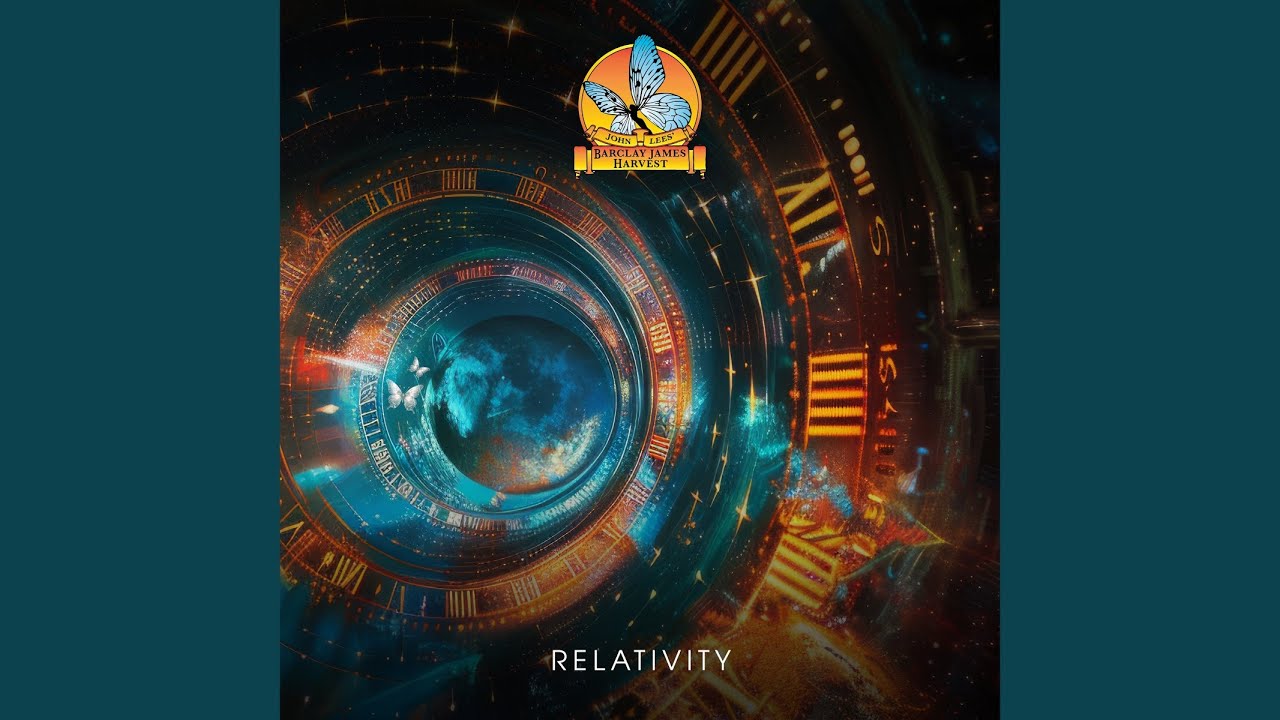
Bookended by two nine-minute parts of the title track characterised by ruminative, ebbing and flowing long-form prog, it also dips into more AOR waters on the soft rock of Peace Like A River and the uplifting acoustic anthemics of Love. Elsewhere, The End Of Days has touches of gospel woven into a rueful view of the planet’’ continuing demise; and Snake Oil gets angry at spiritual charlatans selling us comforting but bogus visions of the afterlife.
The Blood Of Abraham might sound verging on Christian, judging by its title, but Lees explains it’s more about finding common ground in our fellow humans. “If you believe what’s written, then all of us have some relation to Abraham,” he says. “So you look at all these wars going on between peoples; at the end of the day, we could all be from the same source – all related.”
Given such evidence of hard-won worldly wisdom, then, what are we to make of the continuing schism that means the two surviving members of the original Barclay James Harvest are working in separate line-ups of the band?
To recap: after the 1990s split, the founding guitarist and singer – initially billed as Barclay James Harvest Through The Eyes Of John Lees – reconnected with former keyboardist Stuart ‘Woolly’ Wolstenholme, and they made Nexus along with Fletcher and Whitehead. Les Holroyd, BJH’s bassist and other principal songwriter, continued work as Barclay James Harvest Featuring Les Holroyd, with original drummer Mel Pritchard aboard. Pritchard died in 2004 and Wolstenholme in 2010, but, the two rival bands have remained active, albeit with Holroyd’s outfit more focused on touring.
Are any hatchets they once wielded now buried? “It’s all water under the bridge now, isn’t it?” Lees says. “You know, life’s too short.” He explains: “Musically, by the time we split, we were poles apart. And then there were some other issues that, shall we say, offended my sense of fair play. It’s such a long time since I had any contact with Les – I can’t see any way it could happen. But I mean, who knows?”
Meanwhile, Lees is enjoying the way his current band feels like a collective endeavour. “I wanted to get back to a partnership because that’s what makes it feel like the initial, earlier Barclay James Harvest, who I always thought produced the best material. Whoever had the most input on the writing didn’t matter, because we were a partnership. And then it ceased to be a partnership, and different members began to be driven by different demons.”
Further fond memories of the early era were evoked by other aspects of making Relativity. After it was recorded, Lees experienced strong flashbacks to a place where BJH once spent a lot of time. “We went down to Abbey Road to sit in on the mastering of the album for vinyl. It was so strange going back to where my career started; the studios we recorded in when we first signed to EMI.
“We walked in and the guy greeting us said, ‘Welcome home.’ They probably say that to all the clients; but I’m thinking, ‘Really, it is welcome home to me, because this is where I got my first break; where it all started.”
I remember Eric Clapton giving bottleneck lessons to George Harrison on the floor where the cutting rooms were, using John Lennon’s guitar
He was stunned to find large parts of it hadn’t changed much over the past half-century. “The cutting room looked exactly the same – all the old machines still in the corridor, parked up, waiting to be used; so many of them! And even though I didn’t go into Studio Two, where we did all our work, it looked very similar.”
Lees recalls that BJH were not yet in the premier league of EMI acts, meaning they only briefly brushed shoulders with the label’s rock royalty. “We ostensibly got the downtime – when the bigger acts finished in the studio, we would then go in and use them at night. While you were waiting, you’d see these people moving around.
“I remember Eric Clapton giving bottleneck lessons to George Harrison on the floor where the cutting rooms were, using John Lennon’s guitar. I saw Lennon there while he was recording Plastic Ono Band with Phil Spector. Lots of others – Cilla Black, Cliff Richard, The Pretty Things; and we saw a lot of Roy Harper.”
In those studios BJH created an influential blend of orchestral elements and folk-rock on a prolific run of their self-titled 1970 debut, Once Again and …And Other Short Stories (both 1971) then Baby James Harvest (1972). As their sound mellowed their fanbase grew, with Europe proving particularly receptive. This hotbed of support was tapped into in landmark shows – in 1980 they played to 250,000 people on the steps of the Reichstag next to the Berlin Wall. In 1987, in Communist East Berlin, they performed before 170,000 in the bloc’s first ever open-air show by a Western rock band. These events are captured on the albums Berlin – A Concert For The People in 1982 and Glasnost in 1988.
I feel I’ve got to prove myself every time – I overlook the fact that people are there because they want to see us!
When Lees reflects on it all, though, his long-time unease with live performance, seeming to verge on stage fright, can be glimpsed. “This is one of my problems – I don’t appreciate what we’ve done!” he admits. “In som ways, it’s not a positive memory; it’s weird. I remember being terrified at the first one: the amount of people, the sheer proportions of everything, thinking that somebody might be going to assassinate me! I remember thinking, ‘Oh God, why have they got me here? There’s 250,000 people out there wanting to see me… what’s it all about?”
Included in the three-disc edition of Relativity is a 2009 concert at RoSfest, which was one of Wolstenholme’s last appearances. After a lifelong struggle with depression he died by suicide in 2010 – but Lees has fond memories of his old friend from that American trip.
“I had a stinking cold, but it was a good gig; and then we went to New York, where we were supposed to do a show, but it got cancelled. So we did the tourist thing – Strawberry Fields and all these different places. Then the band wanted to go up the Empire State Building, because they hadn’t been before. We all got in the lift, and went up right to the top
“But then Woolly was in the corridor, holding onto the wall. He wouldn’t come out! I said, ‘What’s up with you?’ He said, ‘I’m terrified of heights!’” We’d been up the Eiffel Tower before, me and Woolly, and he hadn’t been frightened of heights then. But he was saying, ‘No no no!’ There was always a bit of chaos when Woolly was around!”
He reflects on his band’s shows with mixed emotions. “As I’ve got older, I’ve felt more anxious and uncertain about live play. I feel I’ve got to prove myself every time – I overlook the fact that people are there because they want to see us! So whether we’ll do any more live work, I’ve no idea. It depends on my mental state. But then, we’re a democracy, so if the other guys are keen I may be outvoted.”
By way of illustrating how the band is much more than just a vehicle for him, he tells the story of “one of the more prestigious shows” they’ve played. “We were asked to do Glastonbury in 2016 [headlining the acoustic tent with a full electric set] and I didn’t want to know. I had no intention of doing it, but the other guys in the band had it on their bucket list – if ever there was something they wanted to do, it was Glastonbury.
“So it went to a vote, and I lost. Mark Powell [Esoteric label manager], a great friend to us, told the band before he told me. If it had been me first, I might ‘not have remembered’ to tell the rest of the band!”
Holroyd, now based in Germany, has been playing festivals and recently toured his adopted home country. Lees had announced that 2023 would be the band’s last year of hitting the road. But hasn’t ruled out more one-off shows, such as the event with the Slaithwaite Philharmonic Orchestra in Huddersfield in 2023. “Like I said, I’ve no expectations for this record. But if it was to, you know, do a bit, then I’d have to look again at the live thing.”
In other words, like the album’s theme, everything’s relative.
Relativity is on sale now via Cherry Red.

