


In 2009 Ian Anderson discussed his motives for writing songs that cover global issues, and explained why he felt a duty to use Jethro Tull as a platform to educate and inform, as well as entertain.
Ask Ian Anderson if he believes Jethro Tull belong within the folk rock genre, and he leads you a merry dance – obviously on one leg. “Are you asking me because I’m known as the unplugged guy in a rock band?” he says, with a hint of a glint in his eye.
“I suppose to most people, folk rock bands are those with lots of delicate acoustic instruments, and are therefore seen as being somewhat quiet,” he reflects. “The reality is quite different. Any bands who play acoustically are probably more amped and mic’d up than the heavy acts you’d care to mention. In fact, the whole concept of an artist playing unplugged is a nonsense.”
Still, the question remains: are Jethro Tull a folk-related band at all? The argument in favour seems unassailable. Not only is there the question of Anderson being a renowned flautist, but over a period of at least three albums – Songs From The Wood (1977), Heavy Horses (1978) and Stormwatch (1979) – the folk influence was considerable. Even the name Jethro Tull comes from an 18th century agriculturist.
“These genre-specific tags have never meant much to me,” shrugs Anderson. “They’re for the convenience of us all, be it media, musicians or fans, as a way of identifying easily and readily where any artist sits in the contemporary scene.
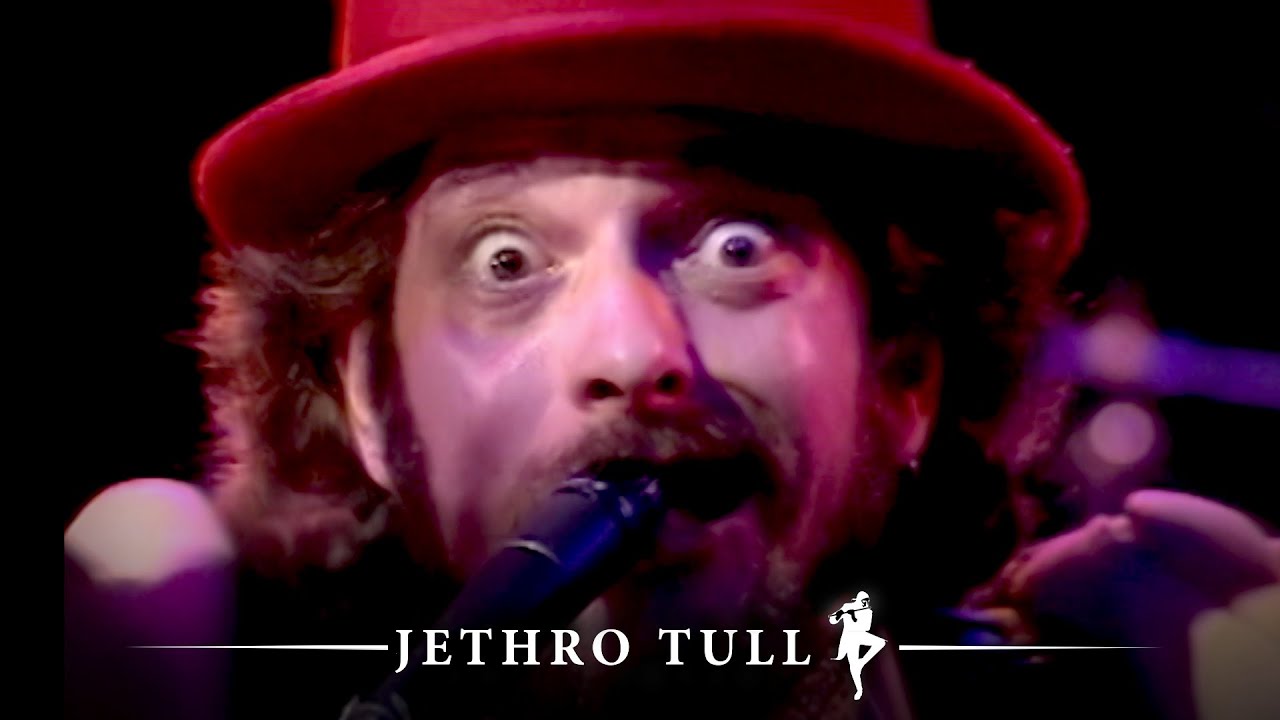
“But what does it mean? We won a Grammy in 1989 for Crest Of A Knave in the heavy metal category. Does that mean Jethro Tull are a metal band? We’ve had our rocking moments, but we’re hardly Metallica.”
But he wants to be clear that he’s not distancing himself from folk rock – he just doesn’t like the idea of his band being readily tagged. “What I appreciate about the folk idiom is that it implies a more organic approach to music,” he says. “From that perspective I can understand why we are put into the category.
“However, I’ve always seen this band as being outside of the box. Hopefully, we don’t fit comfortably into any category. Whatever others may think, I have never thought of Jethro Tull as being tied to doing anything through necessity.”
Yet here’s a clear relationship between the way he sets about making music, and the historical view of folk as artistic expression. Traditionally, folk artists have been prepared to use their music to make value judgements about society. In the days before recorded music, such travelling talents were often the only way people in outlying villages could find out what was happening in the bigger world. They were more than entertainers – they were social commentators and reporters.
It’s something Anderson has been throughout his career. “I’ve always believed that songwriters should never be afraid to tackle the big issues of the day. I like to think, for instance, that I was ahead of everyone when it came to warnings about the climate situation.
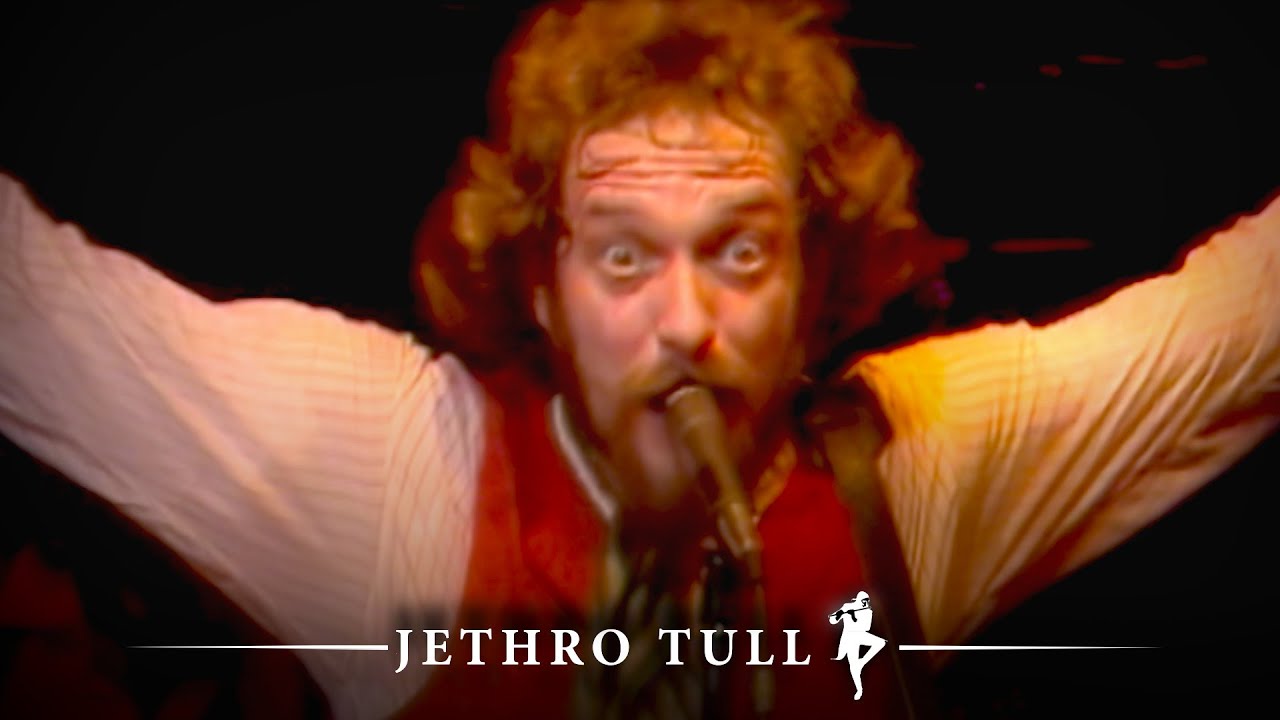
“I wrote Skating Away On The Thin Ice Of The New Day in 1974 about scientists fearing the imminent onset of a new ice age. Of course, they got it the wrong way round. We weren’t about to be enveloped in sheets of ice – as we now know, the opposite is true. However, the principle remains unchanged. I was taking a classic folk route, using music to spread the word about an issue which will affect us all.”
He continues: “Right now we’re facing a crisis over the growing global population which, if it goes unchecked, will use up our resources at a frightening rate. When I recorded Songs From The Wood, the population was about half what it is now. Anyone reading this should be shocked – but it’s true.
Some might suggest we’re too clever for our own good. A few critics would claim we’re way too bombastic and up our own arse
”As an artist, I feel it my duty to be a voice for reason through my music. This allows me to inform and maybe educate. Not to hector or push people into a course of action, but to ensure this subject becomes the focus of debate. Is it a folkish thing to do? I believe it should be.
“It’s no good the older generation, of which I am part, simply saying, ‘I’ll be dead by the time this becomes a crisis.’ No; we are the generation who created the problem, and we swept it under the carpet. We owe it to generations to come to help clear it up – if it hasn’t already gone too far.”
Anderson uses that example to explain how, perhaps, he’s more of a folk purist than many who profess allegiance to the cause. “For me, songs are of particular interest when they tell the stories of people in a situation. Sometimes that context is a little surprising; it’s fascinating for me to see how these characters I’ve created react to variables.

“To give it a painting perspective, I like landscapes, not portraits. I’m like the 20th century Scottish artist Sir William Russell Flint. He painted nude models, and then put them into a pre-prepared landscape. It was an early form of Photoshop.”
But back to the original question. “If you ask most people what sort of a band Jethro Tull are, would the answer be a folk rock one?” Anderson considers. “I believe not. To those who’ve heard of us, we’re probably a progressive band. Some might even suggest we’re a little too clever for our own good. A few critics would claim we’re just way too bombastic and up our own arse. The folk thing would be way down the list.”
We’ve never been trendy. We’ve never been cool. We always ignored what our labels, management and agents wanted
For Anderson, the real triumph of Jethro Tull has been in sustaining a career with barely any compromise to industry mores and demands. “We are perhaps the greatest proof that you can build a decent catalogue, and earn a reasonable living by carving out your own niche.
“We’ve never been trendy. We’ve never been cool. We have almost always ignored what our record labels, management and booking agents wanted. I’d go so far to admit that, on the odd occasions when I did try to deliberately write a commercial song, it failed.
“I know there are a lot of people, especially in America, who like Bungle In The Jungle, but to me it didn’t work. I’m at my best when left to create something without thinking about trends – just through being organic.”

