


In 2019 Prog spoke to Genesis keyboardist Tony Banks on the occasion of the band’s second live album, Seconds Out, being reissued 38 years after its original arrival.
“Hello Paris in the springtime!” says an animated Phil Collins during Seconds Out, the live double album released by Genesis in October 1977. Recorded mostly over four nights at the Palais des Sports in June – technically not spring, but let’s not spoil the moment – the record documented the band’s Wind & Wuthering tour, though it includes only Afterglow from that then-too-recent-to-fillet album.
With Collins comfortably ensconced as frontman/vocalist and Chester Thompson drumming, the music hit the sweet spot between the group’s old and new identities, as they showcased a blend of their classic prog – Supper’s Ready, Firth Of Fifth and The Cinema Show (the last was actually taken from a 1976 show with Bill Bruford on the drumstool) – and more focused favourites from the dawning of ‘the Phil era,’ with A Trick Of The Tail generously represented. Steve Hackett was to depart during the mixing sessions, leaving the band as, studio-wise, the Collins-Banks-Rutherford trio.
While Genesis didn’t consider live albums to be massively important, to one generation of fans this offering was the way in, a first introduction to their catalogue. As such, there are some who still – perhaps sacrilegiously – think of these versions as the definitive ones. At the very least, the readings of Supper’s Ready and Carpet Crawlers here give the earlier, studio-recorded Gabriel ones a real run for their money.
Seconds Out made the Top 5 in the UK and even entered the Top 50 in the USA, where they were only just making inroads. Founding member, keyboard king and 2015 Prog God Tony Banks was 10 years in with Genesis at the time, and says he recently listened to the album “for the first time in a very long while.”

How does Seconds Out sound to you now?
There’s good and there’s less good. Some things are better than the recorded versions; others not quite. I think Supper’s Ready in particular is really good. We felt at the time that this live version was better. Phil’s voice comes across very well.
On Foxtrot, we were putting it together without knowing exactly what we had on our hands. We recorded a lot of the bits separately, of course, and then joined them together. Whereas by the time of Seconds Out we were playing it more fluently. But I mean, Pete’s voice on things like the ‘666’ part was fantastic, so… you gain some, you lose some.
Is this the best Genesis live album?
Oh, I don’t know about that. The first one [Genesis Live] came out against our will a little, so we were never enamoured of that. It was all right, I suppose. The early 90s The Way We Walk ones definitely have some good moments. We were playing more consistently by then.

In a way live albums felt like marking time, not like a ‘real’ release, you know? Like a sort of ‘greatest hits.’ Seconds Out has an atmosphere, though – Paris was good for us. Europe in general was exciting: where people liked us, they liked us a lot. English audiences were quite polite back then, and the Americans made noise but did so throughout the songs as well. The Europeans listened reverentially, then if they appreciated something they’d make lots of noise at the end. So Paris was great – but it wasn’t Italy, which was best of all.
The French seem to enjoy chanting here, though it’s unclear what they’re saying.
We never quite worked out what they’re shouting either! At first it sounded like they were shouting “Pe-ter! Pe-ter!” and we thought they wanted Mr Gabriel back. It transpired it wasn’t that, which made us feel better. It was something else, which we never quite got to the bottom of. They were very enthusiastic, whatever it was. Perhaps I should ask a Frenchman. I probably did at some point, but can’t remember now!
So Phil and Chester had bedded in to their new roles by now?
People always said we sounded better live than on record. I’m not sure it’s true, but we heard it a lot
Oh yes – we weren’t worried at this point. Obviously when we’d first started with Phil singing, he was a bit concerned when the odd person would shout, “Where’s Peter?” and stuff. But even that was done with affection.
Also, we’d not had fantastic success live touring The Lamb Lies Down On Broadway, because we weren’t playing any old stuff. So now that we were touring A Trick Of The Tail and Wind & Wuthering and including old hits and important songs like Supper’s Ready again, the audience were on our side.
As for Chester, the thing with having different drummers is that with some songs you don’t get the feel you had on the album, but other songs you get something better. So I know Eleventh Earl Of Mar isn’t on there, but it was much better with Chester. And we slightly changed things like In The Cage, which became a much more rocky thing. Not just because Chester was drumming but because our approach shifted. In The Cage sounds too jazzy on The Lamb Lies Down, I think.
And there’s a track with Bill Bruford on Seconds Out, isn’t there? He really took to The Cinema Show; he and Phil played that really well, so we wanted to leave that on there.
You left out the piano intro on Fifth Of Fifth.
Did I? Ah yes – we didn’t have a proper grand piano to play live, so I tried to play it on this electric piano, but it had no touch sensitivity. I had to drop an octave in the middle too, because it didn’t have the high octave. In those days we didn’t have the facility to play a proper piano – in fact, everything then was compromised. You couldn’t do half the things you played on the record; you had to change things. But that was okay, because you had to come up with new solutions. Of course, nowadays everything would be different.
What do you recall about the feel of the shows themselves?
People always used to say we sounded better live than on record. I’m not sure that was true, but we heard it a lot at the time. And the Genesis show then was quite innovative in what it did visually. People got a memory of that when they bought Seconds Out.
I wasn’t surprised that Steve didn’t stay with us forever, but I was surprised he left at the time he did
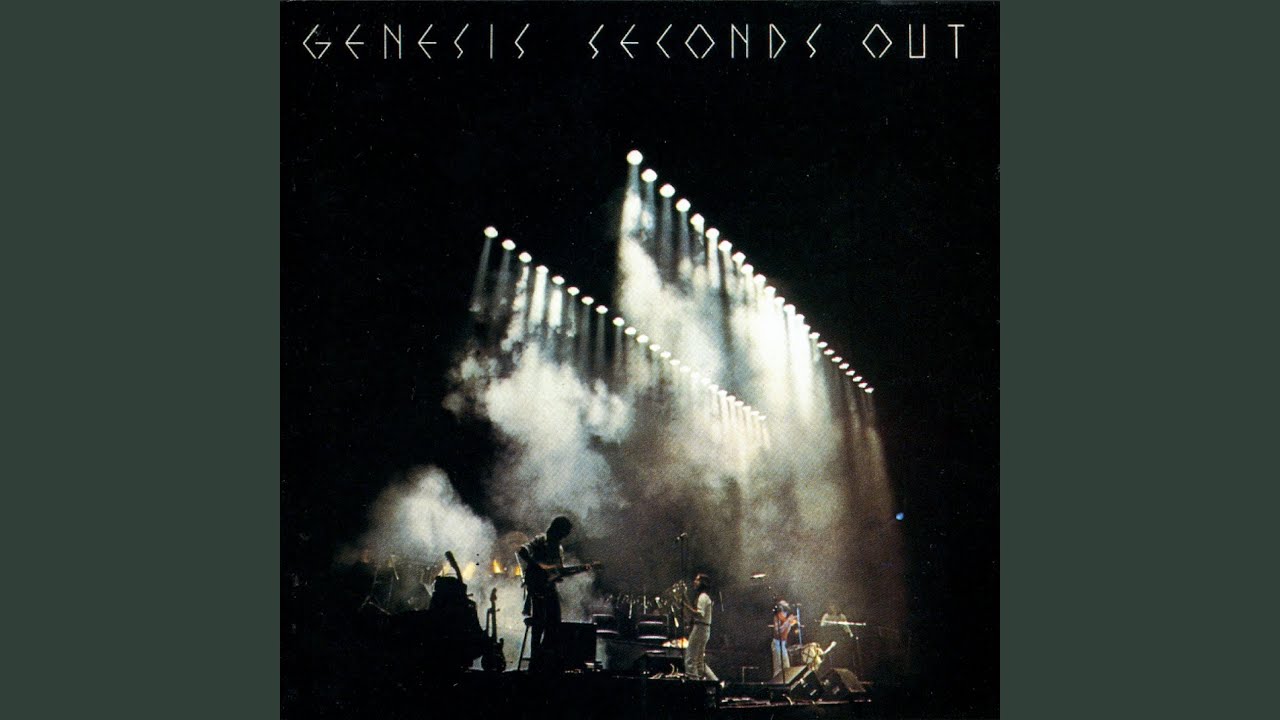
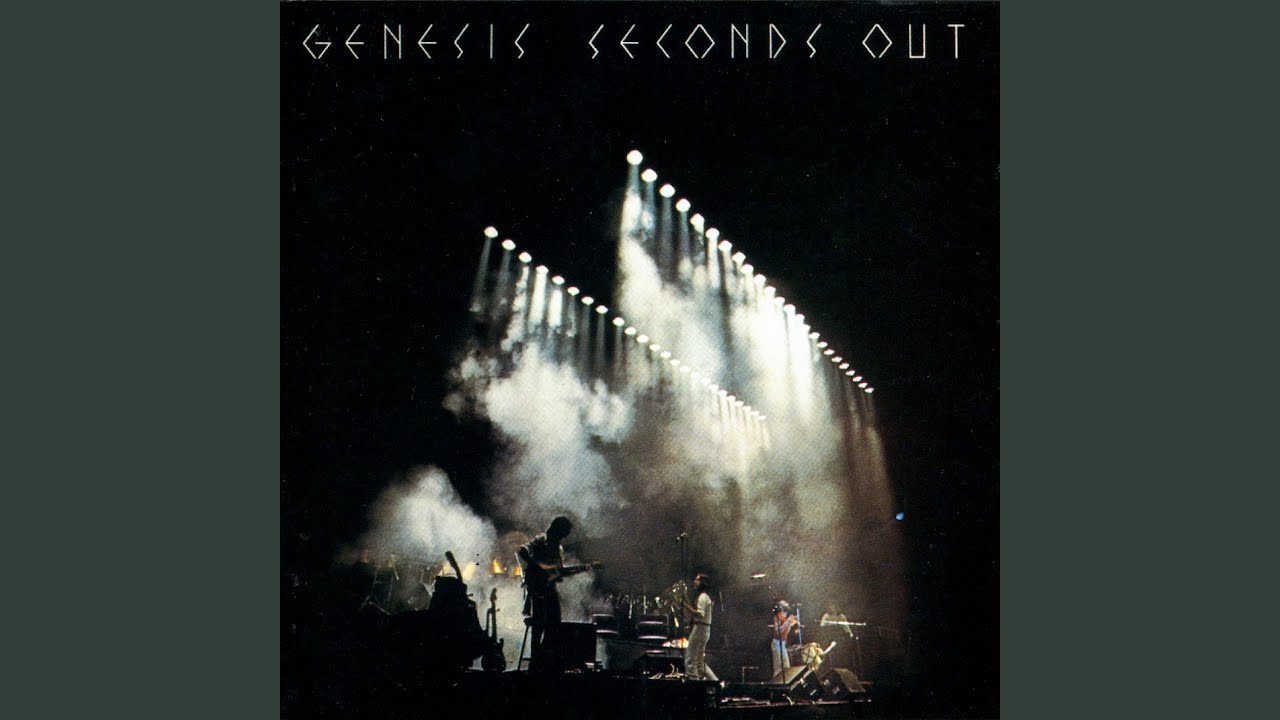
It probably got more extravagant over the years, but we were one of the pioneer bands when it came to lighting. We pioneered the Varilight, which is now ubiquitous. That was when people first saw it, and it was a very hot thing. You had lights that could change colours, 100 lights for one colour and 100 for another – that was a huge change from the early days! The front cover of the album is the Afterglow effect.”
Another stand-out on Seconds Out has to be the gorgeous version of Carpet Crawlers.
The strength of that song took us by surprise. It was written in a throwaway moment really. Mike and I just put together this simple – for us, anyway! – chord sequence, and Peter added this lovely melody on top. I think Phil’s voice, especially when it comes to the later verses – ‘mild-mannered supermen’ and all that – just sounds so good. It really gives it a lift. To be honest it’s a very strange lyric, if you analyse it! But over the years it’s been a stage favourite: we used it as the encore on our tour in 2007.

I appreciate music that’s simple but effective. Perhaps, often, Genesis’ best moments are more complex, especially in those days, but that one’s very enjoyable – even if nobody bought it as a single!
Steve Hackett chose a strange time to leave the group – as you were mixing Seconds Out in London during the summer of 1977.
He did. It was a curious thing, yes. Phil saw him in the street on the way to the studio and offered him a lift, and he said, ‘No, no, I’ll speak to you later’… and he’d left. I wasn’t too surprised that he didn’t stay with us forever, but I was surprised he left at the time he did. On recent albums, and obviously on Wind & Wuthering, he’d had several strong moments, so I thought maybe he’d be happier.
We were ‘underground progressive’ and people who liked us liked us for that reason. Then they didn’t like us when we became popular
But I think he always felt a little bit of an outsider to the group, and that we didn’t do enough of his music. That’s just how we were at the time. We’d do things that appealed to all of us, rather than to one or two. And to be honest, I tended to get more angry than anyone else if we didn’t do my bits, so my bits tended to end up on the records.
It was a shame, in a way. I missed Steve on the next album, …And Then There Were Three… as Mike was just finding his way as a lead guitarist. Steve might have made more of some of those songs.
Was it significant that Seconds Out broke the US top 50?
Our concerts in America were popular, but our records had never followed suit. And in Wind & Wuthering we’d just made our most extreme album in terms of harmonic complexity. Then perhaps after that, across the albums, we got a little more direct. Pockets of America liked us, but we meant nothing in the South or the mid-West until singles like Follow You Follow Me and Misunderstanding got a more universal appeal.
But at this stage we were still a niche group: to some extent in England as well. We weren’t exactly having monster hits. We were kind of “underground progressive,” and people who liked us liked us for that reason. Then they didn’t like us so much when we became popular, just because we were popular! That’s always the way – you’re a little more exciting when not everybody likes you!
What’s your favourite live album of all time?
I’m not the best person to be asked this. I’m always slightly disappointed when I hear live versions of songs I love. I’m into compositions, so what I want to hear is the best possible version of that composition. And usually that’s the studio version.
Having said that, I’ve seen concerts I loved by Stevie Wonder, Elton John, Leonard Cohen, Paul Simon… but I think in the live situation you hear things differently: it’s a one-off.

