


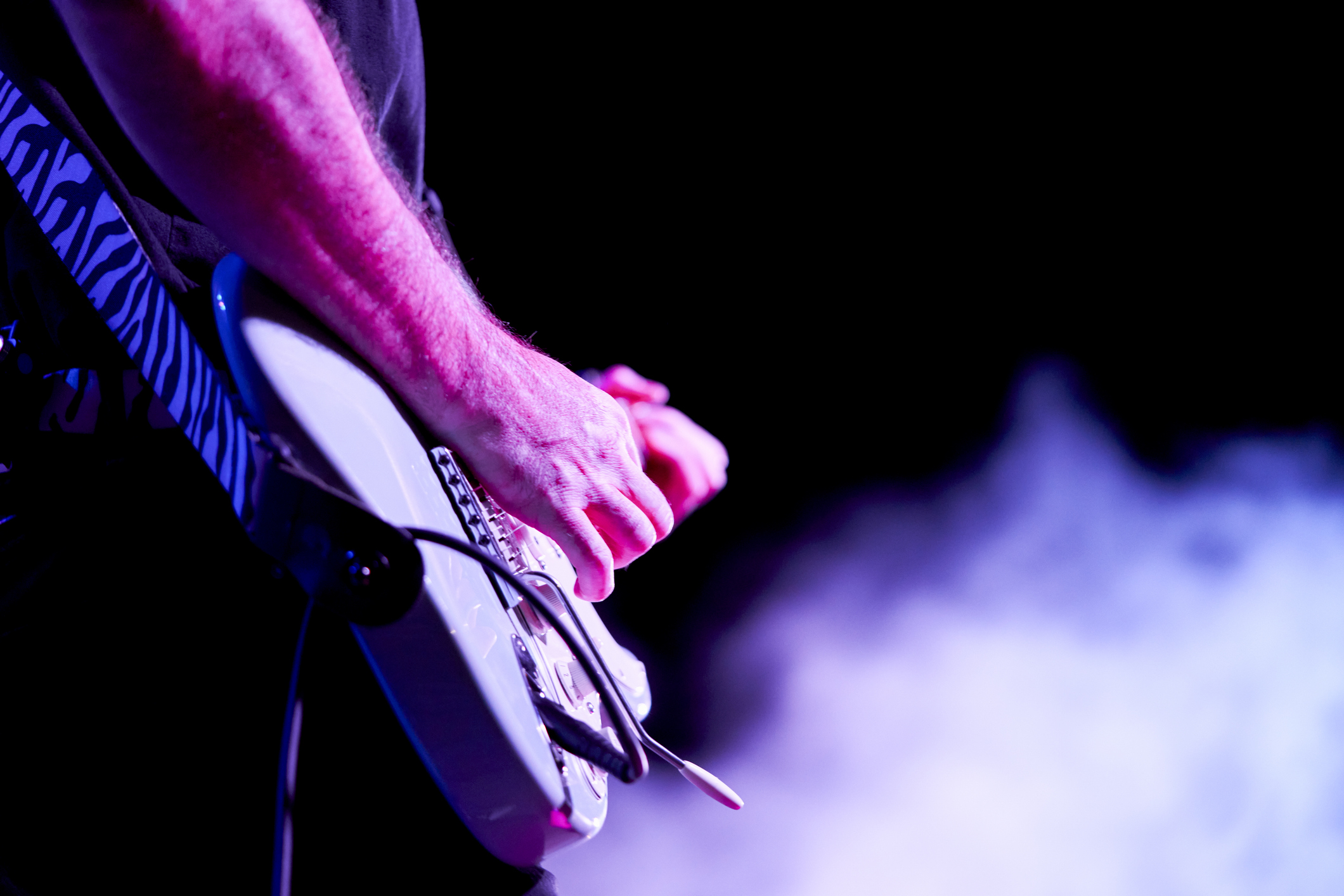


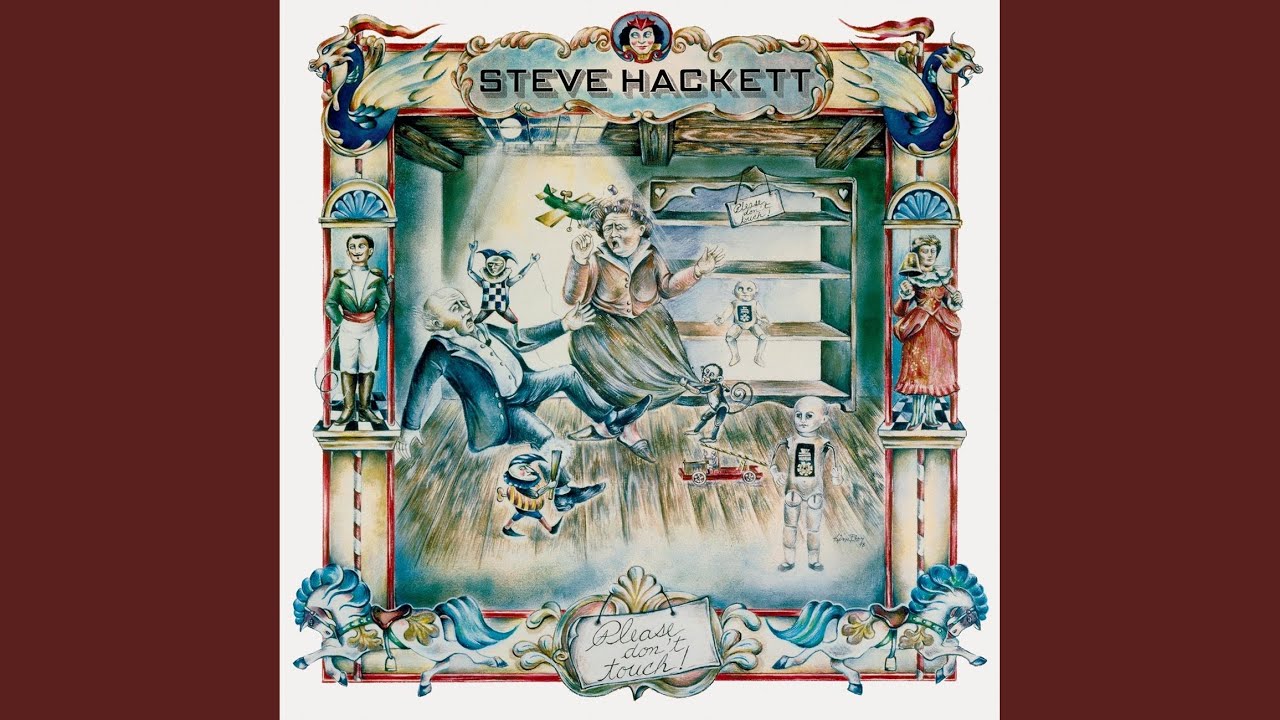
Steve Hackett believes his 1975 solo debut, Voyage Of The Acolyte, helped secure Genesis’ future – but it led to two years of soul searching before he decided to leave the band. His follow-up, 1978’s Please Don’t Touch!, was an altogether different kind of challenge as he tried to navigate life after the band who’d made his name.
Despite the discomfort he’d experienced during the making of A Trick Of The Tail, Steve Hackett stayed with Genesis for 1976’s Wind & Wuthering and the tour that yielded the 1977 live album Seconds Out. But he was frustrated at their rejection of some of his compositions, and by other intra-band issues, and so he delivered a shock to fans by leaving to pursue a solo career, announcing the move shortly before the release of Seconds Out.
In retrospect it’s easy to assume that, as he’d established his reputation as a guitarist and writer, and had proven his viability in the solo field, it would be a painless transition. “I had no guarantee of even being able to earn money as a professional musician,” he admits. “Once I’d left Genesis, I was really prepared to back this music to the hilt. So I worked very hard on Please Don’t Touch!, which was a more difficult album because I didn’t have my bandmates to fall back on. There was no ready-made rhythm section. I had to work with pals and others I’d not worked with before.”
He recorded Please Don’t Touch! partly in the UK and partly in Los Angeles and New York. If he’d given many Genesis fans pretty much what they’d wanted with Voyage Of The Acolyte, the follow-up was different enough to test their allegiance.
His express intention was to make an Anglo-American mix of white and black musical styles, with some eccentric diversions en route. Through Genesis live drummer Chester Thompson he was introduced to bassist Tom Fowler, who’d played in The Mothers with Frank Zappa. Steve Walsh, then of Kansas, sang lead on a couple of songs, as did American folk and soul legend Richie Havens, who’d opened for Genesis in concert in 1977.
Steve’s brother John Hackett flew to the US for the recording to play flute, piccolo, keyboards and bass pedals. “It was a fantastic period for me,” he says. “John Acock [co-producer] and I flew over to LA, booked into the hotel and thought we’d go for a stroll. We were ambling along Sunset Boulevard when a police car screeched to a halt.
“These two cops got out, saying, ‘Who are you guys? What are you doing? Where are you going?’ We said, ‘We’re just going for a walk.’ One of them said, ‘Oh, you’re British? Listen, guys, nobody goes for a walk around here!’ They got back in their cars. It was like, ‘Whoa! This is a different world!’”
A standout song – and the one that strays furthest away stylistically from Genesis – is Hoping Love Will Last, a melodically rich ballad with Randy Crawford on vocals. Although it was released a year before her 1979 breakout hit Street Life with jazz funkateers The Crusaders, she’d previously recorded with some genre heavyweights, including that band’s guitarist Larry Carlton and keyboard player Joe Sample.
Narnia had been earmarked as a single, but the label thought it might be mistaken for a Kansas track
Hackett had met Jaco Pastorius through Thompson, and was hoping to work with him. He went to see Pastorius play at a Chicago nightclub, but was captivated by Crawford’s support set. “She did embellishments on these gentle vocal phrases,” Steve recalls. “Every time she did one, the audience applauded. It was like someone doing a wonderful solo on sax or trumpet. It was very much the jazz crowd there to see her.
"She hadn’t had anything released in the UK, and Hoping Love Will Last would be her first exposure here. There were moments there where Randy sounded like her idol, Aretha Franklin. Funnily enough, the Genesis guys all said how much they liked that track – which was ironic, because it was one of the reasons why I left them. I thought there was no chance of getting the band to do it.”
Havens’ wonderfully grainy voice features on both the Beatlesy How Can I? and the majestic closer Icarus Ascending – a song which would have been fitting for Wind & Wuthering. Walsh took lead vocals on the breezy Narnia, a brisk shuffle and an addictive pop earworm. It was in Hackett’s vocal range, but the guitarist lacked the confidence to deliver lead vocals yet, having only sung the shadowy The Hermit on Voyage Of The Acolyte. Narnia had been earmarked as a single, but the label thought that it might be mistaken for a Kansas track.
Walsh also sang on Racing In A, which allies songwriterly craft to prog complexity. This, too, would have been a good fit for Genesis, but was never intended for them. After some smooth, streamlined guitar lines, halfway through it cuts abruptly into a lengthy classical guitar section, with echoes of Blood On The Rooftops. It also carries a Bach-like feel when Steve recapitulates some of the song’s electric lines.
Phil Collins said, ‘It didn’t sound anything like that when we did it’
Music from the title track had been rehearsed with Genesis for Wot Gorilla? on Wind & Wuthering. It features a similar Brazilian baião-style drum rhythm to the one used by Phil Collins. “I felt very adamantly that we were losing the best of the song, something very strong and spooky,” Hackett says. “So I restored the piece and took the original idea further with a different team: Chester on drums, Tom Fowler on bass and Dave LeBolt from Richie Havens’ band on keys. I played guitar; John played flute and bass pedals.
“I remember bumping into Phil after I’d left Genesis and he said, ‘It didn’t sound anything like that when we did it.’ I got the sense that he felt it would have been nice if the band had done it that way.”
Please Don’t Touch! was released in April 1978, charting at No.38 in the UK. It’s a particularly odd album in that it manages to sound coherent while being so disparate stylistically; a testament to the strength of Hackett’s writing. “Please Don’t Touch! was an attempt to make a personal sampler album, much like the 1968 CBS album, The Rock Machine Turns You On. I wanted each track to sound like a different artist.”
Let’s momentarily revive that hoary old groan-inducing and essentially unanswerable question: what is prog? The album might have strayed from the template of what is generally considered to be progressive rock, as exemplified by his previous band, but Hackett feels it’s definitely a part of the genre.
“I think all too often, ‘progressive’ means, for some people, impenetrable time signatures and it’s difficult and long – all of that. Whereas I think progressive music ought to be inclusive and no kind of music should be off limits.”

