


In the summer of 1985, radio stations across the US began playing the debut single from a new band from San Francisco. Starship, formerly Jefferson Starship, were directly descended from Jefferson Airplane, one of America’s original counter-culture psychedelic rock bands, and We Built This City offered a nostalgic look at the music scene of the 1960s and ‘70s in the city by the bay, while simultaneously lambasting ‘The Man’ for riding his “wrecking ball into our guitars.”
“We just want to dance here, someone stole the stage,” sang vocalist Grace Slick. “They call us irresponsible, write us off the page.”
For an emerging generation of musicians in San Francisco, however, these sentiments were viewed as hugely hypocritical.
“It’s funny,” says Faith No More bassist Bill Gould, “because Jefferson Starship were part of that old hippy music empire in San Francisco, the establishment who ran a music scene that none of my friends could relate to at all. They ran the clubs, they ran the media, they were the old guard who wouldn’t give up what they had. Our band, meanwhile, was part of the ‘Fuck Jefferson Starship’ generation.”
Gould and his best friend Roswell ‘Roddy’ Bottum, childhood neighbours from the prosperous Hancock Park district of Los Angeles, moved to San Francisco in 1980 to attend college in Berkeley. Compared to the straight-laced, structured, suburban LA he knew, Gould found his new hometown free-spirited, open-minded and hugely stimulating, and, quickly ditching college, he gleefully dived headlong into the city’s “chaotic” art scene, answering an ad, placed by drummer Mike 'Puffy' Bordin, to join a band called Sharp Young Men.
“Compared to LA, San Francisco was an amazing place," he recalls. "There was no real industry, it was just this giant wasteland with a million artists and a million bands, rent was cheap and it was a really interesting community. There was no pressing need for us to be a commercial band, and so the city was a good place to find yourself and learn who you are.”
The San Francisco rock music scene had diversified, and darkened, since The Summer Of Love, when artists such as Jefferson Airplane, The Grateful Dead, Moby Grape, Janis Joplin’s Big Brother and the Holding Company and psychedelic hard rockers Blue Cheer ruled the roost. When Gould and Bottum took up residence in the city, Dead Kennedys, Romeo Void, Mutants, Offs and Pink Section were making jagged, aggressive punk and new wave sounds at the city’s infamous Deaf Club, and a nascent thrash metal scene spearheaded by Exodus, Legacy and recently relocated LA blow-ins Metallica was beginning to attract attention from tape-traders and fanzine writers far beyond the Bay Area.
“That early thrash scene blew my mind,” Gould recalls. “It was my gateway to get into rock and metal actually. I came from the punk school where long hair was definitely not cool, at all, but they made it cool. Bordin was friends with Metallica through Cliff [Burton] and so we became friends, and they introduced me to bands like Black Sabbath, who I just didn’t get into the first time around. It was a fun scene to be around.”
In the summer of 1983, having releasing just one single, Quiet in Heaven / Song of Liberty, Sharp Young Men imploded. But partners-in-rhythm Gould and Bordin stuck together to form a new group, Faith No Man, with Roddy Bottum later coming on board to replace original keyboardist Wade Worthington. The band was soon rechristened Faith No More.
"Puffy, Roddy and I were just smoking pot and making noise," Gould recalls. "We decided we'd have a different singer for each show and write a new set each time we played. We had a couple of singers before Courtney Love saw us. She gave me this whole speech on why she needed to sing in our band. It was funny because no one else really cared about us then.
"We did a few shows with Courtney. She was really good, provocative. She insulted everyone within 10 feet of the stage, which we got a kick out of. But when we started writing together it just didn't click."
"We went to Los Angeles and hooked up with Chuck Mosely who I'd played with in a band when I was 13. He was a keyboard player, but when we were drunk we got him to sing with us at the show. People actually started coming to see us so he kinda became our singer.
"We still had a different guitar player at every show, but Puffy was friends with Cliff Burton from Metallica, and Cliff suggested we get Jim Martin. Puffy had played with Jim in a band before. They hated one another from day one. Puffy was like, ‘This guy's a fucking asshole... but I think he can do good guitar'. Jim was a real old school hard rocker, but he shared our vision."
I wasn’t a singer, but I figured I couldn’t make it any worse. Billy was into chaos and aggression so I just fed off that
Chuck Mosley
Even within San Francisco’s diverse rock scene Faith No More were proudly out of step. Gould and Bottum loved Killing Joke and PiL, Bordin was studying African rhythms at UC Berkeley, while Martin was an unreconstructed metalhead. For his part, skate-punk Mosley just improvised over whatever rumbling noise his bandmates erected..
“I wasn’t a singer, but I figured I couldn’t make it any worse than it already was,” he later admitted. “I knew Billy was into chaos and aggression so I just fed off that and had a blast.”
“We didn’t really fit in anywhere,” says Gould, laughing. “When we started, our closest peers were a band called Glorious Din: we’d rent halls and put on shows together, because getting onto the established club circuit was tough. [Legendary SF promoter] Bill Graham still ran the local scene, and was pretty hardcore about shutting down punk clubs, even though that scene represented no threat to his world. It was hard for us to find our place initially: we were invisible in the media, and if we played to 40 people that was a good crowd for us.
"But, oddly, perhaps, we never doubted ourselves. We were very self-confident about what we had, always. We’d made eight track demos with our friend Matt Wallace, and sent them to all the clubs but nothing came back, so we were like ‘Well, there’s nothing wrong with the songs, so they probably just don’t like it because it doesn’t sound good enough.’ So that’s when we pooled our money to make a 24 track recording.”
“The studio was set up in a farm and it was free from any distractions,” says Gould. “We only had three days to record, because we only had so much money. Matt had a little eight track studio at home, but I don’t think he’d ever worked on 24 tracks before, so it was a new experience for all of us.
"We were very military about it, we did a lot of pre-production so that when we went in we didn’t waste a single second. There was zero fun: we just worked, slept on the floor and start recording again as soon as we woke up. We recorded everything in two days and mixed it on the third day.”
There was zero fun [making the album]. We just worked, slept on the floor and start recording again as soon as we woke up
Bill Gould
Back in SF, Gould passed a copy of the five song tape to his room-mate Will, who worked in a record shop. Ruth Schwartz, one of the original editors of punk fanzine maximumrocknroll, happened to be in the store one afternoon when the tape was playing, and she approached the desk to enquire which band was playing on the in-house stereo. Upon discovering that the band were unsigned, she placed a phone call to Gould, and Faith No More were duly dispatched back to Prairie Sun for a second weekend to record a second side for what would be their debut album for Schwartz’s new record label, Mordam.
In early December ’85, We Care A Lot became Mordam’s first release.
“Holding the test pressing for the first time was pretty cool,” says Gould. “And it was extra cool, because it was Mordam’s first record too, so Ruth Schwartz was as excited as we were. Having a record meant that we could tour, so we were off and running.”
While songs such as the gothic When The Worm Turns and the pulsating instrumental Pills For Breakfast showcased the young band's eclectic nature, the album's stand-out track was, unquestionably, its title track.
"We played We Care A Lot as an instrumental for a year before Roddy wrote the lyrics," Gould says. "We all got excited when Chuck sang it because it was the first thing we ever did that sounded like real music. When we first came to England we saw We Care A Lot posters as we drove in from the airport. We just flipped out."
"But we had a massive fight during our first big interview in England. When we woke up no one was speaking to anyone else. I thought we'd just blown everything. I think every one of us quit the band at one point."
![Faith No More - We Care a Lot (Official Music Video) [4K] - YouTube](https://img.youtube.com/vi/LQhX8PbNUWI/maxresdefault.jpg)
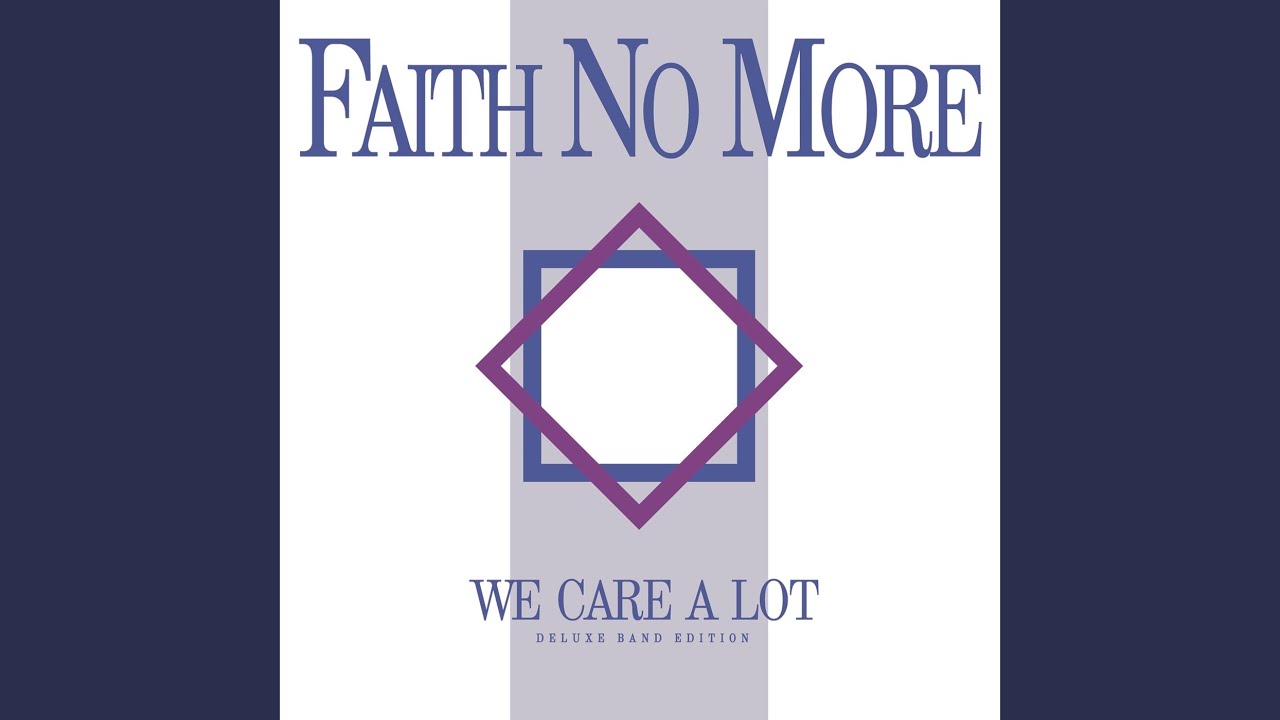
A remastered, expanded ‘deluxe band edition’ of We Care A Lot, which had been out of print for 20 years, was released in 2016 be on Bill Gould’s KoolArrow Records label, with sleeve notes by Roddy Bottum and photographs supplied by Mike Bordin.
When I asked Gould in 2016 how he felt listening back to the album after dusting off the original studio tapes, he answered, “a long enough time has passed now where I can listen to it without feeling embarrassed.”
“I mean, I think it’s a good record,” he added, “but everything you do as a kid you’re later embarrassed about, it’s like looking at your high school pictures. When we transferred the tapes in the studio for the mastering and I heard the songs through the monitors I was amazed at how good it sounded, it impressed me actually, because at the time, in my mind, we were such stupid kids.
“When I think back on that time, my initial memory is how exciting things were, but if I think about it really, it was a complete slog! We were broke, and just trying to survive, with this really weird music that we were so stubborn about sticking to.."
Earlier this week, as the album reached its 40th birthday, the bassist looked back with some fondness on the start of his band's excellent adventures.
On a technical level, this one is far from our best work. But in terms of spirit, it’s right up there
Bill Gould
"Once the music is recorded and it let out into the world, everything becomes subjective," he posted on Instagram. "Is it better, is it worse, is this the band at its most intuitive or most naive? On a technical level, this one is far from our best work. But in terms of spirit, it’s right up there.
"A highly willful gang of presumptuous kids, not quite understanding who they were, but yet, clearly feeling where they need to go. The band was unknown, so there were no outside expectations. But plenty of freedom and drive, and though we did argue a lot, we were united in the project on a core level... we spent money that we didn’t really have to create a vibe, and when it was finished, we looked at ourselves differently.
"So to me," he concluded, "this might be the one that matters the most, and set the stage for what was to follow."

