


“One of more enduring also-rans from the NWOBHM boom,” as Kerrang! magazine put it, Samson were spawned in 1977. They built a loyal live following and cracked the UK Top 40 in 1980 with Head On. Yet their existence was chaotic.

Singer ‘Bruce Bruce’ Dickinson admitted the band “made every mistake in the business”, and, despite an impressive showing at the 1981 Reading Festival, he was ready to quit in frustration. When tensions with Paul Di’Anno hit crisis point, Iron Maiden leader Steve Harris and manager Rod Smallwood knew that a backup plan was essential and thought Bruce might well be one. They went to Reading for a proper look. Steve was impressed, so later that evening Rod talked to Bruce about potentially joining Maiden. Within days of his performance at Reading, Dickinson was formally offered the job. The following week, in Copenhagen, Di’Anno played his last show with Iron Maiden.
Born in Worksop, Nottinghamshire, on August 7, 1958, Paul Bruce Dickinson grew up in a nomadic environment. “I didn’t have an unhappy childhood,” he noted, “but it was unconventional.” Sent to Oundle, a boarding school, he fell foul of bullies. “The lights would go out in the dormitory and fifteen kids would beat the crap out of me. It was pretty horrible… but you build up this shield of mental invulnerability.”
There was one parental lesson that the young Dickinson took to heart: ‘Have a go at everything, even if you’re no good at it.’ He had a passion for military history and fencing, a sport in which he would later earn international recognition. But hearing In Rock by Deep Purple sparked an epiphany. Captivated by Ian Gillan’s soaring, neo-operatic voice, he said: “Ian was a big vocal hero of mine. There was Ian Gillan, Arthur Brown, [Jethro Tull’s] Ian Anderson… they all had a ballsy tenor, extended baritone.” Singing, he realised, would shape his future.

Expelled from Oundle (reputedly for urinating in the headmaster’s dinner), Bruce returned to the family home and formed a band. He joined the Territorial Army for six miserable months, then told his parents that he intended to study for a degree before committing to the military. “That was what they wanted to hear,” he noted, “so that was my cover story.” He read history at college and played in bands in London. After impressing at a pub gig, Bruce was approached by guitarist Paul Samson. One rehearsal later, he was in. He didn’t return to university.
Billed – to his annoyance – as ‘Bruce Bruce’, after a Monty Python sketch, the singer never felt he fitted into Samson: “Some of them just wanted to have a good drink, a good shag and take some drugs, and I found that really, really difficult to relate to.” He also had doubts about the music: “I wanted to be a cross between Ian Anderson and Ian Gillan with crazy notes and great lyrics and drama… I didn’t want to be some knock-off punk singer.”
Bruce encountered Maiden when the bands shared a bill with Angel Witch at the Music Machine in Camden in 1979. They were, he marvelled, “absolutely raging on stage! And I remember thinking: ‘Oh my god, what we could do together!’’’
Bruce launched himself into Iron Maiden with passion. He made his stage debut on October 26, 1981 in Bologna, Italy, where the band set up a few shows to get the band ‘feel’ before the all-important next album. They ended the year with a triumphant secret gig, billed as Genghis Khan, in their East End home from home, the Ruskin Arms. Bruce’s relationship with Steve Harris wouldn’t always be smooth, but the bassist was impressed with the new recruit: “He’s totally professional… looks after himself, wants to go out there and be the best. That’s all you can ask from any frontman, really. We got lucky with him.”
There were some major moves behind the scenes, too, as Rod’s close friend and business partner Andy Taylor joined to deal with Maiden’s burgeoning business affairs.
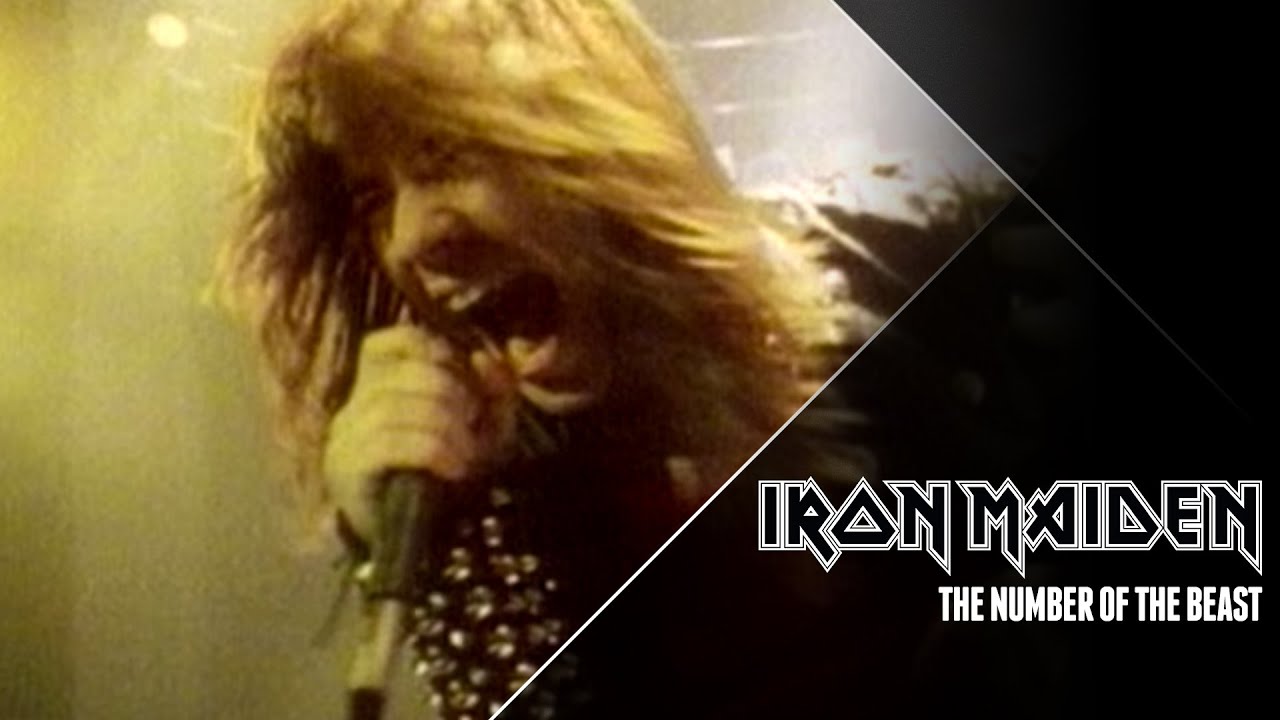
All guns blazed for album number three. “We were on a high throughout the writing and recording of The Number Of The Beast,” Bruce recalled. “Everybody was just delighted. There was no stress around that album at all… We were just having so much fun.”
Nonetheless, with their most demanding tour to date scheduled to begin in February 1982, the band was under pressure to deliver. There was also the question of how fans would react to a new face at the front.

With New Year festivities barely behind them, Maiden returned to London’s Battery Studios, where they had recorded Killers. They had little more than a month to create a follow-up. And once again, Martin Birch was on the desk.
“We put ourselves purposely under pressure,” Steve recalled. “We just allowed ourselves a specific period of time for writing… We’re not a band that writes twenty songs and uses ten. Once we’ve got enough, we stop.”
This brutal treadmill was fundamental to Maiden, even at the height of their fame: “We just went straight in, did the album, [then] straight into rehearsal, straight on tour.”
Bruce’s operatic range provided the freedom to explore more complex music, and Martin Birch’s crisp production gave greater definition to Dave and Adrian’s guitars.
“What I do is pretty simple,” Birch remarked, “but the fact that I’m used to the bands I have worked with helps me to know instantly what they want… even if they don’t realise it clearly themselves.” “He helped us bring out the power in each song,” agreed Dave, “and he knew how to get the best out of all of us.”
Songs that became fan favourites included Children Of The Damned, inspired by a 1964 horror movie; Hallowed Be Thy Name, a seven-minute epic about a man facing execution; the title track, inspired by the Robert Burns poem Tam O’Shanter; and of course Run To The Hills. Memorable moments were also provided by Adrian with the sleazy 22 Acacia Avenue and the joyful The Prisoner, both written with Steve.
Determined to drop jaws, Maiden upped the visual ante with each new release and tour. On The Number Of The Beast’s extravagant panorama, Rod said: “The art was originally intended for the Purgatory single with Paul, the basic idea being to question who is pulling whose strings, Eddie or the Devil? It was meant to be very tongue-in-cheek. But the art that Derek came up with was so brilliant we decided to keep it for the next album, and we asked Derek to come up with a new artwork for Purgatory on a similar theme – the Devil morphing into Eddie. So we basically had the new album art before the band even started writing it. And then Steve came up with the song The Number Of The Beast and, as they say, the rest is history.”
The Number Of The Beast’s cover art became one of rock’s most iconic artworks, inspiring an entire metal aesthetic. Maiden’s Eddie-centric image also had a huge influence. Marketing mogul Gene Simmons assured Rod: “Iron Maiden is going to take over from Kiss as the biggest merchandising band in America.” More tenacious than the Terminator, Eddie has stamped his mark on every album and tour.
Fanning the flames for The Number Of The Beast, Run To The Hills broke free on February 8, 1982 and was the band’s first UK Top 10 single, peaking at No.7 and selling over 250,000 copies. As with many Maiden lyrics, its subject matter was unusual, concerning the conflict between Native Americans and the US Cavalry. Complementing Riggs’s album artwork, the single saw Eddie battling Satan with a tomahawk. The B-side, Total Eclipse, was so banging that Maiden would rue booting it off the album in favour of Gangland.
Run To The Hills proved Iron Maiden were becoming a juggernaut. That was confirmed when the album topped the UK album chart in April 1982. But life for a chart-topping band could be unglamorous, as Adrian discovered: “To get us all in one vehicle, we had an ancient beaten-up bus for the tour, which had broken down. We were pushing it, trying to get it to start, when someone told us: ‘Your album’s just gone to No.1!’” Steve recalled: “I asked the driver what was wrong with the bus, and he replied in a thick Norfolk accent: ‘Well, it were working an hour ago.’”

A surprise awaited when The Beast On The Road Tour crossed the Atlantic in May. Taking the album’s content and artwork at face value, some Christian groups denounced Maiden as Satanists. So persistent was this falsehood that when (subsequently disgraced) televangelist Jimmy Swaggart published Music: The New Pornography in 1984, the book’s cover featured Steve. “It was mad,” the bassist marvelled. “They completely got the wrong end of the stick.”
The band’s second tour of North America in the summer of 1982 saw them playing large arenas as special guests of Rainbow, supporting Judas Priest, and finally playing stadiums with the Scorpions. Despite a total lack of the radio support generally considered crucial in the US for any success, The Number Of The Beast peaked at No.33 Stateside – 45 rungs higher than Killers, thanks largely to the live performances. In Britain the album went gold in less than a month and stuck to the chart for 31 weeks. Success spread around the world, with Top 10 placings from Austria to Australia.
More significantly, The Number Of The Beast reconfigured the face of metal. “It changed everything for us,” enthused Metallica’s Lars Ulrich. “It showed what metal could be.”
Thirty years after its release, a public poll hosted by HMV ranked it the best British album of the past six decades, beating The Beatles, Pink Floyd and Queen. “Astonished and delighted,” was Bruce’s reaction.
Iron Maiden – Infinite Dreams: The Official Visual History is published by Thames & Hudson and available now. Extract reprinted with kind permission.

