


Alien Weaponry frontman Lewis de Jong is screaming as he approaches terminal velocity. “OH FUCK!” he bellows, as he plummets towards the Earth. “WHY DID I DO THIS?!? OH SHIT! I FUCKING HATE THIS!”
Alien Weaponry are at the end of a six-date New Zealand tour, and today’s show is at the AJ Hackett Kawarau Bungy Centre. It’s perched high on a clifftop above a gorge on the Kawarau River, about 15 miles east of Queenstown, a town known much less for its embrace of metal than for its panoramic views and eye-wateringly expensive real estate.
It’s also the South Island’s home of adventure sport and ground zero for commercial bungy jumping, where, in 1988, Kiwi entrepreneur AJ Hackett set up the world’s first ticketed jump on a suspension bridge above the river. It’s not a cheap thrill. The price of a jump is normally $320 (about £140), but the band get to leap for free, and Alien Weaponry fans can buy a steeply discounted bundle that includes entry to the gig and a jump. Perhaps tellingly, only five attendees out of 250 take up the offer. After all, who’d want to dive off the edge of a bridge, with only the river and the rocks 40 metres below to break your fall should the worst happen?
Drummer Henry de Jong wants to. He’s done this before – leaping off the Auckland Harbour Bridge in 2023 for another AJ Hackett promotion – and he can’t wait to go again.
“I loved it,” he says. “It’s the adrenaline, man. Me and Tū [bass player Tūranga Morgan-Edmonds] really enjoy it. We’re not particularly afraid of heights or anything. But Lewis, on the other hand, has a wild fear of heights. They threw him down with a guitar, and he was screaming the whole way down. Weren’t you, Lewis?”
“I didn’t quite see the fun in it like the other two did, ’cause I am quite afraid of heights, so it was a bit intense for me,” confirms the frontman. “So I’m undecided whether I even want to jump today, ’cause it’s even higher than the Harbour Bridge. I mean, it didn’t hurt or anything. It was just fucking scary.”
In the end, they all jump. And Lewis lives up to his billing by screaming all the way down, and screaming some more as he rebounds into the air, flailing in free fall.
“ I hated that just as much as the first time I did it, which confirms that bungy jumping isn’t my thing,” he reflects, still catching his breath after the long climb back up the side of the gorge. “I thought that maybe I might enjoy it the second time. But I quickly realised when I got out there – even before I jumped – that it was going to be the same deal. I just wanted to be on the ground the second I left the ground.”
It’s different for Henry and Tūranga.
“ It was awesome,” says Henry. “I just jumped out as far as I could and had a great time.”
Tūranga, meanwhile, describes the experience as “30 seconds of bliss”.
Both men go again. Second time around, Henry’s bungy cord is attached to his waist rather than his ankles, allowing him to perform a graceful somersault as he jumps, while Tūranga topples off backwards, calmly crossing his arms and throwing the horns as he does, eyes firmly fixed on the band’s photographer.
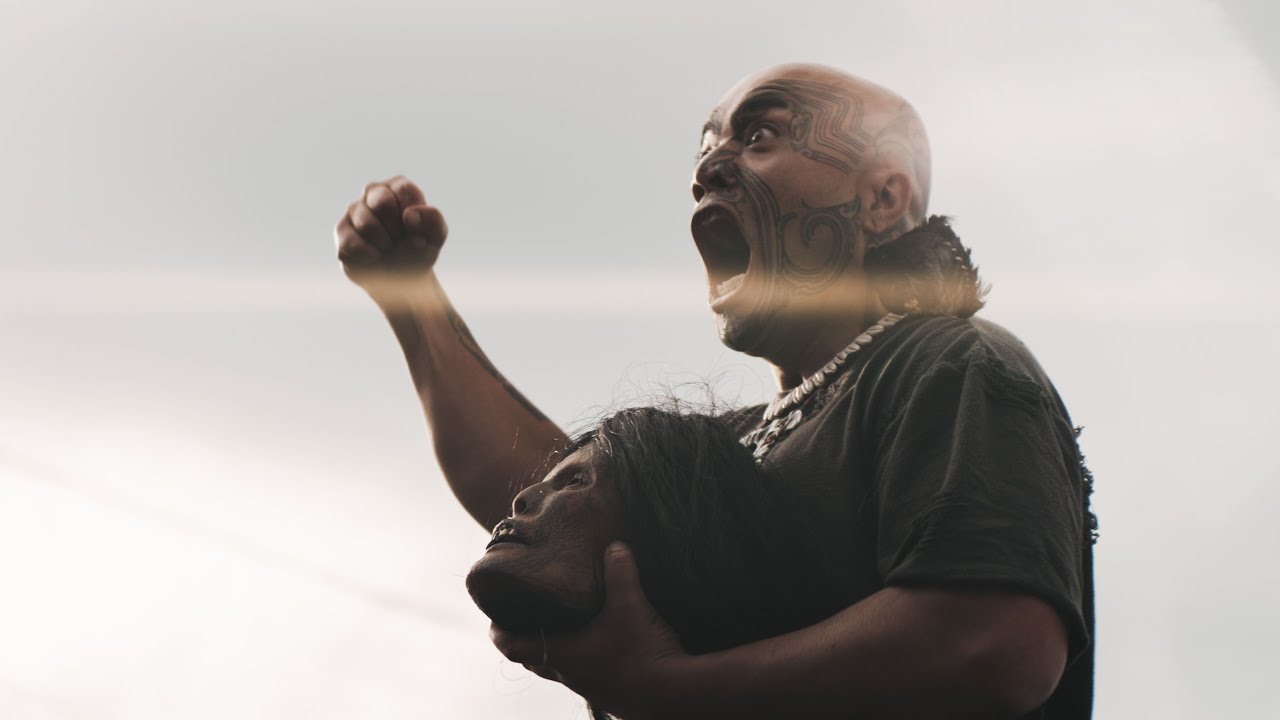
Tūranga joined Alien Weaponry in 2020 – a relatively recent addition to the band, which formed before the de Jong brothers were even teenagers – and is the perfect ambassador for the trio, as anyone who follows him on social media can attest. In his videos – he has 386,400 followers on TikTok, while the band have 12,700 – he speaks thoughtfully about Māori culture and customs.
“I’m not an educator,” he tells Hammer. “I think of myself as an introducer.”
He’s also often the first to answer when questions are thrown at them. Asked about Alien Weaponry’s support slot in Auckland with Guns N’ Roses in 2022, when they played on the opposite side of Eden Park stadium to the main stage during a downpour so severe Lewis’s pedal board developed mould, he’s diplomacy incarnate.
“It was actually an interesting experience,” he says. “Very interesting. With big bands, it can go sort of one of the two ways. And the way that it went for us was they opened the doors five minutes before we went onstage, and we went out to an empty stadium.”
Asked about Lamb Of God man Randy Blythe, who appears on last year’s Te Rā album – even singing a few words in te reo (the Māori language) on Taniwha – and is featured heavily in the band’s 2024 documentary, Kua Tupu Te Ara, the band are more effusive.
“Randy is fantastic all round,” says Henry. “And he knows his shit.” This extends to those te reo lyrics, which Randy supplied.
“He came with them,” says Tūranga. “And they seem so well informed around things Māori in New Zealand that people assume we wrote them. No, he’s just a very intelligent, very well-informed person.”
“He got it right on the first take, even pronouncing Māori words,” adds Lewis, a rabid Lamb Of God fan who had no idea Tūranga was secretly organising Randy’s cameo. “He got the pronunciation bang-on, first try. He didn’t even have to retake anything.”
Another man the band have got to know is Kerry King, whom Alien Weaponry supported on a 28-date jaunt across the US in early 2025.
“He loves a tequila,” says Henry. “Loves a tequila.”
“He’s a quiet dude, and he’s a very humble dude,” adds Tūranga. “Unlike Guns N’ Roses, where it’s just agents and management making a show happen, Kerry actually asked us to go on that tour. You didn’t see him often because he’s quiet, but when you got those moments with him, he was really genuine and down-to-earth.”
“I think that part of his staunch persona is actually just him not being a particularly outgoing guy,” says Henry. “So when you actually get talking to him, and he opens up, it’s awesome.”


It’s showtime. A stage has been erected in the bungy centre’s lobby. The racks of adventure gear have been moved into storage, and the young women who staff the venue have changed from their day attire into more appropriate evening wear: Iron Maiden, Killswitch Engage, Slipknot and Lamb Of God t-shirts.
Lewis, meanwhile, is in the dressing room, coughing violently. He’s been vaping, although he knows he probably shouldn’t, and you wonder how he’s going to make it through the following 90 minutes. The show is brilliant, and brilliantly chaotic. The band are ferociously tight. The opening Holding My Breath, with its spidery riff, is sensational, and Lewis roars, his voice showing absolutely no sign of wear or tear.
Another song from their debut album, Raupatu, ramps up the ferocity. 1000 Friends, from new album Te Rā, finds the hardcore fans – led by hotly tipped local band Powder Chutes, who are dressed as traffic cones – sitting on the floor and pretending to row, surrounded by flailing bodies.
From PC Bro onwards, no song is complete without either a wall of death or a circle-pit erupting, and Tūranga directs the age-old sit-down-and-jump-up routine during Mau Moko. There’s even room for a very special guest, via the medium of pre-recorded audio.
“He can’t be with us tonight because we live on other sides of the globe,” Tūranga tells the crowd, introducing Taniwha. “But listen carefully, and coming out of the speakers like an all-powerful god, you’ll hear the voice of Randy Blythe.”
For the final song, a crushing version of the breakthrough Kai Tangata (20 million YouTube views and counting), Lewis, Henry and Tūranga are joined by Filiva’a James from Polynesian metallers Shepherds Reign, who played a crunching support set earlier. Filiva’a performs the intro’s war cry, tongue out, eyes bulging, while wielding a terrifying-looking club. Cue another six minutes of chaos, one final chance to fling into the fray.
It’s over. AC/DC’s It’s A Long Way To The Top (If You Wanna Rock ’N’ Roll) plays over the PA as the room empties. And Alien Weaponry have climbed another step towards the peak.
Hammer catches up with Tūranga shortly before Alien Weaponry head off to the US for a month of dates with Avatar. It’s a partnership that will resume when both bands arrive in Europe in early February for another six weeks of shows, including five dates in the UK.
They’re doing it like they did it in the excellent Kua Tupu Te Ara documentary, which followed the trio as they toured Europe in a van. For Tūranga, it’ll be a first.
“We did a bus with Kerry King, because we shared the bus with Kerry’s crew,” he says. “I can only assume it’s because of the political situation over in the US right now, but on this particular tour, we’re really stripped back. I don’t think the boys have toured like this since before I was a part of the band. It’s just us and our sound guy, who’s also our tour manager, so we’re going back to real ground-level touring in a van – no beds, back to the van hotel, which will be kind of fun!”
The hook-up with Avatar came about after Tūranga and Avatar bassist Henrik Sandelin ran into each other after an Avatar show in Manchester in 2023. They became fast friends, and a second night out in Los Angeles in the summer of 2024 sealed the deal.
“We disappeared off into the night and went to a bar, and the rest of the night is history,” he says. “But that must have planted the seed, because lo and behold, six months later, we got the call. We talked about it a lot that night we hung out in LA!”
Unusually, Alien Weaponry released Te Rā and went quiet. Instead of heading to the Northern Hemisphere for the European festival circuit, they stayed at home. Tūranga embarked on a road trip, delivering copies of the album to people who’d shaped his path. His first primary school teacher. His piano teacher, now in her 80s.
Now it’s back to business. Picking up momentum. Taking their undoubted fire and ferocity on the road. With heavyweight management behind them (Ghost, Slayer, Gojira), a blistering live show and a renewed sense of focus, it feels like Alien Weaponry have arrived at this exact moment primed, after 15 years of preparation. Ready to bring Māori culture to an audience that’s more ready than ever to embrace it. And they’re still only in their mid-20s.

