


The Wakemans are one of modern music’s great dynasties. In one of Prog’s most revealing and hilarious interviews ever, Rick Wakeman and his eldest sons, Oliver and Adam, discuss their relationship, the family’s musical legacy and whether they’ll ever share a stage.
On a Friday afternoon in a room above a King’s Cross pub, three men are debating one of life’s burning questions: who are the biggest pains in the arse: singers, guitarists or bassists? “Well,” says Rick Wakeman, genuine keyboard legend and one of the great figures of progressive rock, “it depends on the band, but I’d say singers. Male singers, mainly. Male singers followed by guitarists. Bass players don’t tend to be a problem. Drummers? They’re just too loud.”
“It depends who’s paying you as well,” says his eldest son Oliver.
“If the bassist is paying you then it’s never a problem,” says his other son, Adam.
“Mind you,” adds Oliver, “they all say keyboard players are the worst of all.”
Rick nods sagely and says, “Oh, they can be terrible.”
This is a historic moment in the annals of both music and the Wakeman family. Of course, Wakeman Sr needs no introduction – he’s the former Yes keyboard player and solo star who, along with peers such as Keith Emerson, Jon Lord and Tony Banks, made his chosen instrument a key part of the arsenal of prog, bringing a classical sensibility to rock as a whole.
And the apple hasn’t fallen far from the tree. Both Oliver and Adam have carved out successful careers as solo musicians and with likes of Steve Howe and a late-2000s incarnation of Yes (Oliver) and as a member of both Black Sabbath and Ozzy Osbourne’s band, Headspace and Whitesnake spin-off Snakecharmer (Adam).
They’ve both played with their old man, too, albeit separately, a couple of one-off Christmas shows aside – Adam recorded a series of albums with Rick in the 1990s and played in his band, while Oliver and his dad embarked on their first full tour together in the US in March.
But astoundingly, the three of them have never been interviewed together before. Which is why the Wakemans – Wakemen? – are currently sitting around a table in the HQ of the Grand Order Of Water Rats, a venerable showbusiness charity of which Rick has been a member for around 30 years. He’s just been regaling us with tales of former Water Rats Laurel And Hardy, Charlie Chaplin and long-forgotten American dancers The Nicholas Brothers. But now it’s time to lift the lid on one of music’s great dynasties.

Let’s start with an obvious question for Oliver and Adam. When did you realise you had a famous musician for a dad?
Rick: [interrupting] Yesterday!
Oliver: Adam and I both essentially grew up in the 80s, when prog rock wasn’t really the flavour of the day. There were an awful lot of times when we would get picked on because dad would be appearing on breakfast television and things like that: “Why isn’t he in an 80s synth band?” But then I got to about 16, and one of these bullies came up to me in the classroom and said, “Did your dad play with Bowie? That’s pretty cool.” And that was the realisation of, “Oh, actually it’s a thing.”
Adam: Our mum and dad separated when I was about three years old and Oli was five, so we had a slightly schizophrenic life. We had a normal upbringing with Mum, and then we would go and visit Dad when he was back in the country, or visit him on tour.
Rick: I remember one of you coming home and saying, “Would you sign something for some people at school?” And I thought, “Good, the younger generation are getting into it.” So I said, “What are their names?” And you said, “I’ve no idea what the dinner ladies are called!”
Rick, as a busy working musician, how difficult was it raise kids?
Rick: I didn’t. My life was mad, to put it bluntly. Roz [Rick’s first wife], and her second husband, John, they raised them, and to give them credit, they did a fantastic job. But it was wonderful when they came out on tour.
Adam: We came out to Dallas on the ABWH tour. What I remember about it is that [bassist] Tony Levin had got hepatitis, so we arrived and we had to have a jab in the arse. I was like, “I don’t like this...”

Oliver: Dad had to go first. All the crew were going, “You’re going to have to do it, Rick, otherwise you’ll make the kids scared.” And you took us on a trip to see where Kennedy was shot: “[Cheerily] Come on, kids!”
Rick: I remember taking you to an outdoor bistro. The waitress, very pretty, she was on roller skates, she was very bright. So she said, “And what can I get you three brothers?” She was after a big tip...
I took the valuables and left my wife with Tales From Topographic Oceans
Rick
Adam: “Don’t go there, Dad, that’s our third stepmum...”
So when do you remember actually paying attention to your dad’s music?
Oliver: For me, it’s what I call the great attic clearout. My mum went into the loft and came down with this pile of records. She said, “I’m going to get rid of these, do you want them?” I’d just got a record player, so I said, “Yeah, that’d be great.” It was King Arthur, The Six Wives Of Henry VIII, Topographic Oceans...
Rick: I gave her that. I took the valuables and left her with Tales From Topographic Oceans.

Adam: For me, it was a similar thing to what Oli was talking about earlier: your dad’s on telly, so you keep your head down. But as you get older, you start to discover the music. I remember seeing you in one of the incarnations of Yes or ABWH at Wembley Arena. I was looking around the arena as you were launching into one of your solo sections and seeing all the people’s faces. That’s when I was like, “Yeah, I’m doing this.”
Rick, did the kids ever shout: “Would you turn that bloody racket down!” from their bedrooms when you were practising at home?
Rick: No! And when they both started learning to play the piano, I kept well clear. It’s the old principle: you shouldn’t teach your wife to drive and you shouldn’t teach your kids to play piano – get a good teacher. But I was pretty thrilled when they both started playing. There was a point where they both gave up. Your mum called me and said, “Do you want to have a word because they both want to discover other things? Like girls. And girls... And girls.” But they both came back to it.
One of my first sessions was country and western session. I remember thinking, ‘Thanks, Dad, for your advice.’ I still hated it, though
Rick
Other than family history and maybe genetics, what made the two of you want to play the piano and keyboards?
Oliver: I can distinctly remember the first time I played a piano. I was four years old. The lounge in the house had a grand piano in it, and I remember lifting the lid and somehow I hit a chord – like, a third and the fifth – and my left hand hit the same root note. And I went, “Oh my God!” so I did it again, and of course it was awful. But I thought, “If I’m going to do this, I’m gonna have to do it properly.” I knew you’d have to give up your playtime to learn to play the piano...
Rick: That’s what happens when you get married too.
Adam: For me, the instrument made sense. It wasn’t that it was easy. I knew it was going to be challenging – sbut it would also be worth the effort. I would get very frustrated if I couldn’t do something, so I’d practise until I could. Once you find something you absolutely love, you don’t mind spending five hours sitting there until you can do it.

Were you directly influenced by your dad in terms of your own playing?
Rick: No – that’s why they’ve both been successful.
Adam: Yeah, definitely. You can’t not be influenced by it. Not copying the music he’s played, just the impact Dad has had on music in general – people do college courses on it. Oliver and I are very different players, but I think there’s a common thread in our playing which had come from Dad and has just crept in.
Oliver: For me, there’s an element of legacy to it, which goes back to Dad’s unbelievable career. When you look back at the impact those records he made had – and the records that are still coming out continue to have – there’s sort of a level of quality or expectation around the name. I don’t want to put out stuff that will sully that, or bring it down. That’s always in my head: “I’ve got to do the best I possibly do.”
Bill Bruford always said, ‘Work fits into time allotted,’ and he was absolutely spot on. Mind you, Bill was tight
Rick
What’s the best bit of advice you ever got from your dad?
Adam: Probably the most poignant bit of advice is: don’t eat the yellow snow.
Rick: And certainly don’t eat the brown snow.
Oliver: I wish I’d known that. No, probably the best advice is the advice Granddad gave to Dad, which was to play with as many people as you can.
Rick: I never liked country and western music, where the dog’s died and the house has burnt down. But my dad said, “Go and play it, and try and learn why some people do.” There was a pub in Hayes that had a country and western band on a Sunday, so I used to go along and sit in with them. After a few weeks, I realised that some people liked it, even though they were musically inept and I hated it. One of the first sessions I got booked on was a country and western session. I remember thinking, “Thanks, Dad – it was well worth listening to your advice.” I still hated it, though.

Rick, you’ve had your ups and downs in the music industry over the years. Were you worried about Oliver and Adam following in your footsteps?
Rick: No, because that’s what the music business is: it’s huge ups and huge downs and difficult times and positive times. But every little reward, whether it’s a good gig or a good bit of recording or someone coming up and saying, “I really love that work you did,” that’s all you need. Obviously, I do want them to do well because they’ll have some influence on which care home I eventually get put in.
Adam: Yeah, if we can have a word with you after this...
Rick: Adam once sent me a leaflet to look at. A place in Kenya. “Look, it’s got a nice little porch, you can look out over all the wild animals...”
I told Oliver, ‘Just keep out of Yes politics, because that’s the nasty side. And enjoy it while it lasts
Rick
Oliver: Do you remember the show in Gloucester? You had this gag where you picked up a magazine and pretended to nonchalantly flick through it when Jemma [Wakeman, Rick’s daughter and singer] was doing something. We’d actually replaced them all with care home magazines.
Rick: Are you trying to tell me something?
Adam, your first record was 1993’s Wakeman With Wakeman, which you made with your dad. If you dropped a note, did he make you go and stand in the corner?
Adam: Ha, no! The biggest thing I learned was about how everything’s budgeted: “This has got to be done in six weeks of studio time, then we have two weeks to mix it.” That’s as important as any of the other work. I know people who have been making an album for 20 years, and it’s still not finished because they haven’t given themselves that kind of budgetary final date.
Rick: It’s musical discipline. Bill Bruford always used to say, “Work fits into time allotted,” and he was absolutely spot on. Mind you, Bill was tight.

Oliver, you ended up replacing your dad in Yes in 2008. Was that your recommendation, Rick?
Rick: Yes, and he still owes me commission for it. They were going to tour, but I didn’t want to do it without Jon. I got a phone call from Chris, who said, “As you’re not going to do it, who would you recommend?” And I said, “Both my boys could do it. Adam is tied in with Ozzy Osbourne. I know how much Ozzy pays – and it’s a damn sight more than Yes pay. He earns more than I did when I was in the band. But Oliver can do it, and he’s worked with Steve.” Chris said thanks and put the phone down, and then I got a call from Oliver: “Steve just called me. I said I wasn’t sure. How do you feel about it, Dad?” I said, “I got you the gig, which makes me your agent, so I want 10%.” For some reason the phone went dead.
Did you give him any tips on how to survive Yes?
Rick: Not that are for publication. Basically, I said, “Just keep out of the politics, because that’s the nasty side of Yes. Keep out of that and enjoy it while it lasts, because you never know with Yes how long it’s going to.”
I remember Chris Squire saying, ‘I wish you’d show them how you play that.‘ and I went, ‘I bet you do...’
Rick
Oliver, was there ever a point when you were onstage with Yes, playing your dad’s parts, and you thought, “How the hell does this bit go?”
Oliver: It wasn’t so much the parts with Yes as the arrangements. There are these moments in a song like Heart Of The Sunrise where it jumps, and then there’s suddenly an extra bit thrown in second time around – “Oh shit, which bit am I in now?” They’re the bits where you panic.
Rick: With Yes, it was like the old electricians’ trick of using their own coloured wiring – if someone else comes in afterwards, they’ve no idea what’s happening. I remember with Heart Of The Sunrise, when other keyboard players came in, they never got it quite right. I remember Chris saying, “I wish you’d show them what it is you do.” And I went, “Yeah, I bet you do...”

Adam: I actually did one Yes show, in Manchester in the late 1990s. Their keyboard player at the time, Igor Khoroshev, had been delayed and they thought he wasn’t going to make the show. I’d rehearsed and was all ready to go, then he turned up at the last minute. They did let me come on at the end to play Starship Trooper. I remember Igor being really pissed off because Chris kept calling him the wrong name – he kept calling him Ivor. He said, “I’ve been in this band five fucking years, and you can’t remember my name!” I think Chris was doing it for a laugh.
You’ve both separately toured with your dad. What’s that like?
Oliver: Playing the music is great, playing to people is great, but the thing I loved is when we were driving from place to place and we could sit and talk about family history. Because of the childhood we had, we didn’t have time to sit and talk about aunties and uncles and great grandmas and things like that.
To do an album together properly would take about a year of working and would cost an awful lot of money
Rick
Rick: Touring together is a ‘holijob’ – That’s an expression I first heard on a river cruise [Trading Boundaries Voyage] we did a couple of weeks ago.
Adam: Dad was on the first week, and I was on the first week and half the second week with Damian Wilson as Wilson & Wakeman. There were some disappointed people: they thought it was Steven Wilson and Rick Wakeman.
Rick: A few people on that cruise thought it was [former UK prime minister] Harold Wilson.
Rick, do you ever argue with them when you’re working with them?
Rick: No, I don’t think I’ve ever argued with either of them. I’ve always let them do what they wanted to do. I’ve never said, “Play like this or play like that.” I’ve always said, “Play like you. Do what you do.” I mean, they’ve probably called me a wanker before. No, I’d like to think we’ve always had a good relationship, especially as the years have gone by.
What’s the best thing about playing with your sons?
Rick: This is going to sound stupid, but it’s because it’s good. Really good. My co-producer and engineer Erik Jordan, who’s with us all the time, he’ll say to me after shows sometimes, “I saw you smiling when Adam did that, or when Oliver did that.” And I go, “I know. Good, isn’t it?” I’m very proud of that. I’m often asked, “Are there any keyboard players that you really have a lot of time for?” and I always mention these two. It’s not because they’re my boys, it’s because...
Adam: We’re cheap.
Rick: And they owe me money. No, I’m immensely proud of them both, and what they’ve achieved – the small bits they’ve done with me and the big bits they’ve done on their own. I couldn’t wish for any more. It’s wonderful.
What’s your favourite song or piece of your dad’s?
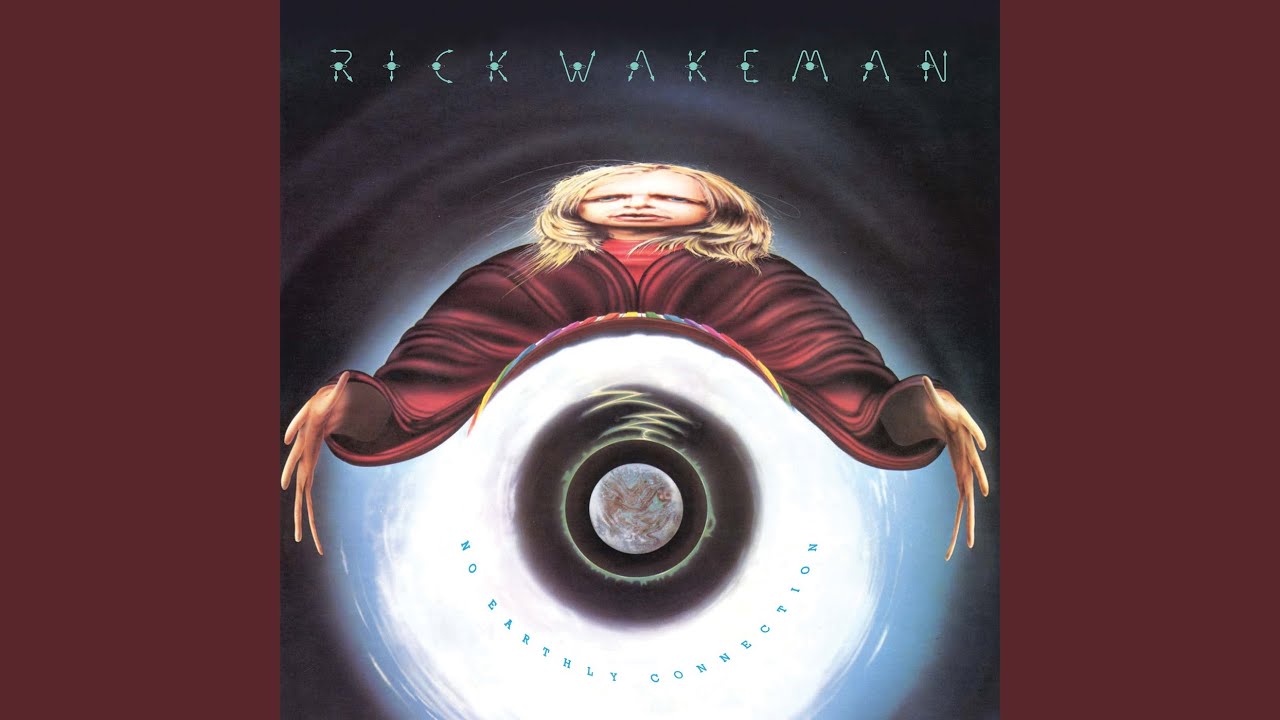
Oliver: There are different eras that I love, because I have different memories from those different times. But if I was going to pick one piece or record, it’d be No Earthly Connection. There’s a time in your career where you find a group of people you really like working with, and I can really hear it in that record.
Adam: We’ve never had a conversation about this, but it’s No Earthly Connection for me, too. It just seemed more fucking crazy than Journey or Six Wives or any of the other records. I loved it.
Rick: I mean, it was a mental album.
So, when will the three of you make an album together or even play together again?

Adam: Aside from obviously a budget to put something together, I think the biggest difficulty in making an album would be time. Like Oli was saying earlier, everything has to be of a high standard, and that takes time.
Rick: You have to be in the same room. And you’ve got to think of the person who’s going to listen to it – how will they determine who’s doing what? I’m not saying it couldn’t be done, because it could, but to do it properly would take about a year of working and would cost an awful lot of money.
Adam: If this was 1974, we’d be sitting in Montserrat for two years doing it. We’d be laughing.
Our time is up: Oliver has a meeting, Adam has a train to catch, and Rick doubtless has more people to regale with tales of Laurel And Hardy and The Nicholas Brothers. We shake hands and say goodbye. A couple of days later, an email arrives from Rick. He says he started thinking about the final question on his journey home – not necessarily making an album together, but at least playing a show together.
“Sitting on the crowded train,” he writes, “I did blurt out, to the other commuters’ shock and surprise, ‘Yes, I’d personally love to make it happen!’ I’m close to 80 years old and who knows how much longer I’ve got being able to play and create?
“For me it would have to be a one-off, a big event with a big band, possibly some orchestra and choir and various guest singers. Featuring music in an equal amount from all three of us, and the last half hour or so incorporating all three of us playing together.
“It’s not likely to happen, sadly,” he concludes, “but a dad can dream.”

