


Rick Wakeman & The English Rock Ensemble have dusted off their capes and returned to odd time signatures and big concepts on Return To The Red Planet. The unexpected sequel to 2020’s grandiose The Red Planet has been inspired by past and current discoveries on Mars. Wakeman tells Prog about his motivation, his legacy, and whether he believes there really is life on Mars.
Witch Hazel Hill, Medusae Fossae, Noctis Labyrinthus… Rick Wakeman laughs at the suggestion they could be titles of Jon Anderson songs. In fact, they’re locations on Mars explored on Return To The Red Planet, his second album about the nearest thing Earth has to a twin.
The reason he went back is obvious. Not only has he been inspired by a stack of new data from the Perseverance rover and other sources; there was also a desire to add more character – particularly fun – to what he achieved on 2020’s The Red Planet. At the time, he called it “the best thing I’ve done for as far back as I can remember.” There must be something about that ball of ice and rock millions of miles away, because the sequel is notably brighter, more sensual and has even more character.
“There’s a few things we couldn’t do on the first one,” he says. “One was to have all the band in the studio. [This time] It was great watching ideas develop and the ideas bounce. I was smiling all the time! I didn’t want to have songs as such, but I wanted to have vocals. From the early Yes days, Close To The Edge and Awaken are classic examples – the voice was almost like another instrument. It wasn’t verse, chorus, that kind of rubbish. It was, ‘This is where the voice needs to come in.’ And it’s not easy to do because there’s no pattern involved.”
He credits his band, The English Rock Ensemble, with working like a well-drilled flight crew. “Dave Colquhoun, Lee Pomeroy and Adam Faulkner sometimes get it before I do! And Mollie Marriott was excellent. There was no, ‘I don’t understand why I’m doing this.’ Her voice is confident. That’s the whole thing with these kinds of albums – they’ve got to sound confident.”
Reflecting on his core motivation, he says, “I think you come to terms with how you write, how you record, how you play. You have to go, ‘Well, that’s what I am. I can’t change.’ But it moves on because technology allows you to do things you couldn’t do before.
“There are so many important elements in any piece of music. If we’re three minutes in and I can’t remember what the previous minute was, that minute has to go! You must keep interest in the music going all the time. It doesn’t always have to be thought-provoking, but it’s got to be interesting.”
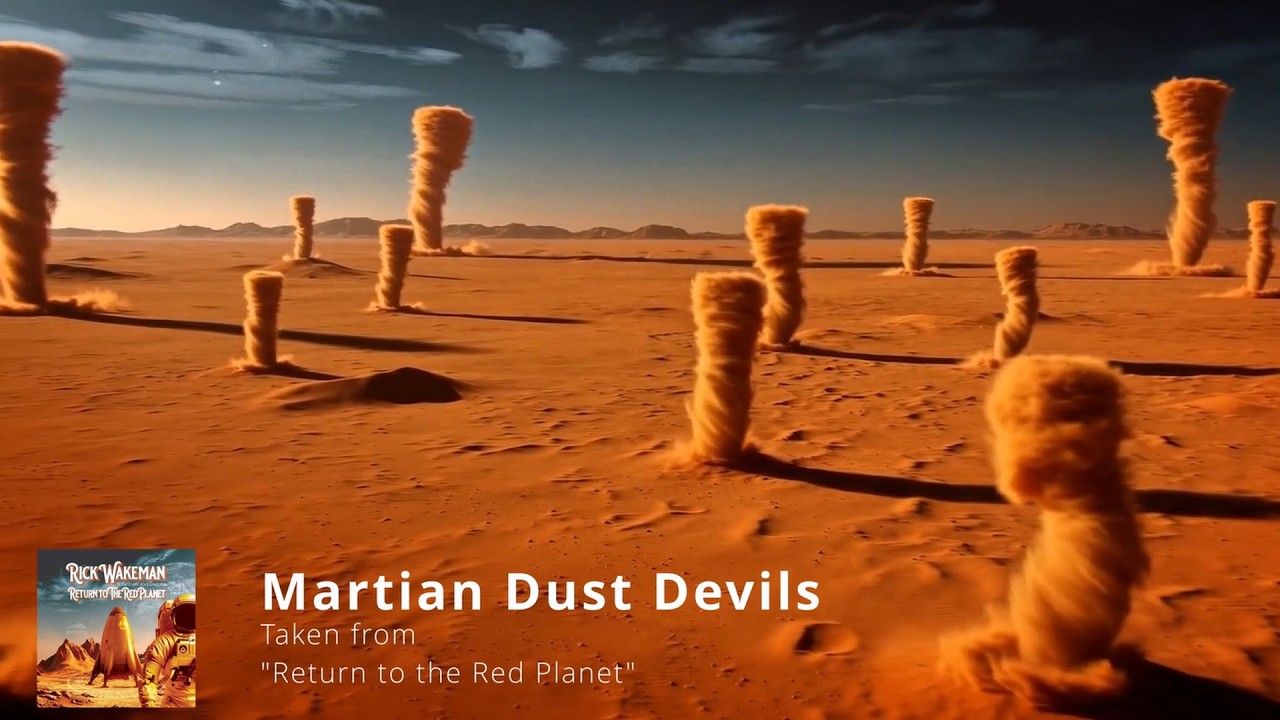
A prime example is the first track the band laid down, Martian Dust Devils, which – unlike the giant storms it’s named after – comes to a sudden halt, in what offers a laugh-out-loud moment of musical joy (at least to this writer). That, too, has one foot in Wakeman’s past.
“I’ve always had a strange thing about how pieces finish,” he says. “I try and let it finish as naturally as humanly possible. A classic Yes example is Heart Of The Sunrise. We looked at all different kinds of endings, then we did something at rehearsal and all sort of looked at each other: ‘Yeah, that’s it!’
“My co-producer, Erik Jordan, said, ‘There are important elements in a Wakeman prog rock album: we’ve got to have some good solos and good sounds. A bit of the unexpected is always good, and we’ve got to have melody; that’s crucial.’”

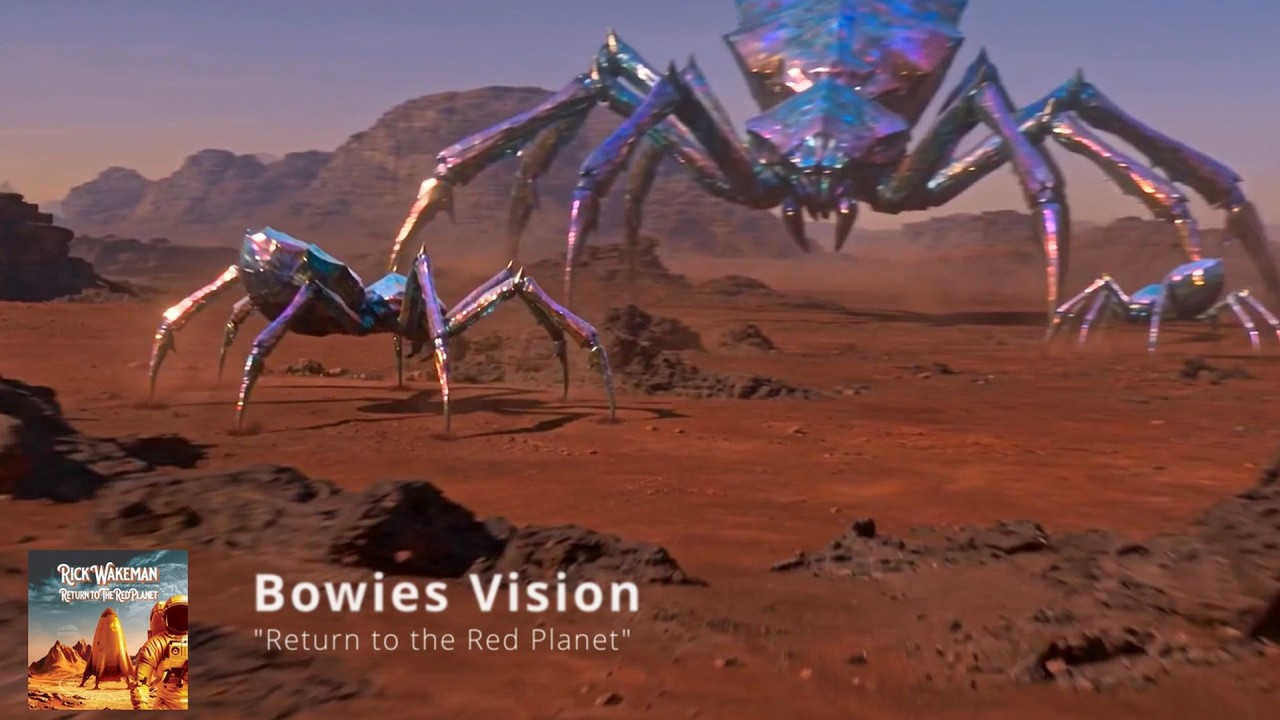
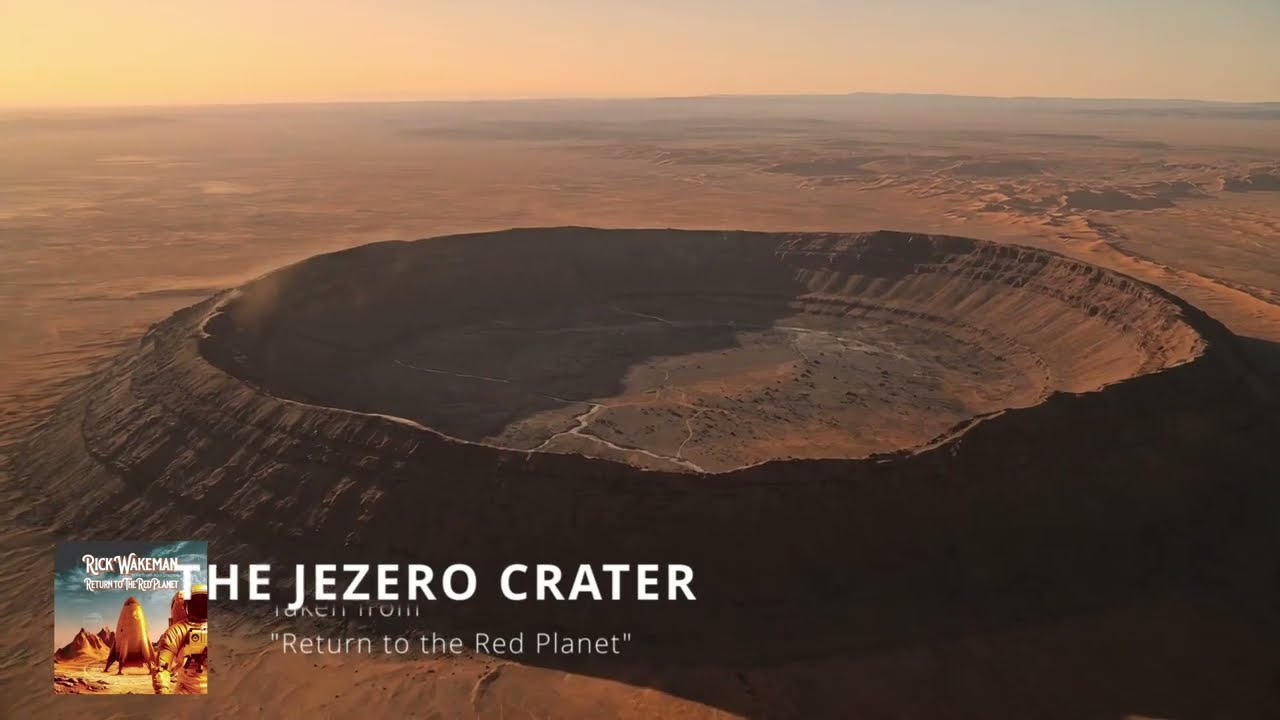
Opener The Jezero Crater – the impact basin where NASA landed Perseverance in 2021, and a key location in the search for ancient life – arrives with an optimistic bombast, seeming to announce, “We’re back!” before falling into a more reflective, “and we have a lot to do.” Noachis Terra compares a future Mars mission to the Biblical story of Noah, expressing the awareness that ‘no one can hear me cry’ amid a world of wonder and terror. St Paul’s Bay is a musical expression of a landscape that looks a bit like it’s covered with spiders. Spiders on Mars?
These and other varying explorations appear on Return, after Wakeman followed the advice of an old friend. “Back in the late 60s David Bowie told me, ‘Always have musicians who understand what you’re trying to achieve. You can have the best musicians in the world, but if they can’t get inside your head you’ll never get the result.’”
I’ve met every single astronaut who walked on the Moon. You ask them the age-old question – ‘Is there anything out there?’
Bowie was equally fascinated by Mars, and Wakeman confirms that memories of deep astronomical and aspirational conversations with the late artist came back to him while he worked. The pair’s long connection is best illustrated by his piano work on 1971’s Life On Mars?, when Bowie gave him a blank slate to play whatever he wanted. It didn’t hurt an iota that both musicians looked up at the sky at night and found inspiration there – and both spent countless hours considering the fourth planet of our solar system.
Hence the creation for this album of Bowie’s Vision. The galactic-scale composition doesn’t suggest what Ziggy and his Spiders meant to Wakeman as much as the effect it had on his worldview (or indeed, worldsviews). “Mars was once a blue planet like Earth – it had more water; it had more everything,” he says, before changing tack: “As you well know, I’ve never taken any drugs in my life, but this might sound like it: There’s quite a belief that billions of years ago, when Mars was like Earth, it did have life of a form; and some of that got here.”
He may be 77, but Wakeman isn’t having a senior moment; a quick search online will offer plenty of evidence that respectable scientists are comfortable with the notion that (as one astro-physicist put it) Earth and Mars have exchanged spit over the billions of years we’ve been neighbours. “A bit sci-fi, I know!” he allows. “But I’ve met every single astronaut who walked on the Moon. When you ask them the age-old question – ‘Is there anything out there?’ – they all say, privately, ‘Anybody who thinks there’s nothing out there is incredibly naïve.’ And the view I get from the astronauts is that if anything particularly nasty was going to be done, it would have happened by now.
Without Roger Dean, Yes albums wouldn’t have been as good as they were
“My friends at NASA can give me insight into things that perhaps the general public can’t get, which is great. You learn an awful lot. But I also wanted to have something a little bit off-the-wall, which is why I put Bowie’s Vision in. It’s worth a little look back at David’s fascination with Mars.”
It’s perhaps strange to hear the master raconteur speaking so seriously and personally. “It is personal,” he says. “Things get more and more personal as you get older. If I had my own record company I’d call it Twilight Records! Because this is where we’re at, and you’re aware that everything counts.
“I talked to Jon Lord at length about this shortly before he passed away. You do become aware, ‘This is not just another album. It’s got to be special; it’s got to mean something to you.’ It’s an awful thing to say, but in theory, it could be the last thing you leave.”
Which is why the presence of a youthful playfulness is essential to the plot on Return To The Red Planet. While meteor storms churning the landscape of Medusae Fossae are reflected in that piece’s electric guitar slides, and the frenetic sections of Witch Hazel Hill track that location’s busy geography, Wakeman sums up the entire planet’s history with closer The Epochs Of Mars.
Here he makes 4.5 billion years feel like a single lifetime in the most satisfying manner, using familiar but inspired musical figures to express the almost English pastoral world the planet once was, before being reduced to a cold, angry wasteland, and finally a sleeping memory. The last section sketches a welcoming favourite aunt who’s lived through the wars, ready to serve homemade cake when we visit after our 250-million mile journey.
In my great-grandchildren’s lifetime, they’re going to land on Mars. I’d like to come back and know what happens
“I wanted that part to feel like you’re lying back on a chair relaxing after it all,” Wakeman agrees, emphasising: “It can all be thought-provoking if you want it to be. It can be interesting if you want it to be. It can be delicate. It can be any emotion you want. But I don’t want it to be miserable in any way.”
The album sleeve was once again designed by Martin Robert Cook, with one edition of the album available in a pop-up book style. That’s another hark back to Wakeman’s past, when Roger Dean almost had his own story going through his sequence of Yes presentations, adding a bonus dimension in a period when, due to print deadlines, the designer didn’t always know much about the music by the time they had to deliver their work.
“The cover is still an important part of the experience,” he argues. “It’s not just a list of who did what. I just spent a week on a boat with Roger and we were talking about it. It’s as if the story continues off the edge of the album. Without his work Yes albums wouldn’t have been as good as they were.”

His commitment to all things space-age continues with his return to this year’s edition of Starmus Festival – blending music, art and science in a manner which prog fans must surely approve – in the Canary Islands. He’s spoken in the past about the joy of simply lying on the ground in his garden, looking up and letting his mind fly into the cosmos.

While this planet’s caveman, lawmen, mice and clowns continue their freakiest show unabated, right at this very moment numerous probes are exploring Mars, sending back new scan results, new images, insights and inspiration. The Perseverance rover is expected to keep rolling for at least another five years – suggesting there’s time for it to return the same amount of data again that it already has.
While that’s probably not enough time to answer the question of what’s really out there (Bowie, maybe?), Wakeman remains convinced that getting boots on the Martian ground is humanity’s destiny; and he cautiously accepts the suggestion that Return To The Red Planet is his contribution to that mindset, in the way 70s sci-fi bred generations of leading scientists.
“Space exploration is necessary in the same way as the days of Vasco da Gama, Columbus and the big ships,” he states. “We’re a race of explorers; we do it because we need to.
“Not in my lifetime, but maybe in my great-grandchildren’s lifetime, they’re going to land on Mars. If there’s any form of reincarnation, I’d like to come back and know what happens.”
Return To The Red Planet is on sale now.
