


In 2021 Mike Oldfield told Prog about the creative process behind his 1983 hit single Moonlight Shadow – which involved making Maggie Reilly sing in a style she’d never tried before – which put him back into his record label’s good books and propelled parent album Crises to success.
If some of Mike Oldfield’s earlier songs had come across as a tad self-effacing, a bit like makeweights, the songs on 1983’s Crises sound more fully realised and far more confident – particularly the single Moonlight Shadow, which reached Number 4 in the UK and Number 1 in many European countries.
Oldfield mulls over the idea of confident songs. “They ended up like that, but they didn’t start off like that,” he explains. “For example, Moonlight Shadow: I got the musicians together, scribbled out some chords and said: ‘Here you go, boys, let’s play this’, and bashed out this backing track that sounded marvellous straight off. And I thought: ‘What is it? Is it an instrumental? Is it a song? What should I do with it?’ Something in me thought it would make a great song – but then I had to think of lyrics and think of a singer.”
He invited Hazel O’Connor to bring her own lyrics and have a go at singing it, but it wasn’t quite what he wanted. After thinking things over for months, he booked Maggie Reilly, who’d sung on Family Man on Five Miles Out, and forced himself to come up with some lyrics.
“I sat down one night with a lovely bottle of Chateau Latour, a rhyming dictionary and thesaurus, and a pen and pad,” he recalls. “The first thing that came into my mind was that it was night, and that there had to be ‘moon’ in it. The Moon was making shadows of the trees; I thought: ‘Alright, I‘ll have some of that in.’
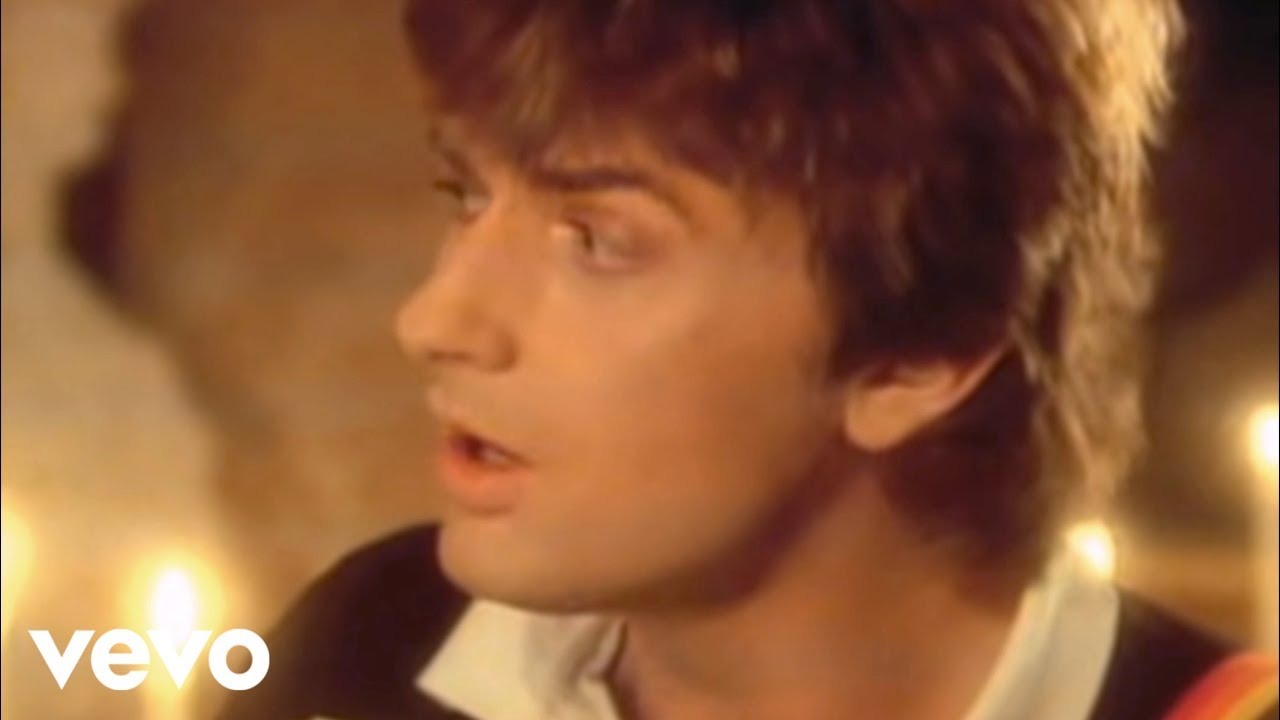
“Ideas and phrases and words poured out in a great big mixture onto the pad, and I started fitting them together. At about five o’clock in the morning I had something that looked like a reasonable song.”
Reilly’s session took place the next day. “She wanted to sing it out in a soulful way, belt it out as rock song. I thought that wasn’t going to work, so I put the mic up very close to her mouth and said: ‘Just whisper it, like you’re whispering in someone’s ear’ – which she’d never done before.”
Later, when Oldfield was adding guitar parst, he and drummer/producer Simon Phillips agreed that should be two solos: one clean and one that should sound “almost like a saxophone.” After an all-night mixing session the song was complete. “I’m pleased with all the work that went into it,” says Oldfield, “because it was successful and it still sounds very good today.”
I used to write little songs; they weren’t very good at all. But then I would make long instrumentals
It marked a change in fortunes for an artist whose recent albums hadn’t achieved the commercial success his label had hoped for. “Suddenly I was popular with the record company again, with people going: ‘Mike, Mike, hello! Where have you been?’” he recalls, amused at the memory.
Crises kept his original fans on board, while appealing to a pop audience. But was he ever worried that in taking this approach he might fall between two stools? “No, no, no – I never think I’d better do something because of this or because of that,” he counters vigorously.
“It just felt like the right thing to do at the time. I don’t really make plans for things. I first started out making music in folk clubs, when I was about 11 or 12. I used to write these little songs; they weren’t very good at all. But then I would make long instrumentals on steel–stringed acoustic guitar. So I’ve always had these two aspects: short songs and long instrumentals.”

