


A key period in Peter Hammill’s creative life is celebrated in a recent 20-disc box set. The Charisma & Virgin Recordings 1971-1986 collates 13 of the prog visionary’s early solo albums, along with a selection of era-specific rarities. Prog catches up with the Van der Graaf frontman to unbox his early years as a solo artist.
“My wife Hilary always says, ‘You start writing these nice songs, and then you spoil them,’” Peter Hammill reports, clearly amused at her assessment. “There’s an element of truth.
“In one way or another I spoil them by running in a manic guitar or by having a rather too complicated lyrical map. I’ve always thought some of my songs could have been quite successful if somebody else had done them.”
But it’s such “spoiling” that gives Hammill’s songs their singular character, as is demonstrated throughout the recently-released 20-disc CD and Blu-ray box set, Charisma & Virgin Recordings 1971-86, which dates back to the beginning of his solo career.
On his Sofa Sound website, Hammill announced it as “really quite an exciting thing,” and it would be churlish to disagree. The studio albums have been remastered, with a couple remixed, and are augmented by live and BBC session recordings.
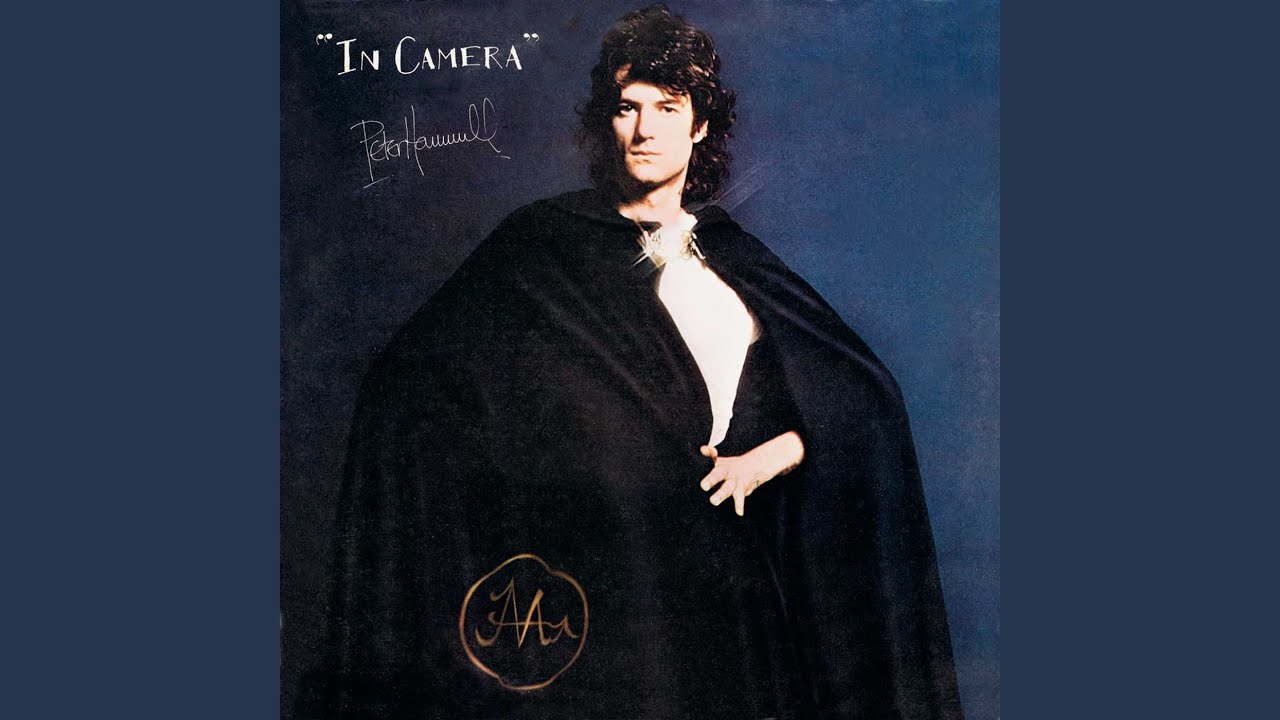
Hammill has always been prolific and his solo career often ran in tandem with his time in Van der Graaf Generator. The hit rate of the box set material is remarkably high and his invention across song form is extraordinary.
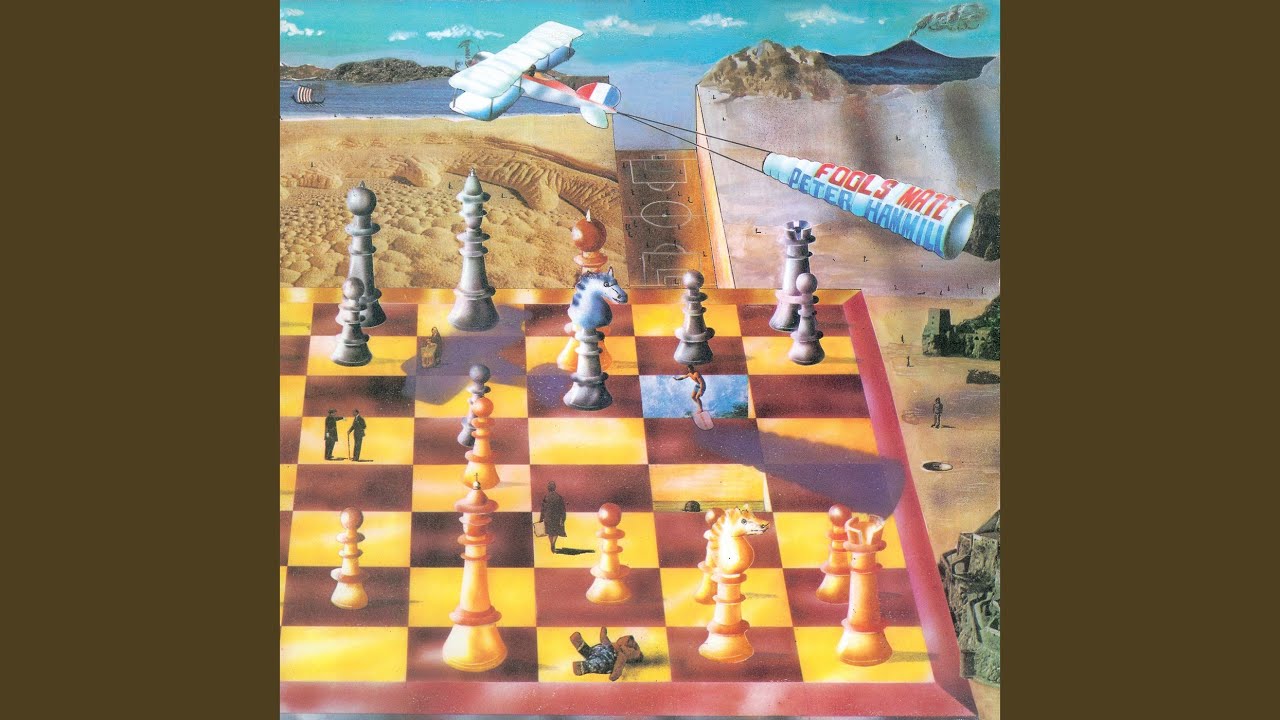
Can the author of this multifaceted body of work identify any kind of signature that unites, say, Magog (In Bromine Chambers) from 1974’s In Camera with the disarmingly sunny Happy from his debut solo album, Fool’s Mate? “No, not as directly as that,” says Hammill.
“But whenever I’m working on music, I have exactly the same attitude towards it: I’ve got to try and work out what’s right for this piece. That might be a little ditty, or it might be something musique concrète. I’ll know the thing has found itself when it satisfies some unspoken criteria which I work on.”
Listening to the box set, how does Hammill relate to his younger creative self? “There are bizarre aspects to it, because obviously it’s the long ago and the far away and the 20 year-old chap. But I think I knew what I was on about, and what’s interesting is seeing the turning points. You don’t realise what they are at the time if you’re a driven young man hurtling onwards.”
One such turning point was the 1973 album Chameleon In The Shadow Of The Night, which was partly recorded at home on a TEAC four-track tape recorded. “That was a defensive move, because, even at that early stage, I realised that the music biz probably wasn’t going to have a lot of time for me unless I had the means of working in my own hands,” he says.

“And I realised that it was potentially a creative move as much as a business one. If I hadn’t done that, then we wouldn’t be talking now, because I was still being pinned down by advances and the demands of record companies.”
Turning to his reputation for blunt-force live shows, he reflects: “I think it’s probably fair to say that I inhabit the songs, or the songs inhabit me. There are going to be mistakes if there’s that kind of high-power performance. But they don’t bother me, because I don’t believe in a perfect performance. I believe in some kind of naked emotion, naked power, revelation of character. Those things don’t need to be buffed, chiselled and honed.
“I’m less extreme now than I’m represented in this box set. I was really an extreme performer in my youth. I would play for two to three hours – which is maybe too much Hammill for anybody!
There were certain aspects when I was in my 20s, where I was effectively writing beyond my age
“When I’m doing it I’m immersed in the song and I don’t even have a consciousness of pacing a set. I’ve often surprised myself halfway through – ‘Oh, I’ve decided to do that one, have I? That’s going to be a bit of a bit of a test!’ There’s no safety net.”
Now well into his 70s, he still feels driven and, during this recent period of recuperation, has been busy recording. “If I drop tomorrow, there would be a posthumous album ready to roll. Not that I think about things in those terms,” he says. “But I’ve also got another album’s worth underway, where I’m trying to bash those slabs of noise into some kind of shape.”
Although Van der Graaf Generator are currently dormant, he reports it’s not impossible that they’ll play live again. And while 2016’s Do Not Disturb was written to be their final album, he isn’t ruling out another one. “I haven’t come up with that material yet,” he says. “But again, never say never.”
On Out Of My Book from Fool’s Mate he sang: ‘Can you imagine us as we adjust?/Can you imagine us getting near 80? We live more sedately still/Hoping the dreams will come true.’ Would he tell his 22-year-old self that his foresight was accurate?
“Well, I wouldn’t, in terms of that particular song – it’s a breakup song, so the rocks are going to be hit quite quickly!” he says with a laugh. “But I think there were certain aspects when I was in my 20s, where I was effectively writing beyond my age.
“‘More sedately’? I guess that’s right. I take things a little bit more easily than I did back in those days. I’m astonished to have got this far.”
The Charisma & Virgin Recordings 1971-1986 is on sale now.

