




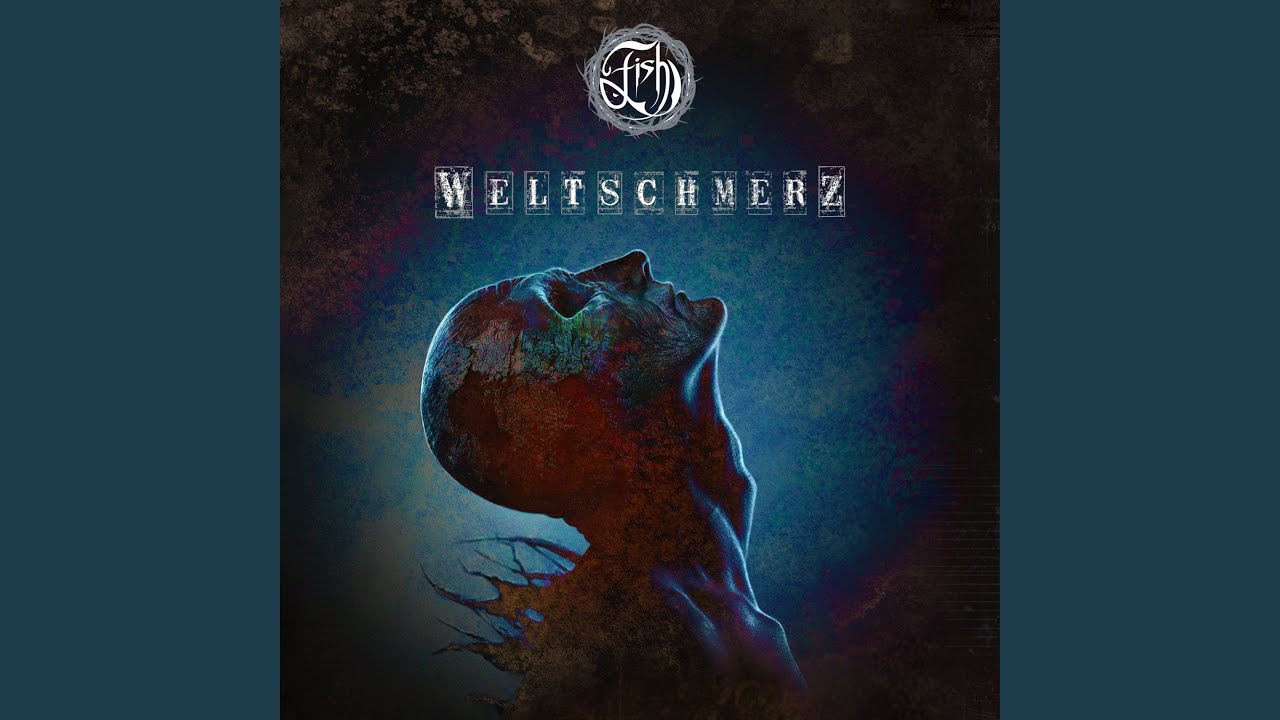
By the time Fish’s final album Weltschmerz arrived in September 2020, it had been subject to delays for several years. In late 2018 – when he was still hoping for a release in a few months’ time – he was confident it would achieve what he wanted it to, and compared the experience to writing his final album with Marillion 31 years previously.
Retirement may be part of life, but for those who’ve had four decades’ immersion in an artist’s music and polished lyrics, the thought of a final album comes with an overwhelming sadness. For Fish, that album is the long-touted Weltschmerz, which – if his plans come to fruition – would already released and bookending his catalogue. Indeed, his December 2019 live expedition was billed as a Weltschmerz & Clutching At Straws Tour – the only problem being that Fish and his band hadn’t written a note of the new record.
“Yeah, last year I was really worried about it,” he admits. “There’s been so much that’s happened. My dad died in May 2016; and six months later, I kind of woke up in the garden and went, ‘Where has the last six months gone?’ I also had a lot of health problems and I just couldn’t get my head into writing. I was in a state of perpetual recovery.
“It was really only around February this year that Steve [Vantsis, bassist] and I had that one spark that just set the control room ablaze. Finally, things just started to come together. I mean, this is tagged as my last album. I just want to do what I want to do and it’s like a ‘damn the torpedoes’ kind of vibe. I’m just going to feel the whole thing through. Whatever it demands will be done.”
Certainly, there was a slight but nagging doubt that writer’s block might blight the project. But once a firm direction had been formed, ideas began to speedily morph into tracks. Within six weeks the duo had four songs in demo form, with two of those running to around 15 minutes each. With another two lengthy epics also in development, Fish began to consider a double album. Yet with the original intention for the album to be released by September, that was adding unnecessary pressure to his schedule.
“I realised it would really screw things up – I knew I’d never be get a double written,” he recalls. “Around March, I got a call from Mark Wilkinson, who told me that he had some issues he had to deal with and there was no way he’d get the artwork ready for September. He and I had been talking for the year previously about how we wanted to put together a great packaging layout, similar if not better to A Feast Of Consequences.
“I said, ‘Look, you’ve worked on every project that I’ve ever been involved with since 1982 and there’s no way I’m going into my last album without you.’ So I thought, ‘Fuck it – let’s find the silver in the dark cloud and put the album back to May 2019.’ I could have put my head under a pillow and had a good sob ,but I just thought, ‘Let’s find a way round it. There’s always a solution to everything.’”
For Fish, there’s a need for the lyrics to dictate the album’s flow – or as he calls them, “rock flicks moments” – where he can effectively draft a short story, then translate it onto a musical backdrop. It’s often been a tricky process. His plan was to bring his band to his Haddington home studio and filter ideas through a process of lengthy jams.
That provided difficult: guitarist Robin Boult was on tour with Howard Jones, and keyboardist John Beck “wasn’t answering his phone.” That left the singer to nurture his relationship with Vantsis, leading to the revisiting of a technique that dates back to Marillion’s early days.
“It’s really quite strange – I’ve kind of gone back to writing in the same way we did between 1982 and 1985,” he laughs. “It’s that kind of vibe. We’re taking bits and putting bits together, but they’re the right bits. It’s like Marillion used to trust me. I could say that I thought one bit works well with another bit, or that I needed a section to go from one piece to another. It’s all about letting the drama and the dynamic rule it with a very strong lyric.”

Anyone who’s followed his career, or seen the interviews which accompany the recent reissues of Marillion’s 80s catalogue may spot an irony. He’s been pretty outspoken about the band’s writing technique of piecing together tracks “with sticky tape.” Return to that method appears to be a pretty dramatic turnaround.
“Well yes, but that’s because I came to loathe it,” he says. “Back in the Script… and Fugazi days, I think they trusted me, and there were a lot of ideas around that we could sift through. Clutching At Straws was when we moved into songwriting. When we moved on to the album that was supposed to come after Clutching At Straws, I was getting presented with loads of bits – but they didn’t make sense. It was like having different scenes from different movies and trying to construct a story amongst it, you know?
It’s become a collection of songs, in the third person, about people dealing with the world they live in
Steve trusts me and trusts my vision on the lyrical side in the same way that the guys used to do in the old days. When you listen to the song we’ve just completed, Waverley Steps, there’s definitely a throwback to that period – it reminds me of Fugazi in the way the tempos move. It was like, ‘This is the story; this is what I need to put across, and I need so many bars to go into the next section.’ It really was like making movies for people’s ears. That’s been commanding all the songs.”
The German word “weltschmerz” refers to a sense of world-weariness and ennui; so it’s obvious that the album possesses an overriding sense of darkness. Yet Fish was keen to avoid clichés, and determined that the lyrics would be far removed from the more obvious protest songs delivered over the decades.
“I got the idea for the title over two years ago, when I was watching the news, and also becoming more aware of people’s feelings,” he explains. “There was a lot of sadness and world-weariness. It wasn’t apathy – it was that people were feeling browbeaten. The last thing I wanted to do though was talk about corporations, kings and queens or corrupt governments. That’s been done so many times by other people, right the way back to Queensrÿche in the 80s. I feel that I’m good at observations of people and observations of things happening around me. So it’s become a collection of songs, in the third person, that are all about people dealing with the world they live in.”
At face value, those subject matters may sound impenetrably gloomy. Waverley Steps delves into male suicide, C Song is written from the perspective of someone diagnosed with cancer, and Market Garden discusses dementia. There are also songs about self-harming and refugees. It’s by no means easy listening – but then Fish has always covered similar subjects in a researched and cerebral manner. Marillion’s Punch And Judy and his solo track Family Business covered domestic violence, and the likes of He Knows You Know referenced drug misuse. Yet for all the preconceptions that could be made about this new material, it’s far from being depressing collection.
“The subjects are really, really heavy,” he accepts. “But the approach I’m taking is something like the movie American Beauty. It deals with really dark subject matters, but it’s done in such a beautiful way. I’m not going out there to try and bring people down. There’s a melancholy to it – but it’s a beautiful melancholy. I took a whip to my own back as well, in that I gave myself a challenge to have a reference to a plant or a garden in every song. That’s all to do with being in the garden for six months after my dad died.”
This isn’t getting made for the money.I have to make this something really, really special
The delay in writing the material led to the hatching of another masterplan. His current tour features the premiere of songs from Weltschmerz, with an EP and downloads of selected tracks released simultaneously, included Waverley Steps, Little Man What Now and Man With A Stick.
“I felt that I could really approach this in a completely different way,” he says. “Rather than the old-fashioned fanfare of ‘here’s the album,’ let’s release a bunch of downloads first. On tour we’re playing 40 to 50 minutes of Weltschmerz along with the Clutching At Straws material – which we intended to do the previous year. I was aware that the fans needed to hear it otherwise there will be some very awkward silences.
“So we’ve recorded 30 to 40 minutes of music already, and then in January, February and March 2019, we’ll record the rest of the material, ready for the album release next May. Next year, it’s the 30th anniversary of Vigil In A Wilderness Of Mirrors, which we’ll tour with Weltschmerz at the end of the year. Then in 2020, that will be the farewell tour.”
It’s evident that Fish intends the album to be a career peak, yet he feels free to enjoy the final writing and recording process. He’ll depart the recording studio with an eloquent, musical swagger rather than a nervous whimper.
“I really want to make it special. I’ve got Dave Jackson from Van der Graaf Generator coming to play saxophone on it – that’s going to be a real teenage dream for me. We’ve got string sections; we’re putting real brass onto Waverley Steps. This isn’t getting made for the money. No; I have to make this something really, really special. I want to be a recording that I can be proud of.
“When I left Marillion, Clutching At Straws had been the best album I did with them. It was my favourite album. One of the problems I’ve had is that people always ask what would have happened next. That’s the way I want to leave my solo career: I want to write an album where people are going to ask what would have happened next? Which is always the end to a good film.”
