




No one would have predicted in 1976 that The Alan Parsons Project – a duo made up of a songwriter and a studio boffin – would become a huge commercial success. It’s been 50 years since the release of Alan Parsons’ and Eric Woolfson’s still-astounding debut album, Tales Of Mystery And Imagination (Edgar Allan Poe). Prog tells the story of a most unlikely phenomenon.
You wouldn’t immediately label Alan Parsons and Eric Woolfson as future rock stars if you saw them in 1974. In photos from the era, they look like regular people with, perhaps, a slightly introverted edge that revealed their preferred activity – writing and recording music in the comfort of a studio. In those early pictures, they look like music fans, Prog readers in fact, and yet they went on to sell 50 million albums, something that few modern artists are unlikely ever to do.
The greatest of tales often have humble beginnings, and in the case of The Alan Parsons Project, the initial meeting of minds took place in the rather municipal surroundings of the canteen at Abbey Road Studios in London. It occurred in the summer of 1974: Woolfson, a songwriter and artist manager who was at Abbey Road to produce young artist Darren Burn, approached Parsons, a successful studio engineer and producer, with a compelling proposal. At 6’3” and 6’6” in height respectively, Woolfson and Parsons quickly saw eye-to-eye in more ways than one.
Parsons, born in London in 1948, had begun his career with a brief stint as a folk rock musician before landing a job at EMI then moving to Abbey Road in the late 60s, where he found himself working on The Beatles’ record named after the studio. “I’ve still never quite got used to the fact that I was involved in recording a Beatles album,” he later said. “That euphoria has always been there. You never shake it off.”
He went on to engineer Wings’ Wild Life and Red Rose Speedway and worked with The Hollies, notably on their 1974 hit The Air That I Breathe; but his biggest score at that point was an engineering role on Pink Floyd’s era-defining The Dark Side Of The Moon in 1972, for which he received a Grammy nomination – his first of 13 to date.

Woolfson, born in Glasgow in 1945, had been a session pianist before writing songs covered by Marianne Faithfull, Chris Farlowe and others; he also worked for the Rolling Stones manager Andrew Loog Oldham, and once recalled Mick Jagger asking him for piano lessons. He was managing Kung Fu Fighting singer Carl Douglas at the time of his meeting with Parsons. His idea was to form a musical partnership to record songs he’d written years previously about the works of American author Edgar Allan Poe.
He’d been inspired by a marketing course he’d attended in the 60s, at which the lecturer had mentioned that no cinematic adaptation of Poe’s works had ever made a loss. “This struck a chord with me,” ruminated Woolfson, “and I thought to myself, ‘If no film of Poe’s work has lost money, why should a musical album be any different?’”
Furthermore, he had vivid memories from his youth of seeing Poe posters in Glasgow cinemas. He’d been too young to see gothic classics The Fall Of The House Of Usher, The Pit And The Pendulum and The Raven at the time – but that only added to their unnerving allure.
The idea appealed to Parsons, a literary man himself, and as the pair talked further the discussion extended to the suggestion that Woolfson should become Parsons’ manager; despite his successes with Wings, The Hollies and Pink Floyd, he was not being recompensed suitably. “I had two consecutive No.1 records on the UK charts, and I had no money in the bank, so I thought something was wrong,” as he puts it.
Woolfson, experienced in chasing down overdue payments on Douglas’ behalf, soon rectified the situation, and the partnership was established. The idea of a manager also being his client’s musical partner raised a few eyebrows at Abbey Road, but that didn’t stop Woolfson securing a single-album contract for the Poe LP with 20th Century Records, the Fox studio label spinoff run by Russ Regan, to which Douglas was also signed. A UK deal was also signed with the Charisma label, run by entrepreneur Tony Stratton-Smith.
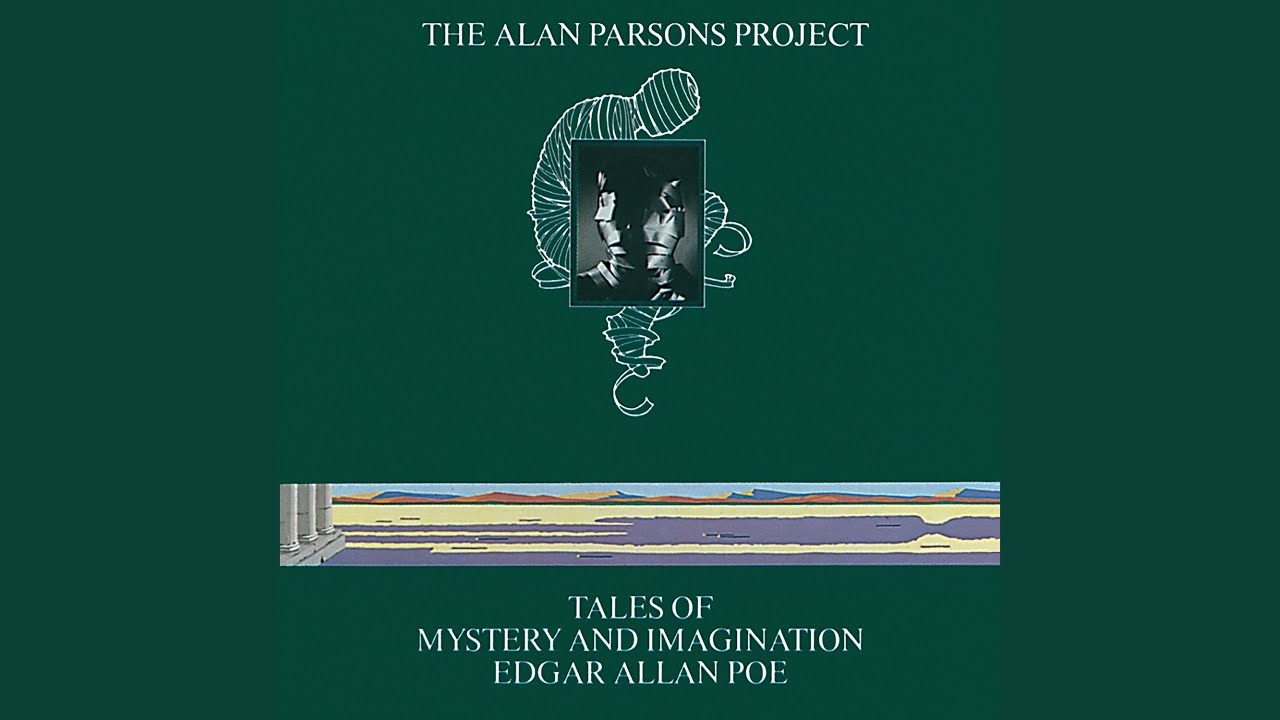
The record, Tales Of Mystery And Imagination (Edgar Allan Poe), was recorded primarily at Abbey Road, with earlier demos recorded at Pathway Studios. Woolfson wrote the songs with Parsons engineering and producing; he also contributed musical pieces, primarily instrumental. The music would be recorded by session musicians and vocals laid down by guest vocalists.
As Woolfson told this magazine’s editor: “Neither of us wanted any permanent members other than the two of us… I saw an opportunity to combine the roles of manager, songwriter and lyricist with Alan’s skills as an engineer and producer, allowing us to make records much in the same way as Stanley Kubrick or Alfred Hitchcock made movies – where the directors, rather than the artists, were the focal point.”
It was very disappointing that we couldn’t use Orson Welles’ voice. I went through 11 years of being unhappy about i
Alan Parsons
Recording sessions at Abbey Road were booked with guitarist Ian Bairnson, bassist David Paton, drummer Stuart Tosh and keyboardist Billy Lyall from the Scottish pop band Pilot recruited to lay down the backing tracks. They were elite talents, with the best-known of them nowadays probably the late Bairnson – who went on to play the solo that you know (whether you think so or not) from the outro of Kate Bush’s 1978 single Wuthering Heights.
Bairnson recalled his band’s contact with Parsons had come after “EMI presented Pilot with a list of 10 engineers working in Abbey Road who wanted to graduate to producing. David recognised Alan Parsons as the engineer on The Dark Side Of The Moon, so his name stood out on the list. We’d noticed Eric Woolfson chatting to Alan in the canteen at Abbey Road, and Eric told us he would be managing him.”
With Andrew Powell, formerly of Henry Cow, on board as arranger and ad hoc keyboard and organ player, guest lead vocals came from John Miles, Arthur Brown, former child actor Leonard Whiting, Terry Sylvester of The Hollies and Parsons’ then-wife Smokey. Two choirs – The English Chorale and the Westminster City School Boys Choir – were booked; Parsons played synth and recorder; and Woolfson played piano, keyboards, harpsichord and organ, as well as singing backing vocals.

That’s an advanced dramatis personae by any standards; but it became even more so when Parsons landed on the idea of recruiting none other than renowned film director Orson Welles to read the spoken-word introduction to the first song, A Dream Within A Dream. “We said, ‘How about getting a really good narrator to introduce the album, and making him the voice of Edgar Allan Poe?’” Parsons recalls. “Somebody at the label knew how to contact Orson Welles, and he agreed to do it. I said, ‘Oh, fantastic – when would he like to do the recording?’ and the record company guy said, ‘I’ll find out.’ Literally the next morning, there was a tape on his desk.”
Unfortunately, Welles’ contribution – speedy though it had been – was a little too late in the process to be included on the original album. “It was very disappointing that we couldn’t use it for the release,” says Parsons. “I went through 11 years of being unhappy about it, but fortunately we had a chance to include it when I remixed the album for CD in 1987.”
had they not lied about what the song was about, I might not have thought of that bass part
Joe Puerta
Another recording session took place in Hollywood when Parsons invited rock band Ambrosia – fellow 20th Century Records signings whose second album, Somewhere I’ve Never Travelled, he’d just produced – to contribute to The Raven. Bassist Joe Puerta remembers now that “Alan asked us if we’d do him a favour and cut a track before they went back to England. Of course we agreed, because we were delighted to be doing something for Alan. But the subject was a complete mystery. When we went into the studio we weren’t told what the album was going to be about.”
It led to a fortuitous creative moment: “I asked, ‘What’s this song about?’ Eric said, ‘Well, it’s called The Raver.’ I said, ‘What’s a raver?’ He said, ‘A raver is what we call a streetwalker [sex worker] in London.’ I said, ‘Oh, well, if it’s a streetwalker, shouldn’t it be a little more funky?’ and I played the bass part that ended up on the album. He said, ‘Yeah, that’ll work!’ So, interestingly enough, had they not lied about what the song was about, I might not have thought of that bass part. If he’d said, ‘It’s called The Raven’, I don’t know what kind of arrangement that would have inspired.”
So what is Tales Of Mystery And Imagination actually like? Well, as with most advanced music, it’s hard to do justice to it in words; but one general observation is that in 2026 it doesn’t sound like a record made in the mid-70s. The irresistible hooks of its songs, combined with the impact of their production, gives it common ground with a whole range of modern sounds, from prog to synthpop and beyond. At the same time, the sheer volume of instruments and the richness of their arrangements gives the music huge dimensions, although Parsons maintains full control of the production, reining in the backing musicians to allow the orchestral elements the room they need.
The Raven is notable for an electronically treated vocal from Parsons via a vocoder: it’s a strings-heavy, chorale-driven composition, highly dynamic, falling almost silent at points. Bairnson delivers a searing guitar solo at the song’s midpoint, and unnerving chants of ‘Nevermore!’ finish up the song. Leonard Whiting – otherwise best known for starring in Franco Zeffirelli’s controversial 1968 film Romeo & Juliet – delivers a rather more introverted performance than that of Arthur Brown, who makes The Tell-Tale Heart his own with all the eccentric gusto that fans of his theatrical character would expect. Listen out for Parsons’ added ingredients: a harmonised guitar solo, layers of smooth vocals, guitar swells and even timpani as the song reaches its peak.
The highly accomplished John Miles – best known then and now for the Parsons-produced 1978 single Music – lends his golden pipes to The Cask Of Amontillado, a sombre, piano and strings-driven composition that builds to a full orchestra, but there are pauses for silence to punctuate the track. (On that note, Parsons always maintained that true silence was impossible to achieve on recordings that use analogue tape, because the tape contains nearly inaudible artefacts: it was only with the advent of CD, six years or so after the release of Tales, that real silence was present on audio recordings.)
The very large orchestra was done at the old Kingsway Hall in central London. One could occasionally hear underground trains during quiet passages
Andrew Powell
Side one, if you’re listening on the original LP or one of the sumptuous vinyl reissues that have appeared since 2007, ends with (The System Of) Doctor Tarr And Professor Fether, which you won’t forget in a hurry because of the expert three-note hook in Bairnson’s guitar solo, and also because it has another set of superb vocals from Miles. The song ends with a fusillade of guitar harmonies and a threatening bass drone – something of a recurring motif on Project albums.
All this songwriting, arranging, performing and producing expertise is merely the appetiser for side two, the five-part suite The Fall Of The House Of Usher. Largely orchestral in nature and symphonic in structure, it moves from the cinematic Prelude to Arrival via the sounds of a thunderstorm, recorded by Woolfson and Paton when the skies unexpectedly opened over Abbey Road. A church organ, nippy synth notes and drum rolls combine with reverberating guitar for a lustrous feel, making the short Intermezzo that follows a chance to take a breath, if a tense one: it’s a minute of horror-movie strings.
Here’s where Andrew Powell really earned his fee, as he recalls: “We used unusual seating layouts for the orchestra for stereo effects on some titles. Most of the orchestra was recorded at Abbey Road, although the very large orchestra used on the Fall Of The House Of Usher suite was done at the old Kingsway Hall in central London, which had a great acoustic – even if one could occasionally hear the underground trains during quiet passages.”

Woolfson and Parsons really flex their songwriting and production muscles on the next two tracks, Pavane and Fall. The former builds via a double bass solo to a full-band groove, while the latter is a dramatic, full-orchestra experience that ends suddenly, leaving a final, unhurried To One In Paradise as the calm after the storm. It’s sung by Terry Sylvester with supporting vocals by Parsons and Woolfson.
Although the album had a title, Woolfson and Parsons didn’t yet have a name for their collaboration, referring to it until the last minute as “the Alan Parsons project” (note the lower-case second ‘P’). Regan liked the working title, though, and insisted on using it – much to Parsons’ surprise. As he says: “I thought it was going to be ‘Various Artists, produced by Alan Parsons.’ The name ‘The Alan Parsons Project’ was invented literally just before the release.”
It wasn’t just going to be an album that they’d toss out then play a few clubs and see what happened. They definitely broke the mould of the music industry
Joe Puerta
Artwork was commissioned from Storm Thorgerson and Aubrey Powell of Hipgnosis, best known at that point – like Parsons himself – for their work on Dark Side. “Alan and Eric wanted something which was very simple and plain as a graphic,” says Powell, “so our photographer, George Hardie, worked with us to create the symbol that you see on the cover. We also shot images that would be associated with Poe: you get the ravens in there, you get the ghostly, ethereal figure of the girl standing on the stairs and so on. We chose to do it at St Pancras Station, which in those days was very old and run-down. It was just a series of corridors and staircases full of cobwebs and grime. It was very fitting for that sort of spooky atmosphere.”
Tales of Mystery was released in the US in April 1976 against some tough competition – although had it appeared six months later it would have faced an even more powerful adversary in the Sex Pistols. As it was, huge-selling rock albums such as Frampton Comes Alive, the Eagles’ Their Greatest Hits (1971–1975) and Wings At The Speed Of Sound were doing extraordinary business – not that Parsons and Woolfson gave a damn about any of that when they launched their LP at the Griffith Park Observatory planetarium in Ll. The event came with one of the very first laser light shows, Orson Welles’ taped commentary and a huge afterparty: Woolfson and Parsons were evidently not planning to let their new masterpiece escape anyone’s attention.
“That was a terrific show, a huge spectacle,” recalls Joe Puerta. “You knew they were thinking big. It was obvious this wasn’t just going to be an album that they would toss out then go out and play a few clubs and see what happened. They definitely broke the mould of the music industry.”
However, an unpleasant surprise awaited: the record failed to make a major commercial impact, reaching only No.56 on the British album charts on its release that August – although it did make some inroads overseas. Reviews were generally civil but lukewarm, although an early fan was Harry Doherty of Melody Maker, who wrote: “I’ve played this album almost constantly for three weeks,” and the NME’s Fred Dellar wrote a florid appreciation in the style of Poe himself.

Both Parsons and Woolfson were disappointed by the relative commercial failure. The latter’s daughter, Sally – who now manages the Project catalogue – recalls: “Dad talked about the excitement of the album coming out, and then the shock when it wasn’t successful, which is why 20th Century Records didn’t offer them a contract for the next album.”
Still, the Project were just getting started. A glittering future lay ahead of them. What’s more, its legacy is intact, with the genius in the grooves of the LP long acknowledged. Modern analyses define the album as an essential part of music history, an example being Classic Rock magazine, which included Tales in its 50 Albums That Built Prog.
The last word goes to Parsons: “If I had to nominate a Project album as my favourite, I would choose Tales. There is something about it that’s unique to this day.”

