


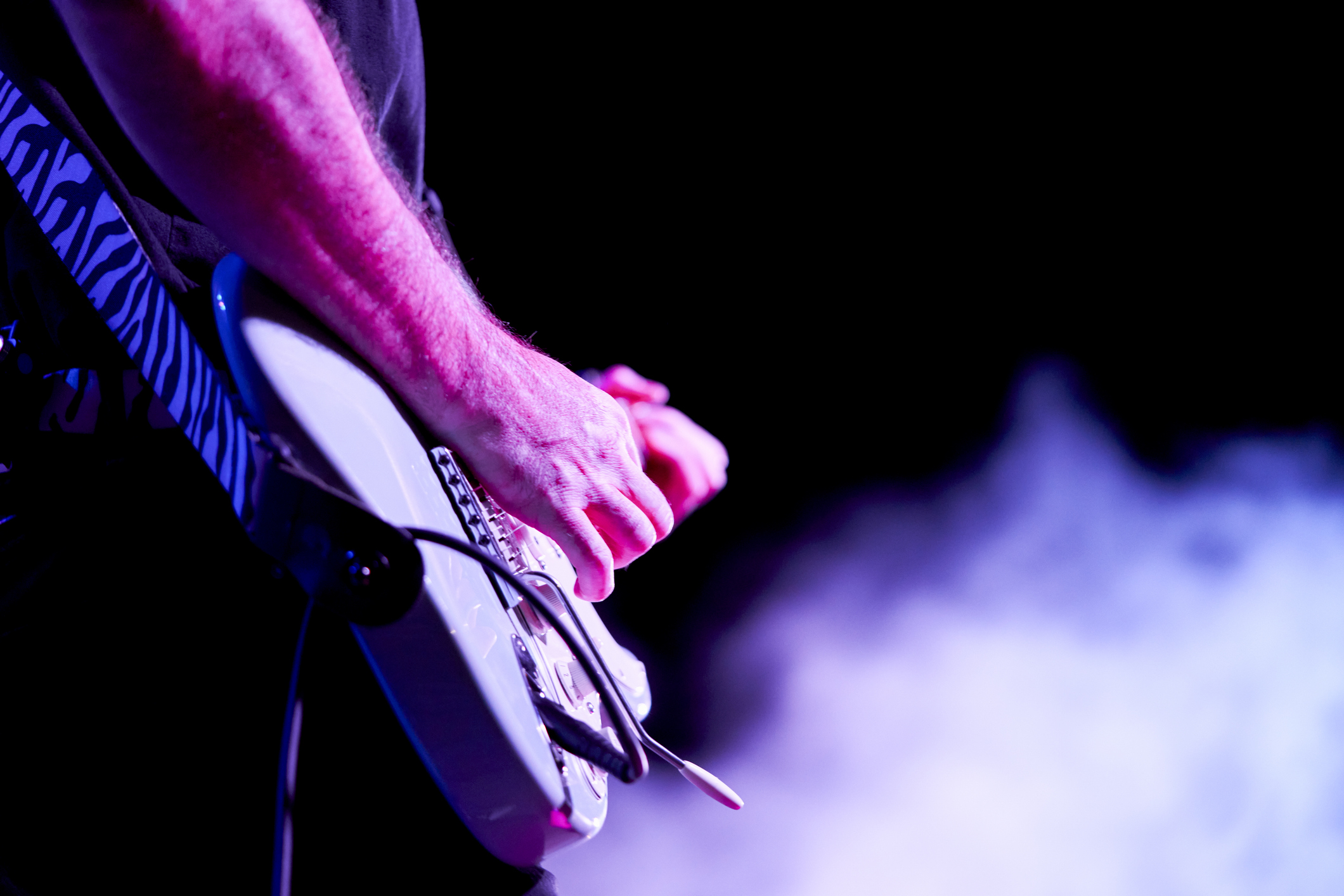


Music has long been associated with therapy, but Ed O’Brien took it to another level on his second solo album Blue Morpho – the first released under his own name. It’s the result of a battle with depression that led to the Radiohead guitarist experiencing a complete transformation, as he tells Prog.
Despite the drop in temperature in Austin, Texas, Ed O’Brien speaks with a warmth and candour that’s at once disarming yet utterly compelling. At the top of the agenda is the Radiohead guitarist’s tunningly beautiful second solo album Blue Morpho. It represents so much more than simply another release – for this is a reckoning, a shedding of skin and a profound rebirth.
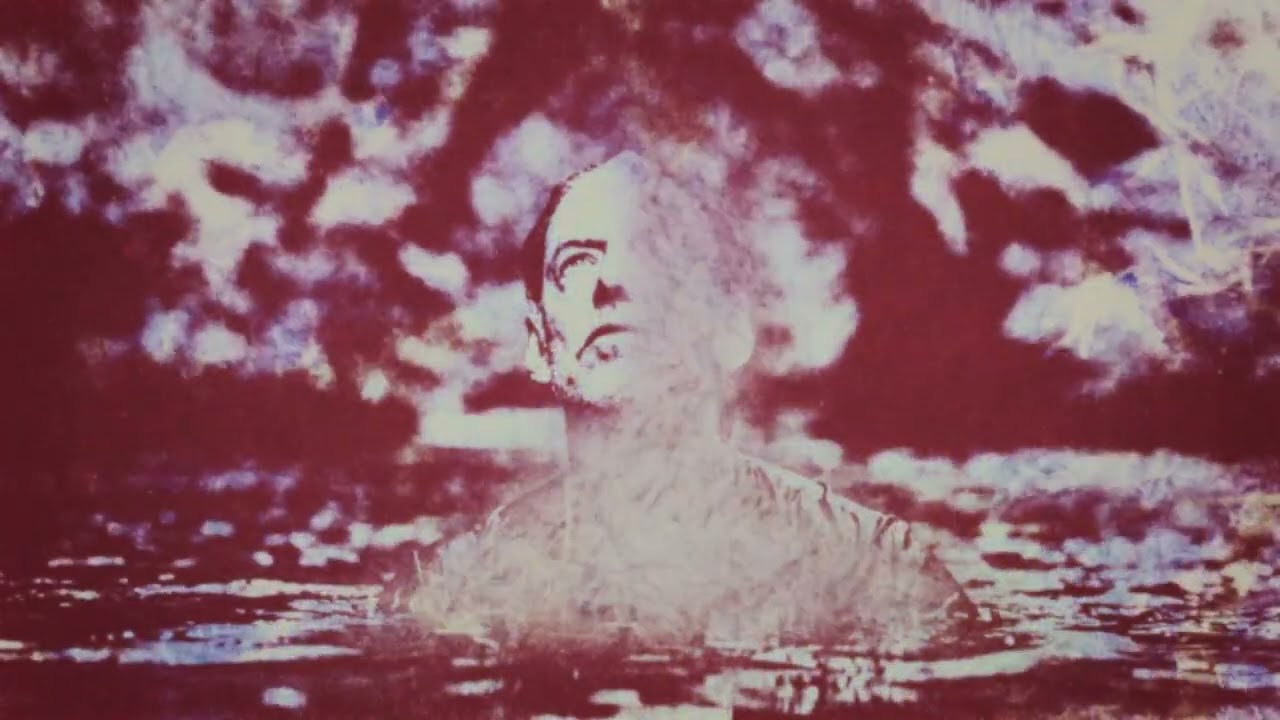
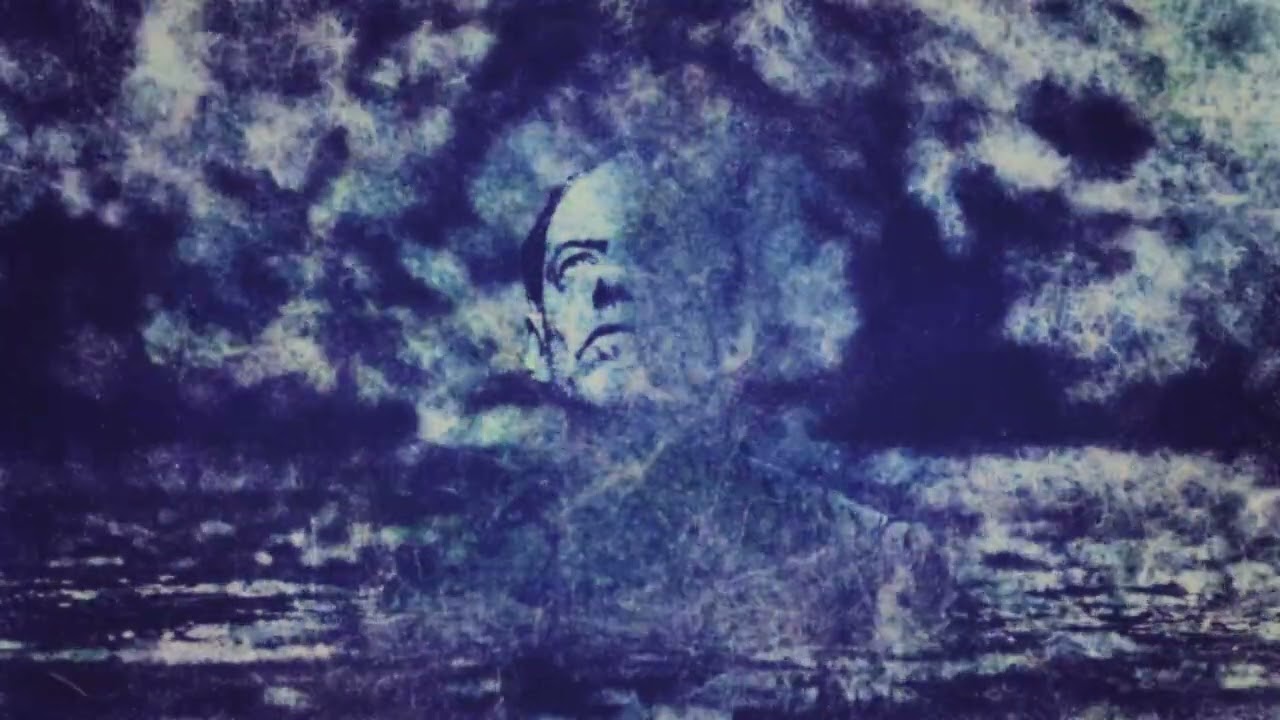
Named after the dazzling butterfly he first encountered while living with his family in Brazil, the record captures a moment of transformation that saw him emerge from the deepest depression of his life with a renewed sense of purpose, identity and faith. “I’m not hiding any more,” he says simply.
Previously he’d released music under the alias EOB; a decision rooted less in artistic intent than self-protection. “I was hiding behind a doppelgänger called EOB. I didn’t think it was very cool going out under my own name. Coming from Radiohead, I knew that whatever I released would be compared to what each of them does either solo or collectively. And I felt deeply insecure about that. I felt like, ‘Who am I? What am I?’”
Those anxieties ran deep. In 2020, while making his debut solo album Earth, and despite working with acclaimed collaborators including guitarist Adrian Utley of Portishead, drummer Omar Hakim and folk singer Laura Marling, O’Brien found himself overwhelmed by doubt.
“There’s healthy insecurity or healthy humility, but this felt crippling at times,” he recalls. “It felt like carrying this weight.” What followed was a collapse and, ultimately, a clearing.
“There’s nothing like going into a deep depression and coming out of that like a dark night in the soul, which completely puts everything into perspective,” he says. “You come out of something like that and you go, ‘I don’t care any more – I don’t care what people think about me.’”
That shift from fear to acceptance beats at the heart of Blue Morpho. Where Earth was shaped by hesitation and uncertainty concerning his role in Radiohead, his latest album is defined by release. “The less you care about your detractors, the more you let go; the more you make the music you want to make,” he says.
“To me, it’s the process of making music that is so completely alluring and all-encompassing and it’s a necessity. I have to do it –and I love it now.”
His depression, which took hold during the pandemic’s first lockdown in 2020, was all-consuming. “That place, the depression, just reduces you. It crushes the ego. It’s like a death,” he says. “Then you slowly build up; it’s like rebuilding your kind of framework and your beingness, and you just do it. You get to this place of acceptance. You go, ‘Yeah – and? So?’ For me it’s a process of letting go, and that has a deeply profound impact on the music.”
In practical terms, that meant letting go of structure and expectation. During that first lockdown, O’Brien found himself being unable to listen to music at all. Initially, he turned outward. “It was almost like this ground zero,” he says. “I was just listening to the insects in that beautiful, glorious weather we had.”
But new and unexpected sources of inspiration soon followed. Almost accidentally, he began listening to Gilles Peterson’s Saturday afternoon show on BBC Radio 6 Music, a programme that champions a heady mix of contemporary and established jazz, hip hop and electronic music. At the same time, O’Brien found himself being drawn to the classical music of his youth; and the mixture of the two made for a potent cocktail in his mind.
It was my intuition saying, ‘That’s what you’ve got to do: just play. There’s no expectation’
“I was just like, ‘I’m kind of done with the form of where I am.’ I wanted to breathe some formlessness into the music that I was making. So it was interesting – the death of the ego was also the death of that form as well.”
The result is an album that resists convention and easy categorisation as it stretches and unfolds according to its own internal logic. “If a song’s going to be 10 minutes long, it’s got to be 10 minutes long,” he shrugs. “Why try and get it down to three and a half minutes? I’m bored with that. I like to let things breathe.”
The path back to creative process became almost like a ritual that doubled as an exercise in survival. Encouraged by his wife, Suzi, O’Brien would retreat into his home studio every morning while his family navigated lockdown life around him.

“I literally had this compulsion,” he explains. “It was my intuition saying, ‘You’ve got to go into this room at nine o’clock, go through ’til 12 – just play. That’s what you’ve got to do: just play. There’s no expectation. You’re not trying to create music; it’s therapy.”
Likening the process to yoga, he continues: “You get into the discipline of practice, turning up each day, and your body switches on and your soul switches on. And with musicians, it comes through us.”
I taught myself meditation, bu never had a connection. Five years ago it just suddenly came
His emerging raw and unfiltered ideas, at first glance, appeared to be directionless. “I had about nine months’ worth of these little gems. I thought they were shit! I didn’t know what they were. Then I came out of this dark place, played them back, and went, ‘Oh my God!’ These notes and riffs held an imprint of the emotional state that I was in. It was a very dark place, but there’s beauty in that place as well.”
Key to shaping those moments was multi award-winning producer Paul Epworth, whose instinctive, fast-moving approach provided a vital counterbalance. “He’s such a different musician from me; he works so quickly. He’s a vibes man and an amazing producer with an amazing soul.”
But while Epworth helped give the songs form, the environment in which they were created gave them their spirit. Much of Blue Morpho was written and recorded in Wales, a place O’Brien describes in mythical and spiritual terms.
“It’s ancient Celtic land,” he says. “There’s a real power there and it gets more interesting the more you learn about the language. That spirit is infused in the language, and that language is infused in the land.”
Having grown up in what he calls the “academic and non-spiritual” environment of Oxford, O’Brien’s connection to nature has become central to his life and work. “It’s been the hardest part to talk about, but it’s my truth,” he says. “I’ve been on a journey for a number of years; I think I’ve been seeking it. I taught myself meditation, but I’ve never sort of had that connection.
“Then, five years ago, it just suddenly came, and it was deep and it was powerful, and it’s a connection with God – it’s a spiritual connection. Unless you’ve experienced it, you cannot describe it.”
When you go to Wales you understand Led Zeppelin in a way that goes deeper
In Wales, that connection feels even more tangible. Once an avowed city dweller, O’Brien bonded with the land after buying a house on the remains of a Roman villa surrounded by valleys, ancient oak trees and running waterways. By a strange coincidence, it’s a stone’s throw from Bron-Yr-Aur, the cottage where Jimmy Page and Robert Plant laid the groundwork for Led Zeppelin III.
“When you go to this land, you understand Led Zeppelin in a way that goes deeper,” he says. “When you hear The Battle Of Evermore – man, it’s like being on the top of fucking Plynlimon, the highest point in mid-Wales, and you feel it.
“And it’s so in this land, this land of poets, this land of mystery, this land of spirit. If you’re sensitive to this stuff – and musicians tend to be sensitive souls – you feel it. And that’s why I’ve been drawn to Wales. That’s why I love Wales; that’s why Wales is my home.”
This spiritual awakening feeds directly into Blue Morpho’s sense of rebirth. The title evokes not only transformation but also an ongoing journey of discovery. “It’s like rebirth,” says O’Brien. “It’s been profound, and I’m excited about what’s next.”
I’ve always loved supporting Thom, but I love supporting him vocally now
That openness to the unknown helped shape the album’s collaborative process, which came together through chance – indeed, contributions from British jazz multi-instrumentalist Shabaka Hutchings and Estonian composer Tõnu Kõrvits occurred almost serendipitously.
“I met Tõnu in Estonia over dinner,” recalls O’Brien. “He said, ‘If you ever want any string arrangements, please contact me.’ Five weeks later he’d done an incredible arrangement with the Tallinn Chamber Orchestra for the title track and Sweet Spot.
“With Shabaka, I was chatting with him at Glastonbury and I said, ‘Do you fancy coming in?’ And he came by three or four months later, laid some flutes down on Thin Places, and it was beautiful.”
For an artist long defined by his specific role in one of the world’s biggest and most original bands, that sense of freedom and transformation hasn’t distanced him from Radiohead. If anything, it’s deepened his appreciation of the band and his role within it. Moreover, the experience of taking on lead vocals strengthened his position as a backing singer to Thom Yorke – something that came to fruition on Radiohead’s unexpected 2025 tour, their first outing in seven years.
“One of my greatest joys is to sing with one of my oldest friends, and I think our voices work really well together,” says O’Brien with no little pride. “I’ve always loved supporting Thom, but I love supporting him vocally now. I know he really enjoyed it, because he said so. I’m just not racked with insecurities like I used to be. I don’t care. I just do it.”
Blue Morpho isn’t just a record, but a carefully charted map of a journey from darkness into light. Like the flight of the butterfly it’s named after, it suggests that O’Brien’s transformation in an ongoing voyage is far from over.
Blue Morpho is on sale now.

