


With his remarkable second solo album Vox Occulta, Leprous’ Einar Solberg may not have found the meaning of life – but he might just have realised his dream of creating the most cinematic music in all of prog. He reveals it’s all about embracing chaos, randomness, orcs, orchestras, and the beauty of melancholy.
“The more I learn about myself, the more I realise I didn’t know,” says Einar Solberg. “When it comes to knowledge about your inner life, I think nobody quite figures that out in a full lifetime even if they dig deep enough; there’s always more to get.”
The Leprous frontman delves into his own psyche on his second solo album, mining emotions both dark and light across eight songs. Vox Occulta – Latin for ‘hidden voice’ – is a fitting title for a record that finds Solberg trying to understand his own negative impulses while reaching for catharsis.
“It’s about the hidden, dark voice in me,” he says. “No matter how much mental work I’ve done, it never completely leaves. I can silence it; it’s not necessarily the dark voice that makes me feel bad about myself.
But it’s the dark voice that makes me say stuff that I regret, that makes me do things that I regret, makes me angry about useless stuff; it’s the destructive voice inside of me which has been a lot stronger at some points of my life. At the moment it’s there but pretty well controlled. I’ve accepted that it comes to say ‘hi’ here and there.”
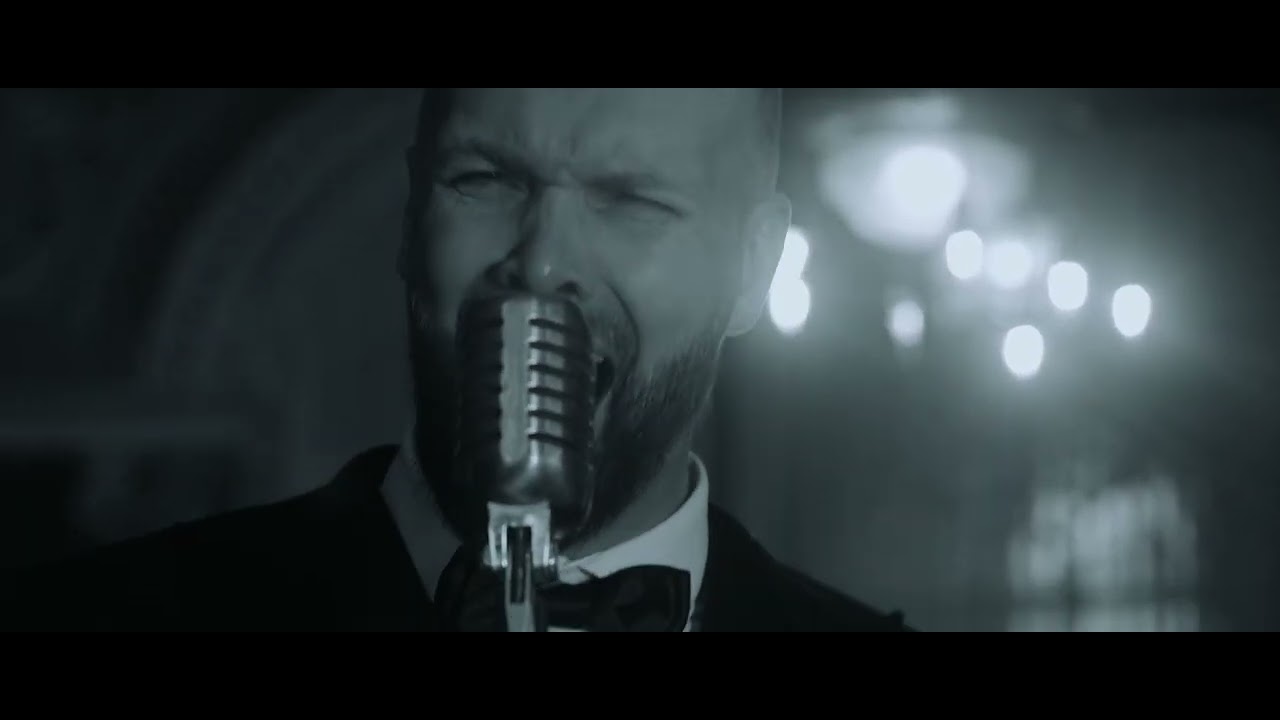
Half of the album’s songs feature the Norwegian Radio Orchestra, whose presence reflects the Solberg’s desire to become, in his words, the most cinematic person in prog. As expansive as Leprous can be, an orchestra might present a daunting prospect for a songwriter schooled in the world of drums and guitars. Or maybe not.
“I’m not scared of many things in music,” says Solberg. “When I want something that I’m not good enough at myself, I work with people who are.”
In this case, that’s Espen Ramsli Fredriksen, owner of Gateway Studios in Norway, where they recorded the orchestra for Vox Occulta. “I needed someone who knows, in detail, what every instrument is capable of, which is a bit beyond my knowledge,” says Solberg, who didn’t want orchestration to be just the icing on the cake of the album.
“I started with the orchestra; that was the first thing I recorded, and then I built everything on top of that. I feel a lot of times, when people add an orchestra to an album, it’s more like layering – but for those four songs where I have the orchestra, it’s the foundation rather than the layers.”
Vox Occulta is an album of sweeping dynamics and grand, theatrical crescendos that reflect Solberg’s preference for the musical equivalent of delayed gratification. “I don’t necessarily like fast, instant rewards because they get tiring and they don’t give me any lasting joy. I like, in music and in life, to build toward something and then get that release. That’s amazing.
“It can be anything – like doing a very difficult hike and then you see the view from the top, or doing a super-hard run and jumping into the ocean right after. I like anything that has to do with going on a path towards something, and then you get the release.”
Solberg believes the music he makes as a solo artist will become “more dynamically extreme than Leprous; the heavy parts will be heavier and the soft parts will be softer”. Just as his composing is constantly developing, he regards life as a work in progress, using his lyrics to examine his own search for meaning – what matters is the process of inquiry, rather than arriving at a definitive answer.
Now that I’m happy, melancholy feels nice. I can enjoy it instead of being scared of it
“It’s not like, ‘I found the conclusion; I’m the only person in the world that has figured out the ultimate meaning of life,’” he says. “I haven’t and I won’t. But I will keep on talking about my perspective at the specific moment I make an album, and that’s it. I keep on changing.”
Vox Occulta is often as melancholic as it is heartfelt and open, although Solberg says he’s not gloomy by nature. Rather, at certain times – such as around the recording of Leprous’ Pitfalls – events in his personal life brought out those brooding and introspective emotions.
“Melancholy didn’t come naturally to me; it came as a result of something, but I love melancholic music,” he says. “Now that I’m happy and doing well in life, melancholy feels even nicer in a way; I can visit that emotion intentionally and enjoy it instead of being scared of it.”
He compares it to exploring a dark cave while carrying a torch to illuminate the darkness: “Suddenly you see it’s quite beautiful in there – it’s not scary any more. That’s how it feels for me now. So I don’t think my music is about to get any less melancholic or dramatic even though my inner life is less melancholic and dramatic.”
Serenitas might be the most emotionally positive piece he’s composed to date. “It’s about this peace that I feel,” he says. “It’s a very uplifting song compared to almost anything I’ve ever done – maybe only in competition with Alleviate or Observe The Train.”
I don’t believe in fate. I believe in manoeuvring randomness and using it to your advantage
Surprisingly, Serenitas came into being because Solberg caught the flu. He had the studio booked for recording vocals; but being unable to sing, he decided to use the space to write. “That song only exists because of something so random,” he says. “My way of seeing life and the world is that everything is a bit random.
“I don’t believe in fate; I don’t believe in much else other than getting better at manoeuvring the randomness and using it to your advantage. When you find yourself in a position like that – ‘Ah, now I cannot do what I wanted’ – you find a way to make that into something beautiful, instead of crying over the fact that you wasted money on the studio.”
In other words, there’s a freedom in letting go; an idea Solberg explores in Liberatio, which he says is “basically about the art of not really caring.” He doesn’t mean callousness; rather the song expresses “the liberation you feel in the moment when you realise that people’s opinions don’t affect you any more than you let them. That’s an insanely liberating thing. Of course, I don’t always succeed; but whenever I do it’s like, ‘Why did I care so much about this?’”
Solberg believes that desire to please others comes from his childhood. He describes himself as someone “who has always been trying a bit too hard to adjust socially to please. That’s good in some contexts – we all adjust socially whenever it’s necessary – but there are a lot of times when it’s not necessary.
“I think people will like you even more when they see that what they think doesn’t get to you; that you’re confident enough in yourself to just do you in an unapologetic way. When I manage to do that, I have the feeling in the chorus of that song.”
It’s very important to know who you are in the music world, or you drown in the vast ocean of other bands
Solberg wants his next solo record to be even more cinematic than Vox Occulta. “Maybe then I can even afford to have orchestra on the entire album!” he says. “I love to do big arrangements, but it started feeling like that was drowning out the other members of Leprous, and they didn’t have any space to show their musicality properly.
“That’s why I’m amplifying it in the solo project, and going fully for the cinematic sound that I know some of the Leprous fans appreciate.” He names Arvo Pärt, Vivaldi, Chopin and Bach as touchstones for classical music, and film composers Ryuichi Sakamoto and Hans Zimmer as inspirations for the cinematic sound he’s pursuing.
Beginning with 2017’s Malina, followed by Pitfalls in 2019 and Aphelion two years later, Leprous incorporated string arrangements, before stripping them out completely with 2024’s Melodies Of Atonement. “These days it’s very important to know who you are in the music world, or else you just drown in the vast ocean of other bands,” says Solberg. “You need to have a very clear image and you need to own that 100%.”
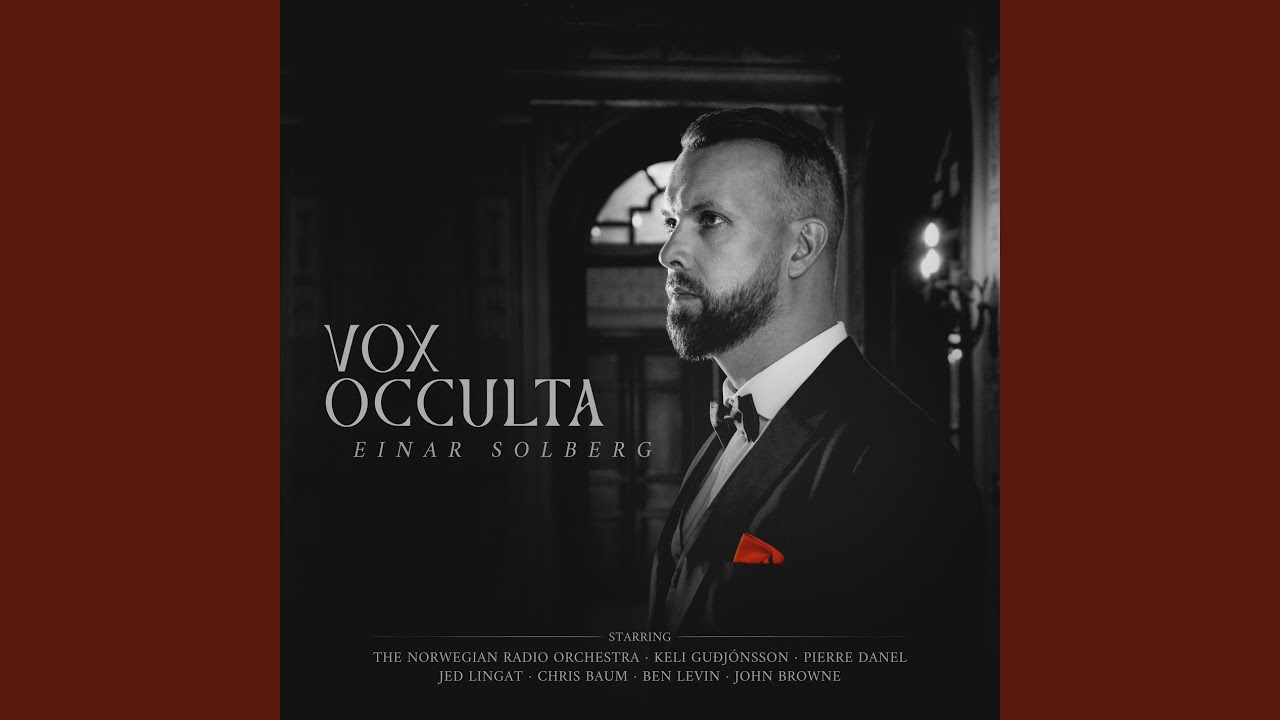
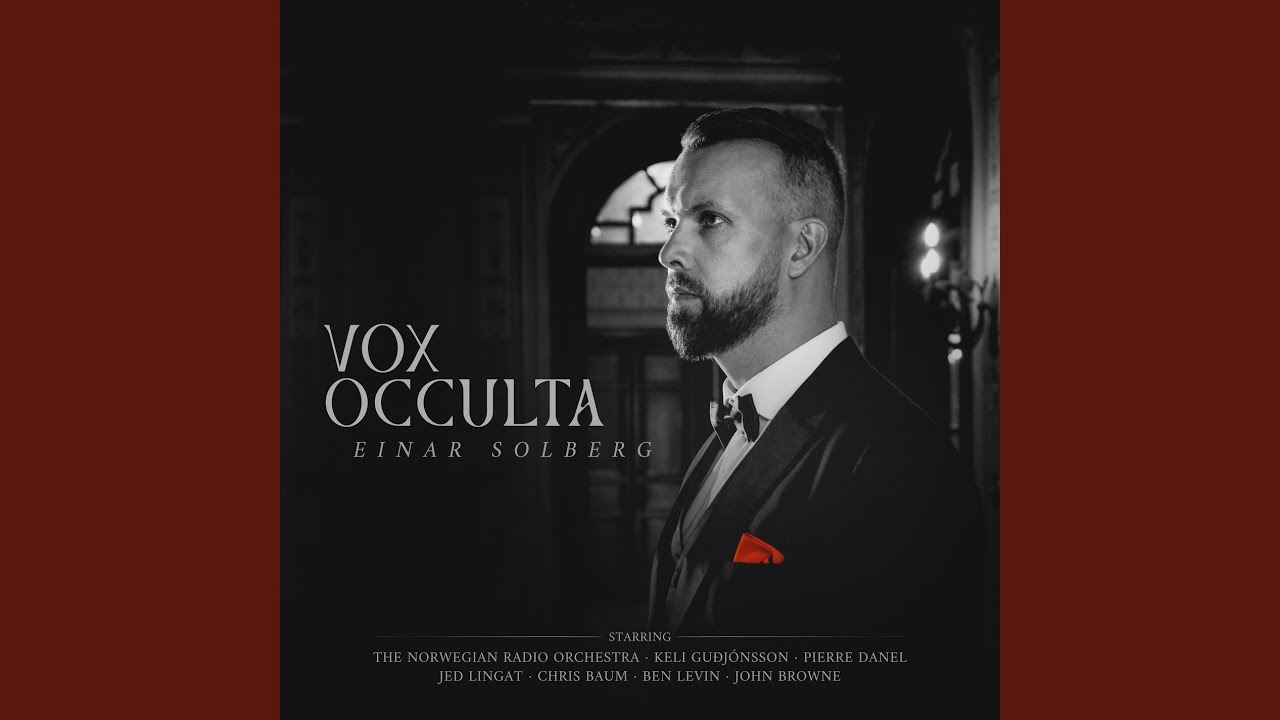
The rousing arrangements and widescreen feel of Vox Occulta has led to suggestions that Solberg would be the perfect candidate to record the next James Bond theme – and it doesn’t hurt that he sports a tuxedo on the album cover, looking ready to step into the role of 007 himself. “I’ve seen one or two Bond movies but I’ve never been a big fan,” he says. “But a lot of people keep saying that, so there must be something in it!”
Lead single Stella Mortua prompted the first wave of Bond suggestions, although Solberg doesn’t hear it that way. “To me, it’s more tribal than James Bond; it sounds less urban,” he says. “The drums are more like the Orcs marching on Helm’s Deep!”

And he says he wasn’t trying for a secret agent image in the cover photo. “I was honestly going for this old-school 70s Mafia look – The Godfather or something in that world. But then again, you aim for something and people get other references, and that’s the beauty of art.
“In these times where you can get generic but high-quality stuff from AI, I think it’s more important than ever to dare to be even more random, more human, more imperfect, more organic. I don’t even have any synthesisers on this album; every instrument is real. AI is insanely good at copying stuff and it’s going to get better at it too. But AI is creating with logic and I’m creating with chaos and randomness.”
Chaos aside, there are no plans to put Leprous on hold; instead, Solberg plans to nurture his band and solo career side-by-side. “I don’t want to do a Steven Wilson or a Devin Townsend, where I quit one and focus fully on the other,” he says. “I want to go back and forth; that’s my long-term vision. It can take two years or it can take 15 years; I don’t care. I’ll just do it gradually.”
Vox Occulta is on sale via Century Media.

