




“Hey, don’t write yourself off yet…’
The lyrics to The Middle – Jimmy Eat World’s breakthrough hit and an absolute emo anthem – might have been intended as words of encouragement to a teenage punk struggling with ideas of self-worth and acceptance, but they could equally have applied to the band’s own career as they entered a new century.
Throughout the mid-to-late 90s, the quartet werea a cult act who had garnered a little airplay on US college radio before being unceremoniously ditched by their label. Their third album in particular, 1999’s Clarity, would eventually come to be viewed as an emo classic but at the time it was considered a commercial flop.
As the band took on day jobs to self-fund the follow up, they looked as likely to crew the next manned space flight to the Moon as break into the musical mainstream. But bolstered by the huge success of The Middle, 2001’s Bleed American changed all that. It wasn’t just a massive album for Jimmy Eat World, it blew the doors wide open for every other emotionally charged rock and punk band to follow.
When Jimmy Eat World formed in Mesa, Arizona in 1993, they had no such grand ambitions. “Our goals were really small when we first started,” guitarist and original lead vocalistTom Linton told Columbus Underground. “We just wanted to put out a little seven-inch and we were freaking out about that. And be able to go to California, you know – leave Phoenixto play a show outside of Arizona.”

They soon went beyond such modest aspirations with debut EP One, Two, Three, Four and a self-titled full-length album, both released in 1994 on local label Wooden Blue Records. Their early material was more in the vein of ramshackle skate-punk and it wasn’t until their second album, 1996’s Static Prevails, that they started to hone their sound into a more refined format.
Lead guitarist Jim Adkins started to take on more of the lead vocals, adding his crystalline highs to Linton’s Jawbox-style rasps, and they brought in more post-hardcore and emo elements. They were signed to Capitol Records on a development deal, which guaranteed one album and gave the label the option for several more, and things appeared to be looking rosy.
In the wake of Green Day’s Dookie though, major labels weren’t looking for bands who could slowly develop their own sound and fanbase. They wanted big returns quickly, and when Static Prevails failed to shift the units, the band already started to see the writing on the wall.
“We approached making [follow-up album Clarity] like we would never get a chance to make another record in an actual studio again,” Adkins told the Washed Up Emo podcast. “So we didgo kinda nuts…like: ‘Alright, today we’re renting timpani!”
The album certainly had its grandiose elements, with a strings, keys, piano, bells and a vibraphone, but there was also the more personal, relatable side that has always been such a key part of emo’s appeal.
Clarity’s lead single Lucky Denver Mint gained some traction and remains a fan favourite to this day, but the album again failed to match their record label paymasters’ expectations. When Capitol decided not to renew the contract, the band were philosophical.
“All big labels are extremely adept at pushing bands that are moving 20,000 or more records a week,” Jim Adkins told Spin. “Capitol knew exactly what to do with that. But they had no idea what to do with bands like us that sold 10,000 copies between all releases. [Clarity] grew over time into what it is now, but that wasn’t the case back then. It made complete business sense to not spend any more money on us.”

Jimmy Eat World were down but certainly not out. Regrouping for the next step, they channelled money from their day jobs and touring that had stepped up a level. Adkins recalled Tom Linton sitting in a bar nervously clutching a backpack with $35,000 in it because they didn’t want to leave it in the car and couldn’t deposit so much in the bank in one go.
Producer Mark Trombino agreed to work on the album that would become Bleed American, with the band paying him when they could, going back on tour to raise funds as needed.
“It turned out to be one of my favourite record-making experiences because it was literally me and four guys just making a record together without any label involvement,” Trombino told Entertainment Weekly. “That was the reason it turned out the way it did.”
As they worked on the album, new record labels sniffed around and the band eventually signed with DreamWorks Records. Bleed American was released in July 2001 (the title was temporarily changed to Jimmy Eat World in the wake of the September 11 attacks).
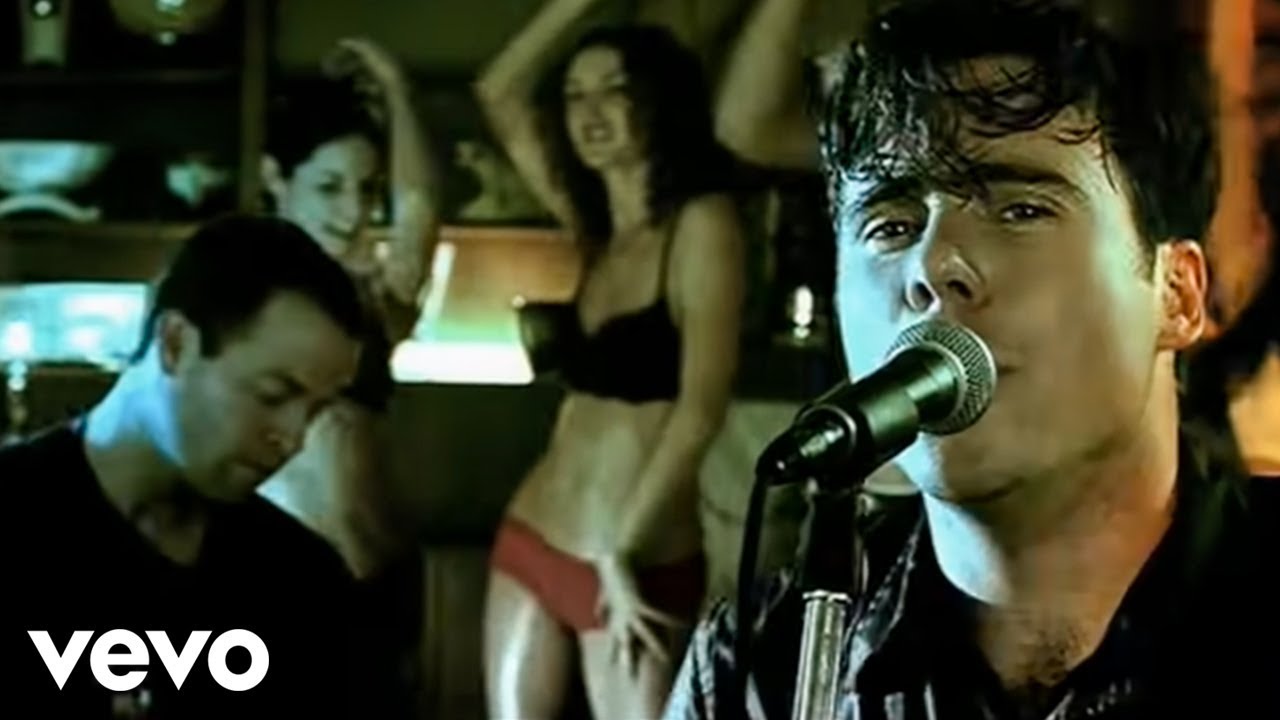
It featured a more streamlined, accessible sound and The Middle was its most anthemic moment. Written in direct response to a fan who contacted them on their AOL account, it featured a dream sequence video in which the protagonist shows up to a party fully clothed, while his peers all dance in their underwear.
“I think we just decided, ‘Let’s lean into this and do it and make sure it’s done right’, make sure it’s not overly gratuitous or inappropriate in a way that feels creepy,” drummer Zach Lind told Grammy.com.
The video was a hit and they toured relentlessly on the back of it, including stints on the Warped Tour and the Pop Disaster tour with Blink-182 and Green Day. By the time they came up for air, this most unassuming of bands were rock stars with a million-selling album behind them.
“The way that Bleed American just opened doors for us was maybe one of the most satisfying experiences of my life,” Lind told Grammy.com. “In the wake of all the frustration and banging our head against the wall at Capitol, it just felt like everything aligned perfectly, and I think we were lucky to be able to experience that in that way, because I don’t think a lot of people get that moment in their life.”

It didn’t only open doors for the band who made it but for the scene as a whole, ushering emo into the mainstream spotlight. It also set up Jimmy Eat World as global stars who would outlive the musical andcultural wave they helped to generate.
They would never match Bleed American sales-wise, but follow-up Futures went Gold and 2007’s Chase This Light would become their highest charting album, peaking at No.5 in the US Billboard 200. They would continue to release a string of consistent and highly regarded albums over subsequent years.
With no splits or lengthy hiatuses, they’re one of the few major players of the 2000s emo boom who haven’t had to affect a reunion to benefit from the recent resurgence of interest, supporting a revitalized My Chemical Romance in Australia and touring with Fall Out Boy in the US. They might dispute the term but Jimmy Eat World remain emo royalty and their legacy is assured.
Originally published in The Story Of Emo. Order it online here and have it delivered straight to your door
