


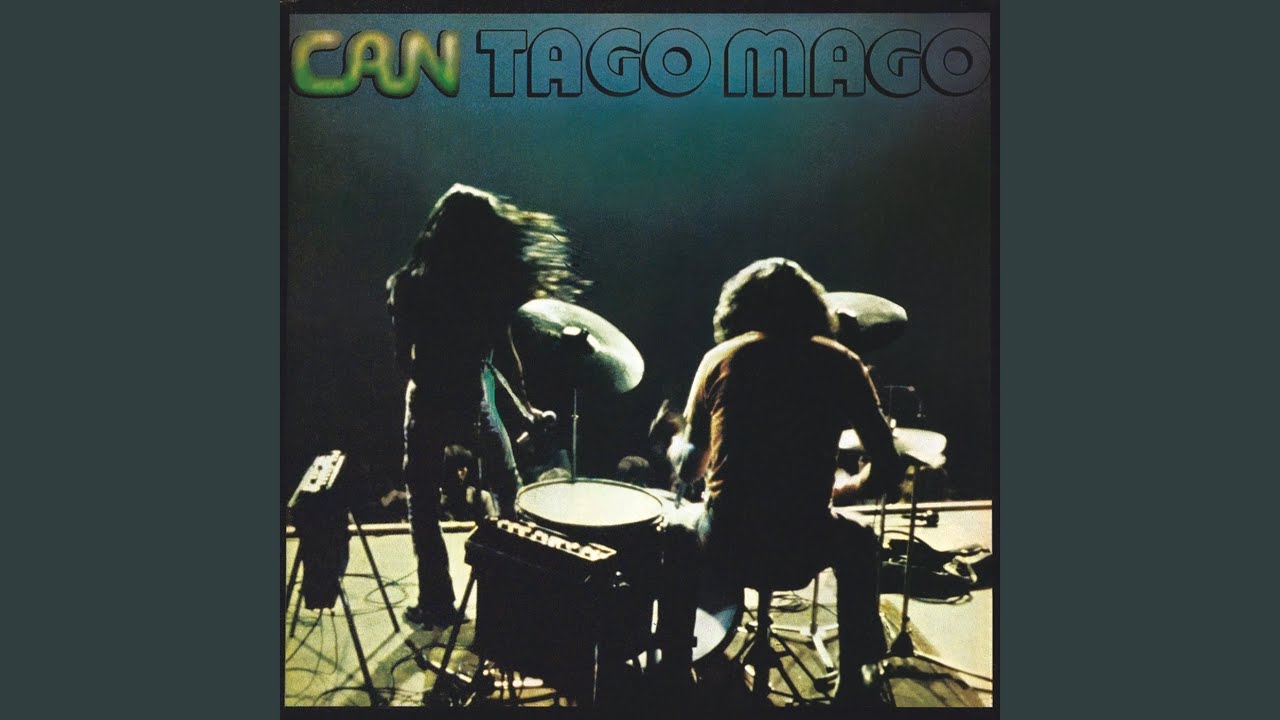
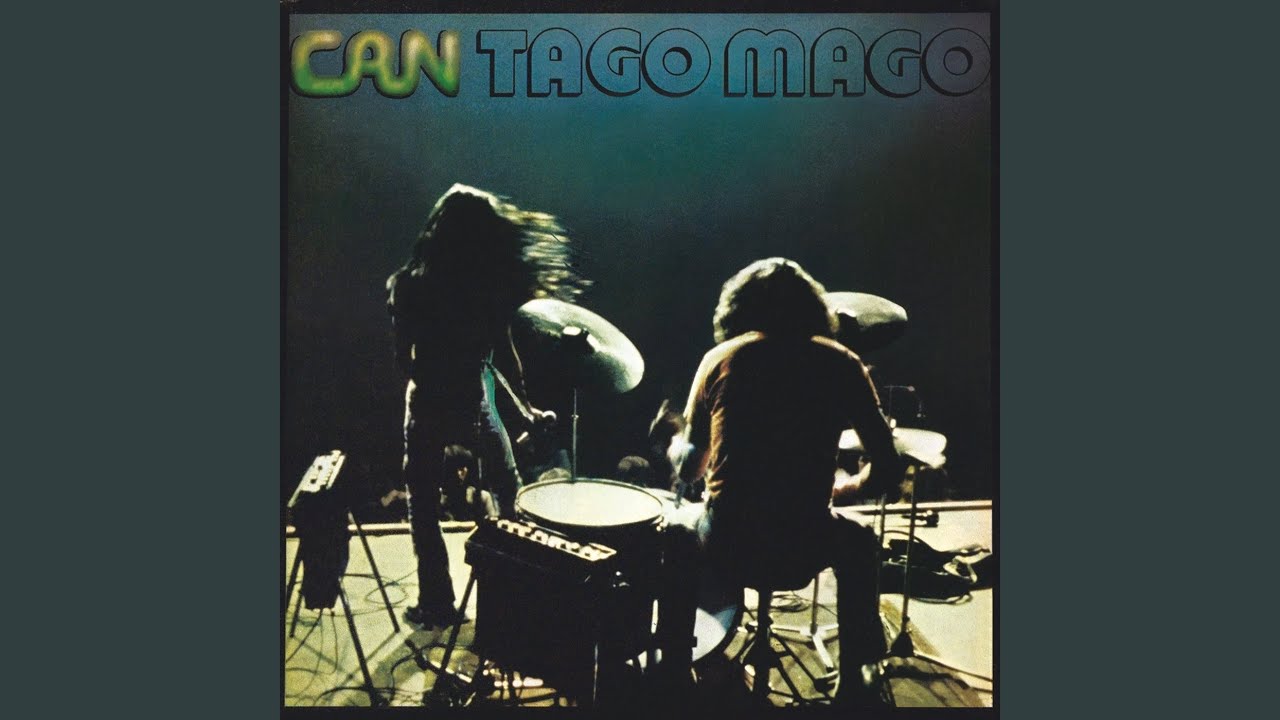
Inspiration to Primal Scream, Radiohead, Happy Mondays and others, Can released their titanic experimental masterpiece Tago Mago in 1971. Marking its 40th anniversary in 2011, Holger Czukay – who died in 2017 – told Prog how they’d secured the services of vocalist Damo Suzuki after the previous incumbent had suffered a massive mental collapse.
“Tago Mago was more than just songs,” says Holger Czukay, one-fifth of legendary German outfit Can. There are songs, but we were thinking differently. I was always thinking in terms of chamber symphonies. A little bit loud and noisy maybe, but the same thing. And not bound only to words. It’s a very original piece of work. You cannot repeat something like Tago Mago. It’s impossible.”
Julian Cope, no stranger to the further reaches of recorded music, has singled out the 1971 album for sounding “only like itself, like no one before or after.” Primal Scream’s Bobby Gillespie envisaged 1991 rave-up Screamadelica as his band’s approximation of Tago Mago. He’s called Can’s music “like nothing I’d ever heard before – not American, not rock’n’roll, but mysterious and European; a true occult sound.”
Thom Yorke cited Tago Mago as a major signpost for Kid A, though Radiohead’s entire career is littered with similar homages. As he put it so beautifully in a Melody Maker interview in 1995, while promoting The Bends: “We nicked Planet Telex from Tago Mago by Can. So fuck off – we are arty, us.”
Can had first come together in Cologne in 1968. Both Czukay and keyboardist Irmin Schmidt had studied composition under avant-garde pioneer Karlheinz Stockhausen. Jaki Liebezeit was a jazzhead drummer who’d already played with Manfred Schoof and Chet Baker, while guitarist Michael Karoli was a formidably gifted ex-student of Czukay’s.
An ornate 15th-century castle called Schloss Norvenich, rented out to them by a wealthy local art-dealer, served as both rehearsal space and studio. The addition of black American vocalist Malcolm Mooney – all primal yelps and raw energy – gave them a focal point for 1969 debut LP Monster Movie.
But by the end of the year Mooney’s increasingly fragile psychological state had made him a liability. During one particularly manic episode at a gig, he had a full meltdown, screaming: “Upstairs, downstairs!” for two hours before collapsing. He quit Can soon after.
Another equally singular talent took his place. Damo Suzuki was a 20-year-old Japanese singer who’d spent much of his time busking around Europe. He was first spotted wandering alone in Munich. “Jaki and I were sitting in a café and we saw Damo coming along the street,” recalls Czukay. “He was somehow praying to the sun and making loud noises, singing or chanting. I turned to Jaki and said: ‘This is our new singer.’ It was a kind of intuition – I couldn’t really say why I thought he would fit into the band.
“I got up, went over and asked what he was doing that night. He said, ‘Nothing special.’ So I asked, ‘Do you want to come and sing at our concert?’ I told him there’d be no rehearsal, we’d see him on stage and he could just go ahead.”
It worked out, but perhaps unsurprisingly, it did so in an unexpected manner. “He started out very calm and peaceful, then suddenly – like a Samurai warrior – he became the exact opposite. We in the band were fine with that, but the audience were frightened by him. They escaped from the venue; there were only maybe 30 people left, who were mostly British and American.

“The actor David Niven was there. They asked him what he thought of all this and he said, ‘I didn’t know it was a concert. I didn’t know it was music!’” It was this line-up of Can that began work on Tago Mago at Schloss Norvenich in the early weeks of 1971.
The record was rammed to the ramparts with hypnotic rhythms, abstract jams, zero-gravity space-rock and pulsing prog. The nature of the recording process meant that stray noises from outside were often assimilated into the music. The rule was simple: if these sounds disturbed the feel of the music, then the band had failed. If they appeared natural, then they’d succeeded.
Nothing illustrates this self-imposed constraint more than the 17-minute Aumgn. At various junctures you can hear a screaming child, a barking dog and Schmidt smashing the shit out of a wooden chair with a pair of mallets while in the midst of an acid trip. None of these things alter the strange equilibrium one jolt.
We picked up strange sounds from somewhere outside. It was an influence that didn’t come from us
“Everything seemed to become music, even when Irmin was hitting and destroying chairs and pianos,” Czukay says. “You have to understand this is the nature of music. Rock musicians would usually record something, then start fixing parts of it to make it more commercial, excluding things that I wouldn’t exclude. But we didn’t want to change it to try to be successful. Success is nice, but it’s not the most important thing.”
There were even nosies on Tago Mago that the band couldn’t account for. “It could be very vexing. Sometimes there’d be a little murmur on the tape, like someone shouting very silently. We picked up some strange sounds that came from somewhere outside. It was an influence that didn’t come from us.”
One of the more oblique tunes was Peking O, 11-plus minutes of merry-go-round keyboards, semi-operatic bleatings, buzzing industrial noise, snaking piano and what sounds like a comb running through elastic. All alongside Suzuki’s anguished shrieks and disembowelment of conventional language.
But Tago Mago isn’t merely all weirdness for the sheer bloody hell of it. One of its most arresting songs is Mushroom, which boasts a great clanging groove and some devilish guitar from Karoli. Can could play, all right. As borne out further by the longest track, the 18-minute Halleluhwah. A titanic funkathon in inner space, Karoli and Liebezeit lock down the churning rhythm, Schmidt adds dissonant drones of keyboard, Suzuki gets to righteously freak out and Czukay threads in a series of smart tape loops. The whole thing leaves you breathless.
Czukay’s inclusion of ‘secret’ collage recordings provided one of the most distinctive elements. “When we’d recorded the tracks and everyone had stopped for tea or whatever, I began recording conversations or when someone was just playing at the table without any intention. This playing without intention became Sides Three and Four, made up of things recorded in between the studio tracks. Later, when everyone else had gone, I took my tape recorder home and edited those first generation tapes. Then I would take them in the next day and say: ‘That’s it. That’s the song.’”
We were trying to make something substantial. You could say it’s a piece of history that was looking forward
Tago Mago became a double album at the insistence of Schmidt’s wife Hildegard, who had all but taken over as the band’s manager. “The first reaction from the record company in Germany was that they wanted us to rewrite it immediately,” says Czukay, with a palpable air of incredulity. “They didn’t want us! At first we were astonished; but we continued anyway.”
It’s now regarded as a masterpiece, of which Czukay is rightly proud. “It’s a big part of my history. It was taking analogue technique but making it all sound like it could have been made today. The kick definitely came from the sound we created. Everything belongs together. With Tago Mago we were trying to make something substantial. You could say it’s a piece of history that was looking forward.”

