


History tends to reduce 1969’s Woodstock festival to a core set of signifiers. Take your pick from a kaftan-wearing Richie Havens barking out Freedom, The Who laying waste Summertime Blues, a “scared shitless” CSNY, Sly & The Family Stone grooving through the early hours, Country Joe McDonald leading The Fish Cheer, or Jimi Hendrix reclaiming The Star-Spangled Banner for hippies everywhere.
Then there’s Ten Years After, the Midlands four-piece who arrived at Max Yasgur’s farm as a hard-grafting blues-rock combo and left as international superstars. Their lift-off point came on the final evening of the event, when they closed their show with a titanic version of I’m Going Home, a rock’n’roll epic that simmered and boiled over 11 grandstanding minutes. At its centre was Alvin Lee, whose finger-blurring fretwork earned him the unofficial status of the fastest guitarist alive.
It was a moment captured in all its glory in Michael Wadleigh’s Woodstock movie, released the following year. “It put us on the world stage,” says drummer Ric Lee (no relation to Alvin, who died in 2013). “We managed six songs at Woodstock, but I’m Going Home endorsed us, because of the film.”

Almost immediately, TYA found themselves on a succession of high-profile US and European tours, lasting well into the 70s. “Before Woodstock we were playing to three-to-four thousand a night,” recalls keyboardist Chick Churchill. “But afterwards we suddenly started playing to crowds of fifteen-to-twenty thousand.”
We were playing Scandinavia with the original Fleetwood Mac. And every night they were blowing us off stage.
Ric Lee
I’m Going Home had arrived out of necessity. Touring Europe in the spring of 1968, TYA found themselves in need of a showstopper. “We were playing Scandinavia with the original Fleetwood Mac: Peter Green, Jeremy Spencer, Mick Fleetwood and John McVie,” explains Lee. “It was a double-header tour but we were going on after them. And every night they were blowing us off stage, because they were doing Shake Your Moneymaker. It was hard work for us, because they’d gone down such a storm.
“Alvin didn’t exactly get miffed,” continues Lee, “but he said: ‘Oh Christ, we’ve got to do something. We can’t have this.’ So one day he organised an afternoon rehearsal, which was totally unheard of. He played me this riff and I started to do a shuffle behind it. We did it again at the next soundcheck, then we put it in the set. It wasn’t quite Shake Your Moneymaker, but we honed it and eventually it took off.”

Less than a fortnight later, on May 14, I’m Going Home was recorded at Klooks Kleek, the Railway Hotel in West Hampstead’s tiny venue, for the live album Undead. Just shy of six-and-a-half minutes, this rendition would be dwarfed by its Woodstock variant, yet the song still packs the same raw heat. Ric Lee and bassist Leo Lyons cook up a frenzied backing, Chick Churchill bubbles out an organ run and Alvin Lee roars away on guitar, heroically switching between lead and rhythm. At one point, things slow to a crawling whisper, before suddenly rushing outwards into an explosive climax.
Released in August ’68, Undead (their second album) exudes a sticky urgency that was a direct result of where it was made. “Klooks Kleek was the upstairs room of a pub,” says Lee. “There were two rooms – the one we played in, then a bar to the right – and it was absolutely jam-packed. Legally, it held about a hundred and twenty people, but there must’ve been over two hundred there that night. It was bloody hot.
“The Decca studio was right next door. Roy Thomas Baker [pre-Queen] was the engineer and he ran the wires over the roof from a desk to the studio. Roy was a real innovator, he thought outside the box.”
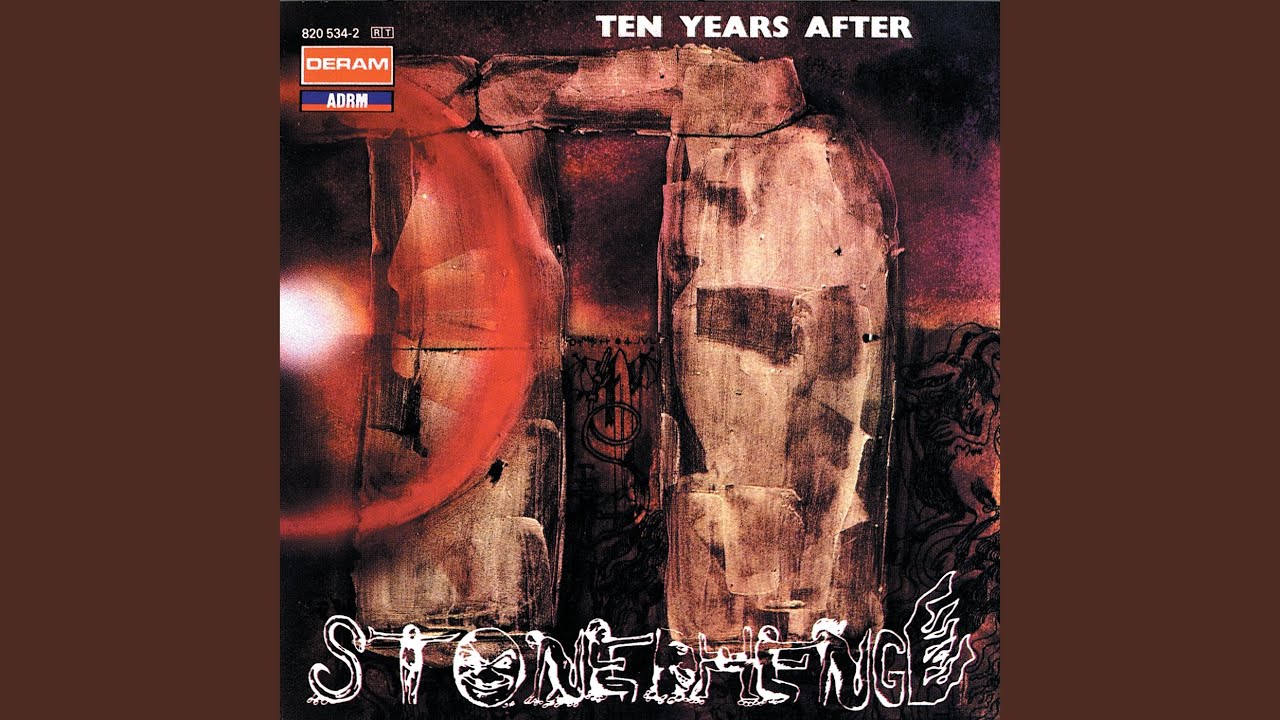
The circumstances of Undead’s release carried logic. TYA were already busy recording a new studio LP, but an invitation from US promoter Bill Graham, who wanted them to play his newly-opened venue in San Francisco, the Fillmore West, sent the band’s label into overdrive.
Before Woodstock we were playing to 3000 people a night. Afterwards we suddenly started playing to crowds of 20,000.
Chick Churchill
“The album we were working on, which turned out to be Stonedhenge, wasn’t anywhere near finished when Bill asked us to go out there,” Lee explains. “And the first one [1967’s Ten Years After] hadn’t really met with any interest, apart from specialist people. So we did Undead in a hurry, so that we’d have it out as we were touring the States.” The chosen lead-off single in America was, naturally, I’m Going Home.
The band played a number of festivals over the next 12 months, most notably Newport Jazz and Seattle Pop. But Woodstock, in August, was the watershed. “We played in St. Louis the night before with Nina Simone, which was a strange kind of bill,” Churchill remembers. “Then we flew to New York and were driven upstate to a hotel near to the festival site, where all the bands congregated. We had no idea there were that many people there until we flew over the crowd in a helicopter.”
“It was an unbelievable sight,” says Lee. “Crosby, Stills and Young – I believe Nash went in another way – shoved us aside and grabbed the helicopter before us, so we caught the next one. We flew in – me, my first wife and a medic, who warned us of this potential hepatitis outbreak: ‘Don’t eat anything unless it’s cooked and don’t drink anything unless it’s sealed.’ And then a storm caused the power to go out.”
“There were some very strong winds that almost blew the stage down,” Churchill remembers, “so it was just getting dark when we were finally able to get on.
“I don’t think Alvin enjoyed all the attention afterwards. As soon as he walked out on the street he was recognisable. But Woodstock is probably the reason why we’re still working. Without it we’d probably have gone into the tides of history. A wave would’ve broken on the shore and nobody would remember us. I’m glad it worked out.”
Originally published in Classic Rock issue 245 (January 2018)

