Nine Pat Travers albums to listen to and one to ignore. "A powerful, soulful vocalist, a sterling songwriter and a guitar magus"

Pat Travers with guitar, studio portrait
(Image credit: Goddard Archive/Alamy)

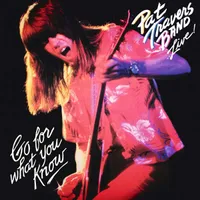
Is Pat Travers criminally underrated? Rush’s Alex Lifeson certainly thought so. But in recent years, Travers’ most famous champion has been Extreme guitarist Nuno Bettencourt. Describing Travers’ 1979 in-concert album Live! Go For What You Know as his “funk rock bible”, Bettencourt often cites Toronto-born Patrick Henry Travers as a major influence. Indeed, the two guitarists played on stage together in Orange County, California, only last year.

Like his hero Jimi Hendrix (Jeff Beck, Jimmy Page and Ronnie Montrose were also influences), Travers made it in the UK first. One of his Stateside rock star mentors, Ronnie Hawkins, had cautioned: “Play to the world, kid, don’t just play to locals.” The precociously gifted Travers took his advice, moving to London in 1975 aged 21, and quickly scoring a deal with Polydor Records after a false start making demos with Steve Lillywhite (later producer for U2) and Mutt Lange (later Def Leppard’s Midas-touch producer circa Pyromania).

A powerful, soulful vocalist, a sterling songwriter and a guitar magus whose unique sound owed something to his earlier adoption of chorus, flanger and delay effects, Travers soon found a key foil in ace bassist Peter ‘Mars’ Cowling, who would help anchor the Pat Travers Band for much of the following decade. Drummers Nicko McBrain and Tommy Aldridge also spent time in his band.

Latest Videos From Louder

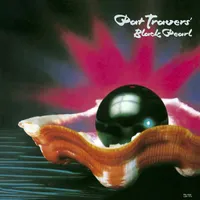
It was Neil Schon - whose band Journey the Pat Travers Band would support in the UK in 1979 - who introduced Travers to Pat Thrall, whose complementary, more histrionic lead guitar playing brought new colours to records such as 1978’s Heat In The Street. But even after Thrall bailed to join Glenn Hughes in the short-lived duo Hughes/Thrall, Travers proved to be more than capable of making other fine and forward-looking records – witness 1982’s Black Pearl, a true last-lost classic which Travers fought tooth and nail to make after legal wrangling with Polydor.

Today, Travers’ studio and live album release tally stands at well over 50. He has guested on records by Glenn Hughes (1977’s Play Me Out) and Extreme (1990’s Pornografitti), made a full-on jazz record (2019’s Swing!), and still gigs regularly in the US. Thanks to Rage Of Travers, a track on The Mountain Goats’ 2017 album Goths telling of Travers’ ire when Bauhaus declined to jam with him, he has also been immortalised in song. Long may he rock.

Lightning bolt page divider

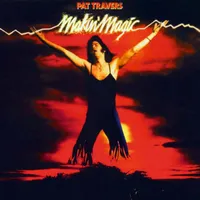
Makin’ Magic (Polydor, 1977)

Makin’ Magic (Polydor, 1977)

With guests including Thin Lizzy’s Brian Robertson (who trades solos on Statesboro Blues) and Glenn Hughes (backing vocals on Stevie), Travers’ second was his first great studio LP. Future Iron Maiden drummer Nicko McBrain now replaced Liverpudlian Ron Dyke, and brought funky, decidedly un-Maiden-like chops to Hooked On Music.

Though Need Love’s chanting and percussion toy-box intro is a tad daft, Rock ’N’ Roll Susie, inspired by Travers’ fun-loving then-girlfriend, is joy incarnate; a high-octane ride to the heart of Saturday night. Now fully acclimatised to London, Travers had arrived, Makin’ Magic delivering on its titular promise.

Live! Go For What You Know (Polydor, 1979)

Live! Go For What You Know (Polydor, 1979)

Recorded at shows in Florida and Texas in January/February 1979, LGFWYK was seismic for Travers, going platinum in the US and raising his UK profile too. His interplay with Californian whiz Pat Thrall – later a foil for Glenn Hughes, Tina Turner and Meat Loaf – is terrific here, Thrall bringing extra stunt guitar and textural magic as he and Travers melt frets.

Makin’ Magic’s supertaut groove showcases definitive Travers band rhythm section Mars Cowling and Tommy Aldridge, while soulful ballad Stevie, built on echoing shards of digitally delayed guitar, was Travers’ loving caution to his hell-raising kid brother.

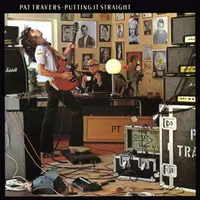
Putting It Straight (Polydor, 1977)

Putting It Straight (Polydor, 1977)

The album’s cover shows Travers – green Cuban heel boots, feather cut, impressive sideburns – ‘sticking it to the man’, but he had punk in his sights too. Life In London pokes gentle fun at the ‘razor blades and safety pins’ look that had become voguish.

Elsewhere, Thin Lizzy’s Scott Gorham guests on Speakeasy, Travers’ snapshot of the famed rock-star hangout in London. Travers had seen Lizzy on their Jailbreak tour before befriending them, and there’s something Robbo-ish about his guitar solo on Dedication. Putting It Straight, Travers summarised, was about “keeping it real, no bullshit”.

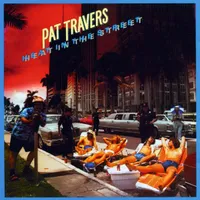
Heat In The Street (Polydor, 1978)

Heat In The Street (Polydor, 1978)

“It felt like we had a new engine in the car, and that car was a Lamborghini”, Travers said of the arrival of guitar foil Pat Thrall. Tommy Aldridge, formerly of Black Oak Arkansas, also signed up, replacing Nicko McBrain on drums.

Thrillingly, Travers and Thrall were double trouble (“both young, skinny and romantically unencumbered” Travers recalled), ripping it up on Heat In The Street’s sizzling title track, and on Go All Night, on which bassist extraordinaire Mars Cowling brings the funk. All this, plus a stonking cover of Evie, written by The Easybeats’ Harry Vanda and George Young.

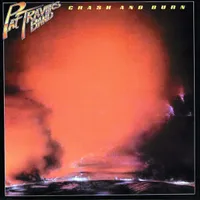
Crash And Burn (Polydor, 1980)

Crash And Burn (Polydor, 1980)

Somewhat controversially, Travers switched to Farfisa organ on a number of Crash And Burn tracks. Its weighty, slow-groove title track feints at dub reggae, while a fine cover of Bob Marley’s Is This Love goes the whole hog. There are out-and-out rockers here too: a sparky cover of gnarly blues classic Born Under A Bad Sign, and Snortin Whiskey, the party-hearty happening single that was the Travers/Thrall lineup’s finest – and heaviest – hour.

Alas, what Travers called “dissension in the ranks” soon followed; Thrall joined Glenn Hughes to form Hughes/Thrall, and Tommy Aldridge joined Gary Moore for Dirty Fingers.

Black Pearl (Polydor, 1982)

Black Pearl (Polydor, 1982)

Described by Travers as “the last of the old-school Pat Travers LPs”, Black Pearl remains criminally unsung. At its root, it’s a mix of brilliantly sung, radio-friendly rockers – Can’t Stop The Heartaches; I La La La Love You – and more out-there moments such as The Fifth, a layered-guitar take on Beethoven’s famed symphony.

The record’s chances of commercial success were somewhat nixed by the video for single I’d Rather See You Dead being set in a funeral parlour, replete with dancing pall-bearers, yet Black Pearl is bursting with life, a true jewel. If you want proof, have a listen to Who’ll Take The Fall.

Pat Travers (Polydor, 1976)

Pat Travers (Polydor, 1976)

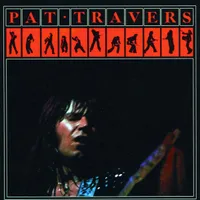
When Travers left Toronto and moved to London in 1975, aged 21, he arrived with little more than a guitar and a change of jeans. A false start in a band that included drummer ‘Topper’ Headon (later of The Clash) ensued before he signed to Polydor and made this self-titled, somewhat cover-version-reliant debut.

Although audibly not yet fully confident in his own writing and singing, for this album Travers recorded a classy take on JJ Cale’s Magnolia, an uncharacteristic rockabilly nugget, Hot Rod Lincoln, and a version of Stan Lewis’ Boom Boom (Out Go The Lights) that would become a barnstorming staple of his live shows.

Radio Active (Polydor, 1981)

Radio Active (Polydor, 1981)

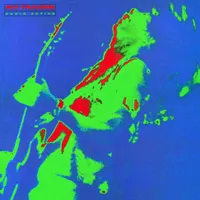
“My anxiety levels were through the roof!”, Travers told this writer of his life circa Radio Active. Yet despite relationship problems, management issues, and ‘Gremlins with pickaxes chopping my mind into little tiny pieces’ (see unhinged, Valium-and-insomnia-informed gem I Don’t Want To Be Awake), Travers came up with the goods.

Superb opener New Age Music isn’t Travers going ambient; rather, it’s a restatement of his belief in the transformative power of rock’n’roll, while Play It Like You See It is a perfectly weighted ballad with pinch-harmonic guitar lines. Travers recorded the entire album twice, nailing it on his second attempt.

Hot Shot (Polydor, 1984)

Hot Shot (Polydor, 1984)

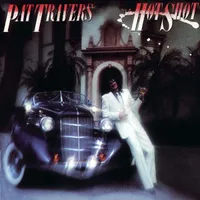
Travers could definitely be described as a hot shot, but this album was his last shot with a major label. Restoring pleasing amounts of guts and balls to proceedings – see Killer and the title track – the record also features decidedly 80s pop-rocker Women On The Edge Of Love, and Louise, conceivably inspired by one of Rock ’N’ Roll Susie’s successors.

Bizarrely, the album’s promo campaign factored in Just Another Killer Day, a daft, 30-minute sci-fi movie in which Travers and his band also appear in ‘live’ performance. “This music is obscene,” declares a heavily lipglossed siren from the planet Zorgo. But she clearly likes it too.

...and one to avoid

You can trust Louder Our experienced team has worked for some of the biggest brands in music. From testing headphones to reviewing albums, our experts aim to create reviews you can trust. Find out more about how we review.
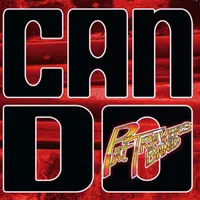
Can Do (Frontiers, 2013)

Can Do (Frontiers, 2013)

Somewhat inevitably, given the sheer number of them that he has released, Travers’ live albums occasionally falter, but the guitar hero hasn’t really made a total turkey studio-wise. Can Do, though, is definitely below par, more of a ‘don’t do it’ for prospective buyers.

A lacklustre take on the Eurythmics’ hit Here Comes The Rain Again seems waterlogged, while Waitin’ On The End Of Time is a rare instance of Travers trying to get the funk out and the funk staying put. For whatever reasons, Can Do just didn’t ignite. Thankfully, Travers got his mojo back by the time he recorded its 2015 follow-up, Retro Rocket.

James McNair grew up in East Kilbride, Scotland, lived and worked in London for 30 years, and now resides in Whitley Bay, where life is less glamorous, but also cheaper and more breathable. He has written for Classic Rock, Prog, Mojo, Q, Planet Rock, The Independent, The Idler, The Times, and The Telegraph, among other outlets. His first foray into print was a review of Yum Yum Thai restaurant in Stoke Newington, and in many ways it’s been downhill ever since. His favourite Prog bands are Focus and Pavlov’s Dog and he only ever sits down to write atop a Persian rug gifted to him by a former ELP roadie.