


In 1981, Bruce Dickinson became the fourth singer to front Iron Maiden, after Paul Mario Day, Dennis Wilcock and Paul Di’Anno. Prior to joining Maiden, Dickinson spent two years as lead vocalist with Samson, another band that rose from the New Wave Of British Heavy Metal.

What were you doing before you joined Samson?
I was singing in college bands. It was semi-pro, gigging in pubs. We did a gig at the Prince Of Wales in Gravesend, and that’s when the guys from Samson came along to check me out. When they offered me the job, sometime in 1979, I was doing my last few months in college. I was still doing exams then, my history finals.
Do you have fond memories of those early days you spent in Samson?
Completely! Totally! I didn’t have a home to go to for most of that time. I remember there were plenty of groupies around, but it was a benevolent scene, everybody looked after each other. I slept in a squat in the Isle of Dogs [in London]. That was where Maiden shot the video for [1984 single] 2 Minutes To Midnight. They wanted this grim location for the shoot, and I said: “Hey, I used to live there!”
Samson’s leader was guitarist Paul Samson, but there was another big personality in the band when you joined – drummer Barry Purkis, aka Thunderstick, who spooked audiences by wearing a balaclava on stage.
I heard that he [Thunderstick] worked as a grave digger before he was in Samson. He liked the theatrics of bands like The Residents and Kiss. Paul was more serious about it, but I was like a prankster on stage back then. What I was doing was almost like street theatre.
Did you believe at the time that Samson could make it big?
Well, the band had a lot of strengths, but also a lot of weaknesses. We had some interesting songs that sat slightly outside of the metal genre. But as players it was very hit-and-miss. Thunderstick’s drumming was – how do I put it? – somewhat eccentric. Samson also had absolutely dreadful management. At one point our booking agent sacked himself! That was during the Survivors tour [1979]. So I booked us a twenty-two date tour, because I had some experience with that, having been Social Secretary at college.

There was an odd mix of personalities in the band.
Everybody had a different drug of choice. Paul was a big stoner. I remember one time he got busted in Grimsby, wearing a bowler hat and rolling a joint outside the nick! I was the drinker. The bassist [Chris Aylmer] was into speed. Thunderstick liked downers. There was one gig where Thunderstick fell asleep but fell against a wall and carried on playing!
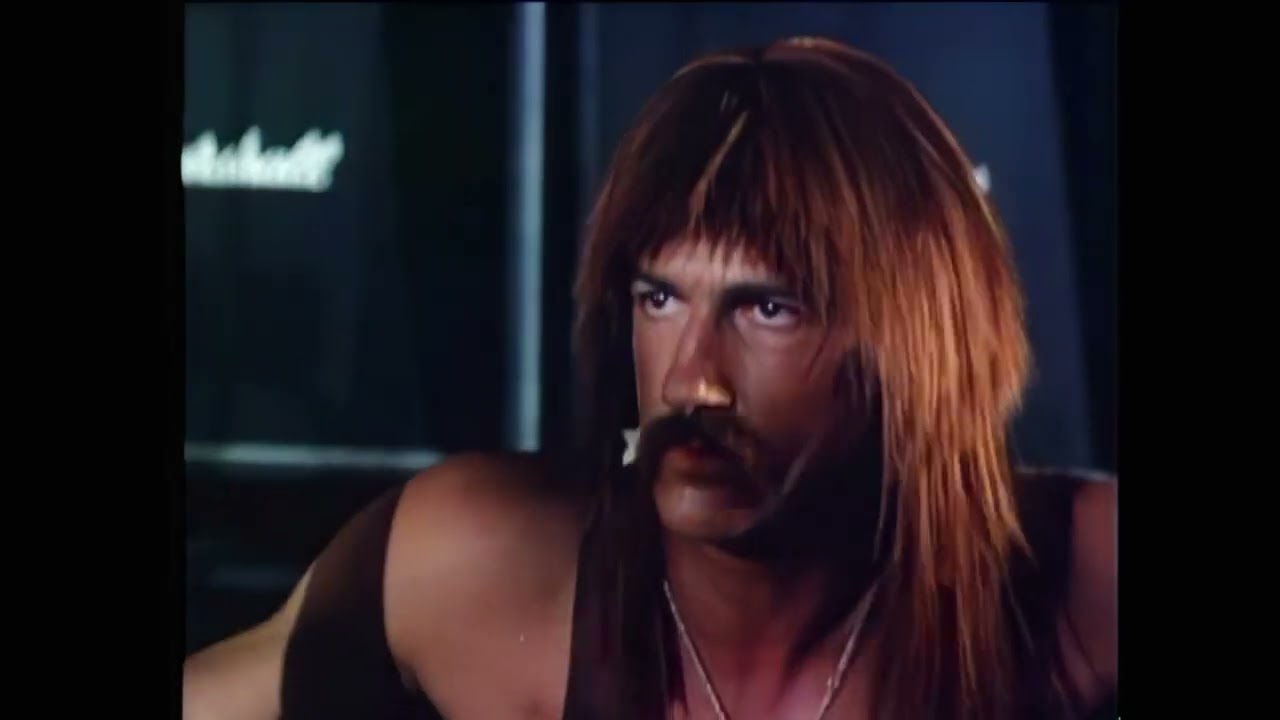
You were sporting a terrible moustache back then.
That moustache was dodgy. Very dodgy. It took ages to grow and it still looked rather sad.
In early 1980, Iron Maiden opened for Samson at the Music Machine in London.
Watching Iron Maiden was like getting hit by a runaway train. I knew then that I should be singing for that band.
Later that year, Samson’s album Head On – your debut album with the band – was released.
Before that album it was all a bit pub rock. I skewed the whole thing over to metal. But then we insisted on producing the album ourselves. There were clouds of ganja smoke twenty-four hours a day. It was not conducive to a profound sense of judgement. We were in Ian Gillan’s studio. He was my hero. One day he walks in and cops all of my Ian Gillan impersonations! “Pretty good, aren’t you?” But there was so much smoking and drinking going on, I thought: “I’m gonna be sick!” I was throwing up for at least forty-five minutes before Ian kicked the toilet door in and put me in a taxi home.
1980 was a watershed year for the New Wave Of British Heavy Metal, with debut albums from Maiden, Def Leppard, Diamond Head, Girlschool and more. Who did you view as the leaders of that scene?
Maiden cornered the market. Praying Mantis were quite good. Def Leppard disappeared to America almost immediately. It was obvious that Leppard were going to turn out radio hits. But all those other bands never quite got out there. It’s the same with any scene – only two or three bands ever make it out.
In January 1981 Samson recorded their second album, Shock Tactics, and this time it wasn’t a DIY production.
We got a proper producer, Tony Platt, who’d just worked with AC/DC. Tony straightened out the eccentricity of the band. He pulled a big chunk out of my voice that I didn’t know was there. I hated it, but everybody else loved it.
While Samson were working on Shock Tactics, Iron Maiden were in an adjacent room at Battery Studios, recording their second album, Killers, with producer Martin Birch, who had previously worked with Deep Purple, Rainbow and Black Sabbath. In a previous interview with Classic Rock you recalled how Martin had invited you to listen to an early mix of Killers and that it blew you away.
It floored me! Killers is one of my favourite Maiden albums, despite the fact that I’m not on it. I wish I had been on it, because Killers actually has got a load of stuff that I would have loved to sing. For me, Killers was like a really updated version of bits of Deep Purple In Rock. That vibe, you know? It wasn’t bluesy, but a song like Wrathchild has got amazing groove to it. And the title track, Killers - wow!
There’s some stuff on Killers which is so atmospheric. I love it! When I hear that album now it really takes me back. I’m just transported back to a world of… bedsit luxury! Ah, those smelly bed sheets!
After seeing Maiden at the Music Machine, had you always kept one eye on how their career was progressing?
Oh, I knew how they were progressing. It was fucking obvious! Maiden were doing a fifty-date headline tour of Europe, and Samson were supposed to support them. We turned up in our transit van, and Maiden had two articulated lorries parked outside. I thought: “Ah, I can see where this is going.” So the different trajectories were obvious. And the tour [Samson’s involvement] got pulled at the last minute – our record company ran out of money and couldn’t pay for us to do it.

By the summer of 1981, Maiden were having problems with their singer Paul Di’Anno.
They were not happy. The cracks were starting to show, and people were starting to talk about it.
In Samson, meanwhile, Thunderstick was gone and they had a new drummer.
Thunderstick was a character, and I liked that about him. But he did get a bit OTT. So Thunderstick left, and then we got Mel Gaynor, a very good drummer who went on to join Simple Minds. But it wasn’t like a band any more.
Is is true that Ritchie Blackmore asked you to join his band Rainbow before you got the approach from Maiden?
There had been rumours of me joining Rainbow. That was partly true. Ritchie Blackmore’s roadie had called me in the middle of the night, saying: “You want the gig?” But I never heard from him again.
August 29, 1981 was a pivotal day in your life. At the Reading Festival on that day you performed with Samson then afterwards met with Maiden’s bassist Steve Harris and manager Rod Smallwood.
Samson’s performance at Reading was pretty good. But I knew it was time for a change. Rod and Steve met me at Reading, but at that point they were still touring with Paul Di’Anno. After a while, Rod said: “Come back to our hotel room, we need to talk in private.”
Before I joined Samson, there had been this incident where the Maiden guys thought that Samson had fucked them over. So Rod always said he didn’t want anyone from Samson in Maiden, even though Clive [Burr, drummer] had already gone from Samson to Maiden before me.
When we got to Rod’s hotel room, he said: “We’re thinking of changing our singer. So we’re offering you the chance to audition.” I said: “Before we start, you know that if I audition I’ll get the gig. I want it. And it’s exactly what the band needs. But be warned – I’m gonna be a pain in the arse. I’m not a clone of the other singer, and I’ll have ideas of my own, ideas that Steve might not like. Steve just said: "Fine!"

What did you remember about your audition with Maiden?
It was weird. They rehearsed with me up in Hackney, with everybody sneaking in. Not that anybody in Hackney actually gave a shit! I turned up and Steve wasn’t there, he hadn’t arrived yet, but everybody else was. And I looked around and everybody was just… not happy. Everybody was just down. And I was thinking: “This is going to be rough.”
But we started bashing through some songs that we knew, and it turned out we all knew half of every fucking rock song on the planet. We had a go at a bit of AC/DC, a bit of Purple – Woman From Tokyo then Black Night – and so on. And suddenly we were all smiling and having a laugh. Then Steve turned up. We went: “Right, let’s have a bash at some Maiden songs.”
We did three or four Maiden songs, but I’d learned all of them. Clive had been Samson’s drummer, so it felt very natural. But then I had to wait two weeks so that they could deal with Paul [Di’Anno] after the last gigs in Scandinavia.
On a musical level, did you and Steve Harris have an instant connection?
Our influences were – and are – broadly very similar. All the early Sabbath stuff, plus the Dio Sabbath stuff, plus Thin Lizzy, Purple. Steve loved UFO. Both of us were major Jethro Tull fiends. Steve loved Genesis. I was into Van der Graaf Generator and Arthur Brown. Ditto Peter Gabriel after Genesis. I was less of a Genesis fan. Steve’s a big Golden Earring fan. But the big ones, we had in common, all those influences.
Was it difficult for you to leave Samson?
I never made any money at all in Samson, but when I tried to leave to join Maiden I was sued by Samson’s management for £250,000. We eventually got the figure down to £40,000. I borrowed the money off Maiden and bought myself out, and bought Samson out. I, and they, were free to walk.
When you quit Samson, how did Paul Samson react?
I think he’d seen it coming. Paul wanted to take the band in more of a blues direction. He loved ZZ Top, stuff like that. I wanted it much more metal. It was never going to last.
Looking back, what was Samson’s peak with you in the band?
Commercially, it was Head On. Artistically, Shock Tactics.
Did you reconcile with Paul Samson before his death in 2002?
Paul got pretty upset when I joined Maiden. I never knew he was ill until his girlfriend contacted me. But I saw him a couple of times before he passed away. The main thing was we did some good stuff together. Paul was a great guitar player and a good songwriter.
A limited edition 40th anniversary double vinyl of Iron Maiden’s Live After Death is out now.

