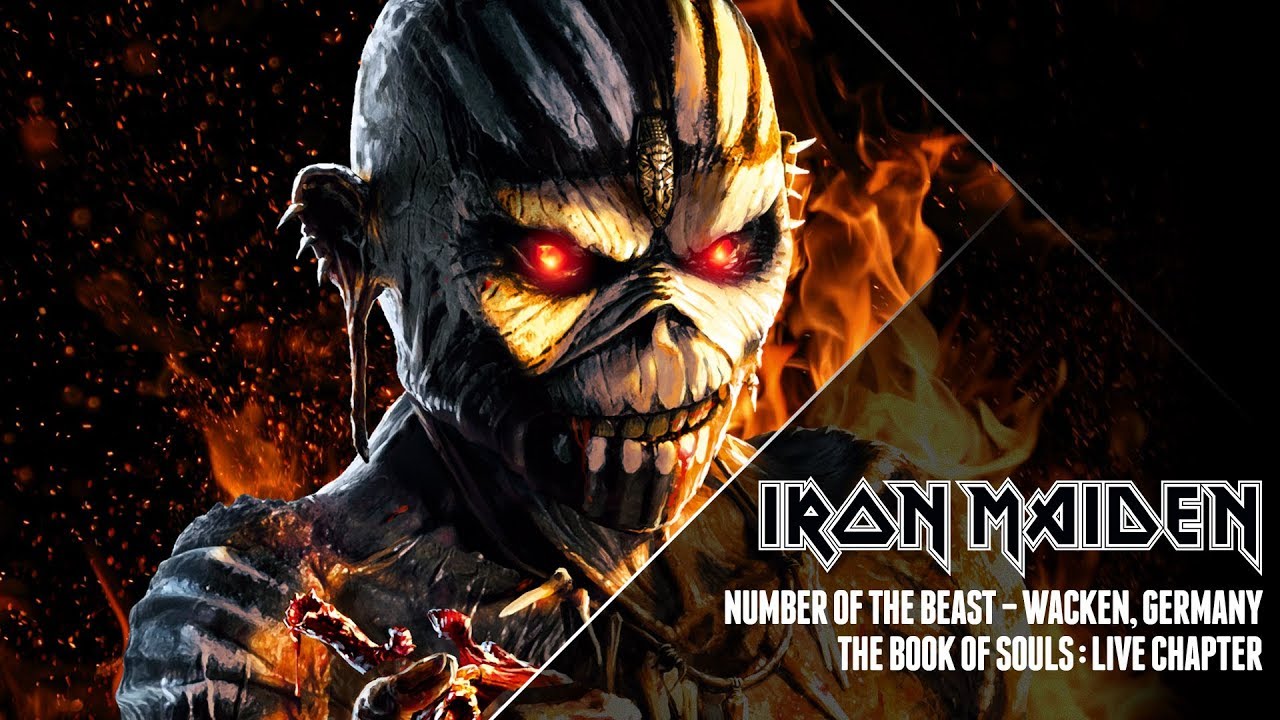


"Woe to you, oh earth and sea, for the Devil sends the beast with wrath because he knows the time is short.
Let him who hath understanding reckon the number of the beast, for it is a human number... Its number is six hundred and sixty-six."
Iron Maiden didn't just create one of metal's all-time greatest intros with the spoken word prologue to The Number Of The Beast, but also set out their stall for everything they hoped to achieve on their third full-length.
Theatrical, bombastic and laced with Satanic menace, the title-track was a perfect demonstration of what vocalist Bruce Dickinson had brought to the band after replacing Paul Di'Anno the previous year. Not that it would be easy for the new boy. Plucked from fellow NWOBHM'ers Samson after a performance at Reading Festival in 1981, Dickinson wasn't about to be just a hired gun in bassist and bandleader Steve Harris's metal machine.
"The first year with Bruce was particularly...complicated," Steve Harris would tell H Le Mag in 1996. "He absolutely wanted to question my position within the band. Personally, I really didn't care. All I wanted was someone to sing my songs and who would be willing to tour at our pace and do his job as a frontman, which meant being the point of focus both on and off stage."
I was throwing furniture around the studio
Bruce Dickinson
Dickinson certainly was that. Eloquent, energetic and capable of booming, almost operatic vocals, his natural singing style encouraged Maiden to switch things up in the studio, writing in a more epic, showy style to match his natural charisma. But although The Number Of The Beast had plenty of moments that showed off Dickinson's vocal versatility, the title-track proved to be a source of enormous frustration, thanks in no small part to producer Martin Birch.
"Martin got into my head," Dickinson told Loudwire in 2022. "He said, 'Sing like you're summing up your whole life in the first two lines of the song.' That took time. I was throwing furniture around the studio, 'WHAT EXACTLY IS IT YOU WANT?!'"
Birch wasn't about to be cowed, however. He'd already worked with Maiden on Killers, and recognised that their new vocalist could elevate their craft. Plus, having worked with the likes of Rainbow and Deep Purple, he knew exactly what he wanted from Dickinson and wouldn't stop until he got it.
"He said, 'Look, I did the same thing with Ronnie [James] Dio,'" Dickinson told Loudwire. "Ronnie came in with Heaven And Hell and thought, 'I can knock these couple of lines out in seconds' - 'Sing me a song, you're a singer'."
The pay-off - besides a nailed vocal take - came when Birch then asked Dickinson to scream at the end of the verse - something he was more than willing to oblige, given all the frustration he'd had recording the track up to that point.
"I was like, 'Oh, willingly'," Dickinson gleefully told Classic Rock in 2012.
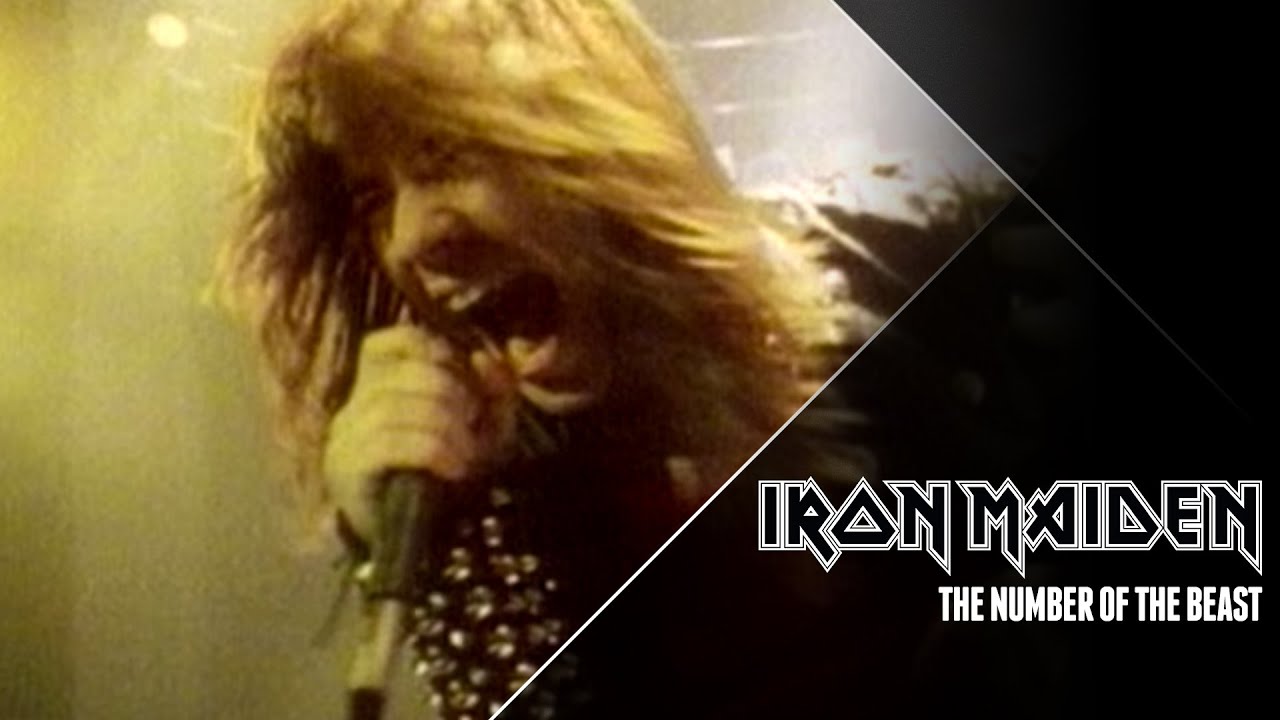
As for that iconic intro, the band had initially hoped to draft in horror movie legend Vincent Price to read out the Revelation-inspired verse. But they were quickly disappointed when Price's agents shared his asking fee would be just shy of the band's whole recording budget.
Instead, they turned to British actor Barry Clayton, who eventually went on to voice the narrator in popular animated kids show Count Duckula.
"He sounded kinda like Vincent Price and was like 300 bucks,” Dickinson reasoned to Sirius XM host Eddie Trunk in 2017.
Although Maiden had flirted with darkness and horror-inspired imagery in the past, The Number Of The Beast proved to be a real gamechanger for the band. Written by Steve Harris, the track had been inspired in part by a nightmare he'd had after a late night viewing of Satanic horror sequel Damien - The Omen II. Also drawing inspiration from Scottish poem Tam o' Shanter, Harris penned a narrative about an encounter with the devil.
In an Omen-esque twist, spooky mishaps kept occuring in the studio while the band recorded. Equipment would cut out randomly, and in a 1982 interview Clive Burr revealed Steve Harris's amp had exploded at one point. But the strangest happened to producer Martin Birch, who attested that he was driving home from the studio on a rainy Sunday evening after working on the title-track when he crashed his car...
"It was a rainy night and I hit this van," Birch explained on documentary Classic Albums - The Number Of The Beast. "I look in the back and there’s half a dozen nuns in the back. I thought, ‘That’s a bit unusual, but it is a Sunday’. This guy gets out and starts praying with me. A couple days later I took my range rover in to be repaired and when they gave me the bill it was £666. I said, 'I'll pay £667 or £668!'”
I was like, 'You guys are going straight to hell!'
Dave Mustaine
Released on March 22, 1982, The Number Of The Beast caused outcry in the US amongst religious conservatives caught up in the Satanic Panic. The band were decried as Satanists, and accused the band of glorifying the devil in their music.
“People have taken it all out of proportion," Steve Harris told Sounds in 1982. "They think it's a concept album when it's obviously not. There's only two songs on that subject and they're obviously escapist, not serious devil worship or anything."
On their US tour, the band even faced protests outside some gigs.
“We get out there and all of a sudden there’s all this stuff about Iron Maiden being devil worshippers," manager Rod Smallwood recalled in 2005 documentary Metal: A Headbanger's Jourey.
"It was the strangest thing, people out there with placards. It wasn’t just us, but I think we really took a lot of the brunt of it. A lot of it started – or re-started again – around the Number Of The Beast album. It would be on local TV stations – you know, the religious stations, actually advertising, ‘See this album, burn it!’ There was one situation where they got all these Maiden and Ozzy Osbourne albums and burned them… then ran away, apparently because they were scared of the fumes. So next time they used a hammer to break them!”
In the documentary Classic Albums - The Number Of The Beast, Megadeth frontman Dave Mustaine recalled seeing the band on that first US run with Bruce. “To have an English band come over here and get the youth of America going, ‘Six-Six-Six!’..." He says with a grin, shaking his head. "I was just like, ‘You guys are going straight to hell!’”
Insidious influence or no, The Number Of The Beast eventually proved to be Maiden's international breakthrough, giving the band their first number one album in the UK, as well as first Top 50 in the US. It also cemented the track - and its parent album - as the moment Iron Maiden truly crossed over into pop culture, becoming the biggest metal band from Britain since Black Sabbath and an eventual global phenomenon.

Over 45 years since it was recorded, The Number Of The Beast remains one of Maiden's most iconic tracks. Coming full circle, the song also finally got its own big cinematic moment when it was featured prominently in 2026 horror sequel 28 Years Later: The Bone Temple.
In a climactic scene, Ralph Fiennes' Dr Ian Kelson must convince a group of murderous, satanist thugs that he's the devil. So, naturally, he dons some corpsepaint-style make-up and sings The Number Of The Beast in a pyro-and-hallucinogen-enhanced performance.
"I wanted it to feel like their first time moshing at a concert," Bone Temple director Nia DeCosta told Entertainment Weekly.
"There was a ring of actual fire, so there were safety experts present," explained actor Jack O'Connell, who plays Sir Lord Jimmy Crystal, leader of the Satanic 'Jimmies'.
"We were told to go for it. Over the course of the two nights that it took to shoot that sequence, it was wild. It felt hallucinogenic and, God, I hope that's how it's received, as well."
As for Maiden, they admitted they were delighted to have the track appear in such a pivotal scene in the movie.
"We don’t let many people use our music," the band told Planet Rock in a statement. "But with the British vibe of this series and the knowledge that Danny Boyle, Alex Garland and director Nia DaCosta (made it) we felt it was a calculated risk! We’re all so chuffed how it came out."
Iron Maiden play Knebworth on Saturday 11 July