




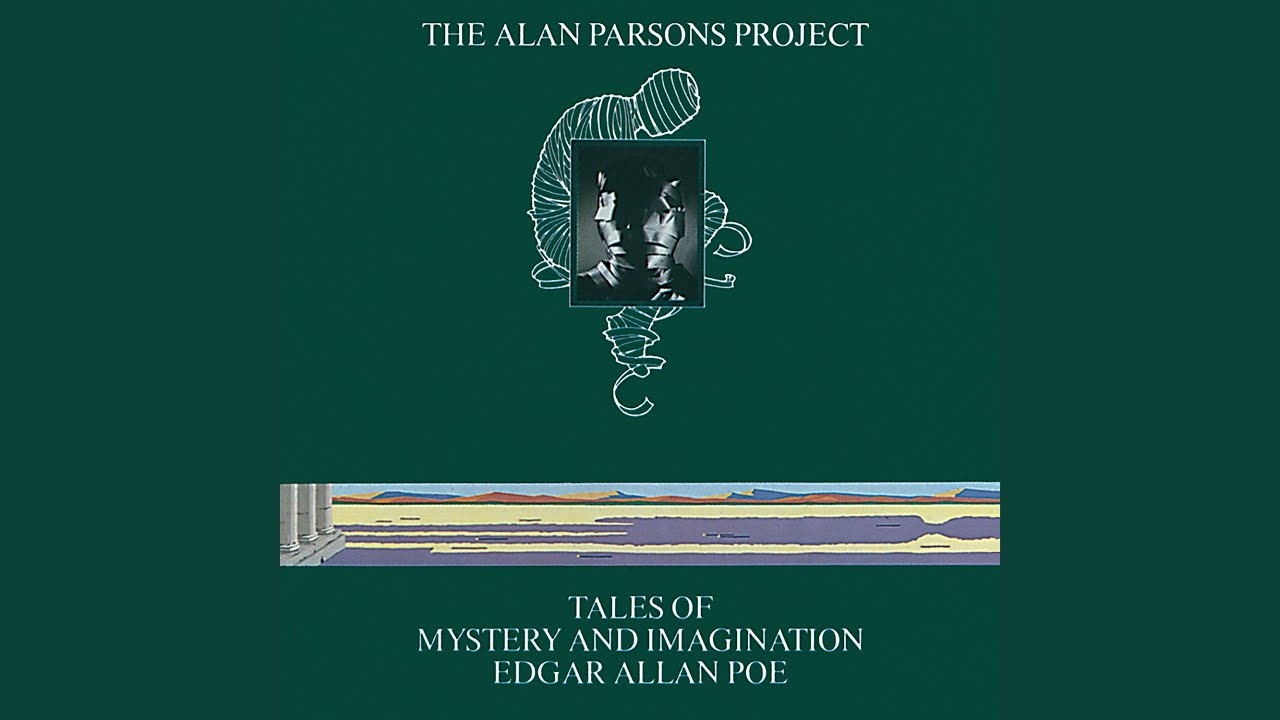
The Pineapple Thief mastermind Bruce Soord’s prog education began with The Alan Parsons Project, and he’s maintained a connection with the older artist over many years. In 2019 Soord told Prog why Parsons – also known for his studio work with The Beatles, Pink Floyd, Steven Wilson and others – matters so much to him.
“When I was 12, the very first proper record I heard was Tales Of Mystery And Imagination by the Alan Parsons Project. That’s when I fell I love with prog.
It totally blew me away and I have never looked back. It ticks every box for a classic prog record. it’s a concept album, it has long songs, orchestras, choirs, and Hipgnosis did the sleeve.
Whether he was working with The Hollies, Ambrosia or Pink Floyd, Alan’s production has always had a particular sound – hi-fi but real – especially his 70s stuff. On everything he’s produced you can hear what he’s bringing to the band, because when he wasn’t producing them that element was gone.
With the Alan Parsons Project you could tell he was in charge. He gathered all these amazing people around him so he could say: ‘I want it like this, I want it like that.’ He’s clearly a perfectionist, and has such a great ear for how songs should be arranged, recorded and how the parts should be played.
And those artists he and Eric Woolfson brought together – John Miles, Chris Rainbow, Colin Blunstone, Ian Bairnson, [arranger] Andrew Powell, David Paton – were unbelievable. Incredible musicians coming together to make songs that sound the way only Alan Parsons could make them sound. It’s because of that process that those albums still sound good today.
People have told me he’s ‘safe,’ a bit MOR, especially in that 80s mid-period, but I don’t care because I loved the songs and the atmospheres. The 70s records – Tales, I Robot – are still edgy and timeless.
They were recorded on tape, and they’re incredibly well played – they’re so tight you can hear everything. On modern records there’s no limit to the number of tracks you can put down, but back in the 70s a 24-track was a luxury.
The Dark Side Of The Moon sounds as good as it does without too many layers, and the same can be said of the Alan Parsons Project albums. He took the instruments, didn’t really over-produce them, but made them sound incredibly real when they went to tape and came out through the vinyl.
I was obsessed with Alan Parsons as a schoolkid – which didn’t help with the girls! It’s because of him that I got my first guitar and tried to write my first songs. He’s got a lot to answer for…”

