


In late 2010, as REO Speedwagon prepared to release a 30th Anniversary edition of their diamond-selling breakthrough album Hi Infidelity, band frontman Kevin Cronin spoke with late Classic Rock writer Malcolm Dome for the first issue of AOR Magazine. They spoke about the band's breakthrough, power ballads, and the fans who hated their success.
It may seem somewhat ludicrous to suggest this, but REO Speedwagon have always been undervalued. On the surface, this is patent nonsense. The Illinois quintet have sold over 40 million records in a career that’s also seen them have 13 Top 40 hits in the US alone. And yet, the band have never really gained the respect and acclaim they deserve.

“Do you know of Betty White?” asks ebullient vocalist Kevin Cronin. “She’s an American comedic actress who’s now nearly 90. She was in The Golden Girls. She recently appeared on [cult US comedy sketch show] Saturday Night Live in the States, and at last is being recognised as a true comedy icon. It’s taken her this long to achieve the goal, so there’s hope for this band yet. I’m still only in my late 50s, so by the time I’m 80, maybe I’ll enjoy the same sort of status!”
There’s something just a little tongue-in-cheek about Cronin’s comments. However, REO were the perennial underdogs who suddenly achieved massive success, and suffered a backlash as a result.
“In the 1970s, we were the Midwest rock band everyone was rooting for in America. We were the ones who drove around in a banged-up van, and people were on our side and wanted to see us succeed. Then in 1981 we had a huge album with Hi Infidelity, and you’d have thought all those fans who’d been willing us to get the breakthrough would have been delighted for us. Not a bit of it.
“We got a major backlash over here. People turned on us. It was as if they resented their big secret band suddenly being the property of the mainstream. That’s what Americans can be like. Very fickle. Over in Britain and Europe, they tend to be a lot more loyal. Once someone becomes a fan, then they stick to the band, whatever happens.”

Hi Infidelity was something of a crucial turning point for REO. It was the album that gave them a reputation for recording power ballads, and it appeared to many that they’d turned their backs on the thunderous hard rock that had steadily built them a reputation through such records as You Can Tune A Piano But You Can’t Tuna Fish (1978) and Nine Lives (1979). But Cronin insists this isn’t the reality.
“I’d been trying for ages to get us to do a power ballad. But I was always met by the same response: ‘This isn’t what REO does.’ Then I came up with Keep On Loving You (which was to become the band’s first No.1 hit in the US; Can’t Fight This Feeling was their only other chart topper, in 1984). I loved that song so much that I was determined to get it recorded.
“We were in S.I.R. Rehearsal Studios in Los Angeles working on the material for Hi Infidelity and I kept pushing this song and getting nowhere. In the end, Gary [Richrath, guitar] got so fed up that he plugged his Les Paul into two Marshall amps and delivered the nastiest solo he could in the song. I’m sure he wanted to piss me off, but the opposite happened. His solo made it come alive. It worked! And the rest is history.”
In fact, REO’s career can be divided neatly into the pre-Hi Infidelity and post-Hi Infidelity periods. And while that album has gone on to sell over 10 million copies in America alone, and four singles from it went into the Top 30 over there, Cronin accepts that it was something of a double-edged sword for the band.
“The ballads got us radio airplay – more than we’d ever had before. And there are those who only think of us in terms of Keep On Loving You or Take It On The Run. It also did wonders for our back catalogue. You Can Tune A Piano But You Can’t Tuna Fish went gold in 1978, selling half a million copies. In 1981, off the back of the success of Hi Infidelity, it sold a further three million.
"But, as I said earlier, we alienated a lot of supposed diehard fans, who were angry at what they felt was us selling out. However, I’d been writing those sort of songs for years. Besides, there was a lot more to the album than the ballads. We could still rock as well.”
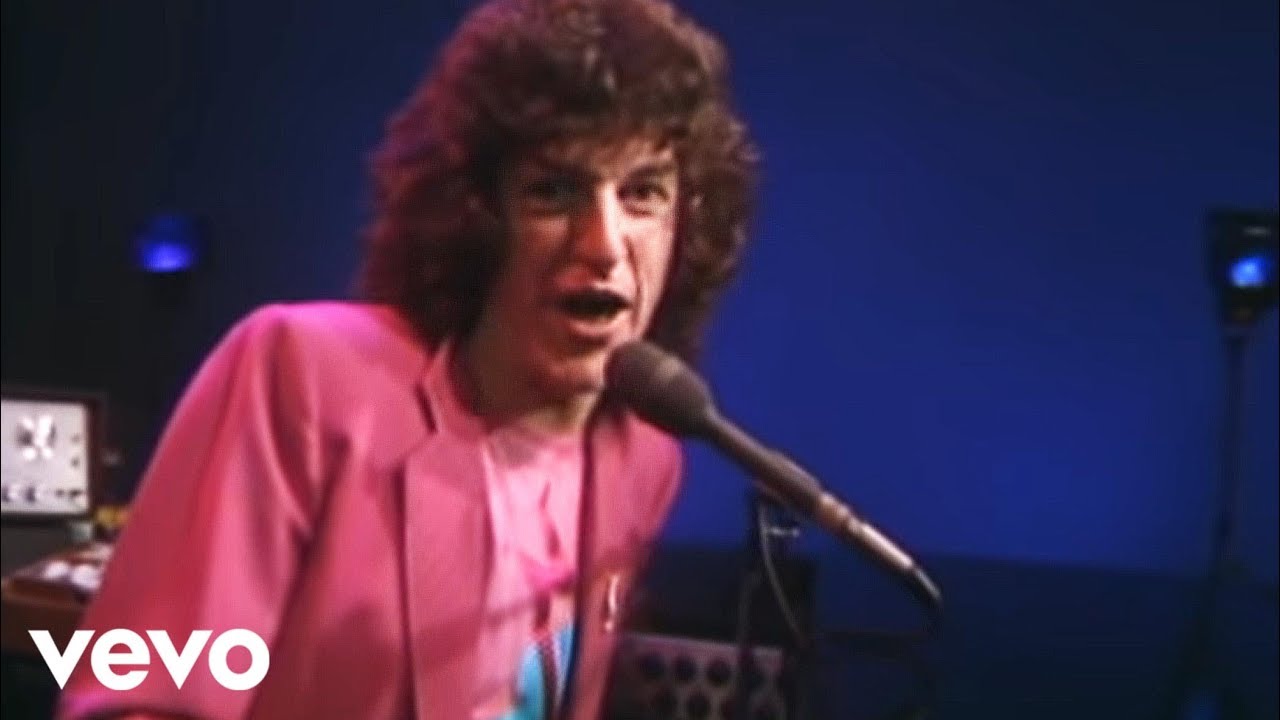
It must also be borne in mind that the band had barely settled into some sort of stability when Hi Indidelity went supernova. They only arrived at what is now regarded as the classic line-up in 1978, with Cronin, Richrath, keyboard player Neal Doughty, bassist Bruce Hall (the last to join) and drummer Alan Gratzer. Before ’78, the band had been in a constant state of turmoil and flux. Cronin himself only joined for second album REO/TWO in 1972, with Terry Luttrell singing on the band’s 1971 self-titled debut (he’d go on to front cult heroes Starcastle). But by the time REO started work on 1973’s Ridin’ The Storm Out, Cronin had gone. Was he pushed, or did he jump?
“I’d like to say that I quit. But the reality was that it was one of those situations where they said to me: ‘You’re fired.’ I responded by saying: ‘You can’t fire me, because I quit.’”
What happened back then is a jumble of confusion, with egos being blamed and accusations flying that the frontman himself had copped something of an attitude. But, now the truth can be told, according to Cronin.
“The reality is that I was having real problems with my throat. You see, I was a folk singer, and not used to singing rock’n’roll, where you really have to stretch. I was so anxious that I went to see a doctor, who told me I’d developed nodes on my vocal cords. I was strongly advised to stop talking for three weeks, and not to sing at all for three months. I didn’t know what to do for the best. I’d only joined the band six months earlier, and really felt I couldn’t admit the truth to them. So I decided, unwisely, not to say anything and ride it out. I was confident that it would just heal itself.”
But the situation became increasingly worse, and ultimately untenable for the young Cronin.
“I tried to protect my voice by talking very little in rehearsals, and only singing the bare minimum. But the rest of the band interpreted this as me being a prima donna and starting to display ego problems. Eventually, it all came crashing down around me, and that’s when I left.”
Thankfully for everyone, he returned three years later. But that in itself is a story of fan power.
“REO had brought in this guy Mike Murphy to finish off Ridin’ The Storm Out. And he also did the next two albums [Lost in A Dream, released in 1974, and This Time We Mean It, put out the next year]. But he was always an odd choice. Don’t get me wrong, I’m a fan of Mike’s – he’s got a fantastic voice. But he’s very much a blues-type singer and that never really felt right for REO Speedwagon.
“The fans obviously agreed, because someone got up a petition in 1975 to get back ‘That Singer’ from the REO/TWO album – me! I think this might have started in Indiana, or somewhere like that. But it took off. There were thousands of signatures on it, and then it reached the band. Of course, this was in the days before the internet, so things took a little longer to happen. But I think the guys were starting to have their doubts about doing another album with Mike, because it just wasn’t working [even though each of the albums REO recorded with Murphy did better chartwise than its predecessor, with This Time We Mean It making it to No.74 – their best yet].
“So, they called me up and we got together. Things were much better by then, because I was a little more mature and road-hardened. I’d learnt a lot as a solo artist from being constantly out on tour with some very big names, and there was a newfound mutual respect between us all. (Incidentally, Cronin wasn’t the first choice to replace Murphy. They’d first asked Greg X Voltz – later of Petra – who’d turned the role down, because of his conversion to Christianity.)
“There is actually a twist in all of this, because a year after I left REO, I’d sought two more specialist opinions about my throat problem. Both agreed that they could find nothing wrong, and that my difficulty had been misdiagnosed in the first place! So, all of this might well have been avoided.”

Despite all those early upheavals, REO have been unchanged now for over 20 years, ever since the shock departure of Richrath in 1989, and the retirement the previous year of Gratzer. In came Dave Amato (former guitarist with Ted Nugent) and Bryan Hitt (ex-Wang Chung drummer). It’s easy to see this era of REO as one of steady decline, as their three new studio albums since have each failed to make the Top 100 in the US – the first time this has happened to the band since 1976’s REO. But Cronin feels differently.
“I’d love to have had the sort of line-up stability that U2 have had, or ZZ Top or Aerosmith. But that’s not been the case for us down the years. We’ve taken a very different path. However, right now I feel we’re a better than band than we’ve ever been. Dave Amato, for instance, has given us something extra and fresh. He’s a lot more melodic as a guitarist than Gary ever was and this has allowed us to try different things.
“The audience also appreciate what we’re about. I honestly believe that those who might have deserted us when we had all those big hits have now ‘forgiven’ us and returned to see what the band are all about. We sell out shows everywhere in America, and are probably doing as well on the road as we’ve ever done. That shouldn’t be happening to people our age, right? Aren’t we supposed to be losing our grip and powers? But that’s clearly not the case.”
One of the reasons Cronin gives for the band’s enduring popularity in the US is their steadfast refusal to give up when things got tough.
“In the grunge era, when Nirvana and the like came on the scene, a lot of bands just stopped. We never did. It meant that, at some point, we were reduced to playing clubs in Mexico. But we never stopped touring. I love playing live too much. For me, it doesn’t matter whether there are 10 or 10,000 people watching, just put me on that stage.”

REO have also been fortunate that the strength of their songs has ensured a continuous renewal of their fanbase, thanks to their use in so many different mediums.
“Our songs have turned up on TV shows, in movies, adverts and also games like Rock Band. We’ve also been given exposure on Glee. All of that helps enormously; it keeps the band’s profile high, but also introduces us to a new generation of fans. And our set now reflects the whole career of the REO. We’ve got the hits in there, plus also really early material like 157 Riverside Avenue (from the debut) and Golden Country (from REO/TWO). It proves to those who only know us for the chart successes that, boy, can this band ever rock!”
The future for REO doesn’t immediately include a new studio album, the last one being 2007’s Find Your Own Way Home. However, they are revamping their 2009 Christmas album Not So Silent Night, with four new songs. And then there’s the celebration of Hi Infidelity’s 30th anniversary.
“We are putting out a box set next year, which is gonna be something really special. But right now, I can’t say too much about it, because the details are still being worked out. I know what I want in there – we’ll just have to wait and see if it happens.”
Cronin is as excited and committed to the REO cause as ever. And he has a genuine love for all the band have come to stand for.
“We’re having more fun than ever, and all of us are in great shape. Of course, we can’t party as much as we used to do, but that’s no hardship. To see the fans still turning up and to know we can deliver what they want is enough for us.”
After years of being undervalued, despite all of their success (and they can match anything Foreigner or Journey have achieved), maybe REO’s time is finally coming? Not that they’ll ever again have the sort of chart impact as they did in the 1980s, but respect and recognition as a great band is now their ambition.
This feature originally appeared in Classic Rock Presents AOR #1, published in November 2010. The 30th Anniversary edition of Hi Infidelity was released in July 2011.

