"A raging maniac with a head full of noise, romance and death." Nine Jim Steinman albums you should listen to and one to avoid
His musical vision was rejected by everyone. Then, like a bat out of hell, he went from a nobody to being hailed as a musical genius
Select the newsletters you’d like to receive. Then, add your email to sign up.
You are now subscribed
Your newsletter sign-up was successful
Want to add more newsletters?
Jim Steinman was one of rock’n’roll’s great visionaries, a raging maniac with a head full of noise, romance and death. As a composer and producer, he brought the drama of Broadway and the scale of opera to almost everything he touched. He was Richard Wagner in a leather jacket, Phil Spector without the homicidal tendencies, the power behind the throne who refused to stay hidden.
Born in New York in 1947, Steinman was weaned on rock’n’roll, girl groups and musical theatre. By the late 1960s he had summoned up his own creative touchstone in the shape of The Dream Engine, a fantastical dystopian sci-fi musical written as a college project, that would provide source material for many of his later songs.
It was another musical, More Than You Deserve, that marked the biggest turning point in his life. Among the cast was a hulking, wild-eyed Texan named Marvin Lee Aday, known to friends and family alike as Meat Loaf. The two of them hit it off and decided to work together. It would be the making of them both.
The story of how Meat and Steinman spent two years getting laughed out of every record label office in New York while hawking the album that eventually became Bat Out Of Hell has passed into legend. Even the album’s eventual producer, Todd Rundgren, found Steinman’s outrageous vision ridiculous. “When I heard the record, I rolled on the floor laughing,” Rundgren later said. “It was so out there.”
Of course, Bat Out Of Hell was released eventually, and became phenomenally successful and swept all before it. It did more than make Steinman wealthy – it was a springboard for his greatness. Throughout the 80s and 90s, he put his stamp on albums and songs by such a diverse range of artists as Bonnie Tyler, Air Supply, the Sisters Of Mercy, Celine Dion and, of course, his old friend and sometime enemy Meat Loaf. He was a master recycler, using and re-using parts or whole songs for different artists – everyone he worked with became part of the Jim Steinman Extended Universe.
Steinman’s ambitions in his later years were thwarted by illness, and when he died in 2020 the world became a less epic place. “When I sang Jim’s song, everyone stood on their feet and went crazy,” Meat Loaf said after his passing. He was referring to a single number from the musical they did all those years ago, but he could have been talking about Steinman’s whole career.
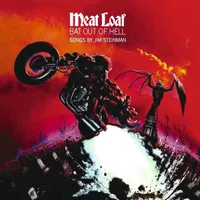
Meat Loaf - Bat Out Of Hell (Cleveland International/Epic, 1977)
The voice belonged to Meat Loaf, the technical sorcery was producer Todd Rundgren’s, but the songs and the mad vision were very much Steinman’s. Bat Out Of Hell’s seven songs are gloriously overwrought and overblown – this is Bruce Springsteen’s Born To Run reimagined by Richard Wagner, sung by a sweat-drenched quarterback in a frilly shirt while Dr Frankenstein hammers a grand piano to dust.
From the immortal title track to For Crying Out Loud’s cry to the heavens, Steinman’s opera of sex and death remains the ultimate benchmark by which rock’n’roll’s grand, ridiculous ambition should forever be judged.
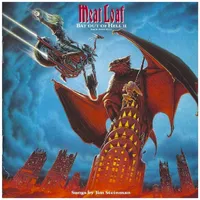
Meat Loaf - Bat Out Of Hell II: Back Into Hell (Virgin, 1993)
It’s one of rock’s great redemption stories: two old friends repair their fractured relationship and return with an album that returns both to their rightful place in the rock’n’roll firmament.
At 75 minutes, Bat II is half as long again as its forebear, but its brilliance lies in the supernatural magnitude of its sound and the sheer conviction of its delivery – who else could serve up a nine-minute song titled I’d Do Anything For Love (But I Won’t Do That) and ensure everyone involved kept a straight face?
Bat II landed in the midst of grunge and still sold millions. That’s how great it is.
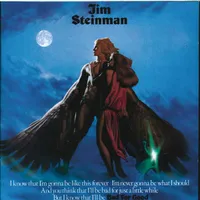
Jim Steinman - Bad For Good (Epic, 1981)
Tired of waiting for a burnt-out Meat Loaf to recover from the considerable excesses of Bat Out Of Hell, Steinman decided to record the songs he’d written for the proposed follow-up himself.
At its best, his lone solo album is even more outrageous than its predecessor – the title track palpitates, Stark Raving Love exhorts, and Love And Death And An American Guitar almost implodes under the weight of its own spoken-word insanity. The vocals are the weak spot, as Steinman and studio ringer Rory Dodd try and fail to out-Meat Loaf Meat Loaf.
The definition of a flawed masterpiece.
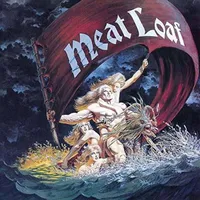
Meat Loaf - Dead Ringer (Epic, 1981)
Following up the insane success of Bat Out Of Hell was tough, especially after four long years away. By then Todd Rundgren had picked up his ball and gone to play elsewhere, Meat Loaf’s full force roar was drained, and the world had moved on to other things. But Steinman still magics up moments of roaring, convulsive rock’n’roll brilliance – Peel Out sounds like a choir of Harley-Davidsons singing in harmony, and Meat/Cher duet Dead Ringer For Love is the soundtrack to the world’s most OTT Tinder date.
No, it’s not as good as its celestial predecessor. But then what is?
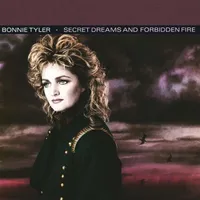
Bonnie Tyler - Secret Dreams And Forbidden Fire (Columbia, 1986)
Steinman’s second collaboration as producer with Welsh belter Bonnie Tyler, following 1983’s Faster Than The Speed Of Night, is bigger, glossier and way more Steinmanesque, framing the singer’s gale-force rasp against crashing pianos, towering choirs and none-more-80s electronic drums.
Bryan Adams and Desmond Child contribute songs, and Frida Payne’s soul classic Band Of Gold is transformed here into a titanic disco-rock anthem. But it’s Steinman’s own numbers that shine like diamonds in the night sky, not least the exhilarating Holding Out For A Hero.
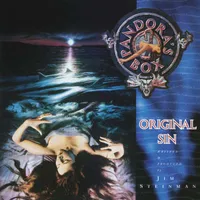
Pandora’s Box - Original Sin (Virgin, 1989)
Steinman’s gothic fever-dream vision of the 60s girl bands he worshipped in his youth finds him in full Svengali mode, assembling a crack team of female singers, including Bat Of Out Hell alumna Ellen Foley, and turning all the dials firmly up to ‘outrageous’.
Good Girls Go To Heaven (Bad Girls Go Everywhere) and The Future Ain’t What It Used To Be are pocket rock operas that pile on the drama, although it’s the magnificent It’s All Coming Back To Me Now that really stands out as the album’s monumental highlight. The most Jim Steinman album Jim Steinman ever made.
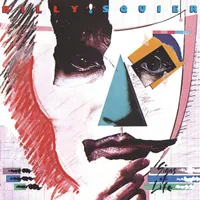
Billy Squier - Signs Of Life (Capitol, 1984)
Big-in-the-80s rocker Billy Squier originally wanted Midas man Mutt Lange to produce his fourth album, but settled on Steinman when Lange was unavailable.
It was, in hindsight, a shonky fit – the headstrong musician wrote all the songs on the record himself, with Steinman effectively relegated to the role of hired gun. His fingerprints are barely detectable on the processed pop-rock of Take A Look Behind Ya and the infamous Rock Me Tonite, and only the oddball (Another) 1984 comes even close to really capturing that Steinmanesque wizardry.
A decent Billy Squier album, perhaps, but an inconsequential Jim Steinman one.
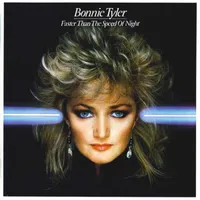
Bonnie Tyler - Faster Than The Speed Of Night (Columbia, 1983)
Tyler was stuck in bouffanted country-pop purgatory before Steinman parachuted in to produce her fifth album. Out went the acoustic guitars and songs about being lost in France, and in came the customary blood, thunder and pianos.
Six of its nine tracks are Steinmanized covers, including versions of CCR’s Have You Ever Seen The Rain and Frankie Miller’s Tears (featuring Miller himself). But it’s the two songs Steinman brought to the table that are the keepers – the revved-up title track, and the monumental power ballad Total Eclipse Of The Heart, a song originally earmarked for Meat Loaf.
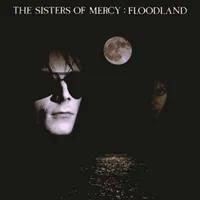
Sisters Of Mercy - Floodland (Merciful Release/WEA, 1987)
A bit of a cheat, really, given that Steinman produced just two songs on the Sisters’ noted second album. But what songs they were – Dominion/Mother Russia and This Corrosion were towering edifices of camp, gothic excess.
A student of the mythology of rock’n’roll, Sisters mastermind Andrew Eldritch knew exactly what he was getting – he pitched This Corrosion to Steinman as “the high-point of a Borgia’s disco evening”, a reference to the decadent Renaissance-era family, and that is exactly what he got. Why Eldritch didn’t get Steinman to produce the whole album is one of life’s mysteries.
...and one to avoid
You can trust Louder
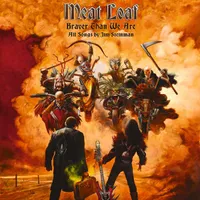
Meat Loaf - Braver Than We Are (Caroline International, 2016)
It was touted as Meat Loaf and Steinman’s first album together since Bat Out Of Hell II more than 20 years earlier. In truth, Steinman wasn’t a well man and Meat Loaf’s voice was shot.
Braver Than We Are pulls together a bunch of old Steinman songs in an attempt to recapture past glories, but the two main dudes are shadows of the men they once were, and producer Paul Crook is no Todd Rundgren. All the good will in the world can’t mask the fact it’s a stinker.
Poignantly, it would be the final album that either man was involved in – Steinman died in April 2020 and Meat Loaf just 10 months later.
Sign up below to get the latest from Classic Rock, plus exclusive special offers, direct to your inbox!
Dave Everley has been writing about and occasionally humming along to music since the early 90s. During that time, he has been Deputy Editor on Kerrang! and Classic Rock, Associate Editor on Q magazine and staff writer/tea boy on Raw, not necessarily in that order. He has written for Metal Hammer, Louder, Prog, the Observer, Select, Mojo, the Evening Standard and the totally legendary Ultrakill. He is still waiting for Billy Gibbons to send him a bottle of hot sauce he was promised several years ago.