


Last March, two lanky, hirsute brothers with a Cain and Abel-like history holed up for eight days and nights at Neon Cross, an old Southern Baptist church-turned-recording studio in Nashville. Conjuring sound and fury, light and shadow, they emerged with an age-defying, high-spirited album, their ninth.
If that sounds a bit Biblical, well, Chris and Rich Robinson of The Black Crowes have always lived by Old Testament extremes. They’ve pushed themselves through every Job-like trial and tribulation, every weirdness, drug and ego trip known to rock bands. Not only did they survive it all, but they’re stronger for it.
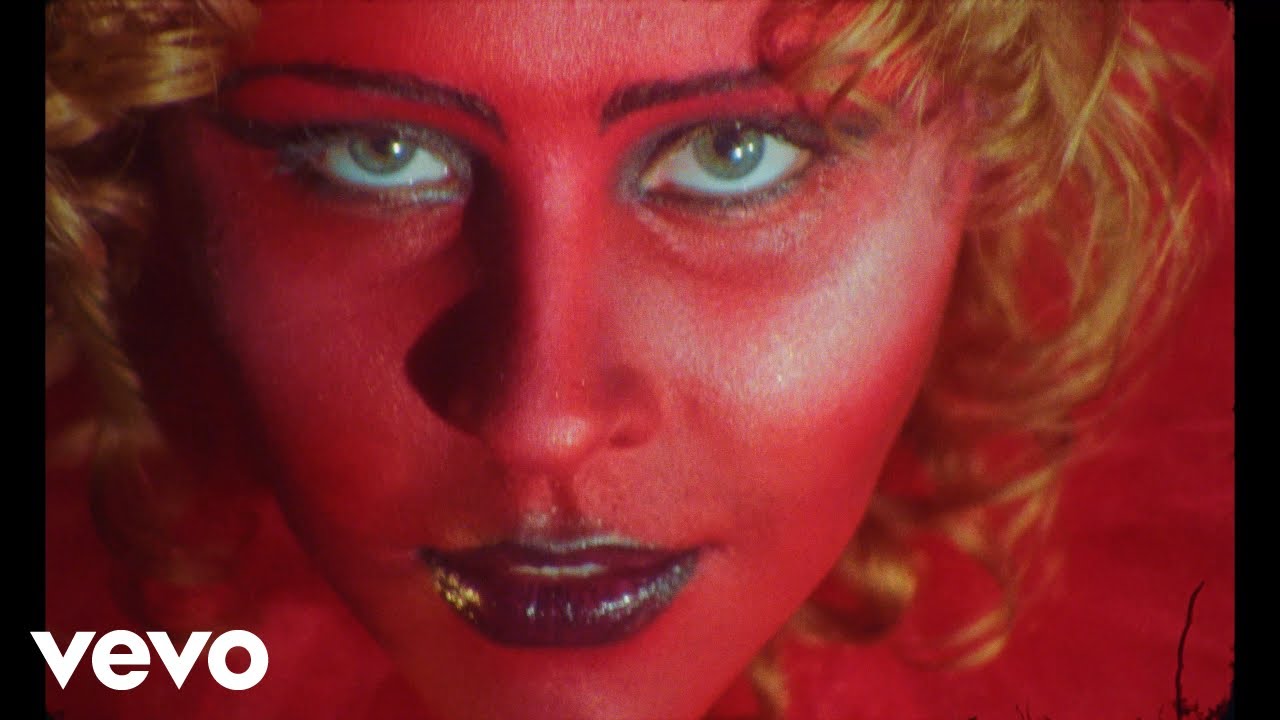
So is their music, as evidenced by their band’s latest album, A Pound Of Feathers. From the scarlet incantation of lead single Profane Prophecy to the Zeppelin-esque swagger and stomp of Cruel Streak to the hands-in-the-air redemptive ballad Pharmacy Chronicles, this is the Crowes at their most soul-baring.
“The album feels transformative,” Rich Robinson says. “Sometimes we’ll have everything laid out - we go in and we record the songs Chris and I have already written. But sometimes we say let’s wing it and just see what happens.”

Rich is talking to Classic Rock from upstate New York, where he has a home (he also lives part-time in Nashville). Dressed all in black – blazer, T-shirt, jeans – and with silver flecks in his hair and beard, he seems much more relaxed and comfortable being interviewed than he has in years past. His enthusiasm for the Crowes’ latest record is there in his smile, as he continues: “I get my most joy out of writing and recording. We did this album in a similar way to Southern Harmony [1992], using the studio for inspiration. It was like: ‘Fuck it, that’s the take, we got it, let’s just keep going!’ It might’ve gone off the rails. But that’s what rock’n’roll is.”
“We wrote on instinct and how things felt in the moment,” Chris Robinson says in agreement. “Rich had these ideas. I had notebooks full of titles and lyrics. We’d pick one, then – boom – we would start. It was raw and full of feeling. We would maybe do three songs in a day."
The Crowes frontman is Zooming with us from his home in Los Angeles. A sunny skylight above his head, a carved wooden bull’s head mounted on the wall behind him, Chris looks healthy, happy and every bit the rock star, tattooed biceps peeking out of a Richard Hell & The Voidoids T-shirt, silver chains, mussed hair and yellow-tinted aviators. He continues:
“Our dear friend Todd Snider, who passed recently, came by the studio to listen, and watching us, he said: ‘What’s going on with you two? Are you wizards? You don’t even say anything to each other. It’s like some kind of ESP!’”

That level of deep communication and trust is even more miraculous given the brothers’ recent history. When the Crowes split in 2015, it felt permanent (Rich announced his departure via a terse press statement – never an encouraging sign for rapprochement). Chris went on to tour and record several albums with his shambling, Grateful Dead-like band the Brotherhood. Rich pursued a solo career and formed The Silverlites with R.E.M.’s Peter Buck, as well as The Magpie Salute with singer John Hogg. Then in 2021, to the rock world’s surprise, the brothers reunited for a 30th-anniversary tour of debut album Shake Your Money Maker.
“When we got back together we had grown a lot,” Rich says. “I mean, we’re both in our fifties now, and we said: ‘Look, we don’t want to do some bullshit money grab, going on tour and fighting and have it be shitty. It doesn’t make any sense.’”
Indeed, during their six years apart, they’d been constantly wooed with offers for big-money reunion tours. “We didn’t take them because we knew we needed to start from scratch,” says Chris.
“We can’t bring back people that carry that old mentality to basically split Chris and I up,” Rich says. “We need to strip everything back, and put our relationship first. We need to listen to each other. Like, fish stinks from the head down. We need to keep it together. And so Chris and I’ve been really adamant about that, and it’s helped our relationship tremendously.”
“Growing up is the hardest part of all this,” muses Chris, who admits that therapy helped him improve his communication skills. “But Rich and I are mid-century products of the Deep South; our emotional vocabulary was not vast. To be where we are today, we had to mature, and that meant going through what we went through.”
Rich agrees: “But it’s night-and-day better. It’s so much healthier. Making records is so much cooler. Touring is so much better.”

They’re even chatting on the phone once a week now, comparing notes on everyday stuff – their kids (Rich has seven, Chris has two), their dogs, cooking. “We also talk about the day-to-day shit of having to run the band and write new songs, and what new music we’re digging,” Rich says. “Just stuff like brothers do, you know?”
The Money Maker reunion tour (46 shows across America, most sold out) led to 2024’s studio album Happiness Bastards, also recorded in Nashville with producer/multi-instrumentalist Jay Joyce. Although Joyce has become known for producing hit country acts such as Eric Church and Little Big Town, his roots run deep in the city’s rock scene with his much-missed power trio Iodine.
“Jay’s musical, he’s versatile, and though it may seem a big stretch to go from a more put-together big-label country project to the wild and woolly Robinson brothers rolling in with these rough song ideas and loud amps, he is right there with us,” Chris says. “When we’re in the studio, Rich is a little more studious, and I’m far more Jackson Pollock, throwing paint around, seeing what sticks [laughs]. And Jay rides that wave between us.”
“We really like Jay as a person, we respect him as an artist,” Rich adds. “Unlike some producers we’ve worked with, I think he really understands the two of us and how we work, individually and together. He knows how to deal with Chris and I in ways that make it stay positive and move forward.”
In the downtime before recording A Pound Of Feathers, the brothers took different – and illustrative – approaches to recharging their creative batteries. Rich moonlights as a serious painter, his large canvases done in a colour-rich abstract expressionist style influenced by Gerhard Richter and Gustav Klimt.
“I love depth and texture,” he says. “Painting seems to activate a different part of my brain. There’s a different sensory scenario - smells and visuals and perspectives. I love it. It’s peaceful. It’s just you and a canvas. There’s no band politics [laughs]. The interesting thing is that when I hear music, I see it. I see it in shapes and colours. When a song is finished, the shape makes sense and is pleasing. So there is a correlation between painting and music.”
“Whatever is wrong with me has to do with a lack of drainage of the creative battery,” Chris says with a laugh. “I don’t tend to shut off. There’s always something driving my aesthetic. Over the last two years I was reading a lot - Christopher Isherwood, Francois Villon’s poetry, books on the Weimar Republic - and watching a lot of French cinema. I made a record with an artist named Dagger Polyester, who’s very edgy, into all sorts of queer and trans things and takes on perversion.”
And as his Instagram profile shows, Chris has also been DJ’ing with his wife Camille at parties and clubs around LA. “We’ve opened for Brian Jonestown Massacre, and DJ’d at The Kibitz Room, a little dive bar inside Canter’s Deli. We’ll play old soul, funk, classical Persian music, everything. What I’m saying is that just being in the world and travelling and absorbing art inspires me.”

Painting and DJ’ing. That introvert/extrovert contrast between the brothers (Chris is two years older) has been there since their childhood in Atlanta. They grew up in a musical family. Their dad was a folk singer (“Very talented, a Bobby Darin type,” says Chris), who had a minor hit, and opened for Bill Haley and Phil Ochs. (“He also played the Grand Ole Opry with Lester Flatt and Earl Scruggs,” Rich says.) More importantly, the old man’s record collection provided his sons with a healthy diet of inspiration, from Johnny Guitar Watson to The Yardbirds to the Modern Jazz Quartet.
Chris, a budding poet and free spirit, quit college in 1984 to sing in the band started by his 15-year-old brother. They called themselves Mr. Crowe’s Garden. Sneering at slick rockers of the time – Loverboy, Night Ranger – the Robinsons mined a grittier past, covering songs by Love, Gram Parsons and Humble Pie. They woodshedded. They burned through drummers and bassists with Spinal Tap speed, started writing their own songs, then changed their name.
In 1989 The Black Crowes were discovered in a local club by A &R man George Drakoulias, who landed them a deal with Rick Rubin’s Def American label, and went on to become their producer for Shake Your Money Maker. Within two years, they were the It Band, all over rock radio and on the cover of Rolling Stone, who voted them Best New Rock Band.
“I was nineteen when we made Shake Your Money Maker,” Rich recalls. “At that age you’re kind of prepared for failure, because if you’ve lived any kind of life, you’ve failed at things. But you are not so prepared for success, especially on the level we had. We were just like: ‘Hey, we made a record!’ We didn’t consider success, we didn’t even consider failure. We’ll go out, play some shows, it’ll be fun. This was before the fighting and the ego and the drugs.”

Within a year, the album went platinum, and they were opening for ZZ Top, Robert Plant and AC/DC. It was 22 months, with 350 shows. “We went from playing in front of fifty people in Tuscaloosa to sixty thousand at Donington,” Rich says. “That’s a fast ascendance. We all climbed Mount Everest together.”
“The ascension was upon us,” says Chris. “And it was all hard to believe. When we got on the plane to fly to LA at the end of 1989 and then back in 1990 to start the Money Maker tour, it was beyond our wildest dream to think that we would be talking about records that we’re making in the year 2026!”
But here they are, and a lot of the lyrics on A Pound Of Feathers feel like Chris reflecting on what it meant – and still means – to be the singer of that huge rock band, navigating the line between light and dark.
“Light and dark has been a running theme in the band,” he says. “It’s part of being Southern, growing up with the thick army blanket of religion over my head. I obviously don’t live a crazy, drug-addled life any more. But I also hate the regret and the severity of people’s choices. There’s nothing more boring than golf [laughs], and people talking about their health regime now that they’re sober.”

Although Chris may not be dancing with the demons, he hasn’t forgotten the steps. Always a proud and poetic lyricist, he quickly recites the chorus of Pharmacy Chronicles: ‘Don’t call the doctor, don’t call the priest, tell old Saint Michael there ain’t no feast/Leave it all behind you, let the demons find you.’ “That line ‘Let the demons find you’ is what a lot of this record is about. I don’t think acknowledging the darkness around us is a bad thing. It should actually add clarity to what’s important.
"Never forget, we’re the writers, the singers, the dancers and the painters. We all need to be more resilient with the slings and arrows of outrageous fortune that befall us all. And even in the darkest songs, I have to have a pinprick of light.”
All of The Black Crowes’ songs, from She Talks To Angels to Pharmacy Chronicles, have begun the same way – with Rich Robinson’s guitar. A master of memorable riffs, he discusses his approach as the band’s creative instigator. “Some of the best guitar parts sound like stories to me,” he says. “That’s the best way I can describe it. Anything that can tell a story and can touch you and inspire you on an emotional level is what really makes anything great, in my opinion.”
He doesn’t like to overthink it when he’s writing the chord progressions and riffs that he’ll hand off to Chris for lyrics and melodies. “It’s always about the sound and feeling. I think about all my favourite players – Peter Green, Keith Richards, David Gilmour. How what they do isn’t about playing a million notes up and down the neck. It’s about sound and feeling.”

Knowing that all veteran bands these days earn most of their bread from touring and merchandising, talk turns to the elephant-in-the-room question: why even bother to make new albums? It’s expensive, it’s time-consuming.
“And yeah, there’s no MTV, Pearl Jam and Faith No More aren’t on the radio,” says Chris. “It’s not a youth-driven thing. And let’s be honest, we’re not gonna have a hit record, man. But there’s still an energy about it, and it’s fun. So we really have the freedom to just let it all kind of funk out [laughs]. We always did whatever we wanted to do. But now, we also realise how we need to be excited about it. We need to feel fulfilled by this.”
“Because of content and streaming services,” Rich offers, “people make music now to meet an end, like: ‘We have to make this record because we have to get it out on Spotify by this time.’ Whereas for us, a record is a statement. An amazing song is a gift, a gift to the world, a song that can move people. On top of that, there are so many creative elements in making a record - the song, the performances, the sound, the sequence, the artwork. If you look at your career as a house, an album is another building stone.”
That leads to the brothers assessing the state of rock music in general, and whether we are, as Chris sings on the album closer Doomsday Doggerel, in ‘a front row seat to the end of times’.
“No, no, there’s still rock’n’roll in the world,” Chris says. “Oasis just sold out stadiums. The Foo Fighters, System Of A Down, Korn, they’re all playing stadiums. AC/DC are old, but they just did it. So there’s a shit-ton of people having a great time playing rock’n’roll.”
But he’s not sold on the current pop star crowd, which he describes as “people doing flips on stage, looking happy and colourful, and everyone has been famous forever”. With a flash of his famous mouth almighty, Chris laughs and says: “You make one record, and now you have your own fried chicken restaurant and your own hovercraft company! Listen, I remember selling six million records and going home and being like: ‘What the fuck just happened?’ Not feeling like: ‘Oh my god, look how amazing I am!’ I was like: ‘Just get me back into playing some music, because that feels normal.’”
“I think there should be more rebelliousness,” Rich adds. “The rebel is gone. It doesn’t exist in our society any more. People are too easy to just be told what to do. As a kid starting out, maybe that makes sense. But for some reason, right from the beginning, we were always a pain in the ass!”
Being a pain in the ass is one thing. But having the goods to back it up – not to mention an inspiring story of redemption and revival – is what has kept The Black Crowes so vital. As they gear up for a world-spanning spring tour (including dates with Guns N’ Roses), both brothers sound stoked about the road ahead.
“I’m really happy with this record,” Rich says. “You know, Chris and I have always been best in the studio. We get along great now, but even back in the day, no matter how bad we were fighting, when we would show up to write or to record, we just kind of put all that behind us.”
“I hope the Black Crowes people like this record and are surprised by it,” Chris concludes. “I get that our audience is older, but you’re gonna get the most out of it if you put something in too, so let yourself go, man, let yourself go. I want to tour and do great shows, and just keep on searching for that feeling. You know what I mean? Because when it works and when it’s good, it’s the best feeling in the world. And I would hope that that feeling transfers to the people sitting in front of us.”
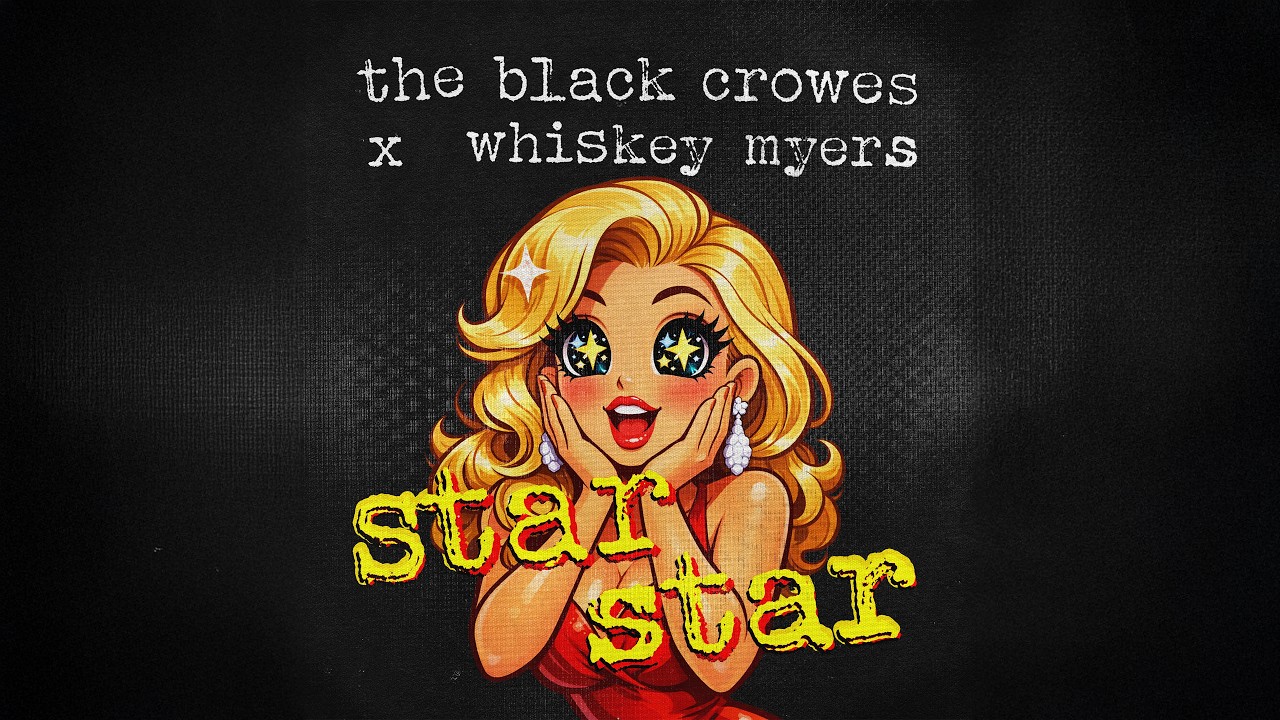
A Pound Of Feathers is out now via Silver Arrow Records.

