


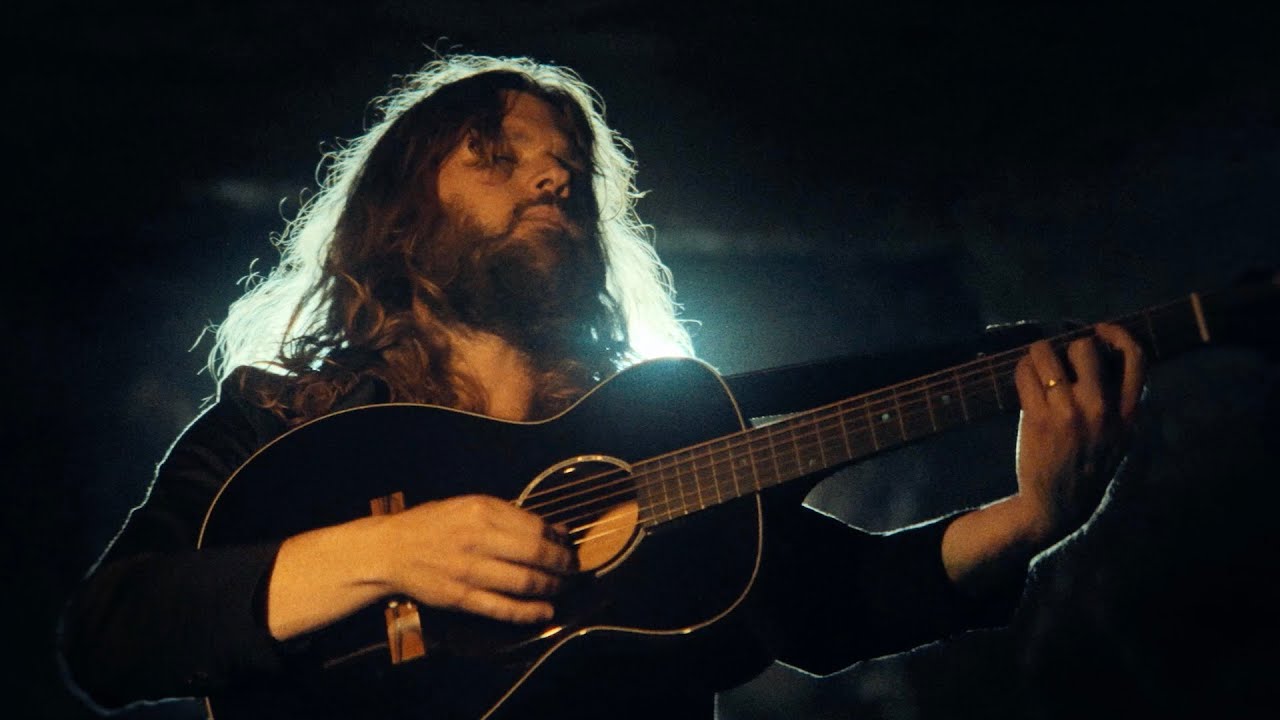
Jay Buchanan was a singer-songwriter who worked in construction before he became a rock star. Last year we were reminded of that, watching him mesmerise a tiny club in London’s Covent Garden with soulful, folk-laced Americana – a week or so after his band Rival Sons’ set at Ozzy’s Back To The Beginning show at Villa Park.
“Everyone’s been on me to make a solo record ever since Rival Sons has been a band,” says Buchanan, who’s writing for their next record when we talk. “Even when we got together, the intention was going to be us doing that, and me also making these solo records. But being in a rock’n’roll band, it’ll take up your time and energy.”
Creatively mined in a bunker deep in the Mojave desert, his album Weapons Of Beauty saw Buchanan reclaim some of that energy, channelling it into transportive slices of widescreen storytelling. The collection was sequenced by Scott Cooper, director of last year’s Bruce Springsteen biopic Deliver Me From Nowhere, in which Buchanan makes an appearance.

You seemed really happy at the London show. I can’t remember the last time I saw you talk or smile as much on stage.
When Rival Sons is on deck, when I’m talking in between songs, I feel like I’m having to hold back this gang; they’ve got their chains and their pipes, and they’re ready to, you know… and I’ve gotta, like, “Whoa, everybody, hang on!” It’s a high-octane band, there’s a lot of energy on deck. But when I’m playing solo it’s completely different. Like that night I think I played for around two hours, and easily twenty to thirty minutes of that is just me talking [laughs]. I like to take my time. I don’t like being rushed.
Much of Weapons Of Beauty is about storytelling. Do you see it more as a product of your own life, or observing the world around you?
I think it’s both. Everything is autobiographical in some sense, and in some ways these stories are told through imagery. These things are all the contents of my heart in some way, whether I’m consciously aware or not. I’ve devoted my whole life to this craft, and it’s still such a mystery to me how it all comes about. I just show up, and I’ve got to be patient.
How did you end up writing in a bunker in the desert?
To write, I need to be alone. I knew I needed to disappear somewhere in order to do this interior mining that I needed to do. One of my closest friends from childhood is an exotic reptile breeder, and I knew he had one or two hundred acres or so out in the Mojave Desert. So I call him, I said: “You think I could set up a tent somewhere? I just need to be alone and not be fucked with for a month or two.” And he said: “Well, I have an underground bunker. Does that work?” “Yes, that’d be perfect!”
As soon as I wrapped filming on the Springsteen movie – that was the first week of January [2025] – I flew back, spent one day home and went straight into the desert. I stayed out there for a week, and then I come home for two days to be with my family, then I go back for another week. I did that for close to three months. It’s a weird way to spend your time.

What were your days like out there?
I got my electricity off a gas generator, so I would drive into town and fill up the gas cans and stock up on food. And my friend’s house was about two miles from where I was, so I’d pop in once in a while. But for the most part it was just eating out of tin cans, things like that. I had a little ice chest, and I’d try to write by it next to a campfire. During the day I’d go out and hike, shoot guns and shoot tin cans and things like that, and explore the gold mines up there. But I wouldn’t go too far into these mines, because I’m alone, you don’t have cell phone reception or anything. I can only be so reckless, because I am a father and a husband.
What was the first song you wrote?
It was the title track. But the song was quicker, it was very different. And then most of the time I was just sitting there with my fishing pole, the line in the water, just going: “Please let me catch one.” Because I go out there for ten days or whatever, and it’s really disheartening to spend that kind of time away from your family, and to come up empty-handed. It can make you feel like: “What the fuck am I doing? What am I doing out here? Who do I think I am, going out here to make a solo record?”
You paint a wide-screen picture of America on the record, in all its beauty and its complexities. What did you hope to convey about America in this record?
I’m not complex enough to give you the answer you’re looking for. I didn’t set out to make an Americana record. I didn’t set out to make a statement about anything. It was just more that sometimes, these things bubble to the surface that you’re not altogether aware of. Like some of your best ideas in your life, they’ll just come to you when you’re not trying to find them. I think that’s part of what makes the writing process so slow and difficult.
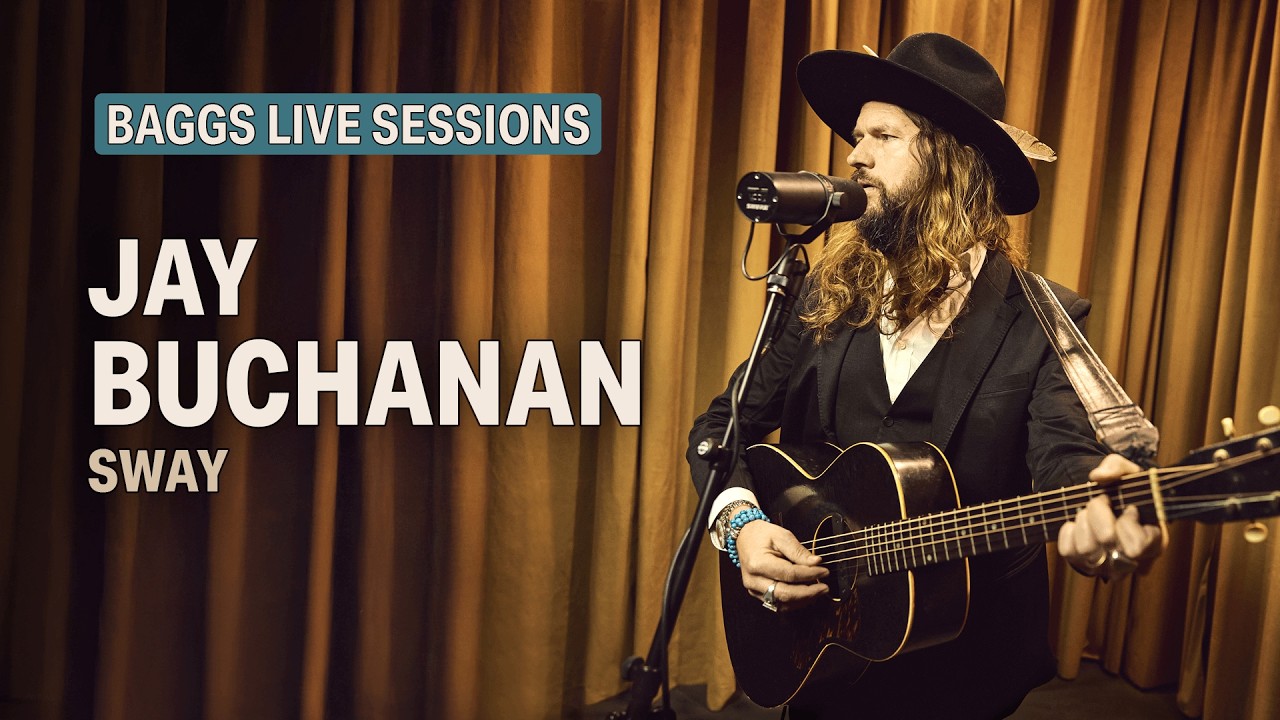
In Sway you sing: ‘I want you now, while we’re still young, and I want you old.’ You wrote it for your wife, didn’t you?
I didn’t set out to, but as soon as I knew I was writing about that sort of love, it was like:“Okay, this is going to be for Caitlin.” That’s about as romantic as I think I’ll ever get, because it’s such a slow dance. And I wanted to ask the listener to have that patience, because when that song starts I give one line, ‘Have you seen?’ and then there’s, like, twenty seconds before the next lyrics. If we’re given a choice we’ll say: “I want it right now.” But when we’re made to wait a little, I think there’s something to that.
Can you remember the first time you fell in love?
Music was like the best friend, and it was a companion to me in a way that no person is. But then real love… I always had girlfriends, I always liked being in relationships. So I had a first couple, twice in high school – two big relationships. And I fell in love many more times. I have had the good fortune to be in love with some fantastic people. I feel like all of those were imperative for me to have the experience with love to finally, now I’ve been with my wife all of these years, and you just… [thinks] you know when it’s time to stop looking.
You spent much of your upbringing in the woods and high desert areas around San Bernardino County in California. How much of that is in these songs?
While I was going up into the desert, I would drive my old diesel tour van that Rival Sons used to travel in in our early days. The guys in the band, they like their sports cars; I like to drive an old beat-up tin can. So I drive to the desert, and my parents’ house is kind of on the way, so I popped in a couple of times. And my mom says: “There’s a couple of boxes of your stuff in one of the closets.” It had tons of old photographs, press clippings from high school, love letters, old lyrics I’d written, high school yearbooks, a bunch of high school stuff, and a few things from my early twenties, like newspaper clippings.
So I took these boxes, and one night I brought them down into the bunker, and was sitting there going through it all. I found myself peeking at someone I used to be – someone I worked really hard to grow out of. Looking at these things gave me some feelings I wasn’t sure about. So I took these things outside and I burned all of them.
Really? You burned them?
Yeah. I do that in my life. I don’t hold on to things. But I burned all of these things ceremoniously, in a way of going, like: “That’s who I was, but it’s not who I am.” Relying too much on retrospect in making that part of your current identity, I don’t know that it’s useful. I’ll go through these cycles where I’ll burn everything, all my clothing, and I’ll get rid of everything. It drives my wife nuts. But I did that and I felt better.
The next day I started writing Deep Swimming. If you look at the lyrics, they read like you’re rifling through old photos. There was something very cathartic about the way that song came about, and the way it makes me feel when I listen to it. There’s a celebration of these hard-worn miles, this growing and then burning, all of these cycles. I think writing the song allowed me to respect and honour all these old things.
Who are the storytellers that move you the most?
I love Jason Isbell’s writing. Leonard Cohen, Bob Dylan, Joni Mitchell, and then listening to the way that Van Morrison would write, because his writing was so emotional. But right now someone like Stephen Wilson Jr. I can’t really relate to his whole catalogue, but he’ll have a couple of tracks that it’s like: “Damn, it moves me so much.” Then filmmakers: Stanley Kubrick, Terrence Malick, Paul Thomas Anderson, Sophia Coppola, Scott Cooper… And I draw a lot of inspiration from painters. There’s a certain language that artists or painters speak.
Did appearing in the Springsteen film Deliver Me From Nowhere give you an appetite for movies?
Yeah, it definitely did. I have an agent now, and I’ll do some auditions. It’s all just make believe and fun for me. I don’t have a background in acting, but it’s certainly whet my appetite. What I loved the most about the experience of working on that film was that it was entirely new. And Jeremy Allen White [who plays Springsteen] was a delight. He and I talked on the phone before the filming and all of that stuff. He was just real easy to be around, and I have nothing but respect for watching how hard he worked.
You’ve talked before about disappearing with a guitar and a bottle of whisky to write songs. What’s your fuel these days?
It’s hiking, and having some tequila or having a couple of beers. I’m careful about that. If I get too intoxicated my antenna doesn’t work. But meditation is a huge one, Transcendental Meditation every day, and exercise – yoga, running.
Do you enjoy being alone?
I probably enjoy being alone more than is healthy. I’ve worked to not be that guy over the years, so now I can only tolerate so much of it; I need that human interaction. I’m on tour with the band all the time, I’m very much used to being around everybody. But I think for so many years, even being in the band and all of that, I could be in a crowd and still feel alone. I think that working through that takes time, because nowadays I don’t need to be alone so much.
Weapons Of Beauty is out now via Sacred Tongue Records/Thirty Tigers.

