"I want to do lots of different things. I'm always on some sort of learning curve." Every album Robert Plant has made since leaving Led Zeppelin, ranked from worst to best
Since Led Zeppelin called it quits, Robert Plant has continued to move forward, refining and redefining his art - and these are the albums that have charted his journey
Select the newsletters you’d like to receive. Then, add your email to sign up.
You are now subscribed
Your newsletter sign-up was successful
Want to add more newsletters?
Instead of resting on his laurels, as he so easily could have, former Led Zeppelin singer Robert Plant has made some of the best music of his career since the turen of the century, broadening his range and refining his art as a vocalist by recording with four different backing groups – the Strange Sensation, Band Of Joy, the Sensational Space Shifters and Saving Grace – and singing duets with country singer Alison Krauss on the million-selling, Grammy-winning album Raising Sand and its sequel, 2021's Raise The Roof.
As Plant stated in 2011: “I want to do lots of different things. I’m always on some sort of learning curve.” And this is why, 18 years after Zeppelin’s triumphant reunion show at London’s O2 Arena, Plant has refused to play with the band again.
His decision was a kick in the teeth for Zeppelin guitarist Jimmy Page, bassist John Paul Jones and drummer Jason Bonham, who deputised for his late father John at the O2. It has also been a bitter disappointment to Zeppelin fans all over the world – 20 million of them had applied for tickets to the London show.
But for Plant it’s a matter of integrity. As he put it bluntly, he doesn’t like the idea of Zeppelin touring “like a bunch of bored old men following the Rolling Stones around”.
He doesn’t need the money – in 2025, Finance Weekly estimated his net worth at £200m. He also feels that the O2 show was a fitting epitaph for Led Zeppelin: “We were so happy that we were actually getting it right,” he said of that night. “There were moments in it where we just took off…” And, above all, Plant is looking forward, moving on – just as he did when Zeppelin broke up in 1980 following the death of John Bonham.
Robert Plant was 32 when Led Zeppelin ended – more than half a lifetime ago. And if the music he created with that band could never be equalled, his subsequent work is as brilliant as it is diverse. Across 17 albums – 12 solo, including those with the Strange Sensation, Band Of Joy, the Sensational Space Shifters and Saving Grace – formed in 2019 with singer Suzi Dian – plus two with both Jimmy Page and Alison Krauss, and one with The Honeydrippers – Plant has continued making great music, still seeking out new and different things.
“I surprise myself,” he says. “And I think that is the reason that I do it.”
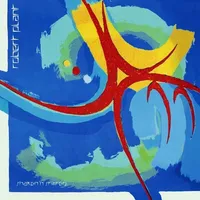
Robert Plant - Shaken ‘N’ Stirred (Es Paranza, 1985)
Plant’s third solo album was his most experimental, a radical departure from his signature sound. One critic likened Shaken ‘N’ Stirred to the new wave music of Talking Heads, and described Plant as “a chameleon with a sharp ear for new sound”. But in his eagerness to sound relevant, something more important was lost.
Shaken ‘N’ Stirred was smart, but soulless. Even the better songs – Little By Little, Pink And Black – were paper-thin. And Plant, normally such an emotive singer, seemed detached on nonsensically titled songs such as Hip To Hoo and Doo Doo A Do Do. But then Plant has always been his own man.
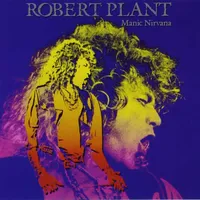
Robert Plant – Manic Nirvana (Es Paranza, 1990)
The album’s title promised all manner of excitement and exotica. The cover image repackaged Plant – by then in his early forties – as the golden god of his youth. In the end, disappointment ensued. Manic Nirvana was good. Just not that good.
On the first two tracks, Hurting Kind (I’ve Got My Eyes On You) and the Zep pastiche Big Love, Pant sounded as if he was trying a little too hard. But a doozy of a riff in Tie Dye On The Highway brought out the best in him, as did the moody acoustic number Liars Dance, with its smoky echoes of Led Zeppelin III.
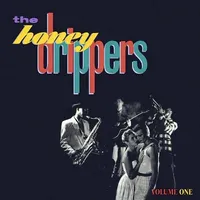
The Honeydrippers - Volume One (Es Paranza, 1984)
It started out as a bit of fun – an occasional band with an ever-changing line-up, playing vintage rock‘n’roll and R&B songs that Plant loved as a kid. But the only recording by The Honeydrippers – the five-track covers EP Volume One – was a surprise hit.
For Plant, this was simply a way of letting off steam between solo albums. But his version of 50s ballad Sea Of Love, featuring a secret cameo from Jimmy Page, reached the US top three, and the EP became a million-seller. The other standout track was a rollicking take on the jumpblues classic Rockin’ At Midnight, which also featured an uncredited guitar hero – Jeff Beck.
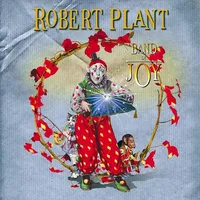
Robert Plant And The Band Of Joy - Band Of Joy (Rounder, 2010)
While millions of fans hung on in the vain hope that Plant would rejoin Led Zeppelin, the contrary old bugger opted instead to relaunch his pre-Zep outfit Band Of Joy, albeit without any other original members.
The new Band Of Joy included American singer-songwriter Patty Griffin, Plant’s current partner. And this album was, in essence, Raising Sand Part 2. Once again, this was a covers album, with a blend of old and new songs. But where Raising Sand was low-key, Band Of Joy has more rock‘n’roll swagger, notably in a rollicking version of Los Lobos’ Angel Dance.
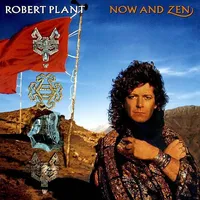
Robert Plant - Now And Zen (Es Paranza, 1988)
With his last album of the 80s, Plant took one step back and two forward. In reaction to the abstract art-rock of 1985’s Shaken ‘N’ Stirred, this follow-up had Plant re-embracing hard rock – and Jimmy Page.
Page featured on two tracks: Heaven Knows and Tall Cool One, which included samples from four classic Zeppelin songs – a riposte to the unauthorised sampling of Zep riffs on the Beastie Boys’ Licensed To Ill. Now And Zen wasn’t all oldschool riffola. The album had a contemporary sound, and Ship Of Fools is a beautiful ballad. But it was thrilling to hear Plant and Page rocking out once more.
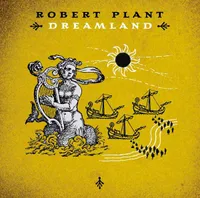
Robert Plant – Dreamland (Mercury, 2002)
A sustained and successful reunion with Jimmy Page meant that Plant’s seventh solo album arrived nine years after the sixth. What’s more, Dreamland was short on original material, with more than half the album given over to covers of old favourites of Plant’s, including Tim Buckley’s Song To The Siren, Bob Dylan’s One More Cup Of Coffee and the deathless Hey Joe.
Among the new songs – written by Plant and a five-strong backing band – is the darkly dramatic Last Time I Saw Her. But the highlight is a version of Morning Dew, the ’60s folk song written by Canadian singer-songwriter Bonnie Dobson and famously covered by The Grateful Dead. Plant’s interpretation is magical – and a glimpse of what was to follow with Raising Sand.
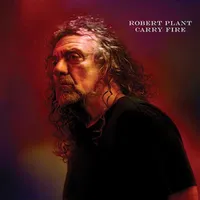
Robert Plant - Carry Fire (Nonesuch, 2017)
There was an element of mischief in the title of this album’s opening track, The May Queen – an echo of a song lyric from the early ’70s that Plant has since dismissed as naive. There’s also an echo of Led Zeppelin III in The May Queen’s propulsive acoustic guitar riff. But taken as a whole, Carry Fire has the strongest connection to Plant’s recent past.
Backed by the Sensational Space Shifters for a second time, he picks up where he left off with Lullaby And The Ceaseless Roar. The big surprise is a croaky duet with Chrissie Hynde on Bluebirds Over The Mountain, an old song from the ’50s by rockabilly singer Ersel Hickey. The best song is Dance With You Tonight, as beautiful as anything he’s recorded with Alison Krauss.
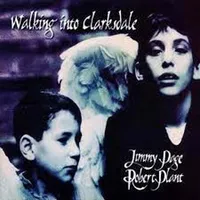
Jimmy Page & Robert Plant - Walking Into Clarksdale (Atlantic/Mercury, 1998)
Buoyed by the success of 1994’s No Quarter, Page and Plant delivered the first album of new and original material they’d collaborated on since Zeppelin.
The album was engineered by alternative rock ascetic Steve Albini. But with Page and Plant having final say as co-producers, Walking Into Clarksdale was very much a classic rock record, on which the Zeppelin sound of old was subtly updated. In places it worked brilliantly – especially on Most High, an hypnotic heavy groover, but as a whole the album was merely good, not great. Zeppelin fans had expected more.
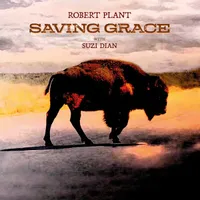
Robert Plant with Suzi Dian - Saving Grace (Nonesuch, 2025)
Plant found a perfect foil in Alison Krauss and did so again with Suzi Dian on Saving Grace, an album named after – and featuring – the band that had backed him on various tours since 2019.
As befits a project that began with Plant meeting banjo player Matt Worley in a Midlands boozer, there is a relaxed, informal feel to the Saving Grace album, which features 10 covers of songs ranging from archaic blues to folk to modern indie rock. Most charming of all is a heartfelt version of It’s A Beautiful Day Today, originally recorded by San Francisco hippies Moby Grape. It’s like Going To California all over again.
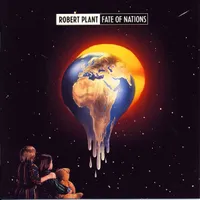
Robert Plant – Fate Of Nations (Es Paranza, 1993)
When this sixth solo album was released, Plant stated: “From the very beginning of this project, I knew what I was going to do: go back into my past.” For reference points, he name-checked The Jefferson Airplane, Traffic, Tim Hardin and others. What he neglected to mention was Led Zeppelin. Calling To You, the opening track on Fate Of Nations, was pitched halfway between Kashmir and In The Evening.
Elsewhere, Plant delivered on his mission statement for this album with a sweetly romantic cover of Hardin’s If I Were A Carpenter. And the simple beauty in 29 Palms made it arguably his greatest solo song since Big Log.
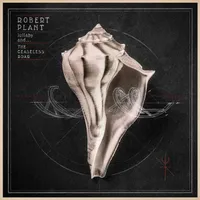
Robert Plant - Lullaby And The Ceaseless Roar (Nonesuch, 2014)
Lullaby And The Ceaseless Roar was Plant’s first studio album with the Sensational Space Shifters as his backing band. It begins with a version of the ancient American folk song Little Maggie, previously recorded by Bob Dylan among others – Plant singing it as if lost in the music. Another track, Poor Howard, is derived from an old Lead Belly blues number – in that sense, a throwback to the early days of Led Zeppelin.
The remainder of this album is all original material, in which contemporary rock sounds merge seamlessly with folk traditions – to brilliant effect in songs such as Rainbow and Pocketful Of Golden. As with much of Plant’s latter-day output, it’s an album with one foot in the past and one in the present.
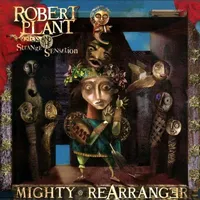
Robert Plant & The Strange Sensation - Mighty ReArranger (Es Paranza/Sanctuary 2005)
Plant’s first recording with the Strange Sensation was 2002’s Dreamland, on which they covered blues and folk songs. Although Dreamland was credited as a Plant solo album, its strength lay in a powerful group dynamic.
And, three years later, on Mighty ReArranger they took it up a notch or two. With all-original material drawn from a deep well of influences – rhythm and blues, English folk, exotic world music – it’s an album on which anything goes. When Plant talks about surprising himself, this is what he means.
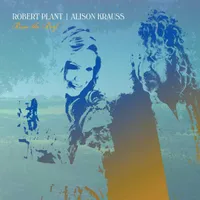
Robert Plant/Alison Krauss – Raise The Roof (Rounder, 2021)
14 years on from their surprise hit Raising Sand, Plant and Krauss reunited for a similarly titled second act. For all its quality, Raise The Roof fell a long way short of its predecessor on a commercial level. Perhaps the novelty value had worn off.
With T Bone Burnett again in the producer’s chair, the sound had a familiar, warm ambience around the two voices. And as with Raising Sand, the choice of songs drew mainly from folk and country music. The album’s best moments include richly atmospheric versions of Bert Jansch’s It Don't Bother Me and The Everly Brothers’ The Price Of Love.
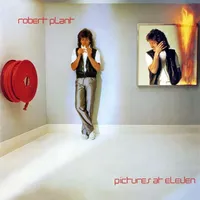
Robert Plant - Pictures At Eleven (Swan Song, 1982)
It was never going to be easy for Robert Plant to rebuild his life and career after the demise of Led Zeppelin. But with Pictures At Eleven – a top five hit in the US and UK – he achieved one of rock’s great comebacks.
His key ally was ex-Silverhead/ Chicken Shack guitarist Robbie Blunt, who co-wrote the album. Phil Collins played drums on six tracks, Cozy Powell on two, the latter clattering away like Bonzo on Slow Dancer. Several songs echoed the modern Zeppelin of 1979’s In Through The Out Door. In a sense, Plant was going where Led Zeppelin no longer could.
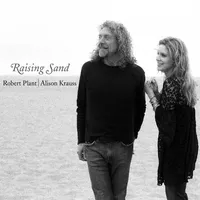
Robert Plant/Alison Krauss - Raising Sand (Rounder, 2007)
They made an odd couple: Plant, the grizzled rock warhorse, and Krauss, the glamorous, fiddle-playing bluegrass star 23 years his junior. But their voices were perfectly matched on an album that gave Plant the biggest hit of his post-Zep career – No.2 on both sides of the Atlantic.
Their duets ranged from blues to folk and country to rock‘n’roll. Some songs dated from the 50s and 60s. Others merely sounded old, such as Please Read The Letter, originally written and recorded for Page and Plant’s album Walking Into Clarksdale. Plant, in harmony with Krauss, has rarely sung better.
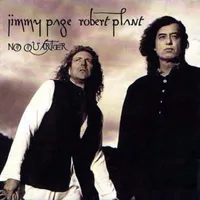
Jimmy Page & Robert Plant - No Quarter (Atlantic/Fontana, 1994)
It was the next best thing to a Led Zeppelin reunion: Page and Plant performing live together for the first time in 14 years. No Quarter was recorded as part of MTV’s Unplugged series, but in a break from the standard format, Page and Plant utilised a full orchestra and Arabic musicians, and recorded in London, Marrakesh and at BronYr-Aur, the Welsh cottage where various Zeppelin songs were written and recorded in 1970.
The result: wonderfully inventive reinterpretations of Zeppelin classics, and echoes of Kashmir in outstanding new song Yallah.
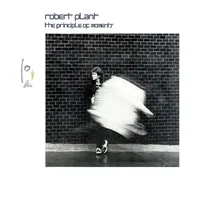
Robert Plant - The Principle Of Moments (Es Paranza, 1983)
With his second solo album, Plant defined a modern rock sound that put clear distance between himself and Zeppelin. Recorded with the same core group of musicians that featured on his solo debut Pictures At Eleven, including guitarist Robbie Blunt and Phil Collins on drums, The Principle Of Moments was a more polished, assured album, with a lighter touch and better songs, such as the elegant hit ballad Big Log.
Traces of Zeppelin remained in the staccato riffing of Messin’ With The Mekon, but, as Rolling Stone said, this represented a “declaration of independence from the past – not a denial of it”.
Sign up below to get the latest from Classic Rock, plus exclusive special offers, direct to your inbox!
Freelance writer for Classic Rock since 2005, Paul Elliott has worked for leading music titles since 1985, including Sounds, Kerrang!, MOJO and Q. He is the author of several books including the first biography of Guns N’ Roses and the autobiography of bodyguard-to-the-stars Danny Francis. He has written liner notes for classic album reissues by artists such as Def Leppard, Thin Lizzy and Kiss, and currently works as content editor for Total Guitar. He lives in Bath - of which David Coverdale recently said: “How very Roman of you!”