


Fusing psychedelic rock, free jazz and pop whimsy, Soft Machine’s 1968 debut album The Soft Machine helped lay the foundations for prog rock and the Canterbury Scene. We explored its intriguing background in 2012.
It’s early December 1968 and Julian Glover, an actor who’ll later appear in The Empire Strikes Back among numerous TV and film productions, is rushing back to 48 Dalmore Road, West Dulwich, from Soho’s One Stop Records. “I’ve got it!” he shouts, running into the living room where a small number of friends and family are waiting.
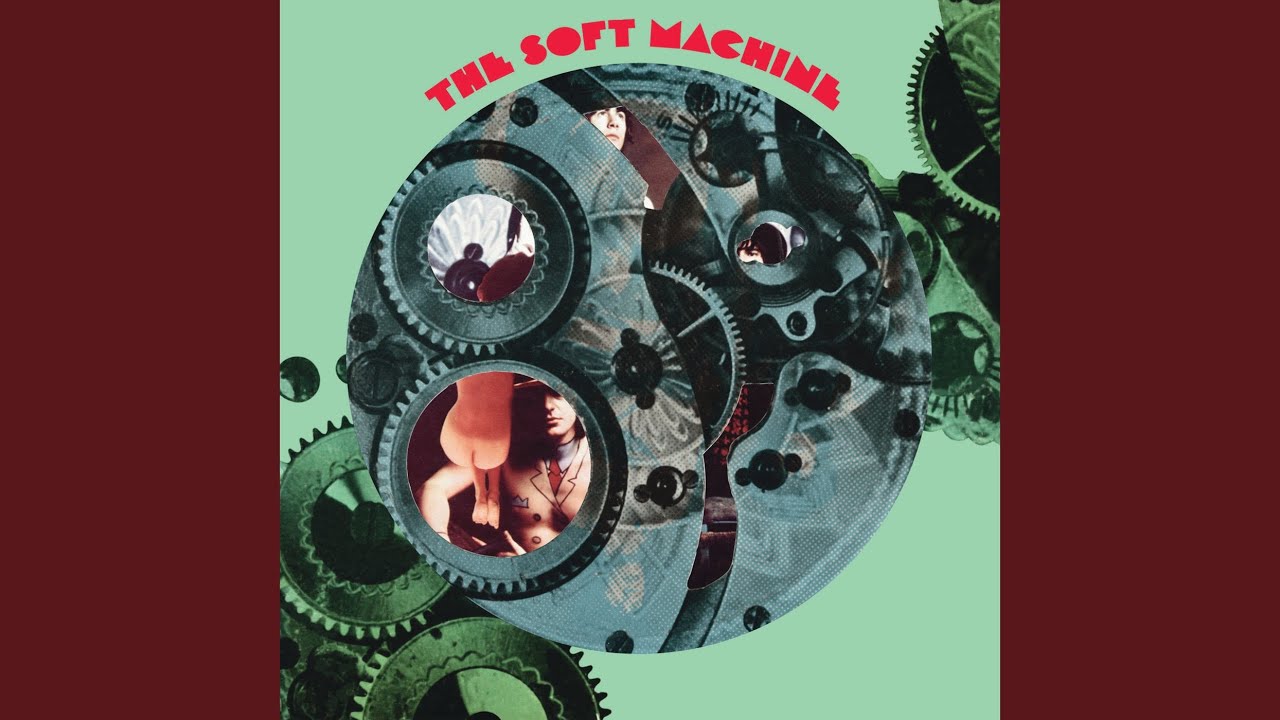
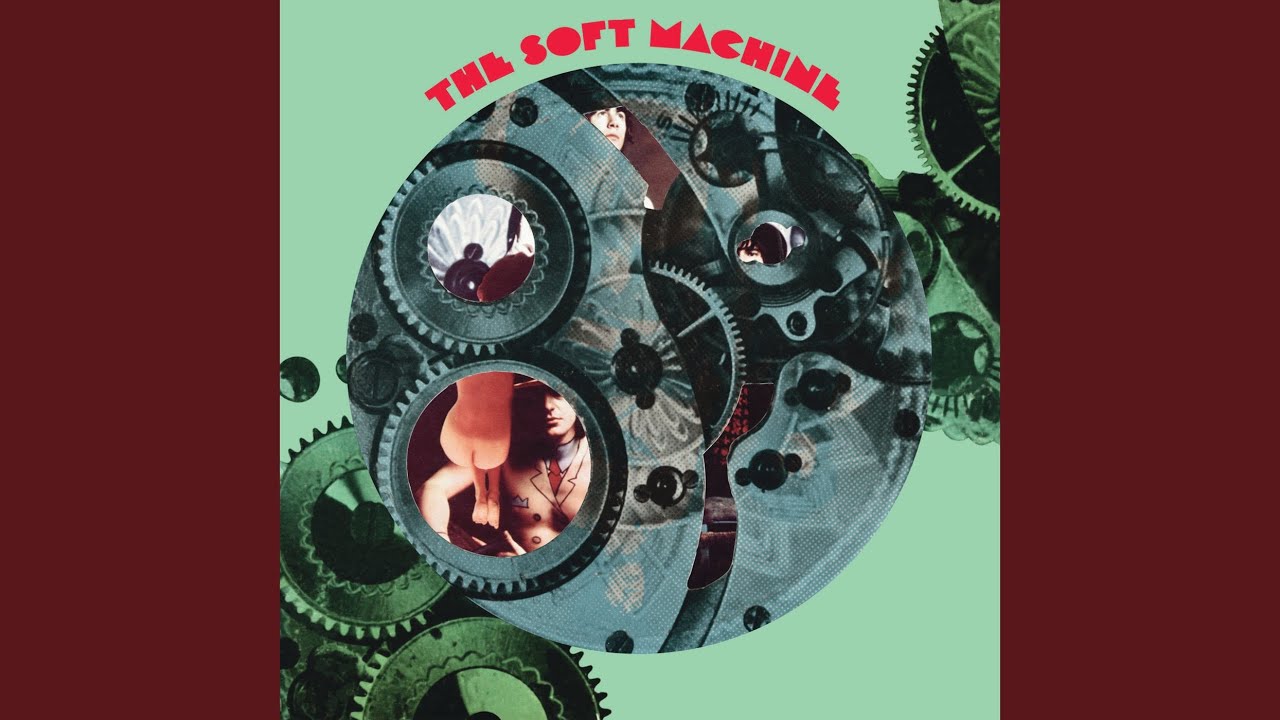
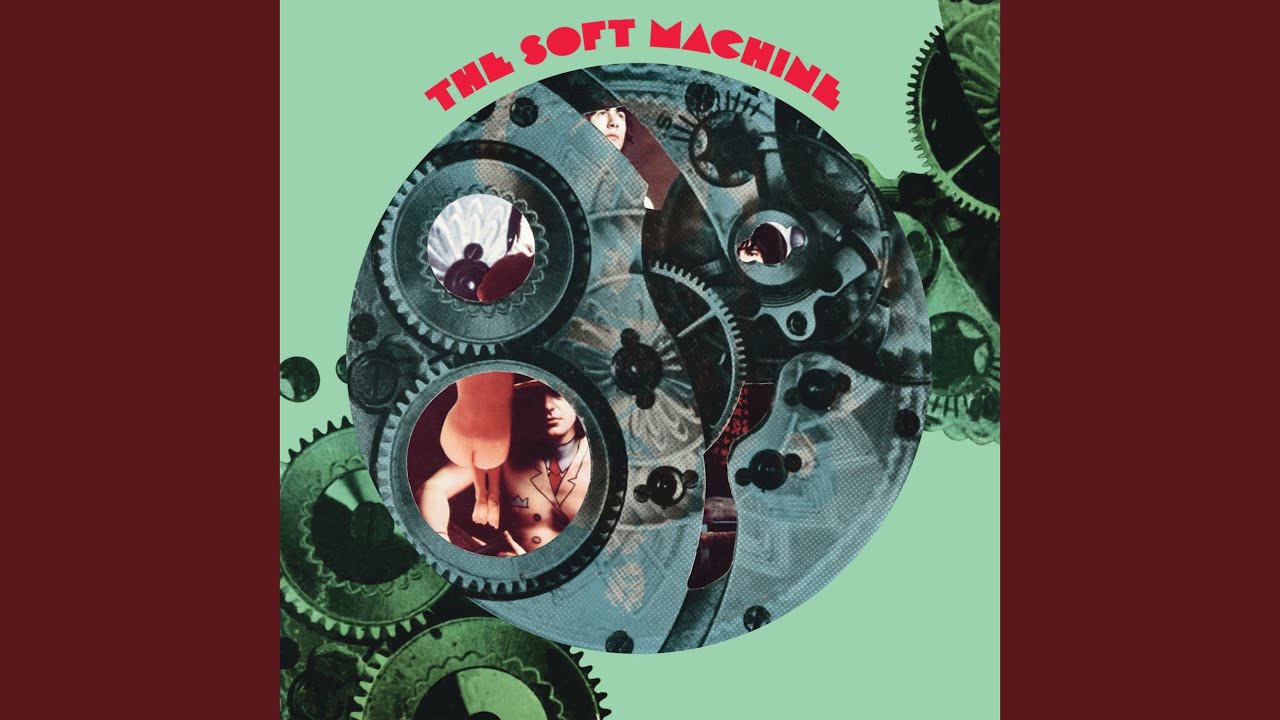
Glover, Robert Wyatt’s older half-brother, is holding a copy of The Soft Machine. Removing it from the impressive sleeve with its revolving pinwheel interior, he puts the imported vinyl onto the player, and the room fills with the strange sounds of Soft Machine’s debut album.
Bill MacCormick – later a member of Wyatt’s post Soft Machine band Matching Mole – was there. “When Julian played it I thought, 'Bloody hell, this is not like anything I’ve heard!’” For the Wyatt family and friends Christmas had come early.
The Soft Machine explodes into life with an abrupt drum roll and Wyatt’s voice in freefall descent. Fragmentary words and phrases slowly accrue around Mike Ratledge’s droning Lowery organ, with gentle nudges from Kevin Ayers’ bass. With echoed percussion clattering from speaker to speaker, the introductory moments are designed to draw the listener in slowly, rather than gruffly grab attention.
But when opening track Hope For Happiness does crank up nearly two minutes later, its wild, abrasive sound offers little in the way of concession to newcomers. “Get on board or get left behind” is the implied message in the song’s bouncing, breakneck delivery. Wyatt’s voice sounds raw and unvarnished as explores philosophical and spiritual conundrums. Then, just as the listener settles down for the ride, the group execute a hair-raising handbrake turn into a wall of discomfiting noise.
From this wreckage, atonal keyboard chords fly side-by-side with reverb-drenched drums and tape-manipulated sounds, all eerily manifesting like a poltergeist wreaking havoc from inside a toy box. Coming at a time when extraneous psychedelic effects were pretty much de rigueur, Soft Machine’s take on such grooviness isn’t the usual cosmically-inclined peace-and-love audio embroidery – it’s something far grittier, confrontational and experimental.
Soft Machine were the place where free jazz, psychedelic rock and whimsical pop converged. The band also operated on the frontier of art, sound and light. They formed in 1966 in Canterbury, Kent. Wyatt and Ayers had played together in the Wilde Flowers, which would also include future members of Caravan. Wyatt and Ratledge also played at various times in a backing group for the poet/songwriter Daevid Allen. They started Soft Machine with Allen, but the Australian left before their first recording was made.
From the start, the new group aligned themselves to all kinds of artistic movements both at home and abroad. They played regularly in Paris and St Tropez, and provided soundtracks for ballets, art installations, free theatre and ‘happenings.’
Life-long fan, Roxy Music’s Phil Manzanera, says: “I recall seeing them at Christmas On Earth Continued, a large event in 1967 at Olympia which had bands like Pink Floyd, Eric Burdon And The Animals, Tomorrow and the Jimi Hendrix Experience. That was fantastic. They had such a combination of sounds – Mike Ratledge’s jazzy keyboards; Robert, who’s totally into jazz but loves pop; and then Kevin, who’s much more song-oriented.”

Speaking to author Mike King in his 1994 book Wrong Movements: A Robert Wyatt, the then-drummer and singer said: “In terms of how we amplified our music we were a rock group, but what we heard in our heads wasn’t pop music. We never looked to other groups for inspiration – in fact we were listening to John Coltrane records... Our music didn’t fit into an already existing format. Pop music didn’t offer enough open space for improvisation. When you have a hit record, you always have to play it the same way; and there was no way we were going to play a tune the same way twice.”
Powered by such energies, The Soft Machine serves up a kind of genetically-mutated forward-looking pop that draws upon jazz and classical music with a disregard for restrictions. However, the band’s instrumental prowess is incidental to the process.
Kevin keeps Robert and Mike within the same universe. Otherwise they could have spun off in different directions
Bill MacCormick
“What was great live was We Did It Again,” says Manzanera, recalling the band’s propensity to turn in versions of the tune that, on at least one famous occasion, lasted for 45 minutes. “It was just an excuse to have a great long jam, of course, but it was great conceptually – almost a kind of systems music. Their live sets were just continuous, and that was rather innovative and wonderful – the way they mixed it up together. That made seeing them a whole experience.”
Wyatt would never dominate another Soft Machine album to the extent that he does here. His self-referential lyrics on Why Am I So Short? brilliantly depart from normal boy-meets-girl territory, preferring instead to examine himself like a specimen under a microscope. He sings: "I’m nearly 5 ft 7 tall / I like to smoke and drink and ball / I’ve got a yellow suit that’s made by Pam / And every day I like an egg and some tea / But best of all I like to talk about me! ”
That kind of whimsical and highly observational approach would later become a template for Hatfield And The North and the other bands gathered under the ‘Canterbury scene’ banner. Yet there’s a perverse irony to the fact that the album which birthed that most English sub-genre of progressive rock was actually recorded in New York’s Record Plant, while the band were touring with Hendrix.
Produced by the band, Hendrix manager Chas Chandler and Tom Wilson – whose credits included Bob Dylan and The Velvet Underground – The Soft Machine was recorded and mixed in just four days. Discussing the sessions to biographer Graham Bennett, Ayers recalled: “All I can remember about Tom Wilson was that he sat on the phone and called his girlfriends all day long. We just played the live set and he said, ‘That’s a take!’ There was very little dubbed on. Had there been a more sensitive or more efficient producer, it could have been much better.”
Yet perhaps because of its relative lack of polish, the album succeeds in presenting Soft Machine without artifice or affectation. It lacks the kind of punch they generated in concert – but there’s a palpable sense that the players are throwing caution to the wind and going for a real performance. Ratledge’s soloing on Lullabye Letter is a high point, closer to the swirling pointillism of free jazz pianist Cecil Taylor than the blues-based idiom usually preferred by his contemporaries.
The Soft Machine is one of those albums that’s been like a friend to me
Phil Manzanera
“Ratledge was groundbreaking,” says Bill MacCormick. “With other players of the day you can trace where they’ve come from. But where did his sound come from? Nobody had played keyboards like that ever. There was that aggression, apart from anything else, and the fact that he used a Lowery through a Marshall stack, rather than a Hammond organ and a Leslie cabinet like everyone else did. He had an incredible facility and speed that took keyboard playing into an area that nobody has done before or since.”
Though he would later enjoy a solo career that spotlighted his lugubrious eccentricity, Ayers’ presence on the album is somewhat muted, compared to the barrage churned up by the drums and organ. Only on We Did It Again and the brooding Why Are We Sleeping? does he truly come to the fore. Yet MacCormick argues that Ayers was a crucial part of Soft Machine.
“He had a difficult job in that band. Whether there was more available than what he was playing in terms of technique, I don’t know, but what he does do works very well. He plays an essential role in keeping Robert’s drumming and Mike’s keyboards within the same universe. Otherwise I think they could have spun off in different directions.”
The album ends with a curiosity that’s an augury of things to come. Box 25/4 Lid features Ratledge on piano and Soft Machine roadie Hugh Hopper playing fuzz bass. Though lasting less than a minute, it anticipates the thematic complexity with which the band would later become identified.
The place should have a blue plaque: ‘Soft Machine annoyed the fuck out of local people rehearsing here, 1967-1969’
Bill MacCormick
Their debut album was only released in America, housed in a lavish sleeve with a revolving disc that rotated the players with cogs and wheels. It pre-dated and possibly inspired the sleeve of Led Zeppelin III by two years. By that time Soft Machine had split up, exhausted and killed off by the treadmill of continuous touring. Then, in late 1968, came a reminder from Probe Records that they were contractually obliged to record a follow-up. With Ayers on sojourn in Spain, Wyatt made the call to Ratledge, and drafted Hopper in to play bass on what would become Volume Two, released in 1969.
“The Soft Machine is one of those albums that’s been like a friend to me,” says Manzanera, who bought his copy in 1968 and has never parted with it. “There are about 15 bits of vinyl I’ve had with me since I was brought up in Cuba, Hawaii, Venezuela and London. This record, along with Volume Two and [1970’s] Third are all like friends, really.”
Bill MacCormick retains a similar love for the album. “It reminds me of all the hours spent drinking tea and listening to jazz in Robert’s bedroom upstairs at 48 Dalmore Road. The place should have a bloody blue plaque on the wall: ‘Soft Machine annoyed the fuck out of local people rehearsing here, 1967-1969.’”

