"Few bands have taken such risks, survived such fractures or left such a deep mark on heavy music." Nine Sepultura albums to listen to and one to avoid

Sepultura studio portrait
(Image credit: Paul Natkin/Getty Images)

From the basements of Belo Horizonte to the brink of their final show, Sepultura’s story is not one of linear ascent, but of collision, reinvention and resilience. Few bands in heavy metal have evolved so violently, fractured so publicly, or inspired such enduring disagreement about what they were – and might have been.

Formed in 1984 by teenage brothers Max and Igor Cavalera, Sepultura emerged from a Brazilian underground that barely registered on the global metal map. With early help from guitarist Jairo Guedz and bassist Paulo Jr., the band effectively learned their instruments in public, forging raw, feral records that sounded less like genre exploration, more like survival exercises. When lead guitarist Andreas Kisser joined in 1987, the transformation was immediate and startling.

By the turn of the 90s, Sepultura had become South America’s first genuinely world-class metal export. Recording in Florida with seminal death metal producer Scott Burns (Death, Cannibal Corpse, Obituary, etc), albums like Beneath The Remains and Arise fused death-metal extremity with thrash discipline. But they didn’t settle into formula. Chaos A.D. broadened the band’s scope with groove, rebellious themes and percussive force; Roots went further still, folding indigenous Brazilian rhythms, down-tuned guitars and ritualistic fury into a record that permanently altered metal’s vocabulary.

Latest Videos From Louder

It also tore the band apart. Following internal disputes and personal tragedy, Max Cavalera departed in 1996, while Sepultura carried on with Cleveland-born vocalist Derrick Green. What should have been fatal became a second act: turbulent, uneven, but defiant. When Igor Cavalera exited in 2006, calls for a ‘classic’ reunion intensified and have never truly faded.

Yet Sepultura refused to become a nostalgia project. Led by Kisser, they have rebuilt and ultimately reasserted themselves with late-career albums that proved relevance need not mean regression. Now, as they complete their farewell Celebrating Life Through Death tour (and release a final EP, The Cloud of Unknowing), tensions surrounding a Cavalera reunion remain unresolved. Kisser has opened the door for a last-night reconciliation, but Max has made it clear it won’t happen.

Four decades on, few bands have taken such risks, survived such fractures or left such a deep mark on heavy music.

Lightning bolt page divider

Roots (Roadrunner, 1996)

Roots (Roadrunner, 1996)

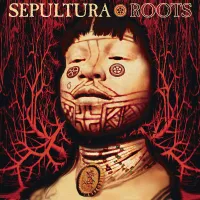
Roots is the sound of Sepultura refusing to be contained by metal’s rule book, and opting to detonate it instead. The album synthesised down-tuned grooves, hip-hop cadences and alternative-metal heft, but its concussive force lay in its embrace of Brazilian identity. Indigenous rhythms, expanded percussion and field recordings powered tracks like Ratamahatta and Itsári, forging a confrontational strain of global metal that had no precedent.

Even the more direct bruisers pulse with a primal authority. Controversial, sprawling and punishing, Roots remains a generational statement that reshaped heavy music’s future.

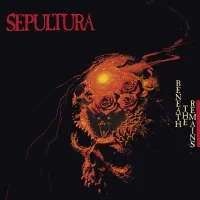
Beneath The Remains (Roadrunner, 1989)

Beneath The Remains (Roadrunner, 1989)

This is the moment Sepultura exploded from regional obscurity into the global extreme-metal conversation – and did so without compromise. Their identity crystallised – leaner, sharper, and impossible to ignore. From the title track’s opening assault to the closing devastation of Primitive Future, there is no filler, only escalation.

Inner Self and Stronger Than Hate provided the band’s first true anthems, while Mass Hypnosis and Slaves Of Pain showcased Kisser’s virtuosity and Igor Cavalera’s wind-whipping tempos. An album that doesn’t introduce Sepultura so much as impose them.

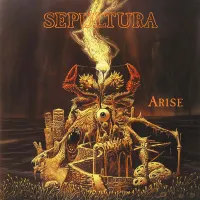
Arise (Roadrunner, 1991)

Arise (Roadrunner, 1991)

Building on Beneath The Remains, Arise refined the band’s death/ thrash assault into something sharper, more confident and brutally efficient. The title track and Dead Embryonic Cells remain definitive statements, their precision and venom amplified by famously confrontational videos.

Desperate Cry and Altered State stretch the formula without diluting it, and at the centre of it all, Max Cavalera’s gasolinesoaked vocals and bluntly political lyrics cement the album’s urgency and ferocity. While innovation took a back seat to consolidation, Arise is a genre benchmark whose authority has grown with time.

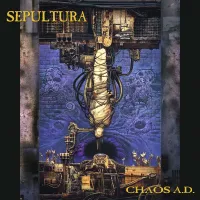
Chaos A.D. (Epic, 1993)

Chaos A.D. (Epic, 1993)

Chaos A.D. marks the point where Sepultura stopped chasing extremity for its own sake and instead weaponised simplicity. They tightened their attack, slowing tempos and foregrounding groove, texture and political intent.

Standouts like Refuse/Resist, Territory and Propaganda distilled death metal, hardcore and classic metal into instantly absorbing forms, while collaborations with Jello Biafra signalled widened horizons. By stripping excess and amplifying rhythm, Chaos A.D. redefined heaviness itself, laying the blueprint for groove metal, modern hardcore crossover and everything that followed.

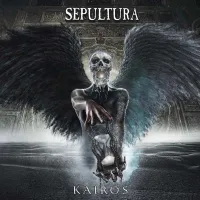
Kairos (Nuclear Blast, 2011)

Kairos (Nuclear Blast, 2011)

Kairos is the most credible reclamation of Sepultura’s post-Cavalera identity. After years of concept-heavy sprawl, the band stripped back to shorter, punchier tracks rooted in thrash and groove, reconnecting with the physical urgency of their middle years.

While critics noted an absence of instant classics, tracks like Born Strong and Mask succeed through focus and intent rather than reinvention. Derrick Green sounds fully embedded rather than provisional, and Kisser delivers some of his sharpest late-era work. It’s not a rebirth, but it’s enough to elevate it above transitional releases and justify its superiority.

Quadra (Nuclear Blast, 2020)

Quadra (Nuclear Blast, 2020)

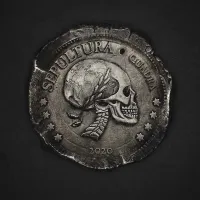
Quadra is the album that finally silenced the idea that Sepultura’s best days were irretrievably behind them. Structured around four stylistic ‘quadrants’, it functions as both synthesis and statement, uniting thrash ferocity, Roots-era groove, progressive experimentation and unexpected melody.

Isolation and Means To An End reconnect with the band’s early violence, powered by (future Slipknot) drummer Eloy Casagrande’s explosive attack, while Capital Enslavement and Guardians Of Earth lean into rhythmic and textural depth. Quadra stands shoulder to shoulder with Sepultura’s finest work.

Against (Roadrunner, 1998)

Against (Roadrunner, 1998)

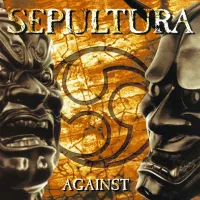
Against is a public act of defiance. Released in the immediate aftermath of Max Cavalera’s exit, it documents a band refusing to disappear quietly, even as the ground shifts beneath them. The confrontational opening run feels deliberately bruising, as if Sepultura are daring listeners to keep up.

Yet uncertainty seeps in as the record unfolds, torn between the discipline of Chaos A.D. and the lingering shadow of Roots. Derrick Green’s arrival is competent rather than transformative, and the band’s search for a new centre isn’t fully resolved. Still, Against earns its place as a necessary, transitional statement – survival music made while under fire.

Dante XXI (SPV, 2006)

Dante XXI (SPV, 2006)

Conceived at a moment when Sepultura were searching for intellectual and artistic legitimacy in the post–Cavalera era, Dante’s literary ambition was no small gamble. Drawing loosely on Dante Alighieri’s Inferno, the album frames the band’s ongoing turmoil as a descent and reckoning, rather than a rebirth.

Sonically, it’s more cohesive than its reputation suggests, balancing speed-driven aggression with darker, slower passages that hint at post-metal and doom. Dante XXI succeeds as a serious, engaged attempt to redefine Sepultura’s identity on their own terms. It doesn’t resolve the crisis, but it confronts it head-on.

Nation (Roadrunner, 2001)

Nation (Roadrunner, 2001)

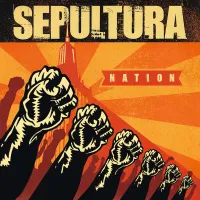
Nation captures Sepultura at their most ideologically earnest and artistically conflicted. Caught between moral urgency and creative uncertainty, it doubled down on political vision, framing itself as a utopian manifesto built on unity and resistance.

The intent is sincere, but the execution wavers. Tracks like Sepulnation and Border Wars gesture toward collective purpose, yet often feel like diluted echoes of Roots, while flirtations with nu metal date the record. Still, Nation matters as a document of a band refusing to coast; a probing search for relevance and cohesion while struggling to translate those convictions into consistently compelling songs.

...and one to avoid

You can trust Louder Our experienced team has worked for some of the biggest brands in music. From testing headphones to reviewing albums, our experts aim to create reviews you can trust. Find out more about how we review.
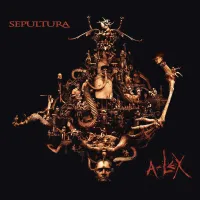
A-Lex (SPV, 2009)

A-Lex (SPV, 2009)

A-Lex found Sepultura stripped of founding drummer Igor Cavalera and under gathering existential pressure. Framed around Anthony Burgess’s A Clockwork Orange, it doubles down on concept at the expense of character.

The songs hit hard, efficiently and often anonymously, leaning on hardcore-tinged churn rather than the rhythmic danger or cultural tension that once defined the band. Derrick Green’s vocals are fierce and committed, and Andreas Kisser’s riffs rarely misfire, but intensity alone can’t disguise the album’s emotional flatness. Lacking both immediacy and strong identity, A-Lex stands as a monument to overreaching.

Joe Daly

Hailing from San Diego, California, Joe Daly is an award-winning music journalist with over thirty years experience. Since 2010, Joe has been a regular contributor for Metal Hammer, penning cover features, news stories, album reviews and other content. Joe also writes for Classic Rock, Bass Player, Men’s Health and Outburn magazines. He has served as Music Editor for several online outlets and he has been a contributor for SPIN, the BBC and a frequent guest on several podcasts. When he’s not serenading his neighbours with black metal, Joe enjoys playing hockey, beating on his bass and fawning over his dogs.