




In July 1974, the 25-year-old Rick Wakeman had his first heart attack. The keyboard player, who had left Yes earlier that year following the tour for the divisive Tales From Topographic Oceans album, had been taken ill just a day after staging a show in support of his third solo album, the hugely successful Journey To The Centre Of The Earth, at the Crystal Palace Bowl in South London.
And so it was that he found himself stuck in Wexham Park Hospital in Slough, Berkshire for six weeks while he recovered. The heart specialist who was treating him advised him to stop playing and effectively retire. “I had been told that I would not be able to work again, and if I did my heart would give out,” Wakeman told Classic Rock in 2013.
Wakeman was having none of it. Defying doctor’s orders, he spent his convalescence sketching out the album that would become The Myths and Legends of King Arthur And The Knights Of The Round Table. The tale of the fabled British ruler had caught Wakeman’s imagination after being taken on holiday as a child to Tintagel in Cornwall, whose castle was said to be the site of Arthur’s court Camelot. A more recent visit to Tintagel had ignited the idea of writing an album based around the Arthurian legends.
“I was staying at the King Arthur’s Arms, and I was looking out at the ruins of the castle,” Wakeman told The Strange Brew. “I’d always been fascinated by the legends, but being there, in that atmosphere, it just felt like the right time. I wanted to do something that had a narrative but wasn't just a retelling of a book. I wanted to pick out the characters – Galahad, Guinevere, Merlin – and give them their own musical identity.”

Cooped up in his hospital room, Wakeman began devouring books on the subject, scribbling musical ideas on manuscript paper and humming them into a cassette recorder someone had smuggled into his room for him. The very first song he wrote there reflected both his health issues and the medical advice that he should quit: The Last Battle.
“It’s not really just the last battle of King Arthur but it was probably my last battle because I wasn’t going to give in,” Wakeman later said of the song’s defiant title.
The album itself was no less ambitious. “Writing Arthur was different from …Six Wives,” he told The Strange Brew, referring to his second solo album, The Six Wives Of Henry VIII. “With …Six Wives, I was painting portraits of people I could research in history books. With Arthur, I was painting legends. The music had to be grander. I remember sitting at the piano and trying to find a theme that sounded ‘ancient’ but with a modern, progressive edge.."
Even at that early stage, he had big plans for both the record and a huge live extravaganza to accompany it – a King Arthur Day, held in the grounds of Tintagel Castle on Easter Monday.

“I’d like it to be more of a pageant than a rock show and involve the local people in making it a complete show, with jousting, medieval bands and knights,” he told Melody Maker journalist Chris Welch at the time. “It’s got to be planned in advance so we can cater for 100,000 people,” he added optimistically.
Wakeman began recording the new album in earnest at Morgan Studios, Northwest London in November 1974. He was joined by the so-called English Rock Ensemble – vocalists Ashley Holt and Gary Pickford-Hopkins, guitarist Jeffrey Crampton, bassist Roger Newell, drummer Barney James and percussionist John Hodgson. They were joined by narrator Terry Taplin. And then there was the 45-piece New World Orchestra and the 48-strong English Chamber Choir. The latter pushed Wakeman’s label, A&M, over the edge.
"The label thought I was mad. I told them, 'I want an orchestra, a choir, a rock band, and narrators,’” Wakeman told The Strange Brew. “They said, 'Rick, that's going to cost a fortune.' And I said, ‘Yes, but it's King Arthur! It can’t be small.’ We were pushing the boundaries of what a concept album could be. It wasn't just about the music; it was about the spectacle.”
Among Wakeman’s arsenal of keyboards was a Mellotron, which was duly deployed to evocative effect. “The Mellotron was essential for King Arthur…,” he told The Strange Brew. “It has that slightly eerie, haunting quality that fits the Lady of the Lake or the mystery of Merlin. I used the choir tapes and the string tapes to create this wall of sound that felt like you were in a great hall or on a misty battlefield. It gave the album its atmosphere – that feeling of being half-real and half-dream.”
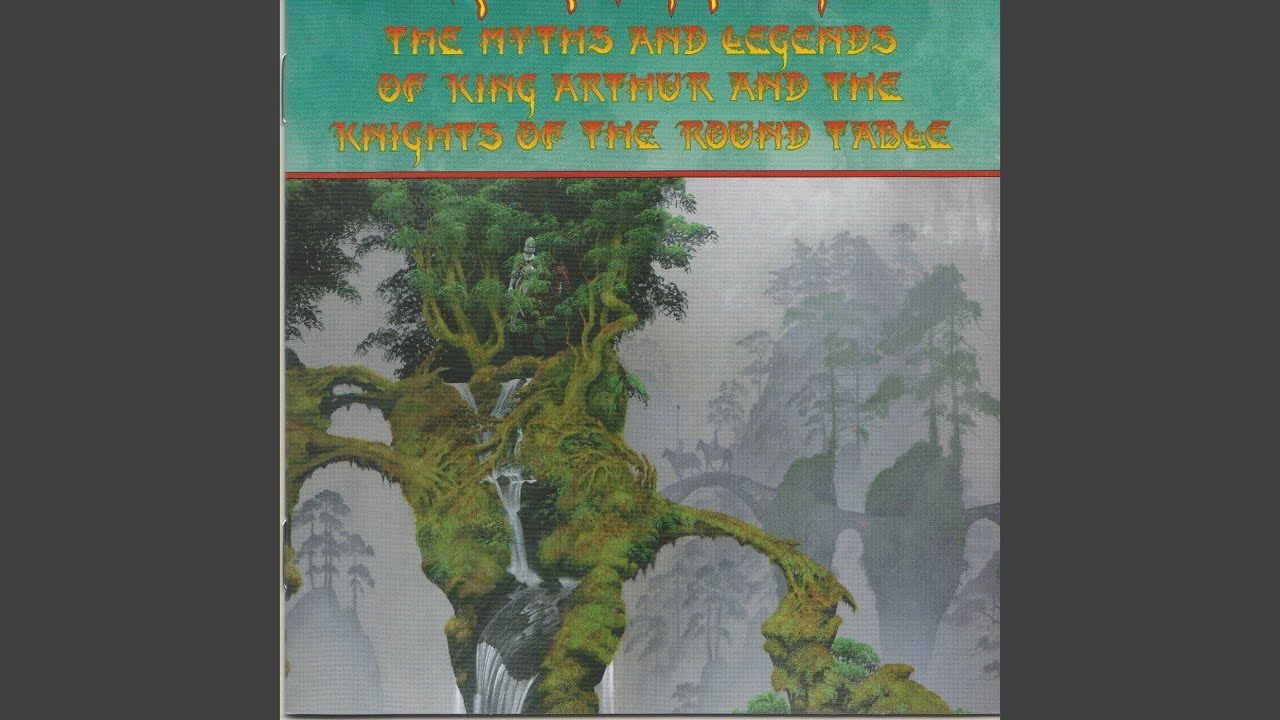
The finished album delivered on the grand yet dreamlike atmosphere. From the mysterious, sombre drift of the opening Arthur onwards, it struck an enchanting balance between complexity and melodic heft, as surging Mellotrons and squelching Moogs collide with real choirs, vivacious orchestral interventions and the exhilarating of sound live guitars, bass and drums.
Wakeman certainly didn’t sound like a man who had recently had a brush with death. His synth solo on Sir Lancelot And The Black Knight is one of the most outrageous things he has ever recorded, not least the moment when its underlying pulse is hijacked by a brief burst of hip-shaking samba.
Elsewhere, a labyrinth of layers and contrasting keyboard tones gave the ominous Merlin The Magician an ethereal quality in keeping with the mystical overtones of the King Arthur story, while the pomp-fest of The Last Battle is 10 minutes of euphoric grandeur.
The Myths And Legends Of King Arthur And The Knights Of The Round Table was released in March 1975. Although it didn’t replicate the phenomenal success of Journey To The Centre Of The Earth, it still did more-than-respectable business on both sides of the Atlantic, reaching No.2 in the UK and No.21 in the US. And while Wakeman’s vision of a huge King Arthur-themed gig in Tintagel never materialised, he did something arguably even madder: a live show… on ice.

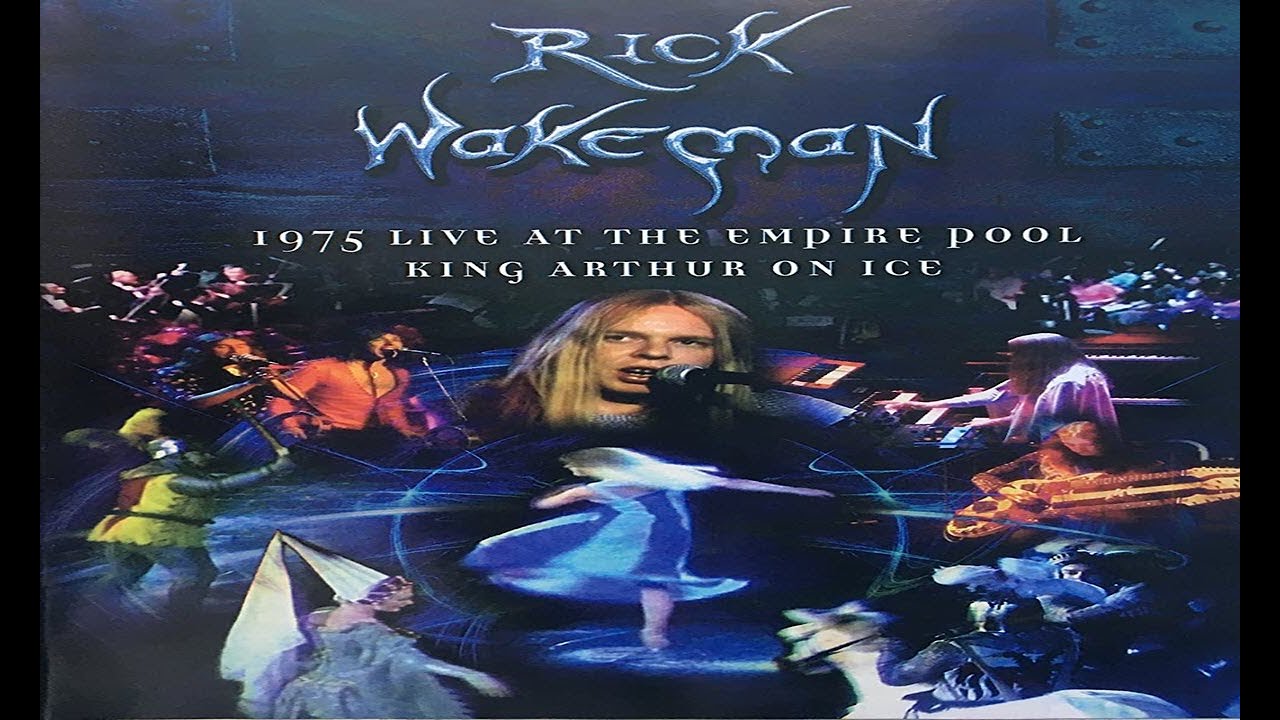
After Wakeman’s suggestion for a one-off gig at Wembley Stadium was deemed too ambitious, they settled on the smaller Wembley Empire Pool, which stood nearby. Three shows were planned between May 30 and June 1, 1975. There was just one problem – it had been booked by an ice dancing troupe for a show due to start immediately afterwards.
“I wanted to do the King Arthur… show at Wembley,” Wakeman told Classic Rock. “And they said: ‘You can’t, there’s an ice rink installed.’ I said: ‘Sod it, I’ll do it on ice.’”
Funded by Wakeman himself, the resulting shows were either one of rock’s most unique spectacles or its grandest folly. As well as the English Rock Ensemble, the keyboard wizard was joined by an orchestra, a choir and a small army of more than 60 skaters playing various characters from the King Arthur story, from Arthur and his paramour Guinevere to a phalanx of knights.
“I wanted the concerts to be musical and entertaining,” Wakeman told Metal Talk. “I followed some great advice given to me by David Bowie, who told me to do what I wanted to do on stage, especially if I was using my own money. ‘Don’t let any promoter, agent or manager tell you,’ he said. ‘They don’t have the imagination…’ I’m forever indebted to David for that.”
The sold-out shows were ridiculously entertaining, but they were also hugely expensive to the point of wiping Wakeman out financially. He managed to tour the US and South America - albeit without the ice rink – but it wasn’t enough to reverse his parlous fortunes. He had only one option: rejoin Yes. By the end of 1976, he was back in the band he’d left two years earlier.
Today, The Myths and Legends of King Arthur And The Knights Of The Round Table stands as one of the high points of both prog’s Golden Age and Wakeman’s own career, even if its own legend has been overshadowed by those infamous, ultimately ruinous gigs.
But it was just as important for Wakeman on a personal level, a blast of symphonic defiance in the face of both medical advice and even death itself. Looking back on the Wembley gig, he recalled playing The Last Battle – the song he’d composed while convalescing in hospital and ignoring his doctor’s insistence that he hang up his cape.
“I vividly saw myself lying in bed at Wexham Park Hospital, absorbing the consultant’s unwanted advice that I should contemplate early retirement,” he later said. “It showed the piece had far more subconscious meaning than I’d realised when I wrote it. It was, in retrospect, as much about me as about events at Camelot.”
