


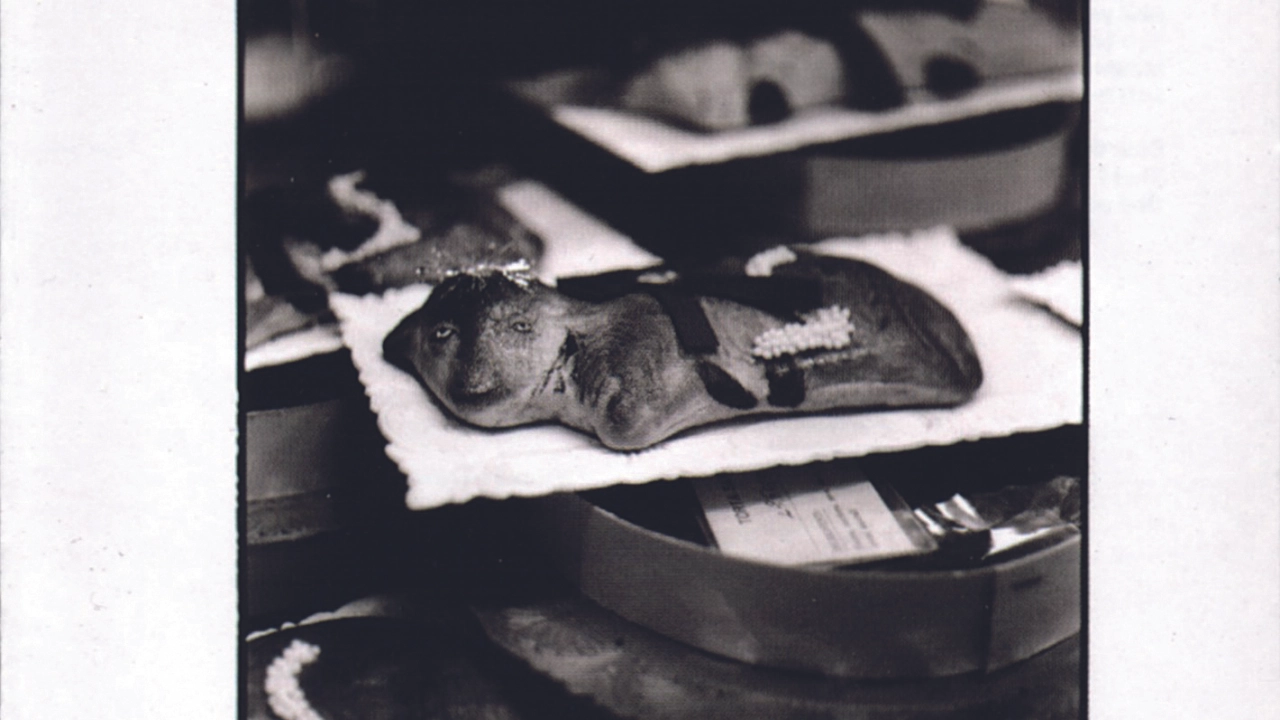
There has never been, and one suspects there will never be, another band quite like Talk Talk, or an artist with a vision as singular and distinct as Mark Hollis.
Although Talk Talk first came to the world’s attention as ostensible members of the synth-pop movement that sporadically dominated the charts during the first few years of the 1980s, Hollis’ crew were plainly operating on a more refined level than their peers, and even on their second album – 1984’s It’s My Life – they were beginning to exhibit depths and ingenuity that placed them firmly in the art rock realm. The trilogy of extraordinary albums that followed – _The Colour Of Spring _(1986), Spirit Of Eden (1988) and Laughing Stock (1991) – confirmed that Hollis was anything but a preening pop star. Instead, those records explored the outer limits of rock minimalism and jazz-inspired experimentation, using melody as texture rather than heavy-handed declaration, and generating a new sonic vocabulary in the process. Laughing Stock, in particular, hinged on an improvisational ethos and somnambulant grooves that certainly sounded as if they’d drawn some inspiration from Can and Faust, even if Hollis remained tight-lipped about his own influences and compositional process.
Seven years later, Hollis released his one and only solo record, thus bringing his association with Polydor, not to mention his entire career as a recording artist, to a gentle and effortlessly mysterious close. Heartbreakingly fragile and delicate, the eight songs on this utterly beautiful album shared some of Talk Talk’s amorphous drift, but this was a much more personal statement, framed with baroque elegance and delivered with a devastating lightness of touch by a shadowy crew of acoustic musicians. Every moment on Mark Hollis oozes exquisite magic, but it’s the album’s elaborate eight-minute centrepiece, A Life (1895-1915), that suggests that its creator could have gone on to make many more mind-blowing and thrillingly idiosyncratic masterpieces. Instead, after the album’s low-key release and moderate success, Hollis made no live appearances or did anything to promote his work and then walked away from the music business to focus on his family. He has never returned. Whether or not he wanted to enshroud his own creative achievements in yet more mystique is questionable, but his vanishing act ensured that Mark Hollis is an album that will always wield immense enigmatic power: a beautiful farewell from an instinctively progressive talent.

